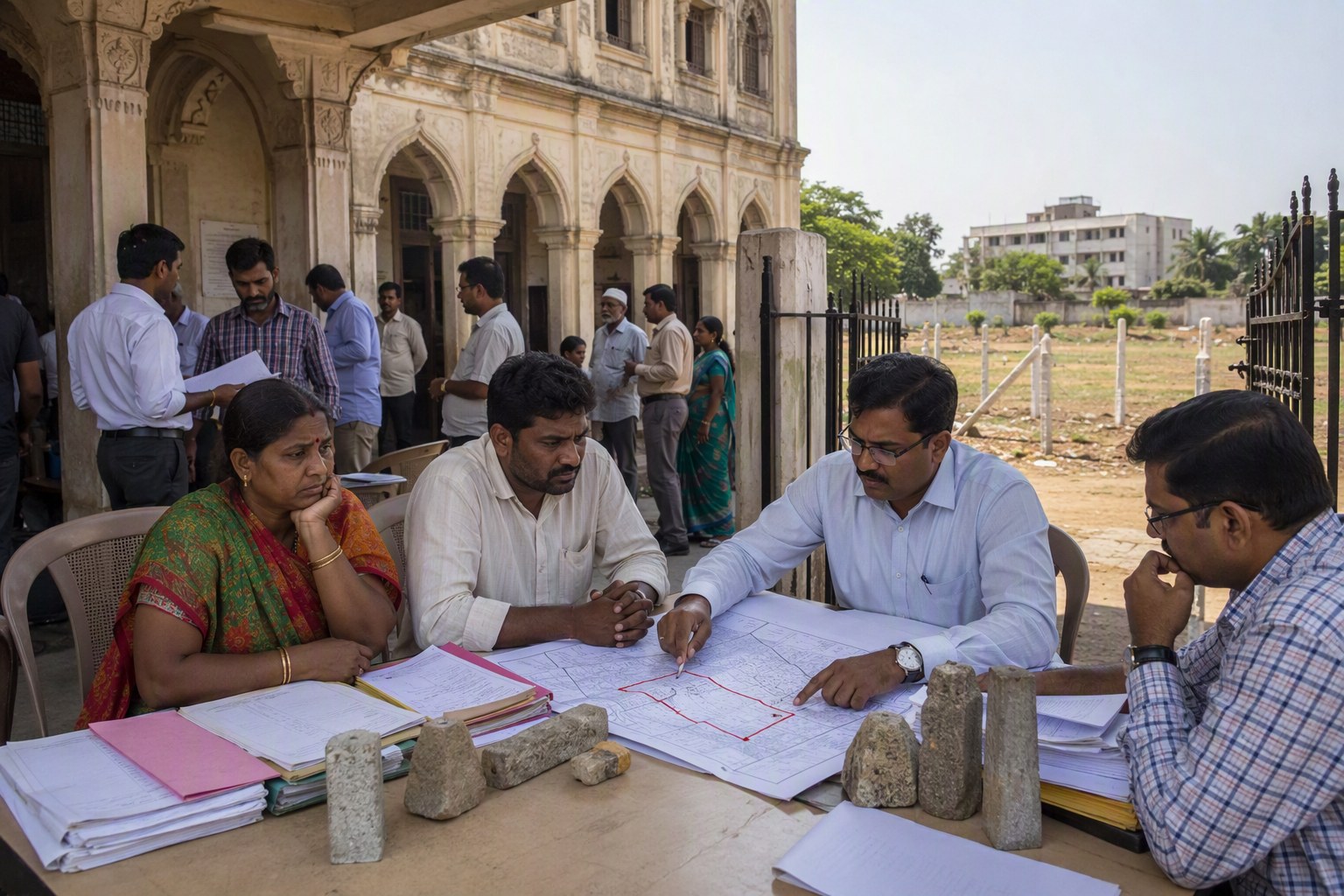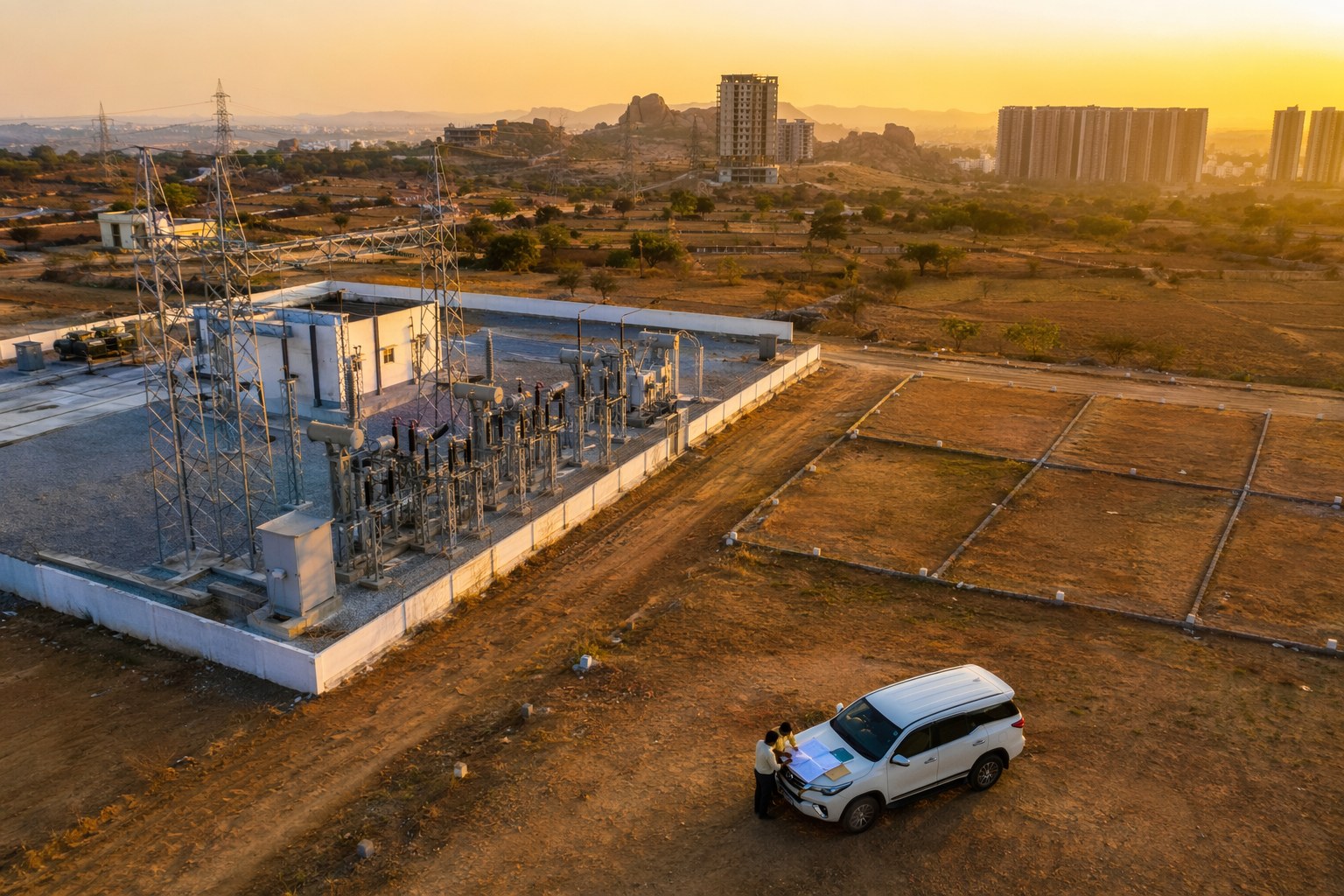



Telangana May Add 22-A Alerts to Encumbrance Certificates, a practical upgrade that could save buyers from one of the most painful shocks in property registration: discovering at the SRO counter that the land is flagged under Section 22-A. If implemented, the warning would appear directly on the encumbrance certificate, so buyers, bankers, lawyers and document writers can spot a prohibited-property issue much earlier.
For Telangana home and land buyers, this is not a small technical tweak. Verified.RealEstate’s current prohibited-property database tracks 3,076,153 Section 22-A records. That is the scale of the risk sitting behind routine land checks in Hyderabad outskirts, HMDA growth corridors, gram panchayat layouts and old village survey numbers.
Our view: putting 22-A alerts on ECs will not replace legal due diligence, but it can stop many bad deals before token advance, sale agreement or bank processing starts.
Telangana May Add 22-A Alerts to Encumbrance Certificates: What could change
At present, many buyers treat the encumbrance certificate as a clean-history certificate. In practice, an EC mainly shows registered transactions such as sale deeds, gift deeds, mortgages, releases and court-related entries where recorded. It may not be the full answer on whether a survey number is prohibited from registration.
The proposed idea is simple: if a property or survey number is on the Section 22-A prohibited list, the EC itself may show a clear warning. That means a buyer checking an EC for land in places like Shankarpally mandal, Serilingampally mandal, Rajendranagar mandal, Medchal mandal, Patancheru side villages or Hayathnagar mandal can get an early red flag instead of finding out during registration.
This matters most in land transactions, plot purchases, old family properties, assigned land issues, lake-buffer disputes, endowment land claims and survey-number mismatch cases. In our experience, the biggest fights happen when the buyer has already paid an advance and only then learns that the SRO may refuse registration.
Why Section 22-A alerts on ECs matter for Hyderabad buyers
Section 22-A is used to restrict registration of certain categories of properties. These may include government-notified prohibited lands and other properties where registration is barred or restricted as per government records. In Telangana, buyers usually cross-check this through IGRS, Dharani-linked land details, local revenue office inputs, pahani records, village maps and SRO-level scrutiny.
But the average buyer does not know how to connect all these dots. A person buying a plot near Shamshabad or a resale flat-linked undivided share in Gachibowli may ask for an EC, but may not separately check the 22-A list. A farmer selling ancestral land in a village may have a pahani in one name, old registered documents in another, and a survey number that partially overlaps with a prohibited record. These are not rare field problems.
If the EC starts carrying a 22-A warning, the document becomes more useful at the first stage itself. It can help:
Buyers avoid paying advance on risky survey numbers.
Banks screen loan files before valuation and legal processing.
Lawyers focus faster on the exact defect instead of doing blind searches.
Document writers warn parties before preparing sale deeds.
Sellers identify errors in government records and start correction steps early.
How buyers should check property before registration
Even if Telangana adds 22-A alerts to ECs, buyers should not stop with one document. A clean EC is useful, but it is not the same as a clean title. We have seen many Hyderabad-area transactions where the EC looked normal, but the survey number needed deeper verification through revenue records, layout approval, land use and SRO jurisdiction.
Before paying advance, use these checks together:
Check the property’s EC using Encumbrance Certificate Search.
Run the survey number through Section 22-A Prohibited Property Check.
Verify survey number and village details through Survey Number Finder.
Confirm the correct registration office using Find Your SRO Office.
Compare government market value through Market Value / Guideline Value Search.
For flats and ongoing projects, check project registration on RERA Project Lookup.
For buyers in Kokapet, Tellapur, Narsingi, Mokila, Adibatla, Kollur, Bachupally and Kompally, this layered check is sensible because many deals involve old survey numbers converted into plotted layouts or apartment projects. Land title and layout approval must both be clean.
Telangana May Add 22-A Alerts to Encumbrance Certificates: Practical impact at SRO level
The SRO is where paperwork meets reality. A buyer may have a sale agreement, DDs, witnesses, stamp duty plan and slot booking ready. If the registration system throws a prohibited-property objection at that moment, the transaction gets stuck. That creates pressure on both parties, especially where the buyer has arranged funds or the seller has committed to another purchase.
An EC-level alert can shift that warning to the beginning of the transaction. It is better to know the problem while negotiating than after paying stamp duty or arranging bank disbursement. Buyers can then ask the seller to clarify title, obtain revenue records, show mutation history, produce pattadar passbook details where applicable, or explain how the property was removed from any prohibited list if such correction has happened.
| Check | What it tells you | Why it matters |
|---|---|---|
| EC | Registered transaction history | Shows past sales, mortgages and other registered entries |
| Section 22-A check | Whether registration may be restricted | Helps avoid SRO refusal or last-stage objections |
| Pahani / revenue record | Possession and land classification details | Useful for agricultural and converted lands |
| SRO jurisdiction | Correct registration office | Prevents filing at the wrong office |
| Guideline value | Government market value reference | Helps estimate stamp duty and registration cost |
What sellers and developers should prepare
Sellers should not wait for the buyer to find a problem. If a land parcel has old revenue complications, mismatched survey subdivisions, pending family partition, mutation gap or wrong prohibited-property tagging, it is better to prepare documents before marketing the property. This is especially true for land around fast-moving corridors such as ORR exits, Pharma City-side villages, airport-side mandals and western Hyderabad growth pockets.
Developers also need to be careful where projects are assembled from multiple land parcels. One problematic survey number can slow down approvals, registrations and customer confidence. If 22-A alerts come on ECs, buyers will ask sharper questions. That is good for the market. Clean-title projects will stand out; doubtful land parcels will face harder scrutiny.
For cost planning, buyers can use Stamp Duty Calculator after checking the guideline value. If there is any doubt about total property value including land and structure, Composite Value Calculator can also help with a basic estimate. These tools do not replace legal opinion, but they make the first round of due diligence more organised.
Our take: faster warnings, fewer registration shocks
Telangana’s registration ecosystem has already moved many checks online, but property buyers still depend heavily on middlemen, document writers and informal assurances. A 22-A alert inside the EC can bring the warning into a document that buyers already understand and ask for.
Will it solve every title issue? No. ECs cannot speak for unregistered family claims, oral partitions, boundary disputes, wrong site measurements, access-road problems or land-use violations. But for prohibited-property checks, putting the alert directly in the EC is a strong buyer-protection step.
Until such a feature is formally available, our advice is straightforward: never rely only on the sale deed chain and EC. Check 22-A status, pahani, Dharani data where relevant, SRO jurisdiction, guideline value, layout approval and RERA status for projects. In Telangana real estate, the cheapest due diligence is the one done before paying advance.
Frequently Asked Questions
Will a 22-A alert on an EC mean the property cannot be sold?
It means the property may be restricted or prohibited for registration as per government records. The buyer should pause the transaction and verify the exact reason with SRO, revenue records and a property lawyer.
Is an Encumbrance Certificate enough to verify land in Telangana?
No. An EC shows registered transaction history, but buyers should also check Section 22-A status, pahani, Dharani-linked details, survey number accuracy, layout approvals and SRO jurisdiction.
How many Section 22-A prohibited property records are tracked?
Verified.RealEstate’s current prohibited-property database tracks 3,076,153 Section 22-A records for Telangana-related property checks.
Which tool should I use before paying advance for a plot?
Start with the Section 22-A Prohibited Property Check, EC Search, Survey Number Finder and Market Value / Guideline Value Search. For projects, also check RERA registration.