

Telangana May Clarify Fee Refunds for 22-A Hit Registrations: What Buyers Should Watch
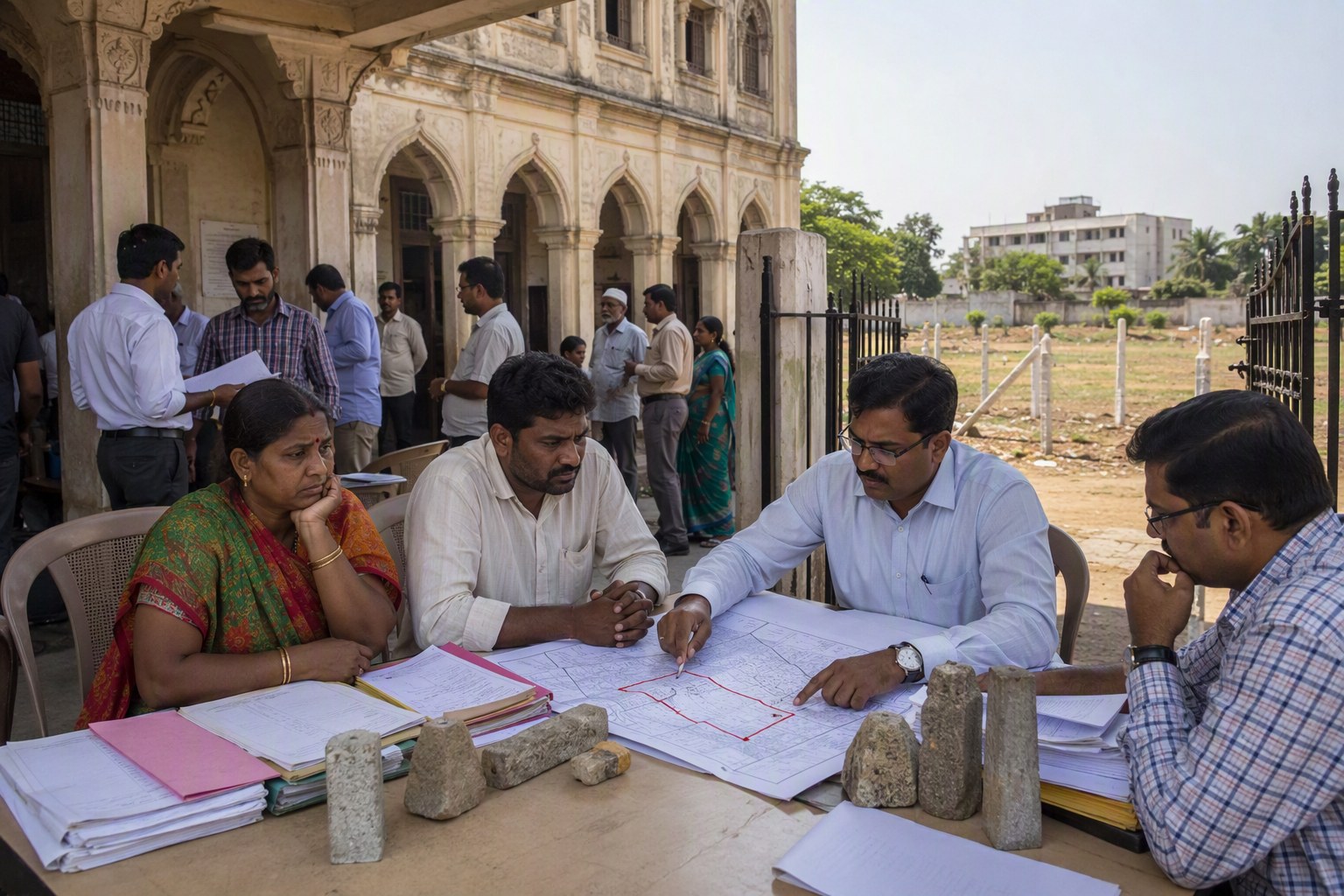
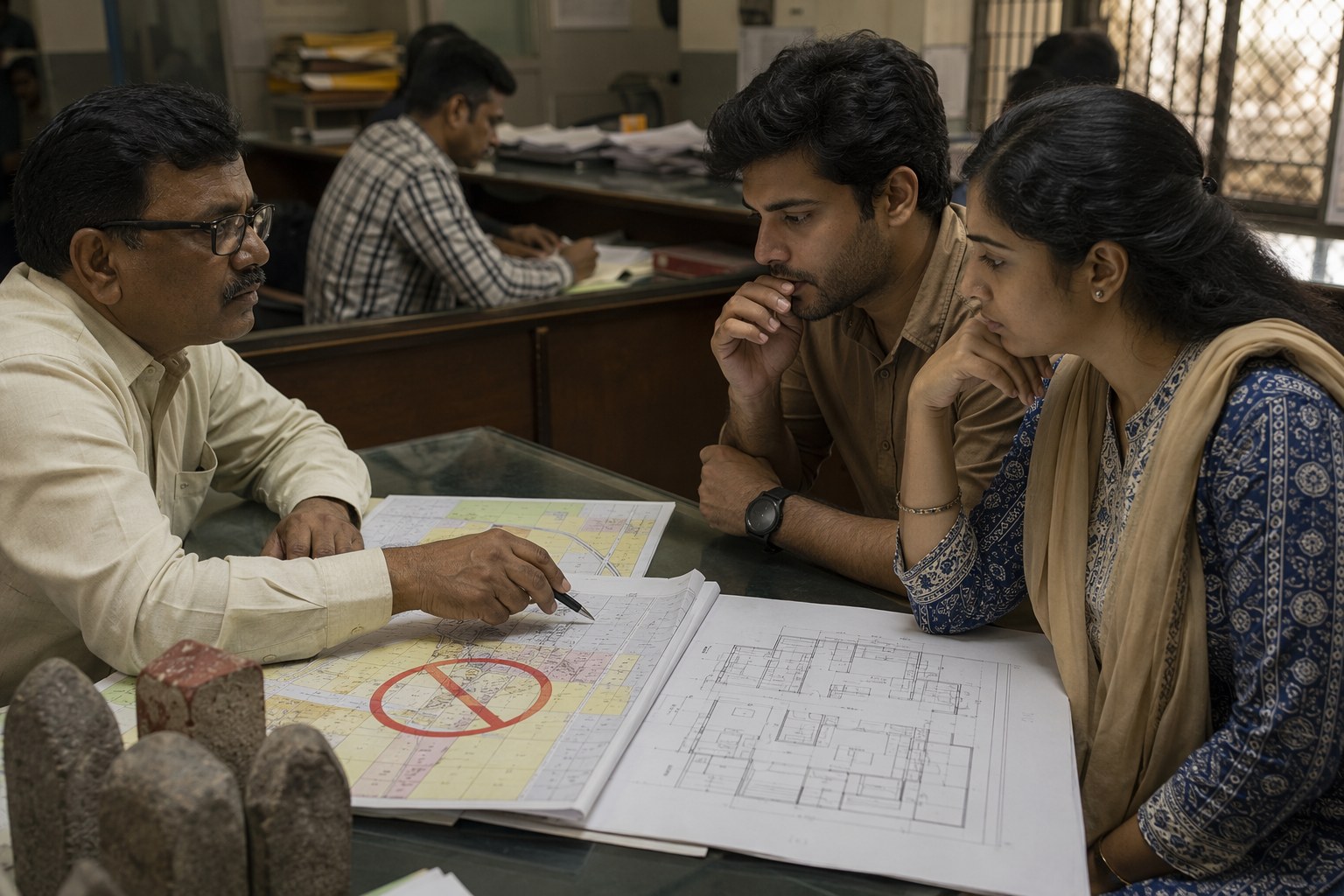
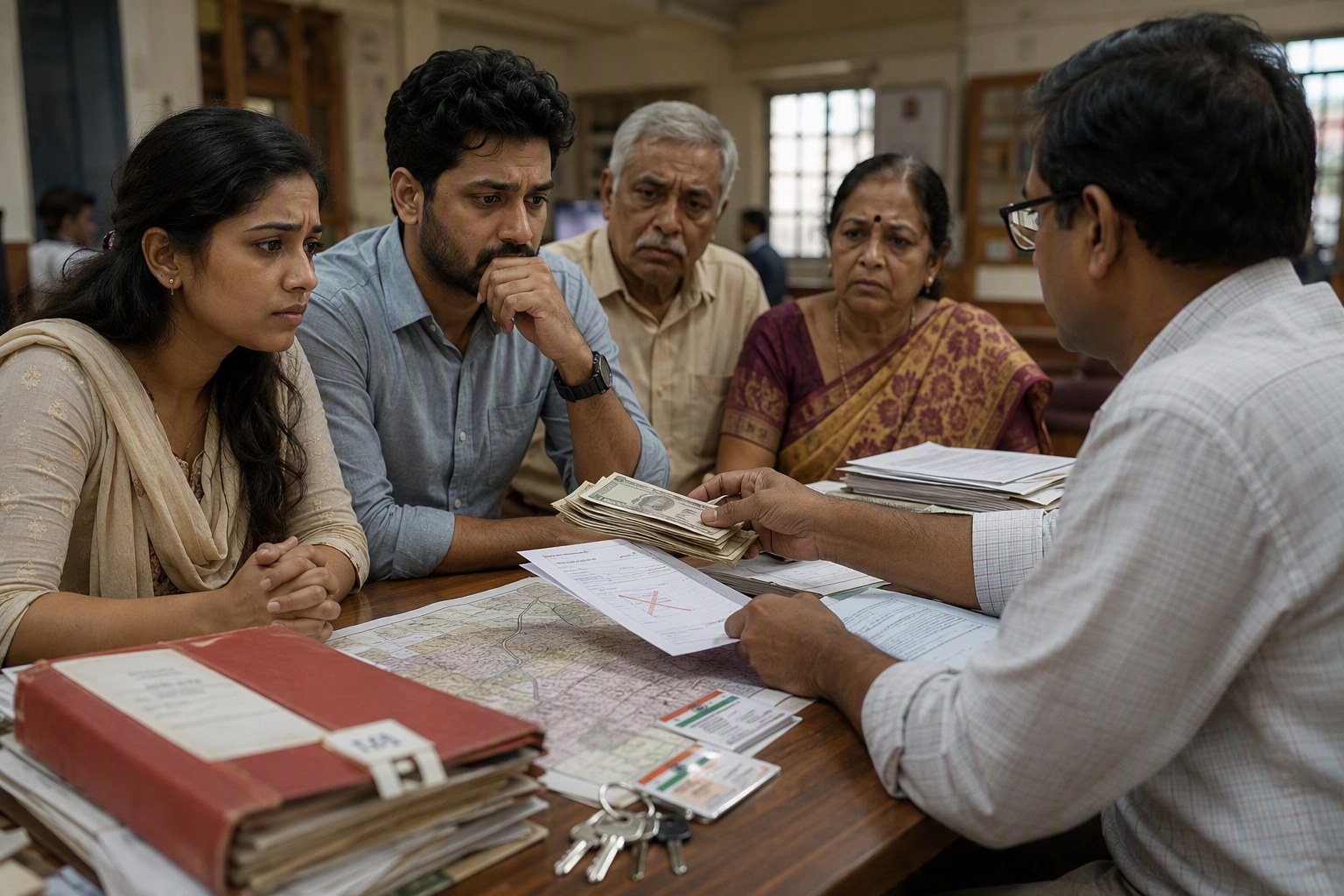
Telangana May Clarify Fee Refunds for 22-A Hit Registrations, a move that could bring relief to buyers whose sale deeds get stopped after a Section 22-A prohibited property check at the registration stage. The issue is simple but painful: a buyer pays stamp duty and registration-related charges, reaches the SRO, and then discovers that the survey number or property entry is blocked under the prohibited properties list.
As per latest IGRS data available with Verified.RealEstate, Telangana has 3,076,153 prohibited property records under Section 22-A. That number alone shows why refund clarity is not a small administrative matter. It affects buyers, sellers, document writers, bankers, and even SRO staff across Hyderabad, Rangareddy, Medchal-Malkajgiri, Sangareddy, Vikarabad and other districts.
In our experience, the confusion is sharper in fast-moving Hyderabad land markets such as Kokapet in Gandipet mandal, Tellapur and Osman Nagar near the Serilingampally side, Mokila and Shankarpally, Adibatla in Ibrahimpatnam mandal, and plots around Hayathnagar, Maheshwaram and Moinabad. Buyers often verify EC and link documents, but miss a fresh 22-A check before paying registration charges.
Why Fee Refunds for 22-A Hit Registrations Need Clear Rules
Section 22-A entries are meant to stop registration of properties that the government treats as prohibited for transfer. These may include government lands, assigned lands, endowment lands, wakf-related entries, court-disputed entries, ceiling surplus lands, and other categories notified by authorities. The practical problem is that the buyer may come to know of the block only when the document is presented or verified at the SRO.
For a middle-class buyer, money locked in a registration challan is not a small matter. Families arrange funds through savings, bank loans, gold loans, advances from relatives, or by selling another asset. If the document is refused due to a 22-A hit, the next question is immediate: how do I get my money back, how long will it take, and which office should I approach?
At present, buyers usually depend on local guidance from the SRO, document writer or registration consultant. Some are told to apply for refund through the department route. Some are asked to first obtain proof of refusal or non-registration. Others are asked to correct property details if the hit is due to wrong survey number, village, extent, or mismatch in records. This uneven ground is exactly where a clearer state-level refund note would help.
Our view is that refund guidance should be written for ordinary buyers, not only for officials. It should say what happens when a sale deed is not admitted, what happens when it is refused after verification, and what papers are needed for refund.
Fee Refunds for 22-A Hit Registrations: The Policy Gap
The biggest gap is timing. A buyer generally pays based on market value, ready reckoner or guideline value, and the nature of the document. Before that payment, the safer sequence is to check market value, EC, SRO jurisdiction, survey number and prohibited property status. But in the real market, many people pay first because the seller is pressing for registration date or the bank has given a narrow disbursement window.
A clearer policy can reduce disputes in three ways:
- Pre-registration clarity: If a property is already blocked under 22-A, buyers should know not to generate challans until the issue is resolved.
- Post-refusal refund route: If the SRO does not proceed with registration due to a 22-A entry, the buyer should know the exact refund application process.
- Record correction route: If the hit is due to data mismatch, there should be a path to correct records rather than forcing parties into repeated visits.
This matters a lot in mandals where old revenue records, pahani entries, Dharani data, layout approvals and SRO records do not always speak the same language. We have seen this especially in peri-urban land pockets where agricultural land has slowly moved into plotted development or villa projects.
How a 22-A Hit Usually Comes Up During Registration
In many cases, the buyer has seen the property, negotiated the price, checked the parent deed and taken an EC. Then the registration process begins. The problem appears when the property details are entered for document preparation or when the SRO system flags the property as prohibited.
The hit may arise from the survey number, sub-division number, village name, mandal mapping, nature of land, or an old government entry. In Hyderabad’s surrounding markets, one survey number may have multiple sub-divisions and several transactions over time. A small mistake in survey number or village spelling can push the buyer into unnecessary trouble.
Before paying any registration-related amount, buyers should use a basic verification stack:
- Check whether the survey number is in a prohibited list using the Section 22-A Prohibited Property Check.
- Verify past transactions through the Encumbrance Certificate Search.
- Confirm the correct registration office with Find Your SRO Office.
- Cross-check the survey reference using the Survey Number Finder.
- Estimate duty and charges only after these checks using the Stamp Duty Calculator.
For apartments and under-construction projects, buyers should also verify the project through the RERA Project Lookup. RERA registration does not automatically clear land title, but it gives one more layer of project-level information.
What Buyers in Hyderabad Should Do Before Paying Registration Charges
Hyderabad buyers need to be more cautious because the city’s growth has pulled revenue villages into high-value real estate zones. Kokapet, Puppalaguda, Narsingi, Tellapur, Kollur, Mokila, Patancheru, Bachupally, Kompally, Shamshabad and Adibatla are all active markets, but each location sits within a specific mandal, village and SRO framework.
Do not rely only on a brochure, layout plan or seller’s assurance. Ask for the survey number, village, mandal, extent, link documents, mutation trail, latest pahani where applicable, EC, layout approval and tax receipts. If it is a flat, ask for land documents of the project along with RERA and approvals. If it is a plot, be even more careful with survey number and layout approval status.
Use the Market Value / Guideline Value Search to understand the government valuation basis. Then check the property through the Property Verification Tool. If there is any doubt on land use, road access or layout conditions, do not rush to payment just because the seller says another buyer is ready.
One practical suggestion: take a screenshot or printout of your key checks on the day you generate the challan. Records can change, and a dated trail helps when you are later explaining your case to a bank, SRO or legal advisor.
What a Useful Telangana Refund Clarification Should Contain
If Telangana issues clearer guidance, buyers will benefit most if the note covers real-life situations, not only legal language. A good clarification should answer these points:
| Issue | What buyers need clarity on |
|---|---|
| Document stopped before admission | Whether full refund can be claimed and what proof is required |
| Document refused after scrutiny | Which order or endorsement must be attached |
| Wrong survey number entered | Whether correction is possible or fresh payment is needed |
| 22-A entry later removed | Whether old challan can be reused or refund must be processed |
| Bank-funded purchase | How refund communication can be given for loan file closure |
The department should also make the refund route visible in plain language at SRO offices and online. Many buyers still depend on agents because the official process feels unclear. A transparent checklist would reduce avoidable running around.
Developer and Seller Responsibility in 22-A Cases
Sellers and developers should not push buyers to pay registration charges until the property is clean for registration. In land deals, the agreement of sale should mention who bears the loss, delay or refund follow-up if the registration is blocked because of a 22-A entry or title defect known to the seller.
For plotted layouts in areas like Shankarpally, Moinabad, Maheshwaram and Ibrahimpatnam, buyers should insist on written confirmation of approvals and title documents before fixing the SRO date. For apartments in areas like Gachibowli, Nallagandla, Kondapur, Bachupally and Kompally, the land title and permissions behind the project matter as much as the flat number and floor plan.
We have seen buyers treat registration as a formality after loan sanction. That is risky. Banks do legal checks, but a buyer should still do independent checks. A 22-A block is not something to discover at the counter after money has already moved.
Bottom Line for Buyers Facing a 22-A Block
If your registration is blocked due to Section 22-A, do not panic and do not immediately generate another challan. First, get clarity from the SRO on the exact reason for non-registration. Ask whether the issue is a prohibited property entry, data mismatch, wrong jurisdiction, survey error or document defect. Keep copies of challans, appointment details, draft document, refusal note or any endorsement provided.
Then take legal advice, especially if the property is land or a resale asset with old link documents. If the block is genuine, push the seller to resolve it or refund your advance as per agreement terms. If it is a record error, the correction route may involve revenue authorities, Dharani-related records or departmental clarification.
Telangana’s possible clarification on fee refunds for 22-A hit registrations would be a welcome step. But the best protection is still early due diligence. Check before payment, not after the SRO says no.
Frequently Asked Questions
What is a 22-A prohibited property in Telangana?
A 22-A prohibited property is a property that is restricted from registration under Section 22-A. It may relate to government land, assigned land, endowment land, wakf entries, court disputes or other notified categories, depending on the official record.
Can I get a refund if my registration is blocked due to a 22-A entry?
Refund may be possible depending on the stage of registration, type of payment and official reason for refusal. Buyers should collect the SRO endorsement or proof of non-registration and follow the refund process advised by the department.
How can I check 22-A status before registration?
You should check the survey number, village and mandal details through a prohibited property check before generating payment. Also verify EC, SRO jurisdiction, market value and link documents.
Does an Encumbrance Certificate prove that a property is free from 22-A issues?
No. An EC shows registered transactions and encumbrances for the selected period. It does not by itself confirm that the property is free from Section 22-A restrictions. A separate prohibited property check is needed.
Should I pay stamp duty before checking 22-A status?
Preferably no. Check 22-A status, EC, SRO jurisdiction, survey number and guideline value first. Pay registration-related charges only after the property details are verified.