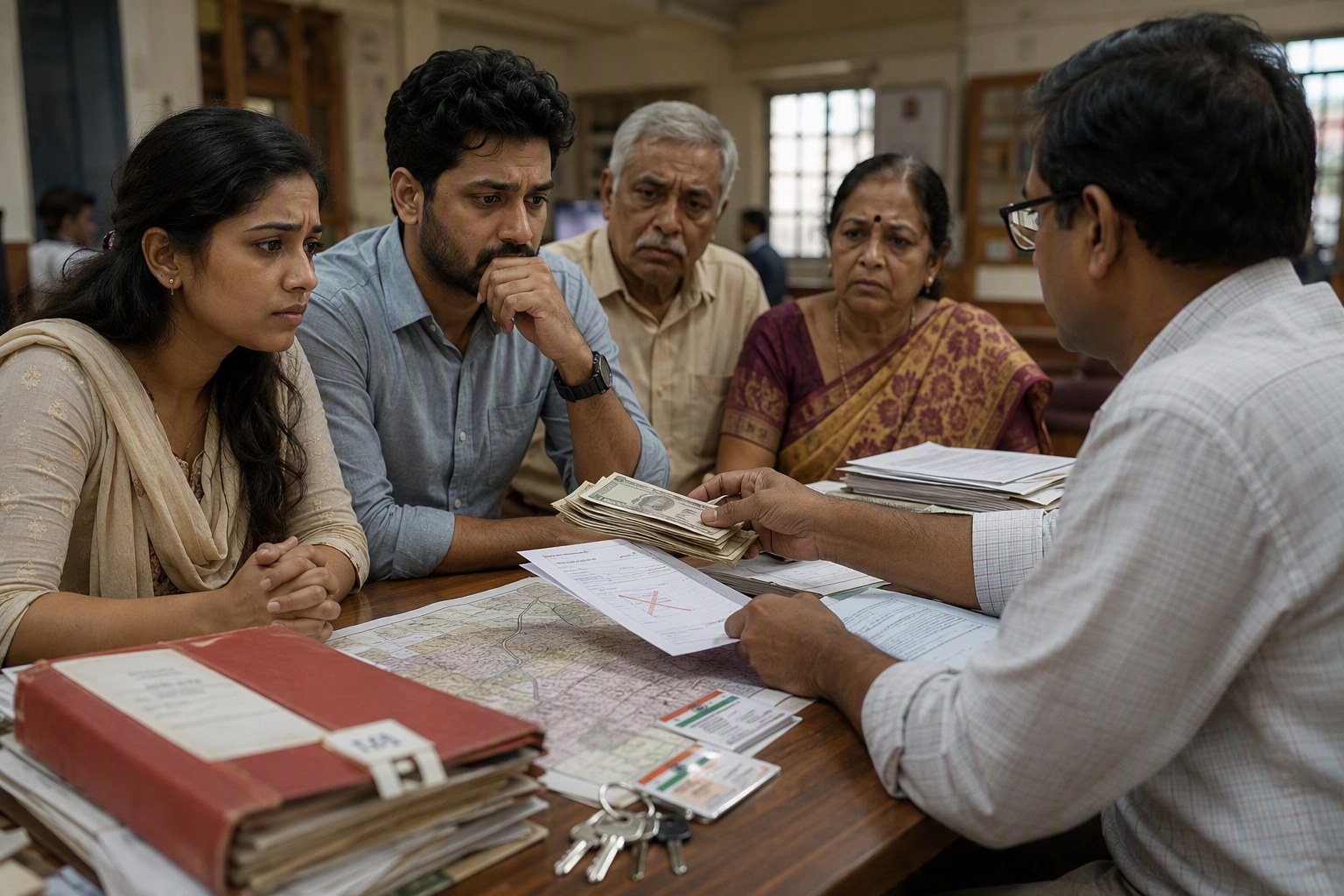
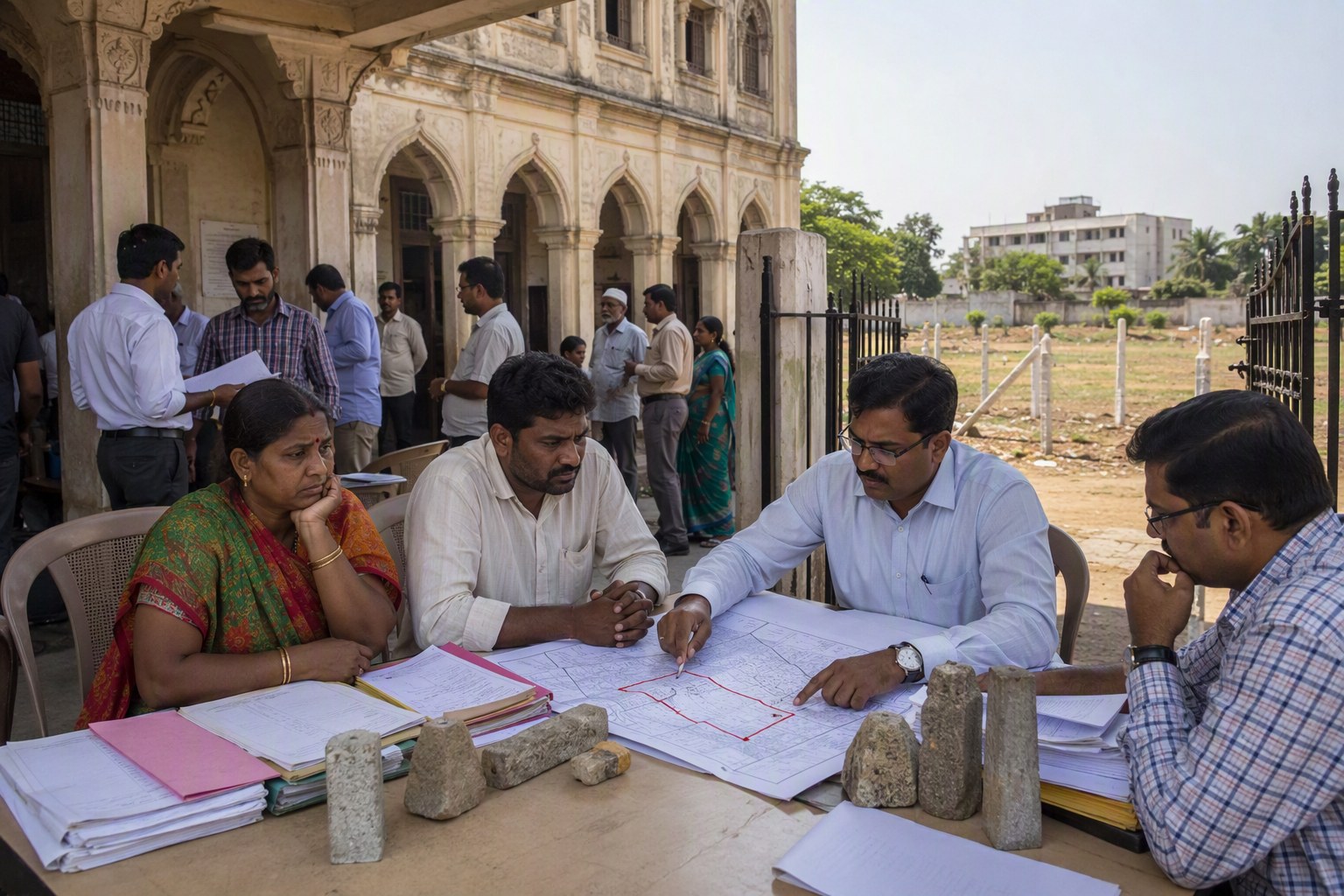
Telangana May Standardise 22-A Appeals for Landowners is the kind of reform many property owners have been waiting for, especially those whose land is stuck in the prohibited properties list under Section 22-A. As per latest IGRS data available with Verified.RealEstate, Telangana has 30,76,153 prohibited property entries. A standard appeal format, if adopted properly, can reduce confusion at SRO offices, cut repeated paperwork, and give owners a clearer route to challenge wrong or outdated entries.
For buyers and families holding ancestral land in Hyderabad, Rangareddy, Medchal-Malkajgiri, Sangareddy, Vikarabad and other districts, the issue is not academic. One wrong entry against a survey number can block registration, delay bank loans, disturb family partitions, and make even a genuine sale agreement risky.
Telangana May Standardise 22-A Appeals for Landowners: What is being discussed?
The government-side thinking, as understood from the registration ecosystem, is simple: owners need a uniform appeal format to deal with Section 22-A prohibited property entries. At present, many landowners go from the SRO to the mandal office, from mandal office to district authorities, and then back again with different sets of documents. Some submit pahani copies, some submit old sale deeds, some attach Dharani screenshots, some give family settlement papers. The file may still be returned because the representation is not in the expected format.
A standardised format can bring basic discipline. It can ask for the survey number, village, mandal, extent, nature of claim, present prohibited category, supporting documents, earlier proceedings if any, and the specific relief sought. That may sound basic, but in our experience, most 22-A disputes become messy because the first application itself is unclear.
Our view is that a good appeal format will not automatically remove a property from the prohibited list. But it can stop owners from filing weak, incomplete, or wrongly addressed representations.
Before filing any representation, landowners should first check whether the survey number is actually appearing in the 22-A list. Verified.RealEstate users can start with the Section 22-A Prohibited Property Check, then verify past transactions using the Encumbrance Certificate Search and locate the right registration office through Find Your SRO Office.
Why Telangana May Standardise 22-A Appeals for Landowners now
The scale of the problem is the main reason. With 30,76,153 prohibited property entries recorded as per latest IGRS data, even a small percentage of wrongly tagged or outdated entries can affect a large number of families. Owners of assigned lands, endowment lands, government lands, ceiling surplus lands, wakf-related properties, and other restricted categories often find their survey numbers blocked for registration.
Some entries are valid and must remain protected. Nobody wants government land or endowment land to be sold through private documents. But Telangana also has older village records, resurvey issues, spelling variations in owner names, overlapping survey references, and changes after layouts, partitions and acquisitions. This is where a standard appeal process can help separate genuine claims from weak claims.
In Hyderabad’s growth belt, this matters even more. We regularly see buyer anxiety around places such as Shankarpally mandal, Serilingampally, Gandipet, Maheshwaram, Shamshabad, Ghatkesar, Medchal, Shamirpet and Hayathnagar. In these locations, the difference between a clean survey number and a disputed one can decide whether a deal moves ahead or collapses at the SRO counter.
What a useful 22-A appeal format should contain
A proper appeal format should not be a vague one-page request saying “please remove my land from prohibited list”. That rarely works. The format should push the applicant to disclose the full property trail.
| Appeal field | Why it matters |
|---|---|
| District, mandal, village and survey number | Helps authorities identify the exact land parcel without confusion. |
| Extent claimed by applicant | Useful where only part of a survey number is disputed. |
| Present 22-A category | Shows why registration is blocked. |
| Applicant’s title basis | Sale deed, inheritance, partition, patta, court order or other claim. |
| Revenue record references | Pahani, ROR, Dharani entry or mutation details can support the claim. |
| Earlier proceedings | Prevents repeated fresh claims without disclosing past decisions. |
| Relief requested | Clarifies whether deletion, correction or partial modification is being sought. |
For landowners, this is where document discipline matters. Use the Survey Number Finder to confirm the survey reference, check the ready reckoner through the Market Value / Guideline Value Search, and run a broader check using the Property Verification Tool. These steps will not replace legal advice, but they can help you avoid obvious mistakes before approaching an advocate or revenue officer.
How this affects buyers in Hyderabad and surrounding mandals
For a buyer, a standard 22-A appeal format is useful only if it creates traceability. If the seller says, “case is under process”, ask for a copy of the appeal, acknowledgement, supporting documents and the exact authority before whom it is pending. Do not rely only on oral assurances from brokers.
In areas like Kollur, Mokila, Tellapur, Adibatla, Tukkuguda, Bachupally, Kompally and Pocharam, land has moved from agricultural holdings to plotted layouts, villas, apartments and commercial parcels over the years. Many buyers see HMDA approval or gram panchayat history and assume the title is clean. That is not enough. Section 22-A status, EC history, pattadar details, layout approval, land use, road access and mortgage charge should all be checked.
If you are buying an apartment, also verify the project on RERA Project Lookup. If it is open land, check land use through Land Use Zone Finder. If the deal value is being negotiated, the Stamp Duty Calculator can help you understand registration cost based on the value entered by you.
Where owners commonly go wrong in 22-A cases
- They file without checking the exact prohibited entry: Many owners do not know whether the block is on the full survey number or part of it.
- They mix title dispute and 22-A correction: A family dispute between siblings is different from a wrong prohibited property entry.
- They submit only recent records: Old pahani, earlier sale deeds and mutation history may be relevant.
- They ignore mandal-level variations: Records in one mandal office may not match what the SRO system shows.
- They proceed with sale agreements before clearance: This is risky because registration can fail later.
In our experience, the most practical approach is to prepare a file in three parts: identity and ownership papers, revenue record trail, and registration record trail. Keep copies clean, readable and indexed. If there is a court order, attach the full order, not just the last page.
Will a standard format solve the entire 22-A problem?
No. It can reduce confusion, but it cannot replace field verification, revenue record correction, legal scrutiny or administrative decision-making. Some properties are rightly prohibited and should remain so. Some require correction because of clerical errors. Some need a court route. Some need action by revenue authorities before the registration department can do anything.
That said, a standard format can make the first stage fairer. Today, two owners with similar issues may get very different guidance depending on the office they approach. A common structure can reduce that unevenness. It can also help officials reject incomplete applications faster and process genuine ones with better clarity.
What landowners should do right now
If your property is affected by Section 22-A, do not wait till the buyer is sitting at the SRO office. Start early. Check the prohibited status, collect EC records, verify survey number details, compare Dharani and old revenue papers, and take professional advice before filing an appeal.
For sellers, clarity improves negotiation power. For buyers, caution saves litigation. For families dealing with inheritance land in mandals like Moinabad, Keesara, Abdullapurmet, Ibrahimpatnam, Chevella and Rajendranagar, this proposed standardisation can be useful if it is backed by transparent processing and speaking orders.
The key message is straightforward: Telangana’s 22-A list is large, and the paperwork around appeals needs order. A standard appeal format will not cure every land problem, but it can give genuine owners a cleaner starting point.
Frequently Asked Questions
What is Section 22-A in Telangana property registration?
Section 22-A deals with properties that are prohibited from registration, such as certain government, assigned, endowment, wakf or otherwise restricted lands. If a property is listed, the SRO may refuse registration.
How many prohibited property entries are recorded in Telangana?
As per latest IGRS data available with Verified.RealEstate, Telangana has 30,76,153 prohibited property entries under Section 22-A.
Will a standard 22-A appeal format remove my land from the prohibited list?
Not automatically. It can help you file a clearer appeal with the right property details and documents. The final decision depends on records, verification, legal status and the competent authority’s order.
What documents should I check before filing a 22-A appeal?
Check the prohibited property status, EC, old sale deeds, pahani or revenue records, Dharani details, mutation history, survey number references and any earlier proceedings or court orders.
Should buyers purchase land if the seller says a 22-A appeal is pending?
Buyers should be careful. Ask for the appeal copy, acknowledgement, supporting records and legal opinion. Avoid paying major amounts until the title and registration status are properly verified.