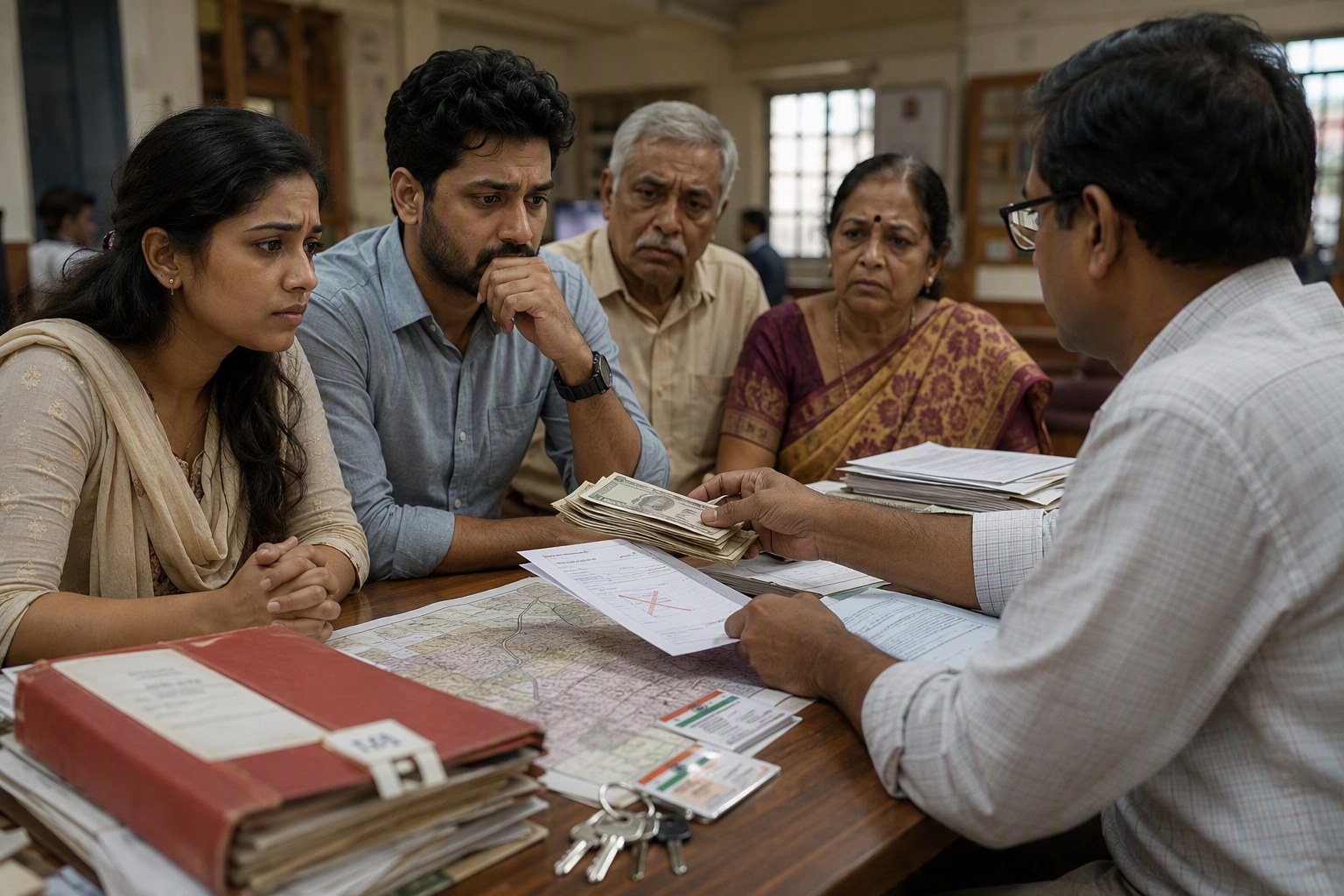
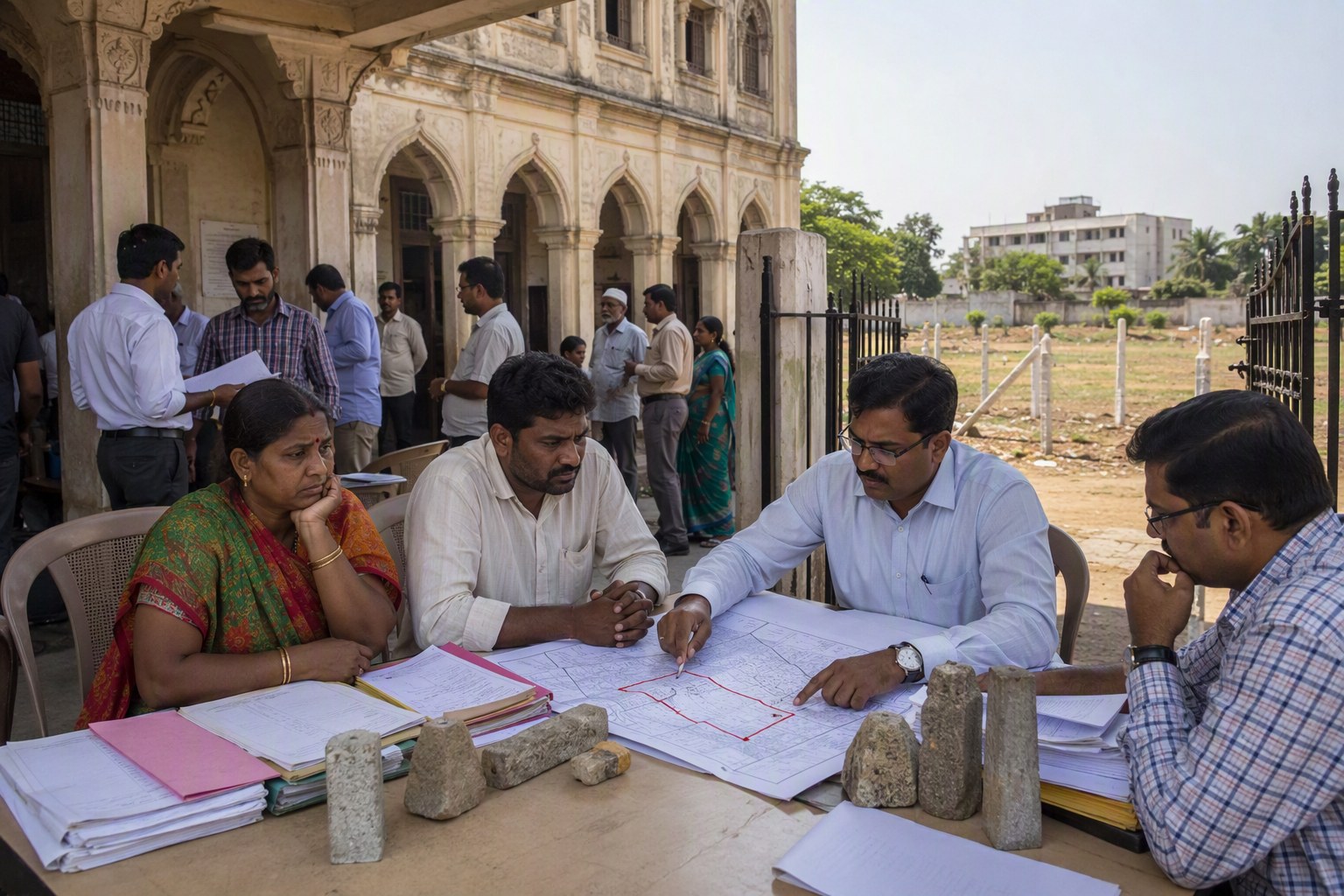
Telangana May Standardise SRO Checklists for Property Deals, a move that could make registration day less confusing for buyers, sellers, bankers and document writers across the state. The proposal, if taken forward, would mean a uniform list of documents at sub-registrar offices instead of each SRO asking for papers in a slightly different order or format.
For Hyderabad property buyers, this is not a small administrative change. We have seen families from Kondapur, Bachupally, Tellapur, Kompally and Uppal lose half a day at the SRO because one missing EC printout, old link document, property tax receipt or pattadar detail was not flagged earlier. A standard checklist can cut repeated visits, reduce last-minute panic and bring more predictability to sale deed registrations.
A uniform SRO checklist will not make a bad title good. But it can make the registration process clearer, faster and less dependent on guesswork.
Telangana May Standardise SRO Checklists for Property Deals: What may change
At present, buyers usually depend on a document writer, bank legal team, builder CRM staff or an agent to know what a particular SRO may ask. In theory, the registration requirements are based on law and department rules. In practice, local verification habits differ across busy offices such as Serilingampally, Kukatpally, Rajendranagar, Gandipet, Medchal, Uppal, LB Nagar and Shankarpally.
A uniform checklist can bring all SROs onto one common format for common transaction types: apartment sale, open plot sale, resale flat, agricultural land sale, gift deed, mortgage, development agreement and GPA-based transactions. This would help both urban buyers in GHMC limits and land buyers in mandals like Shamirpet, Maheshwaram, Kandukur, Moinabad and Yacharam.
The biggest benefit will be pre-registration clarity. Before booking a slot, the buyer can verify whether the property has a clean encumbrance record, whether it falls under Section 22-A prohibited categories, whether the market value is correctly assessed, and whether all parties have valid identity and tax documents.
Why Telangana May Standardise SRO Checklists for Property Deals now
Property registrations in Telangana have become more digital, but the buyer experience is still uneven. Dharani covers agricultural land workflows, while non-agricultural property registrations still require careful document preparation through the Registration and Stamps Department process. The gap is most visible when a buyer shifts from one SRO jurisdiction to another.
For example, a resale flat in Gachibowli under Serilingampally mandal may need a chain of sale deeds, occupancy certificate details, society NOC where applicable, latest EC and property tax receipts. An open plot in Adibatla or Tukkuguda may require layout approval details, link documents, market value check and sometimes land conversion papers depending on the history. A land parcel near Shankarpally or Chevella may bring questions on pattadar passbook, pahani, ROR entries, survey number and 22-A status.
When these checks are not listed clearly at the beginning, the buyer reaches the SRO with stamp duty already paid or sale consideration arranged, only to discover a missing paper. That is where standardisation can save time.
The 22-A risk: 147,934 prohibited properties cannot be ignored
The most serious pre-registration check is Section 22-A. Telangana has 147,934 prohibited properties recorded under Section 22-A categories. These can include government lands, assigned lands, endowment lands, Wakf properties, Bhoodan lands, forest lands and other restricted properties.
In our experience, many buyers first check price, road width and loan eligibility. They check 22-A only after paying an advance. That is risky. If a survey number is prohibited, the SRO can refuse registration. A uniform checklist should ideally place 22-A verification at the top, not as a final-stage formality.
Before paying token advance for land in areas like Mokila, Kollur, Patancheru, Shamirpet, Maheshwaram, Ibrahimpatnam or Yadagirigutta side, buyers should use a Section 22-A Prohibited Property Check and cross-check survey details through the Survey Number Finder. For a broader title check, the Property Verification Tool is also useful.
What a sensible SRO checklist should include
A good checklist should not be just a photocopy list pasted on a wall. It should be transaction-specific. A flat buyer and an agricultural land buyer do not need the same documents. Here is how a practical format can look.
| Transaction type | Key documents likely needed | Buyer-side checks |
|---|---|---|
| Resale apartment in Hyderabad | Parent deed, latest sale deed, EC, property tax receipt, building permission or OC where applicable, Aadhaar/PAN of parties | Check EC, guideline value, pending loan, society dues |
| Open plot in HMDA area | Link documents, layout approval, plot schedule, EC, identity papers, market value statement | Check HMDA/DTCP status, road width, land use and 22-A |
| Agricultural land | Pattadar passbook, pahani, ROR, survey map, EC, seller identity, Dharani-related records | Check survey number, 22-A, possession and access road |
| New apartment from builder | Agreement, allotment letter, sanctioned plan, RERA details, payment proof, buyer KYC | Check RERA, carpet area, undivided share, OC timeline |
For new projects in Kokapet, Narsingi, Tellapur, Miyapur, Kollur and Kompally, buyers should not stop at brochure verification. Use the RERA Project Lookup to check project registration, promoter name, approved plans and declared completion timelines.
Stamp duty, ready reckoner value and registration cost
Telangana property buyers also need cost clarity before they walk into the SRO. For a normal sale deed, the broad statutory cost is 4% stamp duty, 1.5% transfer duty and 0.5% registration fee, taking the total to about 6% of the value considered for registration. The value is generally based on the higher of the declared sale consideration or the government market value.
So, if a resale flat in Kondapur is registered at ₹1 crore, the buyer should budget around ₹6 lakh towards these main statutory charges, apart from any other applicable service or documentation costs. For a ₹75 lakh apartment in Bachupally, the statutory charge works out to about ₹4.5 lakh. This is why rate checking before agreement is sensible.
Buyers can use the Stamp Duty Calculator to estimate registration cost and the Market Value / Guideline Value Search to check the ready reckoner value for the locality. For apartments where land value and structure value need a combined view, the Composite Value Calculator can help.
How this could reduce repeated SRO visits
The usual pain point is not one big legal issue. It is often a small mismatch: father name spelling difference, wrong door number, old EC period, missing link document, unverified GPA, bank release deed not attached, or survey number mismatch between pahani and sale deed. A standard checklist can push these issues to the pre-scrutiny stage.
For buyers using housing loans, the bank legal report and SRO checklist should speak to each other. If the bank has cleared a flat in Manikonda but the SRO wants an older link deed, that gap must be known before registration date. If a plot in Medchal mandal has a layout approval issue, the buyer should know before paying stamp duty.
One very practical improvement would be an online checklist mapped to the SRO jurisdiction. Buyers can first identify their office through Find Your SRO Office, then run EC, 22-A, guideline value and document checks before slot booking. That will reduce crowding and make the registration counter less stressful.
Our view: standardisation is useful, but title due diligence remains non-negotiable
We support a uniform checklist because it gives ordinary buyers a fair starting point. Not every family buying a ₹55 lakh flat in Miyapur or a ₹90 lakh villa plot near Kollur has access to a senior property lawyer from day one. Clear SRO-level requirements can reduce dependency on informal advice.
Still, buyers should not confuse checklist compliance with title clearance. An SRO registers documents; it does not certify that your title is perfect for all future disputes. The buyer must still check link documents, possession, litigation, EC, permissions, land use, road access and seller authority.
For fast-growing areas such as Kokapet, Tellapur, Mokila, Patancheru, Shadnagar and Maheshwaram, this is even more relevant. Prices move quickly, advances are paid quickly, and mistakes become expensive. A uniform checklist can bring discipline, but buyer caution has to remain.
Frequently Asked Questions
Will a uniform SRO checklist make Telangana property registration faster?
It should reduce avoidable delays because buyers will know the required documents before visiting the SRO. The actual speed will still depend on title clarity, document accuracy and SRO workload.
What is the biggest check before buying land in Telangana?
For land, Section 22-A status is one of the biggest checks. Telangana has 147,934 prohibited properties recorded, so buyers should verify the survey number before paying any advance.
How much are normal sale deed registration charges in Telangana?
For a typical sale deed, buyers usually calculate 4% stamp duty, 1.5% transfer duty and 0.5% registration fee, totalling about 6% of the registration value.
Do I still need legal verification if the SRO accepts my documents?
Yes. SRO acceptance does not replace legal due diligence. Buyers should check link documents, EC, permissions, litigation, seller authority, possession and land use before registration.