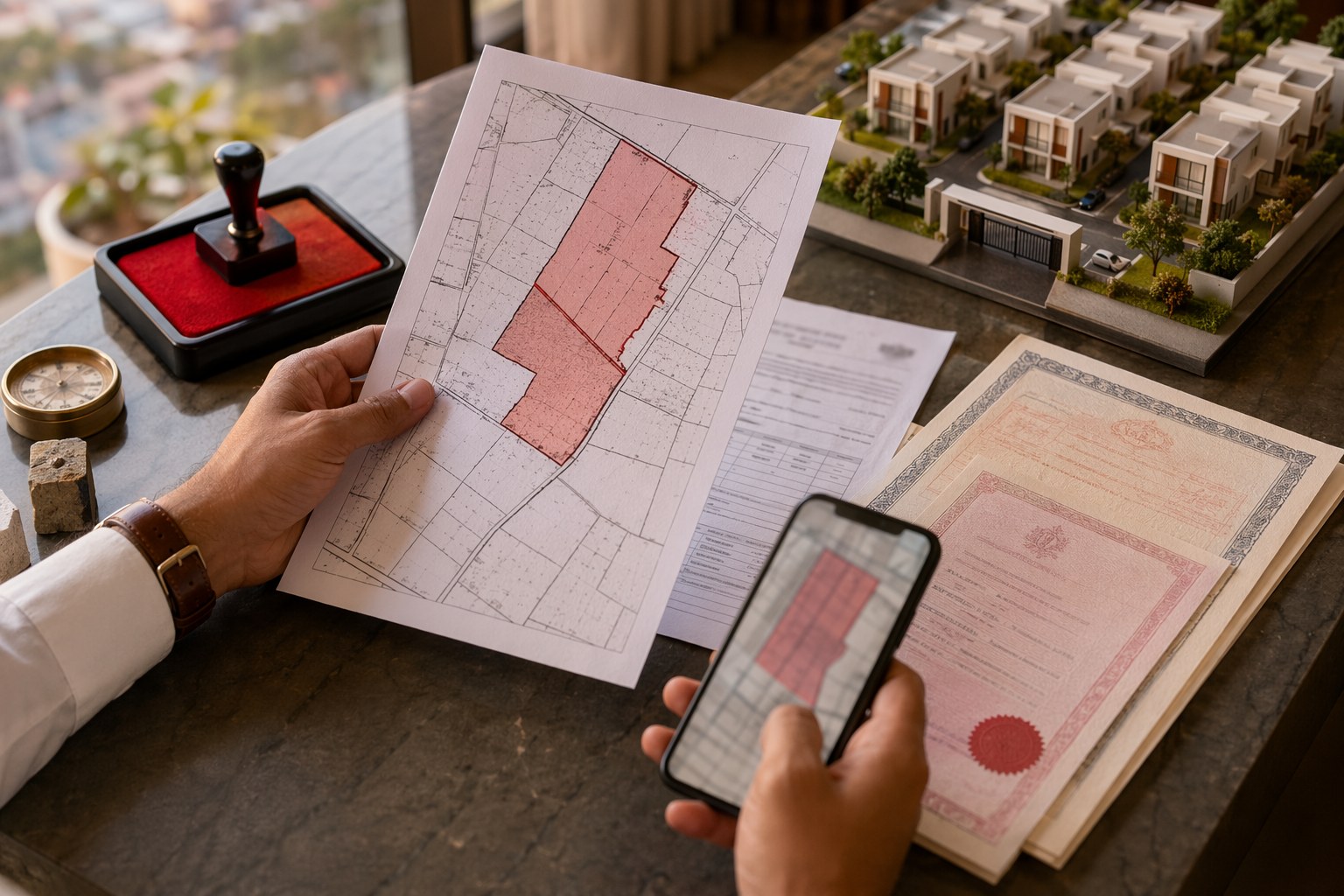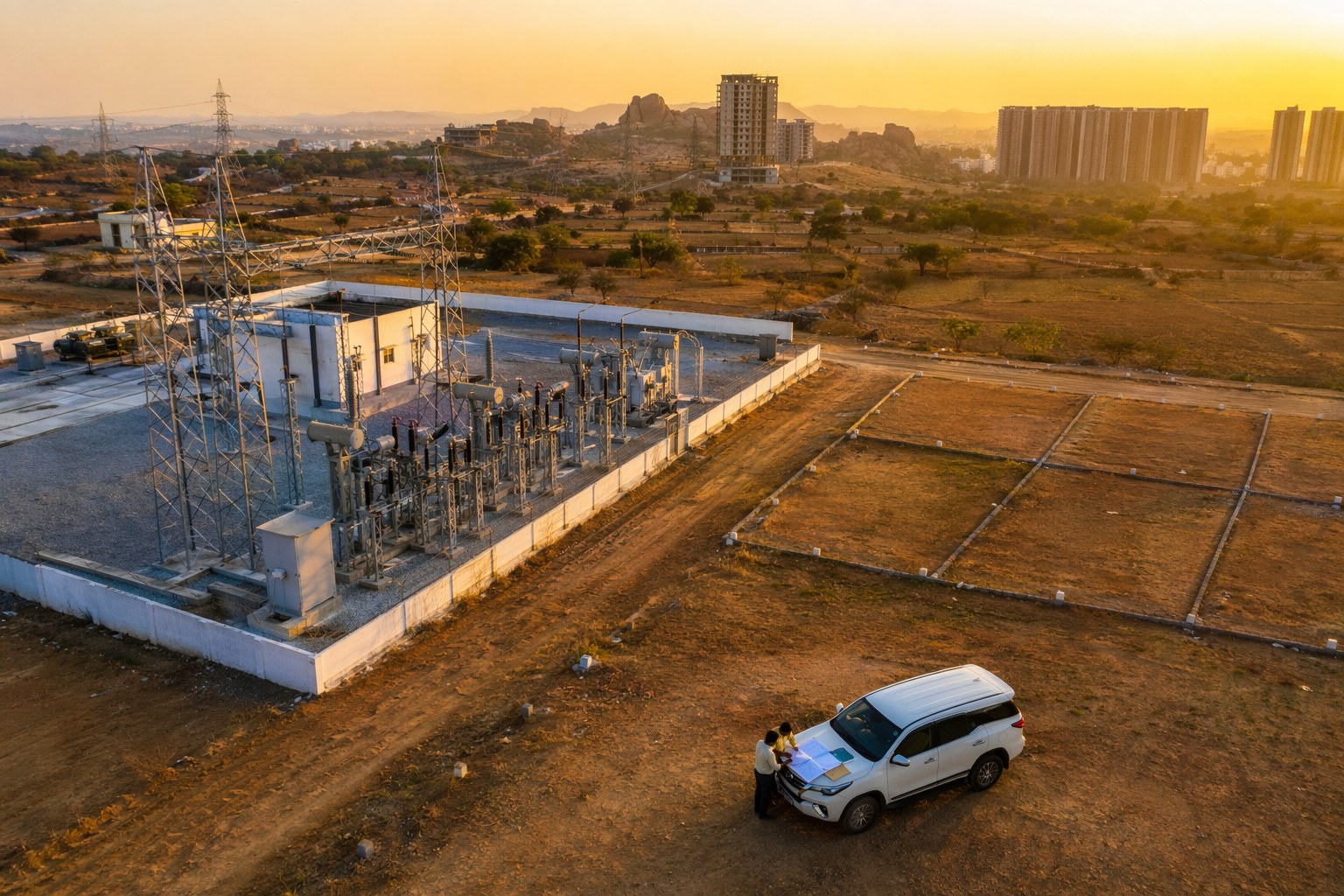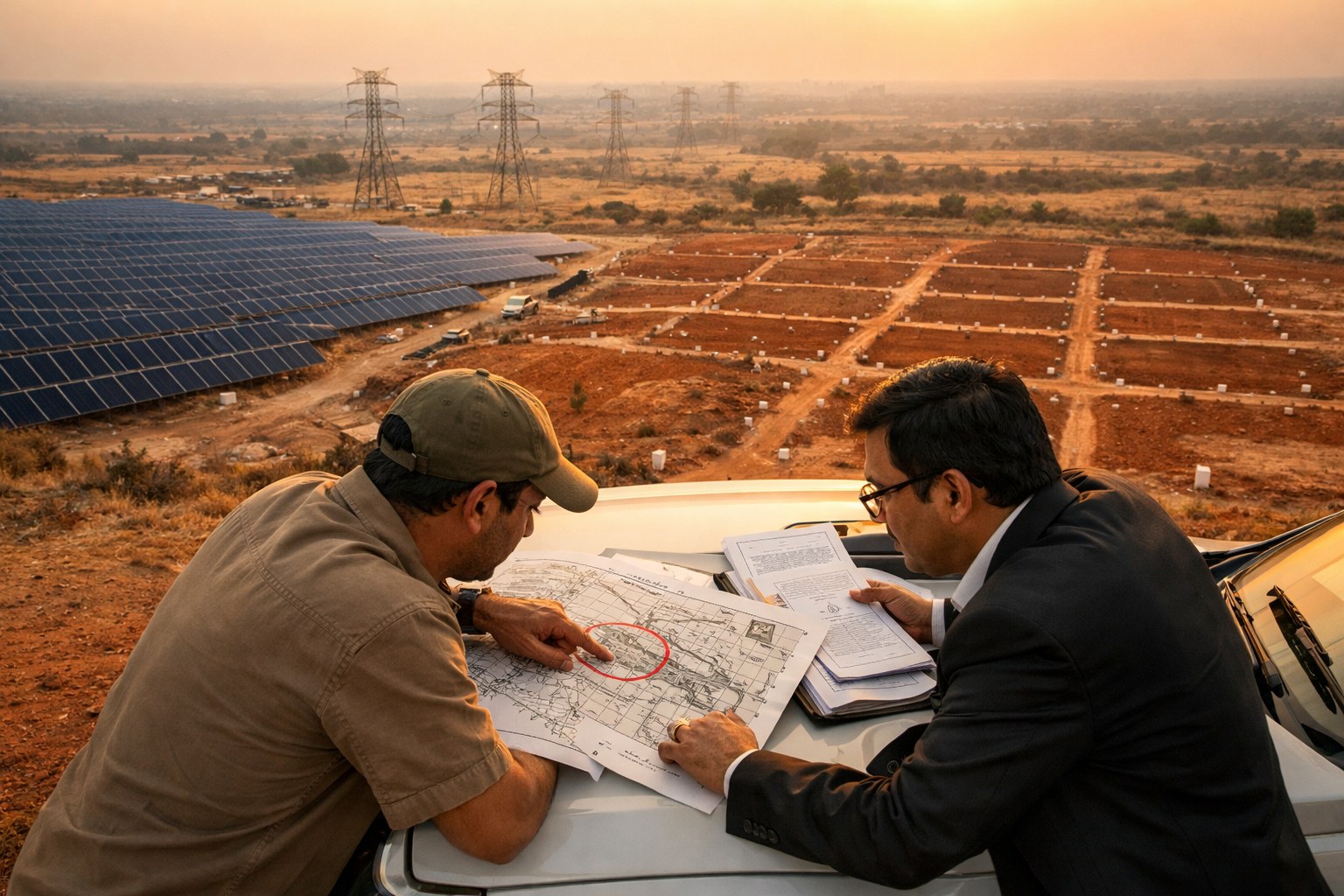
Telangana Solar Park Land Deal discussions are bringing one old land-office question back to the front desk: is the land clean under Section 22-A? For large renewable-energy transactions in Telangana, the money is no longer the only headline. The real test is whether every survey number is free from prohibited property flags, encumbrances, pattadar disputes, assignment land issues and SRO-level registration blocks before the cheque moves.
Telangana has 1,47,934 prohibited properties under Section 22-A in the official property ecosystem. That number is not small. For a solar park spread across hundreds or thousands of acres, even one wrongly included survey number can delay registration, scare lenders and disturb project timelines. We have seen this in land aggregation work around Rangareddy, Sangareddy, Medak, Vikarabad, Mahabubnagar and Nalgonda belts, where clean-looking agricultural parcels can still carry old revenue restrictions.
For big solar and renewable-energy land deals, the first due diligence file should not be the price sheet. It should be the 22-A check, survey map, pahani history, EC trail and SRO verification.
Telangana Solar Park Land Deal: Why 22-A Verification Is Now Deal-Critical
Section 22-A of the Registration Act is the state’s gatekeeping mechanism for properties that cannot be registered or need special scrutiny. These may include government lands, assigned lands, endowment lands, wakf lands, ceiling surplus lands, certain litigation-hit parcels and other notified categories. In simple terms, if a survey number falls under 22-A, the SRO may refuse registration.
That is why a Telangana solar park land deal needs a different style of land verification compared to a normal villa plot purchase in Shankarpally or a flat purchase in Kokapet. Renewable-energy projects need contiguous land. Aggregators may bring parcels from multiple pattadars across different villages. One 10-acre block in a 600-acre acquisition can become a problem if its pahani shows assignment history or if the Dharani record does not match possession on ground.
Before any token advance, buyers should run a Section 22-A Prohibited Property Check and match the result with village-level revenue records. We also advise using the Survey Number Finder to avoid confusion between old survey numbers, sub-divisions and current Dharani entries.
Telangana Solar Park Land Deal Due Diligence: The New Checklist
In our experience, land deals above even 25 or 50 acres should be treated like institutional transactions. A solar park land bank is not just a sale deed exercise. It is a title, revenue, planning, access and payment-risk exercise.
| Check | Why it matters in solar park land | Where buyers usually slip |
|---|---|---|
| 22-A status | Confirms whether registration can legally proceed | Only checking one main survey number, not all sub-divisions |
| Encumbrance Certificate | Shows registered mortgages, sales, gifts and court-linked entries | Pulling EC for only 13 years instead of checking older title chain |
| Pahani and Dharani | Shows pattadar, extent, nature of land and cultivation history | Ignoring mismatch between revenue record and physical possession |
| SRO market value | Sets stamp duty base and registration cost planning | Assuming deal price and ready reckoner value are the same |
| Access road | Solar projects need equipment movement and grid connectivity access | Depending on informal cart tracks without recorded right of way |
For EC, buyers can begin with the Encumbrance Certificate Search. For registration value planning, the Market Value / Guideline Value Search helps compare the SRO ready reckoner value against the negotiated price. Stamp duty and registration charges can be estimated using the Stamp Duty Calculator.
Telangana Solar Park Land Deal Pricing: Local Rates Still Need Legal Filtering
Solar land pricing is very different from residential land pricing. In Hyderabad’s western corridor, buyers talk about Kokapet, Neopolis, Narsingi and Financial District at premium urban rates, but solar park land usually moves further out where large extents are available. Think Chevella and Moinabad mandals in Rangareddy, Zaheerabad and Kohir side in Sangareddy, Kulkacherla and Pargi side in Vikarabad, Jadcherla and Balanagar belt in Mahabubnagar, or parts of Yadadri-Bhuvanagiri and Nalgonda where grid access is practical.
Market behaviour is sharply different by mandal. Near Shankarpally and Mokila, open land quotes often jump because of villa layout demand and Hyderabad expansion sentiment. In parts of Chevella, the same acre may be judged by road width, ORR connectivity, HMDA influence and farm-house demand. Move towards interior Vikarabad or Mahabubnagar belts, and the rate conversation may shift from residential plotting potential to agricultural productivity, approach road and solar irradiation viability.
That is why we tell renewable-energy buyers not to fall for a single per-acre quote. A land parcel at a lower rate can become costlier if it carries a 22-A issue, no proper road, pending family partition, unregistered agreement of sale or bank charge. A higher-priced parcel with clean title, clear pahani, proper access and friendly SRO documentation may close faster and save finance cost.
Why Escrow-Style Safeguards Are Becoming Standard
Large land deals in Telangana traditionally moved through advance payments, agreements of sale and staged registrations. That model is risky when the buyer is aggregating land from 40, 80 or 150 pattadars. If one seller fails to clear a revenue defect, the whole block can lose value for a solar developer.
An escrow-style structure is now sensible. The buyer deposits funds with release conditions. The seller receives payment only after agreed checks are passed: 22-A clear status, EC verification, family consent, mutation consistency, physical possession handover and SRO readiness. This protects both sides. Sellers get comfort that the money is arranged. Buyers avoid paying full consideration for land that cannot be registered.
For NRIs, companies and clean-energy funds, this is even more relevant. Their boards and lenders will ask for documentary proof, not village assurances. A proper file should include Dharani extracts, latest pahanis, old link documents, EC, tax receipts if applicable, SRO market value printout, land use note and legal opinion. For tracking future changes, especially when registration is spread over weeks, buyers can use the Property Change Tracker.
SRO, Dharani And Mandal-Level Checks Cannot Be Outsourced Blindly
Every Telangana land buyer has heard one line: “Sir, record is clear.” That is not enough. The SRO record and Dharani record must talk to each other. The mandal revenue office history should also support the seller’s title. In older villages around Ibrahimpatnam, Kandukur, Keshampet, Shabad, Toopran, Bhongir and Choutuppal, land has often moved through inheritance, oral partitions, old sada bainama claims and unregistered possession arrangements. Some of these may not defeat title, but they must be understood before money is released.
The Find Your SRO Office tool helps identify the correct registration office. This matters because wrong SRO assumptions can delay documentation, especially near jurisdiction boundaries. A village that looks close to one urban centre may fall under a different SRO with different practical processing patterns.
Land use is another practical issue. Solar projects need compatibility with local planning rules, conversion requirements and permissions. Buyers should check zoning through the Land Use Zone Finder. If any portion is later proposed for industrial, battery storage, substation or worker facility use, planning checks become even more relevant.
What Hyderabad Investors Can Learn From This Telangana Solar Park Land Deal
The lesson is not only for renewable-energy companies. Even buyers of farm land near Chevella, plots near Yacharam, acres near Shadnagar or redevelopment land in Uppal should take the same attitude. First verify, then negotiate, then pay.
Hyderabad’s land market has become smarter after the rise of HMDA layouts, RERA-registered projects and institutional money in Kokapet, Tellapur, Kollur, Tukkuguda and Adibatla. But rural and peri-urban land still carries old risks. A clean-looking Dharani entry is a good start, not the full story. A 22-A flag, court entry, family dispute or access problem can reduce liquidity overnight.
We have seen buyers save themselves by spending two days on verification before paying an advance. We have also seen buyers spend years trying to recover money after trusting only a broker’s word. Telangana’s 1,47,934 prohibited properties are a reminder that land due diligence is not paperwork for lawyers alone. It is the core of the deal.
For a solar park, title risk can disturb project finance, power purchase timelines and EPC planning. For an individual buyer, the same risk can block registration or resale. The scale changes, but the principle remains the same: check the survey number, check the SRO, check the revenue history, and keep payment conditional till the land is genuinely transferable.
Frequently Asked Questions
What is Section 22-A in Telangana property registration?
Section 22-A lists properties that are prohibited or restricted from registration, such as certain government, assigned, endowment, wakf, ceiling and notified lands. If a survey number is flagged, the SRO may refuse registration.
Why is 22-A verification crucial in a Telangana solar park land deal?
Solar parks need large contiguous land parcels. Even one problematic survey number can delay registration, project finance and site development. That is why every survey number and sub-division should be checked before payment.
Which documents should be checked before buying large land in Telangana?
Buyers should check 22-A status, EC, pahani, Dharani pattadar details, old link documents, family consent, SRO market value, access road records and land use permissions.
Can escrow-style payment help in Telangana land transactions?
Yes. Escrow-style safeguards allow payment release only after title, 22-A, EC, possession and registration conditions are satisfied. This reduces risk for both buyer and seller.
Is Dharani record enough to confirm clean title?
No. Dharani is a key record, but buyers should also verify EC, link documents, mandal revenue history, SRO position, physical possession and any litigation or family claims.