Telangana Land Sellers May Face Deal Holdbacks Over 22-A Proof as cautious buyers, family offices, developers and land aggregators are asking sellers to first prove that the survey number is not affected by Section 22-A restrictions before releasing the full sale consideration. In big-ticket land transactions across Hyderabad’s growth corridors, this is becoming a hard negotiation point, not a small legal formality.
The reason is simple. If a land parcel is listed as prohibited, disputed under government records, or blocked for registration at the SRO level, the sale deed can hit a wall even after token, advance and agreement terms are settled. As per the latest Verified.RealEstate database mapped from government registration records, Telangana has 3,076,153 prohibited property records under Section 22-A. That one number is enough to make serious buyers slow down.
In our experience, the buyer is no longer satisfied with only a pahani, EC and seller affidavit. For large land deals, the buyer wants clean 22-A proof before the last tranche moves.
Telangana Land Sellers May Face Deal Holdbacks Over 22-A Proof: what is changing in negotiations?
Earlier, many land deals in the outskirts of Hyderabad moved on trust, local verification and a few revenue documents. A buyer would check the pahani, link documents, EC, pattadar passbook, layout status and then proceed. That style is still seen in smaller transactions. But for larger parcels in and around areas like Shankarpally, Mokila, Kollur, Adibatla, Maheshwaram, Shamshabad, Kandukur, Patancheru and Yacharam, the paper trail is being tested much harder.
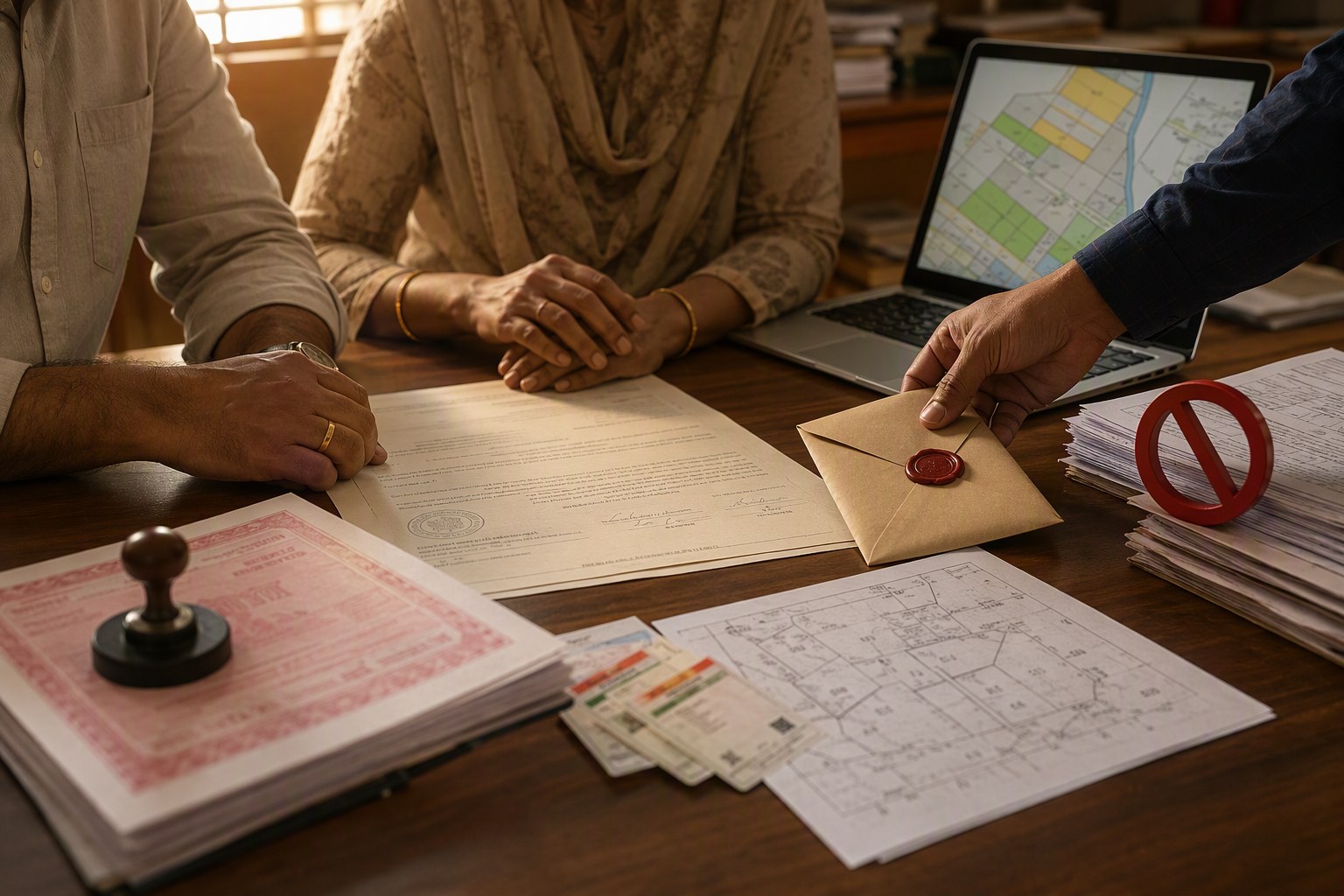
The new clause we are seeing is straightforward: part of the sale consideration may be held back until the seller produces satisfactory proof that the property is not in the prohibited list under Section 22-A. This proof may include SRO-level confirmation, registration department search output, Dharani status, current revenue record, mutation trail and legal opinion from the buyer’s counsel.
This does not mean every seller is at fault. Many genuine pattadars are facing extra questions because old entries, land classification issues, assigned land history, ceiling concerns, endowment references, waqf references or government land notings can appear in different records. Sometimes the seller’s family has enjoyed possession for decades, but the buyer’s lawyer still insists on checking whether the survey number is blocked for registration.
Telangana Land Sellers May Face Deal Holdbacks Over 22-A Proof in high-value corridors
The impact is sharper in mandals where land demand is high and parcels are being assembled for villas, plotted developments, warehousing, pharma-linked activity, education campuses and long-hold investment. In Ranga Reddy, Medchal-Malkajgiri, Sangareddy and Yadadri-Bhuvanagiri belts, buyers are not only looking at location. They are checking whether the land can actually be registered without interruption.
Take a typical negotiation in Shankarpally mandal or Maheshwaram mandal. The seller may quote based on local market sentiment, road access and nearby development. The buyer may agree commercially, but then ask for a condition precedent: clean 22-A verification before registration. If the seller pushes for full payment at agreement stage, the buyer may counter with a holdback clause. That held-back amount is released only after the SRO accepts the document or the buyer receives clear proof from the concerned records.
This is also visible near Hyderabad’s western belt, including Kollur, Tellapur-side influence areas, Mokila and Patancheru surroundings. Buyers know that a good location alone does not remove title risk. A blocked survey number can disturb funding, resale, layout approval and project planning.
Why Section 22-A proof now carries deal value
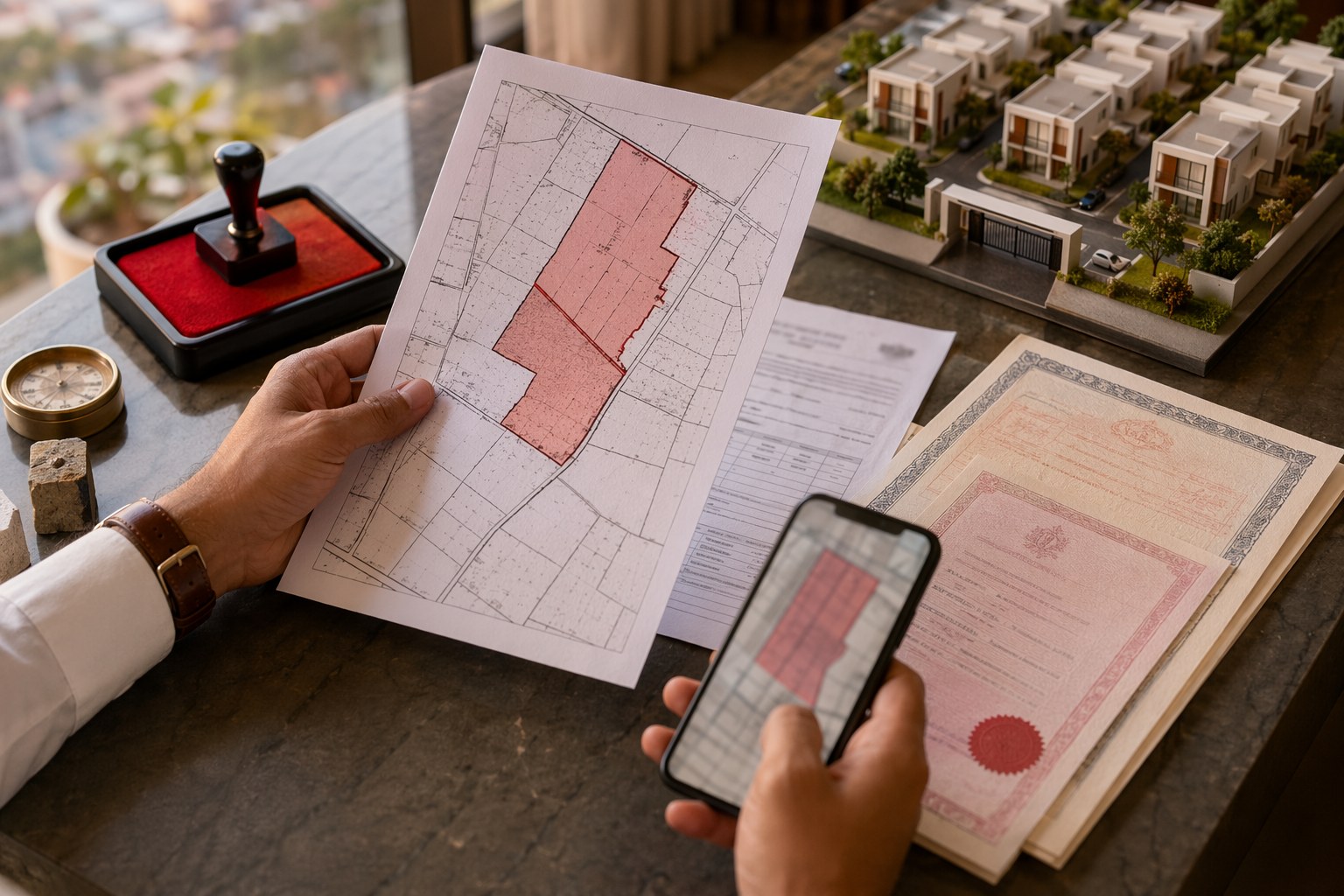
Section 22-A restrictions matter because they can stop registration of certain properties. The usual risk areas include government land, assigned land, endowment-related properties, waqf-linked properties, ceiling surplus land, lands under court or department objections, and other categories notified or treated as prohibited under government records.
For buyers, the fear is not only losing money. It is the delay. A transaction can get stuck after due diligence cost, token payment, legal drafting, family discussions, bank checks and board approval. For developers, even a few unclear survey numbers inside a larger assembled land parcel can delay the whole project.
That is why smart buyers are using tools and public records before signing. On Verified.RealEstate, a buyer can start with the Section 22-A Prohibited Property Check, cross-check basic land details through the Property Verification Tool, and track title movement through the Encumbrance Certificate Search. If the deal is moving towards registration, the Find Your SRO Office tool helps identify the correct SRO jurisdiction.
How holdback clauses are being written
A holdback clause is not one standard format. It changes based on the land, seller profile, buyer comfort and legal advice. But the structure is usually similar.
- Advance payment: Paid after signing an agreement of sale, subject to document review.
- Due diligence period: Buyer checks EC, pahani, Dharani, mutation, link documents, survey number history and Section 22-A status.
- Conditional payment: A major portion may be paid at registration if the document is accepted by the SRO.
- Holdback amount: A final tranche may be retained until post-registration checks, mutation or specific government confirmation is complete.
- Seller undertaking: Seller confirms that there is no suppression of prohibited property status, litigation or government claim.
From the seller’s side, this can feel harsh. Many sellers say, “My land is patta land, why should payment be stopped?” That concern is fair. But buyers are also reacting to ground reality. When prohibited property data contains 3,076,153 records, no serious buyer wants to rely only on verbal assurance from a broker or village-level confidence.
What sellers should prepare before entering the market
If you are selling agricultural land, converted land or plotted land in Telangana, prepare your file before negotiating price. A clean file gives the seller more bargaining strength. It can also reduce unnecessary holdback pressure.
| Document / Check | Why buyer asks for it |
|---|---|
| Latest EC | To check registered transactions, mortgages, releases and claims |
| Pahani / Dharani record | To verify pattadar name, survey number and land classification |
| Link documents | To trace title flow from earlier owners |
| Section 22-A check | To see if registration can be blocked |
| SRO jurisdiction check | To confirm where the sale deed must be registered |
| Guideline value check | To estimate stamp duty and registration cost basis |
For valuation and registration cost planning, sellers and buyers should use the Market Value / Guideline Value Search and Stamp Duty Calculator. If the land is part of a proposed development, the Land Use Zone Finder and Road Width Check can also reduce later surprises.
Locality examples: where this issue is being watched closely
In Hyderabad’s western and southern growth belts, land buyers are alert because transaction sizes are larger and development timelines are sensitive. Around Mokila, Shankarpally and Kollur, villa and plotted development interest keeps seller expectations strong. Around Shamshabad, Maheshwaram, Kandukur and Adibatla, buyers look at airport-side access, ORR connectivity and future industrial or institutional demand. In Patancheru and nearby Sangareddy side villages, investors often study both access and title history.
But the same rule applies everywhere: a good road, good frontage and good local demand do not cure a weak title. If a survey number has a 22-A concern, the buyer will either renegotiate, ask for a holdback, demand seller-side clearance, or walk away.
My view: sellers should not treat 22-A proof as an insult
We’ve seen many deals turn tense because the seller treats every buyer query as mistrust. That approach does not help. In Telangana land transactions, 22-A proof is now part of price discovery. If the seller can show a clean record, the buyer’s comfort increases. That can support faster closure and better payment terms.
On the other hand, if the seller avoids giving survey number details, refuses SRO verification, or says “registration office will manage,” buyers become cautious. In higher-value deals, that line does not work anymore. Buyers have their own lawyers, lenders, auditors and family stakeholders.
The practical answer is not panic. It is preparation. Check the survey number early, get the EC, verify Dharani entries, match the pahani with physical possession, identify the correct SRO, and keep link documents ready. If there is an old 22-A issue, disclose it and resolve it before demanding full consideration.
What buyers should not miss before releasing final payment
Buyers should avoid paying the entire amount only on the basis of an agreement of sale, especially when the land parcel is large or assembled from multiple survey numbers. At minimum, check the prohibited property status, EC, seller identity, family consent, possession, approach road, land use and SRO acceptance risk.
For agricultural land, survey number accuracy is critical. Use the Survey Number Finder if there is confusion in village or mandal mapping. For document review after getting the EC, the EC Analyzer can help identify transaction patterns that need closer legal review.
Deal holdbacks are not meant to punish genuine sellers. They are a risk-sharing tool. In Telangana’s current land market, especially around Hyderabad, the seller who proves clean title early will have an advantage over the seller who asks buyers to proceed blindly.
Frequently Asked Questions
What is Section 22-A in Telangana land registration?
Section 22-A refers to properties that may be prohibited from registration under government records. These can include government land, assigned land, endowment-related land, waqf-linked land and other restricted categories, depending on official entries.
Why are buyers holding back part of the sale consideration?
Buyers are retaining a final tranche until the seller proves that the survey number is not affected by 22-A restrictions and the SRO will accept the sale deed. It reduces the risk of paying fully for a property that cannot be registered.
How can a Telangana land seller reduce holdback pressure?
The seller should keep the latest EC, pahani, Dharani record, link documents, mutation details and 22-A verification ready before price negotiation. A clean document file gives the seller stronger negotiating power.
Is a clean EC enough to prove there is no 22-A issue?
No. An EC shows registered transactions and encumbrances, but 22-A status must be checked separately through prohibited property records, SRO verification and relevant revenue records.