Telangana Eyes Rainwater Audits for New Housing Layouts is not just another civic checklist story. If the State tightens rainwater harvesting audits for fresh residential layouts, buyers in Hyderabad’s growth corridors may soon have to check water planning with the same seriousness as title, RERA registration, road access and SRO value.
The immediate signal is clear: rainwater harvesting may move from a drawing-sheet promise to a live due-diligence point. For plotted layouts and gated villa communities coming up around Gandipet mandal, Shankarpally, Maheshwaram, Medchal, Ghatkesar, Patancheru and Tukkuguda, this can change how buyers evaluate a project before paying token advance.
In our experience, buyers ask about HMDA approval, RERA number, road width and UDS. Very few ask whether the recharge pits are actually built, connected and maintainable. That gap is exactly where rainwater audits can bite.
Telangana Eyes Rainwater Audits for New Housing Layouts: What may change for buyers
At present, rainwater harvesting is often treated as a routine compliance condition in layout permissions and building approvals. On paper, most new layouts show recharge pits, stormwater drains, open space and gradient planning. On ground, the quality varies sharply.
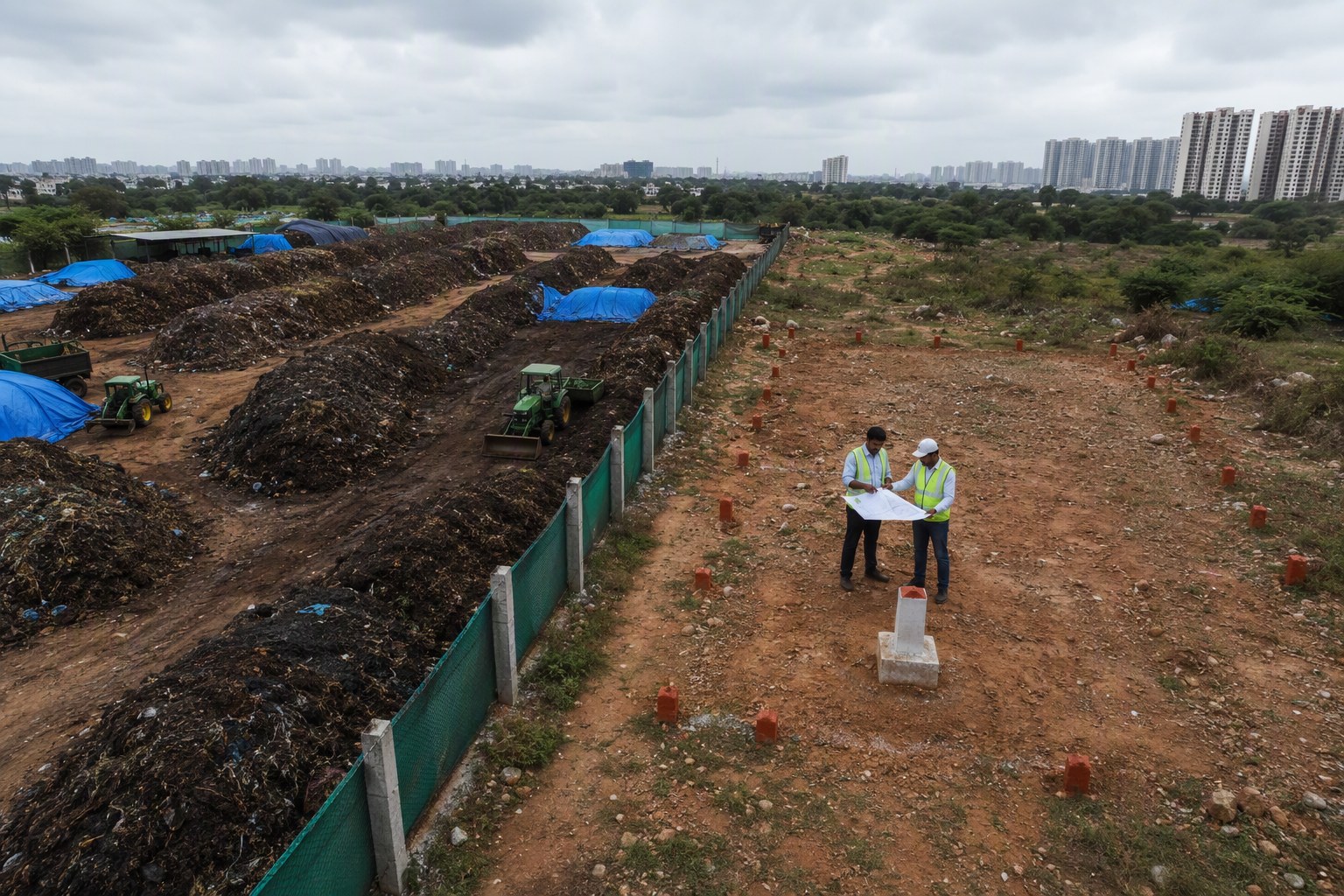
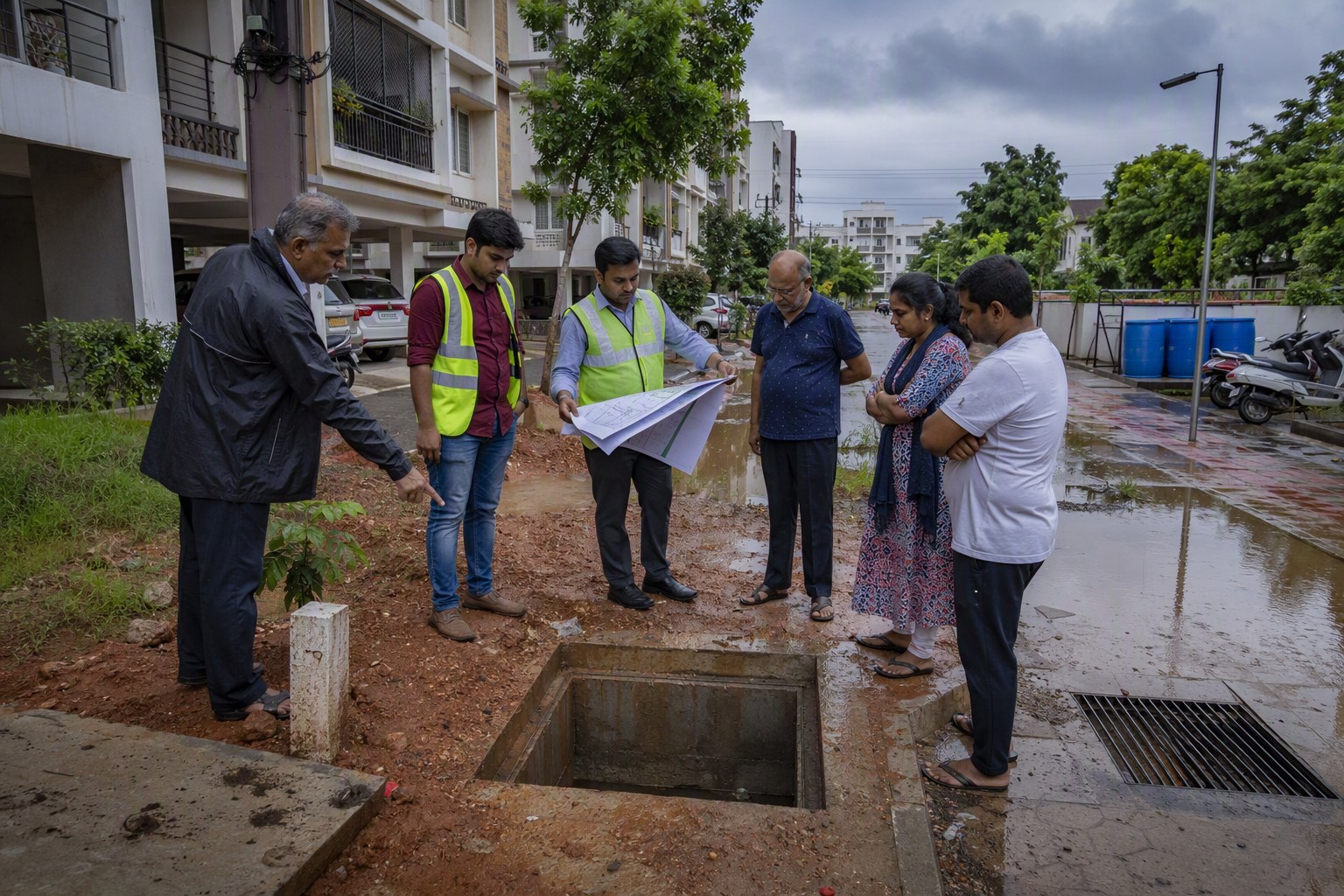
A serious audit system would mean authorities may look beyond the sanctioned plan. They could verify whether recharge pits exist at the promised locations, whether they are connected to stormwater lines, whether silt traps are functional, and whether natural nalas or low-lying drainage channels have been blocked during land development.
For a homebuyer, this is not an environmental luxury. It affects borewell life, road flooding, basement seepage, compound wall damage and long-term maintenance charges. We have seen layouts near fast-developing stretches like Mokila, Kollur, Tellapur, Adibatla and Pocharam where monsoon behaviour tells more truth than the brochure.
Why Telangana Eyes Rainwater Audits for New Housing Layouts now
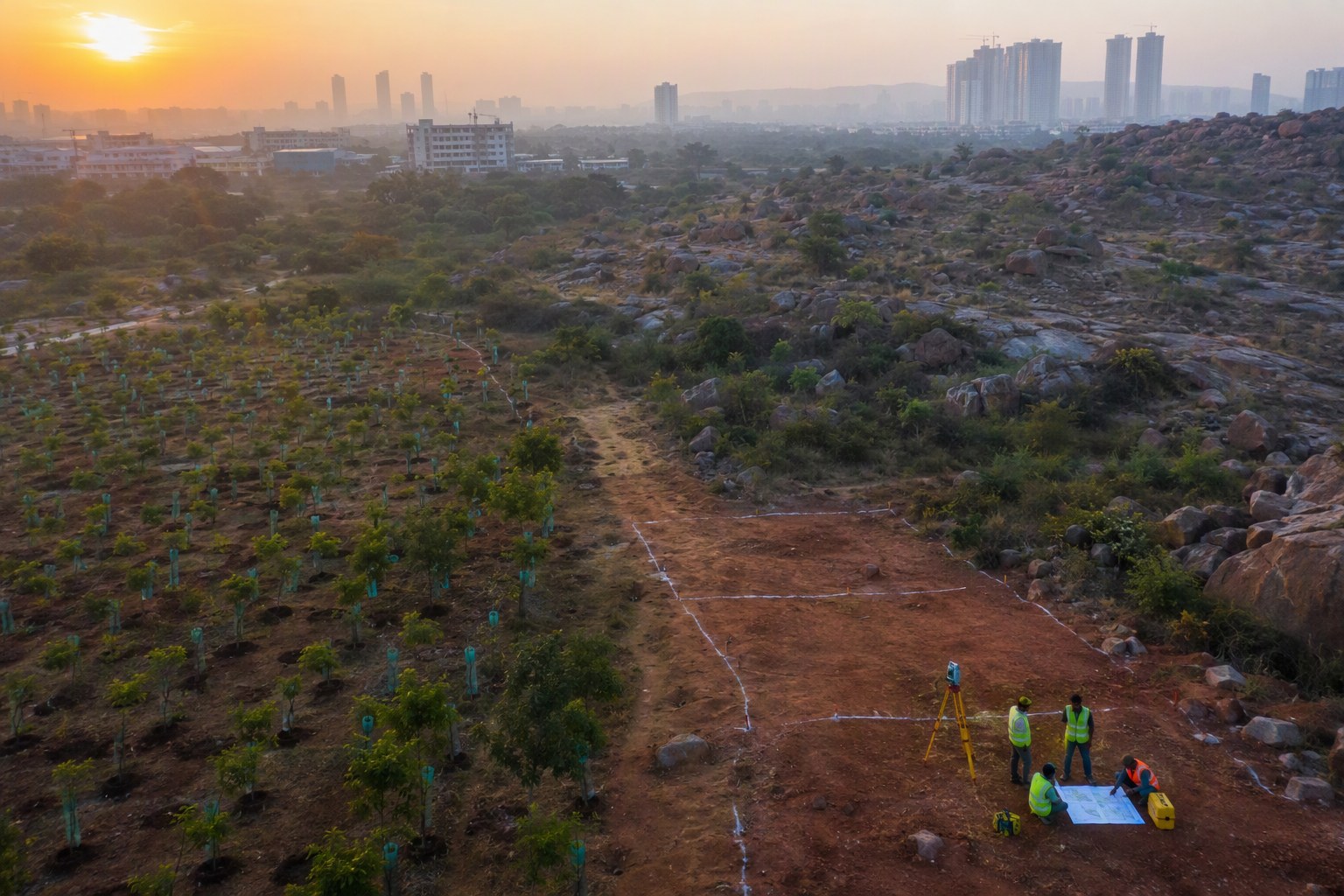
Hyderabad’s outer growth is no longer limited to apartment towers in established areas like Kondapur, Nallagandla or Miyapur. The real action in the last few years has moved into plotted ventures and villa layouts in mandals around the ORR and beyond. These projects convert agricultural land parcels into residential layouts, often across multiple survey numbers.
Once internal roads, compound walls and plot demarcations are done, natural water movement changes. If developers do not plan recharge and stormwater disposal properly, neighbouring lands also suffer. In low-lying pockets of Maheshwaram, Abdullapurmet, Ghatkesar and Keesara, even a small obstruction can push water into another owner’s land.
This is why buyers should start reading rainwater compliance as part of property verification. Title may be clean, but bad water planning can make a plot practically difficult to use during heavy rains.
From compliance tick mark to buyer due-diligence checkpoint
The big change is mindset. Earlier, a buyer would ask: “Is the layout approved?” Now the better question is: “Is the approved drainage and rainwater harvesting system actually executed?”
Before booking in a new layout, buyers should check at least five items:
- Whether the layout approval drawing clearly marks rainwater harvesting pits and stormwater drains.
- Whether the pits are physically present at site, not just shown near parks or open spaces.
- Whether the internal road slope carries rainwater into drains instead of individual plots.
- Whether any nala, tank bed, buffer or low-lying channel is part of the land parcel.
- Whether the project has RERA registration, where applicable, with matching layout and amenity details.
For RERA-registered projects, buyers can cross-check declared project details using the RERA Project Lookup. For land identity, especially in plotted layouts spread across multiple survey numbers, the Survey Number Finder is useful before you compare the brochure with actual village records.
What this means in Hyderabad’s active layout markets
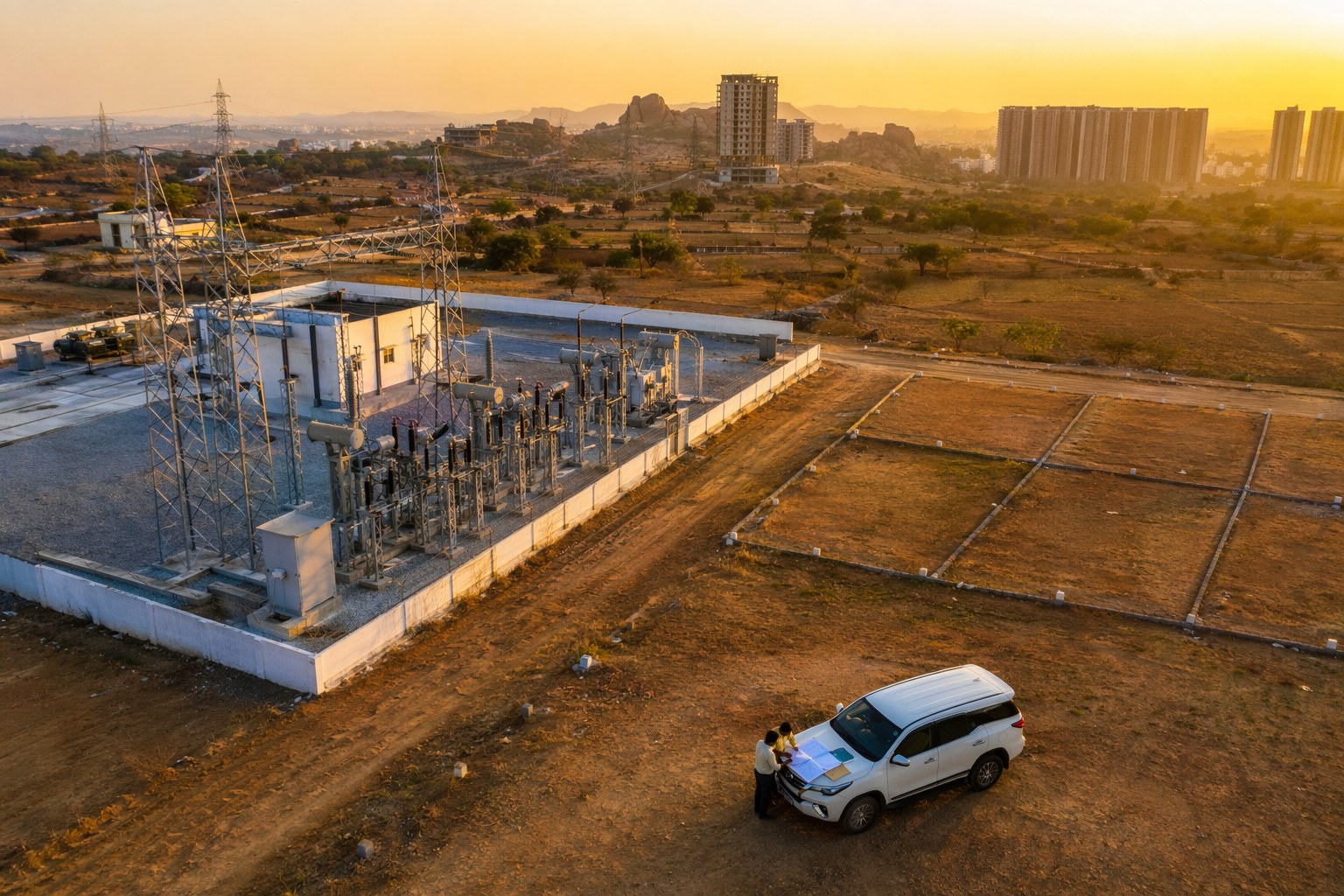
Rainwater audits will matter most in fast-selling peripheral markets where land conversion and layout formation are happening at speed. Think of Shankarpally and Mokila on the western side, Tukkuguda and Maheshwaram on the southern side, Ghatkesar and Yadagirigutta-side corridors on the eastern side, and Medchal-Kompally stretch in the north.
Each micro-market has a different water problem. In Gandipet and Shankarpally mandals, buyers worry about premium pricing and long-term groundwater reliability. In Maheshwaram and Tukkuguda, the issue is often flat terrain and stormwater disposal. In Ghatkesar and Pocharam, old village drainage paths can get disturbed by new compound walls. In Patancheru and Isnapur, industrial surroundings and road levels add another layer of caution.
| Buyer check | Why it matters | Useful Verified.RealEstate tool |
|---|---|---|
| RERA status | Confirms declared project details and promoter information | RERA Project Lookup |
| Survey number match | Helps verify whether the marketed land matches actual records | Survey Number Finder |
| Guideline value | Shows government market value used for registration calculations | Market Value / Guideline Value Search |
| Encumbrance check | Tracks registered transactions and mortgages at SRO level | Encumbrance Certificate Search |
| 22-A risk | Checks whether a property falls under prohibited categories | Section 22-A Prohibited Property Check |
The Section 22-A lesson: buyers are already learning to verify beyond brochures
Telangana’s property market has already taught buyers one hard lesson: government records matter. As per the database available with us, 147,934 properties are listed under prohibited properties under Section 22-A. That number alone should make any buyer cautious about relying only on marketing material.
The same thinking should apply to rainwater systems. If a buyer can check 22-A status, EC, guideline value and SRO jurisdiction before registration, there is no reason to ignore physical infrastructure that affects daily use of the property.
Before paying a major amount, use the Section 22-A Prohibited Property Check, verify the registration trail through the Encumbrance Certificate Search, and confirm the current ready reckoner value through the Market Value / Guideline Value Search. These checks do not replace legal opinion, but they reduce blind spots.
How rainwater audits can affect pricing and negotiations
Good water planning can become a price differentiator. A layout with executed drains, recharge pits, open space, proper road levels and clean approval history deserves a better buyer response than a layout where everything is left to the future owners’ association.
On the other hand, if a developer is selling plots at a premium in a mandal like Gandipet, Serilingampally fringe, Shankarpally or Maheshwaram, buyers should insist on seeing executed infrastructure. Not only entrance arch, blacktop road and streetlights. Ask for drainage gradient, recharge pit locations, OSR details and maintenance plan.
For open space planning, the OSR Calculator can help buyers understand whether the open space commitment looks reasonable. For internal access and approach roads, the Road Width Check is another practical filter, especially for layouts where the approach road passes through village roads or private land strips.
What developers should prepare for
If Telangana brings stricter rainwater audits, serious developers will not suffer. In fact, they may benefit. Buyers are willing to pay for credible infrastructure when proof is available. Developers should keep site photographs, completion certificates where applicable, pit drawings, drain execution details and maintenance responsibility records ready.
The weak projects will face sharper questions. If recharge pits are blocked with debris, if stormwater drains end abruptly, or if the layout level is raised without thinking about neighbouring land, buyers may hesitate. Banks and large channel partners may also start asking for stronger site-level evidence.
Our view: this is overdue for Telangana housing layouts
Rainwater harvesting cannot remain a decorative approval condition. Hyderabad’s expansion is too large for that. When thousands of families buy plots on the promise of future living, water sustainability must be treated as part of basic project quality.
We believe rainwater audits should be visible to buyers in simple language. Not a thick technical file nobody reads. A layout should disclose number of recharge pits, capacity, location, drainage outfall, open space treatment and maintenance responsibility. If this becomes standard, buyers will ask better questions and developers will build better layouts.
For now, buyers should do a combined check: legal title, land use, SRO records, RERA status, road width, OSR and on-ground water infrastructure. Use tools like the Property Verification Tool, Find Your SRO Office and Land Use Zone Finder before taking a final call.
The short point is this: in Telangana’s new housing layouts, rainwater harvesting is becoming a buyer-risk issue, not just an environmental condition. Smart buyers will check it before registration, not after the first heavy rain.
Frequently Asked Questions
Will rainwater audits become mandatory for all new layouts in Telangana?
The State has been signalling tighter scrutiny of rainwater harvesting in new developments. Buyers should assume that approved layouts will face more practical checks on recharge pits, stormwater drains and site execution.
What should I check before buying a plot in a new Hyderabad layout?
Check RERA status where applicable, survey numbers, EC, Section 22-A status, guideline value, road width, OSR and the physical rainwater harvesting system at site.
Which Hyderabad areas need extra caution on rainwater planning?
Fast-growing layout markets such as Shankarpally, Mokila, Gandipet, Maheshwaram, Tukkuguda, Ghatkesar, Patancheru and Medchal need careful site inspection because land levels and natural drainage vary widely.
Can poor rainwater harvesting affect my plot value?
Yes. Poor drainage can cause waterlogging, borewell stress, road damage and higher maintenance costs. Buyers may discount such plots during resale.
Is legal verification enough for buying a plotted layout?
No. Legal checks are necessary, but buyers should also verify physical infrastructure, especially roads, drainage, recharge pits, open space and access before paying a large advance.