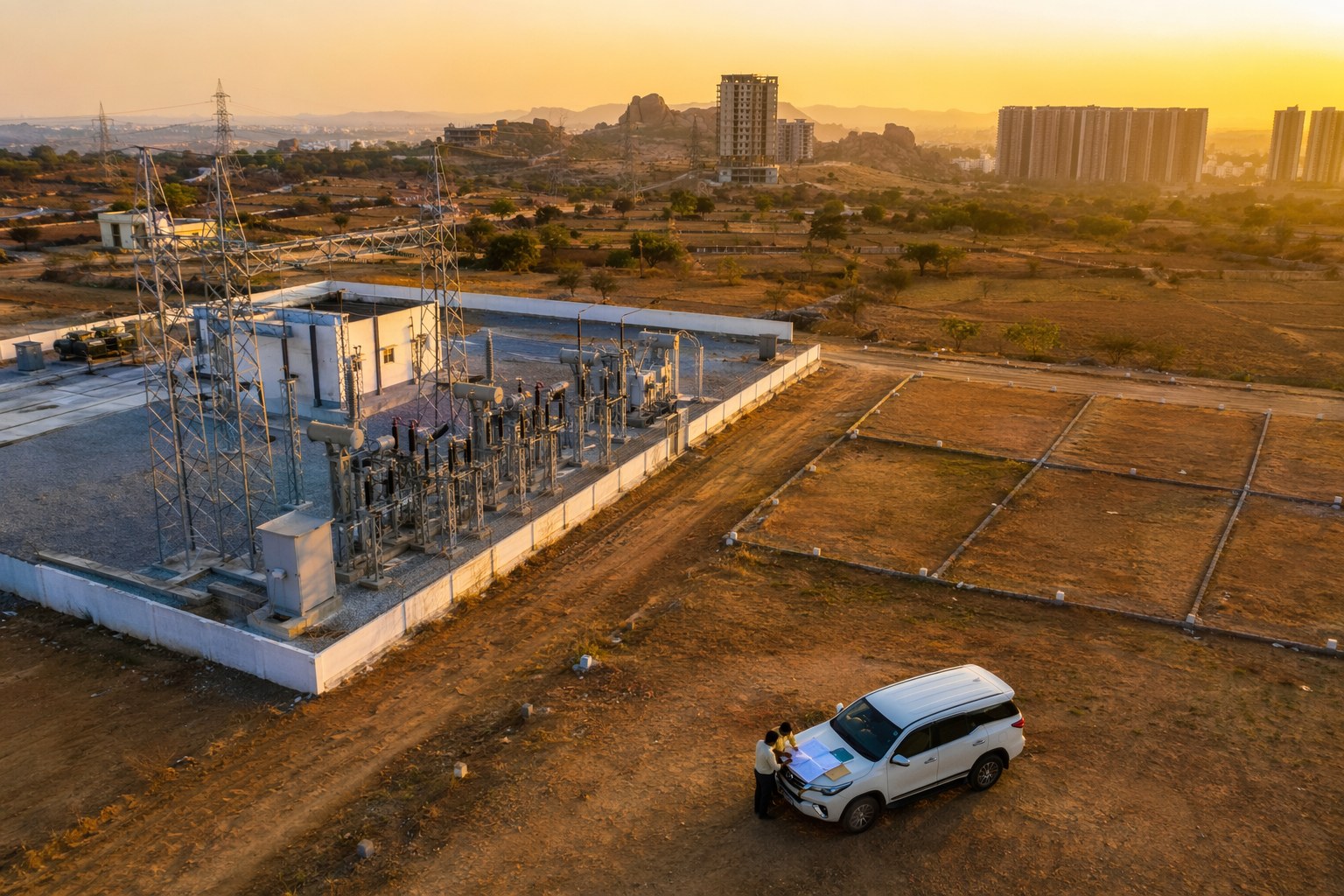



Telangana Project Escrows Face Slower Releases on 22-A Checks as banks, NBFCs and project financiers take a harder look at land records before releasing construction-linked money from escrow accounts. The trigger is not a sudden rule change. It is the sheer volume of prohibited property entries sitting in Telangana records. The Verified.RealEstate database shows 3,076,153 prohibited properties under Section 22-A. For developers, especially those building across Hyderabad’s expansion belts, this can mean slower drawdowns, tighter documentation and more questions before every stage-wise fund release.
In our experience, financiers are no longer satisfied with only a title deed, RERA registration and a sanctioned plan. They are increasingly asking whether the project land, access road, plotted layout parcel, mortgage parcel or even adjoining survey number has any 22-A shadow. This is where cashflow planning starts getting affected.
Telangana Project Escrows Face Slower Releases on 22-A Checks: what has changed on the ground?
The change is mostly in lending behaviour. Escrow-linked releases are usually tied to project progress, certificates and lender covenants. Under RERA, buyer collections are monitored through separate project accounts, and withdrawals depend on construction progress and professional certifications. But when a lender also sees a possible 22-A issue in the land chain, the release file can sit longer.
Section 22-A entries generally refer to properties where registration is prohibited or restricted under government records. These can include assigned lands, government lands, endowment lands, wakf-related entries, ceiling surplus lands or other notified categories. The practical problem is that many Hyderabad-side projects are built on land parcels that have gone through old village records, pahani entries, mutation changes, Dharani updates, SRO transactions and layout approvals. One mismatch is enough for a lender’s legal team to ask for a clarification.
This is not only a concern for small builders. It can affect larger projects in and around Kokapet, Narsingi, Kollur, Tellapur, Mokila, Bachupally, Miyapur, Uppal, Shamshabad, Maheshwaram, Patancheru and Medchal. Many of these locations sit across fast-growing mandals where old agricultural survey numbers have been converted into apartment, villa or plotted development parcels. When the parent survey number has a historical red flag, financiers usually want the developer to prove how the current parcel is clean.
Our reading is simple: the 22-A risk is moving from the registration desk to the finance desk. Earlier, buyers worried about it at sale deed stage. Now, banks are checking it before they let construction money move.
Telangana Project Escrows Face Slower Releases on 22-A Checks: why builders should care
For a builder, an escrow delay is not just paperwork irritation. Construction billing, contractor payments, steel and cement procurement, labour mobilisation and buyer demand notices are all linked to cashflow timing. If a lender pauses a release until the 22-A clarification comes, the site team may slow down even when the project has enough bookings.
Hyderabad developers are used to dealing with EC, link documents, market value certificates and SRO-level checks. But a 22-A review is a different animal. It may require village-level record examination, Dharani extract comparison, old pahani review, clarification from revenue authorities or proof that only a neighbouring survey number is prohibited, not the project land.
For buyers, the impact is indirect but real. A project may raise a stage-wise demand only after work reaches a milestone. If the builder’s release from escrow slows, construction scheduling may shift. In some cases, buyers may receive revised payment timelines, delayed slab completion notices or extra explanations from the CRM team. Serious buyers should not panic, but they should ask sharper questions.
Where the 22-A friction appears in Hyderabad project finance
The issue usually appears at three points. First, at loan sanction, when the lender’s lawyer checks title. Second, at creation of mortgage or charge, where the land or receivables are offered as security. Third, during periodic escrow release, when the lender checks whether earlier conditions have been met.
For example, a residential tower in Serilingampally mandal may have clean sale deeds, but if one link document refers to a larger agricultural survey number that partly appears in a prohibited list, the lender may ask for a survey sketch, mutation record and revenue clarification. In Rajendranagar or Gandipet mandal, access-road issues can also become sensitive because a project may be clean internally but dependent on a road strip with older classification doubts.
In plotted layouts around Shadnagar, Maheshwaram and Kandukur side, the problem can be even more document-heavy. Parent land may have multiple sellers, old pahanis, conversion proceedings and layout approvals. If any survey number in the chain has a prohibited-property entry, the financier may not release funds until the developer separates the risk clearly.
What lenders are asking before escrow-linked releases
Based on the files we see in the market, lenders and project finance teams are asking for cleaner, traceable records. The common checklist includes:
- Latest Encumbrance Certificate from the correct SRO jurisdiction.
- 22-A prohibited property verification for all project survey numbers.
- Dharani extracts and pattadar passbook details where applicable.
- Old pahani or adangal records for agricultural-to-non-agricultural land history.
- Approved layout or building permission copy with matching survey numbers.
- RERA project registration details and declared land extent.
- Legal opinion covering parent documents, link documents and any government restriction.
- Clarification where prohibited entries relate only to neighbouring or non-project land.
Buyers and developers can do preliminary checks using Section 22-A Prohibited Property Check, Encumbrance Certificate Search, RERA Project Lookup and Survey Number Finder. For valuation and registration planning, the Market Value / Guideline Value Search and Find Your SRO Office pages are also useful.
Impact on builders, buyers and financiers
| Stakeholder | Likely impact | Practical response |
|---|---|---|
| Builders | Escrow release files may take longer where 22-A entries touch the land chain. | Keep survey-wise title notes, revenue records and legal clarifications ready before asking for drawdown. |
| Homebuyers | Construction-linked payment schedules may shift if fund release slows. | Check RERA status, EC, SRO jurisdiction and 22-A status before booking or paying major instalments. |
| Banks and NBFCs | More legal scrutiny before release of project finance or buyer-linked disbursements. | Insist on parcel-level verification, not only project-name verification. |
| Landowners in joint development | Old title defects may delay developer funding and approvals. | Resolve revenue-record mismatches before signing development agreements. |
Why 3,076,153 prohibited property entries matter
The number is the main story. With 3,076,153 prohibited properties under Section 22-A in the Verified.RealEstate database, the chance of a lender encountering a red-flag entry somewhere in a land verification workflow is not small. This does not mean every entry affects a live project. It also does not mean every project near a 22-A survey number is defective. But it does mean lenders will prefer slower, cleaner releases over quick disbursements with unresolved title doubts.
Hyderabad’s development pattern makes this issue more visible. Apartment projects in Nanakramguda and Kokapet, villa communities in Mokila and Kollur, plotted layouts beyond Shamshabad, and mid-market projects in Bachupally or Kompally often depend on large assembled land parcels. Land assembly brings link-document complexity. Once a lender sees several vendors, old survey subdivisions, conversion orders and changing SRO boundaries, the legal review naturally becomes cautious.
There is another angle. Many buyers compare only carpet area, amenities, possession date and payment plan. That is not enough now. A clean project should stand up to land-record checks. If a builder is transparent, they will usually share RERA number, project land extent, approval details, EC and broad title confirmation. If the sales team avoids basic survey-number questions, treat that as a warning sign.
What developers should do before asking for escrow releases
Developers should prepare a project finance title pack before the lender asks for it. This should be survey-number-wise, not brochure-wise. A good pack should map every project document to the same land identity: village, mandal, survey number, sub-division, extent, SRO and approval reference. If Dharani shows one name, the sale deed shows another description and the approval drawing uses a shortened survey reference, the lender’s lawyer will ask questions.
We’ve seen faster movement when builders include a short legal note explaining why a 22-A entry is not applicable to their project land. For example, the prohibited entry may relate to a different sub-division, an old government claim that was later clarified, or land outside the approved project boundary. The explanation must be backed by documents. A verbal assurance from a broker or liaison person is useless in a bank file.
Before collecting large buyer advances, developers should also align payment milestones with realistic escrow release timelines. Over-aggressive demand schedules can damage trust when lender approvals slow down.
What buyers should check before paying
Buyers in Hyderabad should ask for the project RERA number, survey number, SRO, EC, approval copy and whether the land has any 22-A entry. This is basic due diligence, not overthinking. Use Property Verification Tool for a broader check and EC Analyzer to understand transaction history better. If you are buying in a large gated community, ask whether the undivided share and project land match the approved plan.
For under-construction flats, also check whether your bank has approved the project. Bank approval is not a perfect guarantee, but it tells you that at least one lender has reviewed the documents. If your own home loan bank raises extra questions on 22-A, do not ignore it. Ask the builder for written clarification.
The market is still active. Good projects with clean title, proper approvals and transparent documentation will continue to get funded. But the days of casual land verification are ending. In Telangana, 22-A checks are now part of the project finance conversation, and that will shape how quickly money moves from escrow to construction site.
Frequently Asked Questions
What is Section 22-A in Telangana property records?
Section 22-A refers to categories of properties where registration is prohibited or restricted under government records. These may include certain government, assigned, endowment, wakf or other notified lands, depending on the record.
Why are Telangana project escrows facing slower releases?
Banks and project financiers are checking whether project land or linked survey numbers appear in 22-A prohibited property records. If there is a doubt, they may hold or slow escrow-linked construction releases until the builder gives proper clarification.
Does a 22-A entry near a project mean the project is illegal?
No. A nearby or historical 22-A entry does not automatically make a project illegal. The issue is whether the exact project land, access land or mortgaged parcel is affected. Survey-number-level verification is needed.
How can a buyer check 22-A risk before booking a flat?
Ask the builder for survey numbers, RERA number, EC and approval copy. Then check the land through the Section 22-A Prohibited Property Check, EC Search and RERA Project Lookup tools before paying a major amount.
Can escrow delays affect my payment schedule as a buyer?
Yes, indirectly. If lender release to the builder slows, construction milestones may shift. That can change when the builder raises stage-wise payment demands or when your bank disburses the next home loan tranche.