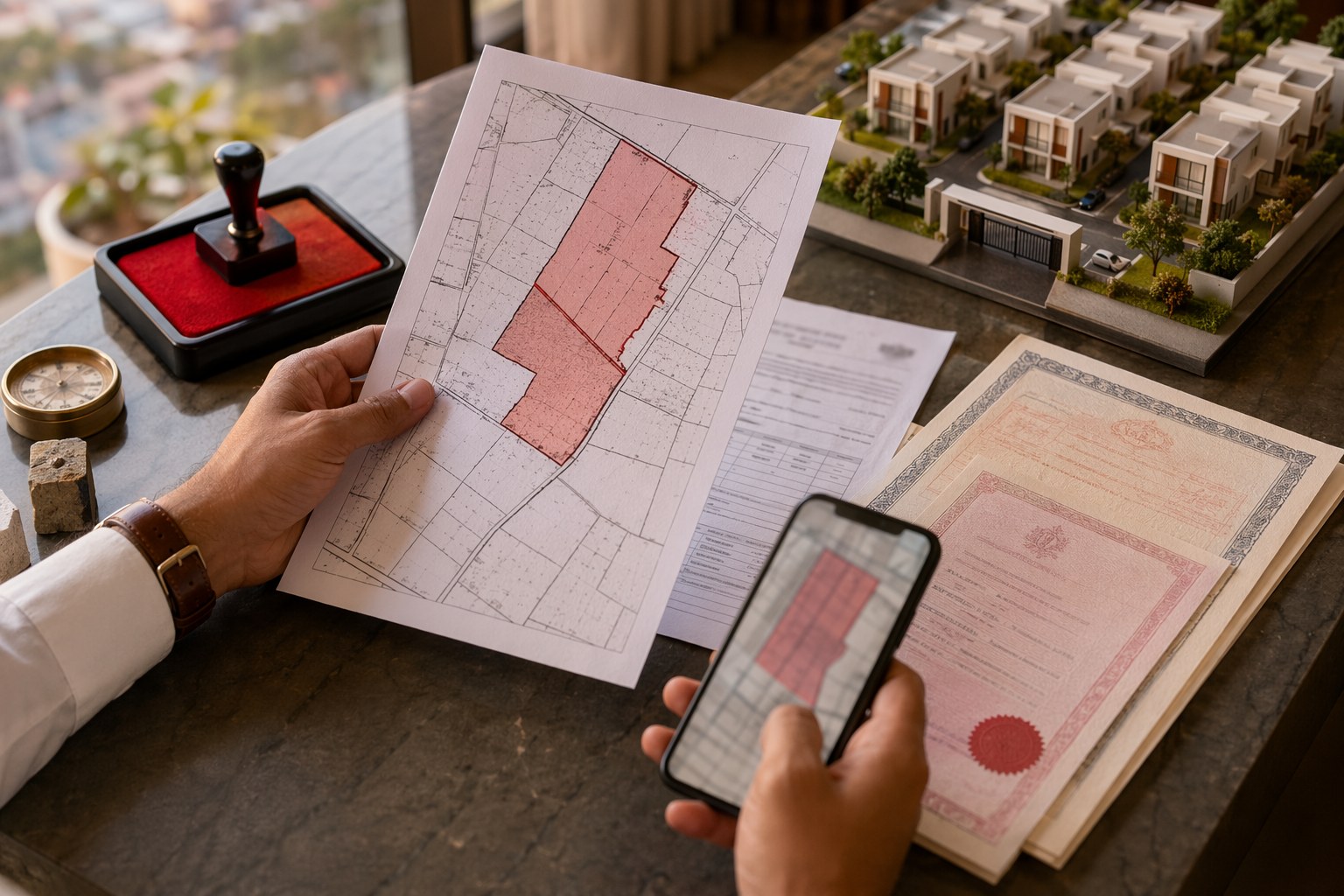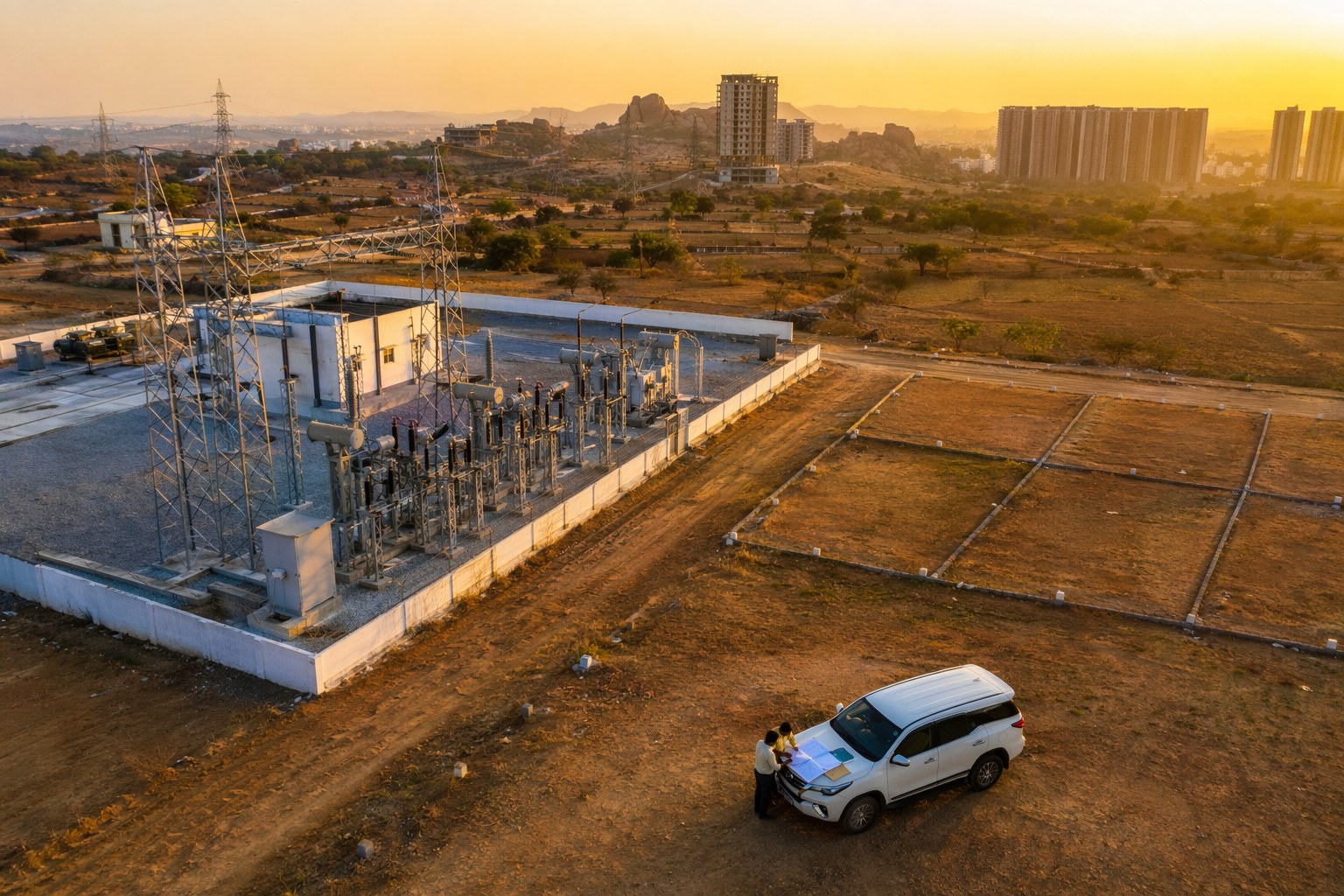
30.76 lakh 22-A parcels may reprice Telangana land credit because banks, NBFCs, private financiers and buyers cannot treat every land parcel as clean collateral anymore. As per latest IGRS data, Telangana has 3,076,153 Section 22-A prohibited properties. That is not a small legal footnote. It is a major pricing signal for land-backed lending, resale negotiations and due diligence across Hyderabad’s growth belt and district markets.
Section 22-A entries generally refer to properties where registration is prohibited or restricted under government records. In practical terms, if a parcel is listed under 22-A, an SRO may refuse registration. For lenders, that directly affects enforceability. For buyers, it affects exit value. For sellers, it affects negotiation strength.
Our reading is simple: the market will not stop because of 22-A, but valuation will become sharper. Clean title land will command more confidence, while doubtful parcels will face heavier discounts, slower sanctions and deeper document checks.
30.76 Lakh 22-A Parcels: Why This Matters For Telangana Land Credit
Land has always been a preferred collateral in Telangana. Families pledge it for business loans, developers use it for project finance, and investors treat it as a long-term store of value. But the presence of 3,076,153 prohibited properties changes the credit conversation from “What is the land worth?” to “Can this land be legally transferred, mortgaged and enforced?”
That distinction is critical. A parcel in a high-demand corridor near Kokapet, Tellapur, Gachibowli, Shamshabad, Maheshwaram, Shadnagar or Medchal may look attractive on location. But if the survey number is affected by a 22-A entry, the market value alone cannot carry the loan file. The legal status will decide the haircut.
In Hyderabad and surrounding mandals, we’ve seen buyers become more careful about checking survey numbers before paying token advance. Areas like Rajendranagar, Serilingampally, Gandipet, Shankarpally, Moinabad, Kandukur, Abdullapurmet, Ghatkesar and Medchal-Malkajgiri have active land demand, but that demand is now tied to stronger verification. The first question is no longer only road width, HMDA limits or future connectivity. It is also: “Is the land registerable at the SRO?”
Before committing money, buyers and lenders should run a Section 22-A Prohibited Property Check, verify ownership history through Encumbrance Certificate Search, and compare declared values with the Market Value / Guideline Value Search. These three checks can change the entire pricing discussion.
30.76 Lakh 22-A Parcels Could Change Collateral Valuation
Collateral valuation is not just about square yards, acres, road approach and nearby layouts. For lenders, land must be saleable if the borrower defaults. A prohibited property weakens that comfort.
Here is how the credit impact may play out:
- Lower collateral acceptance: Banks and NBFCs may reject parcels where 22-A status is unresolved.
- Higher legal scrutiny: Lenders may ask for pahani, title deeds, EC, Dharani records, mutation details and SRO-level confirmation.
- Conservative valuation: Even where the land has market demand, uncertainty can reduce the loanable value.
- Delayed sanctions: Files involving agricultural land, assigned land, government land claims or disputed survey numbers may take longer.
- Shift towards clean-title assets: Plots in approved layouts and properties with stronger documentation may get preference.
For developers, this has a direct bearing on land aggregation. If a proposed land bank contains mixed survey numbers, even one problematic portion can delay layouts, permissions, mortgage creation or resale. In our experience, these issues usually surface late, after money has already changed hands. That is when disputes become expensive.
What Section 22-A Means In Real Deal Pricing
In negotiation, clean title is now a pricing asset. Sellers with clear EC, matching Dharani records, proper pahani entries and no 22-A restriction can defend their price better. Sellers with unresolved entries may face hard questions from buyers, especially in land-heavy mandals outside Hyderabad.
The pricing gap may not be visible in online listings. A seller may quote based on nearby transactions, road access or future development. But serious buyers will price in risk after checking the survey number. If the land cannot be registered smoothly, the buyer’s offer naturally comes down or the deal stops.
For example, in growth-side localities such as Kollur, Mokila, Narsingi, Adibatla, Bongloor, Tukkuguda, Kadthal and Shamirpet, buyers are already comparing multiple legal variables: HMDA or DTCP approval, land use zone, road width, EC trail, litigation risk and SRO acceptance. A 22-A hit can outweigh the attraction of location.
Use the Property Verification Tool before advance payment. If you are unsure which registration office handles the village, check Find Your SRO Office. For survey-level checking, start with the Survey Number Finder. These are basic steps, but they prevent costly assumptions.
Impact On Hyderabad Periphery And District Land Markets
The effect will be sharper in land-led markets than in finished apartments. A flat in a RERA-registered project has a different documentation chain. Open land depends heavily on revenue records, survey boundaries, pattadar details, succession, conversion status and registration permissions.
Hyderabad’s western corridor has seen premium pricing because of IT employment and infrastructure expectations. The southern corridor around Shamshabad, Maheshwaram and Kandukur has strong land investor interest. The eastern belt towards Ghatkesar, Yadadri side and Abdullapurmet attracts budget-driven buyers. The northern side around Medchal, Shamirpet and Kompally continues to see plotted and warehouse-linked demand. Across all these belts, 22-A status can create a separate risk layer.
District markets may feel it differently. In smaller towns, buyers often rely on local word-of-mouth and village-level familiarity. But lenders will still insist on formal checks. If a land parcel is not acceptable as collateral, its liquidity reduces, even if everyone locally knows the owner.
How Lenders May Read The 3,076,153 Figure
The number 3,076,153 is large enough for credit teams to treat 22-A verification as a standard step, not an optional legal query. That does not mean every land loan becomes risky. It means the screening process becomes stricter.
| Market Participant | Likely Reaction To 22-A Risk |
|---|---|
| Bank or NBFC | May ask for stronger title documents, legal opinion and SRO confirmation before accepting land as collateral. |
| Buyer | May delay advance payment until prohibited property status, EC and survey details are checked. |
| Seller | May need to clear record issues before expecting full market pricing. |
| Developer | May conduct survey-number-wise due diligence before aggregating land for layouts or projects. |
| Investor | May prefer clean, registerable land over discounted but legally uncertain parcels. |
This is where valuation becomes more legal than emotional. A buyer may love the location. A lender may still say no. A valuer may mention market demand. The legal team may still mark it risky. In land deals, the final value is the value that can survive registration, mortgage and resale.
Due Diligence Checklist Before Using Land As Collateral
If you are planning to buy land or use existing land for a loan, keep the process boring and disciplined. Fancy brochures do not matter if the SRO refuses registration.
- Check whether the survey number appears in the 22-A prohibited property list.
- Match the owner name across sale deed, Dharani, pahani and mutation records.
- Take an EC and review the transaction chain, not only the latest entry.
- Confirm the correct SRO for the village and mandal.
- Check whether the land is agricultural, converted, assigned, government-claimed or affected by litigation.
- Compare government guideline value before agreeing on consideration and stamp duty planning.
- For plotted layouts, check approvals and project status where applicable through RERA Project Lookup.
- Estimate registration costs using the Stamp Duty Calculator.
One practical tip: do not rely only on a photocopy of an old deed. Many 22-A concerns show up when you test the current survey number against present government records. Land records change, disputes get updated, and prohibitions may affect only part of a village or survey extent. That is why survey-specific verification matters.
Our View: Clean Land Will Get A Premium
The presence of 30.76 lakh 22-A parcels does not mean Telangana land is unsafe. It means the market is becoming more selective. Clean-title land in strong localities will become easier to finance and easier to resell. Questionable land may still trade, but at a risk-adjusted price and with longer negotiation cycles.
For Hyderabad buyers, this is actually a healthy correction in behaviour. Earlier, many land purchases moved on trust, family references and urgency. Now, buyers are asking for EC, Dharani extract, pahani, SRO confirmation and prohibited property status before paying serious money. That discipline protects both genuine sellers and genuine buyers.
For lenders, the message is equally clear. Land collateral must be tested for legal transferability, not just location value. When a state has 3,076,153 Section 22-A prohibited properties in government records, credit policy cannot ignore it.
Frequently Asked Questions
What are 30.76 lakh 22-A parcels in Telangana?
They refer to the 3,076,153 Section 22-A prohibited properties recorded as per latest IGRS data. Such properties may face restrictions on registration depending on the nature of the entry.
Can a Section 22-A property be used as loan collateral?
It depends on the specific record and lender policy. Many lenders may reject or heavily scrutinise such land because enforceability and resale can become difficult if registration is prohibited.
How can I check if my land is under Section 22-A?
You can start with a Section 22-A Prohibited Property Check, then verify EC, survey number, Dharani and SRO details before making any payment or loan application.
Will 22-A status reduce land price in Hyderabad outskirts?
Usually, yes. If buyers or lenders see legal uncertainty, they may reduce their offer, ask for record correction first, or avoid the deal. Clean-title land is likely to get better pricing confidence.
Which documents should I verify before buying land in Telangana?
Check sale deed, EC, pahani, Dharani ownership, mutation, survey number, SRO jurisdiction, land use, layout approval if applicable, and Section 22-A status. Do not rely only on verbal assurance.