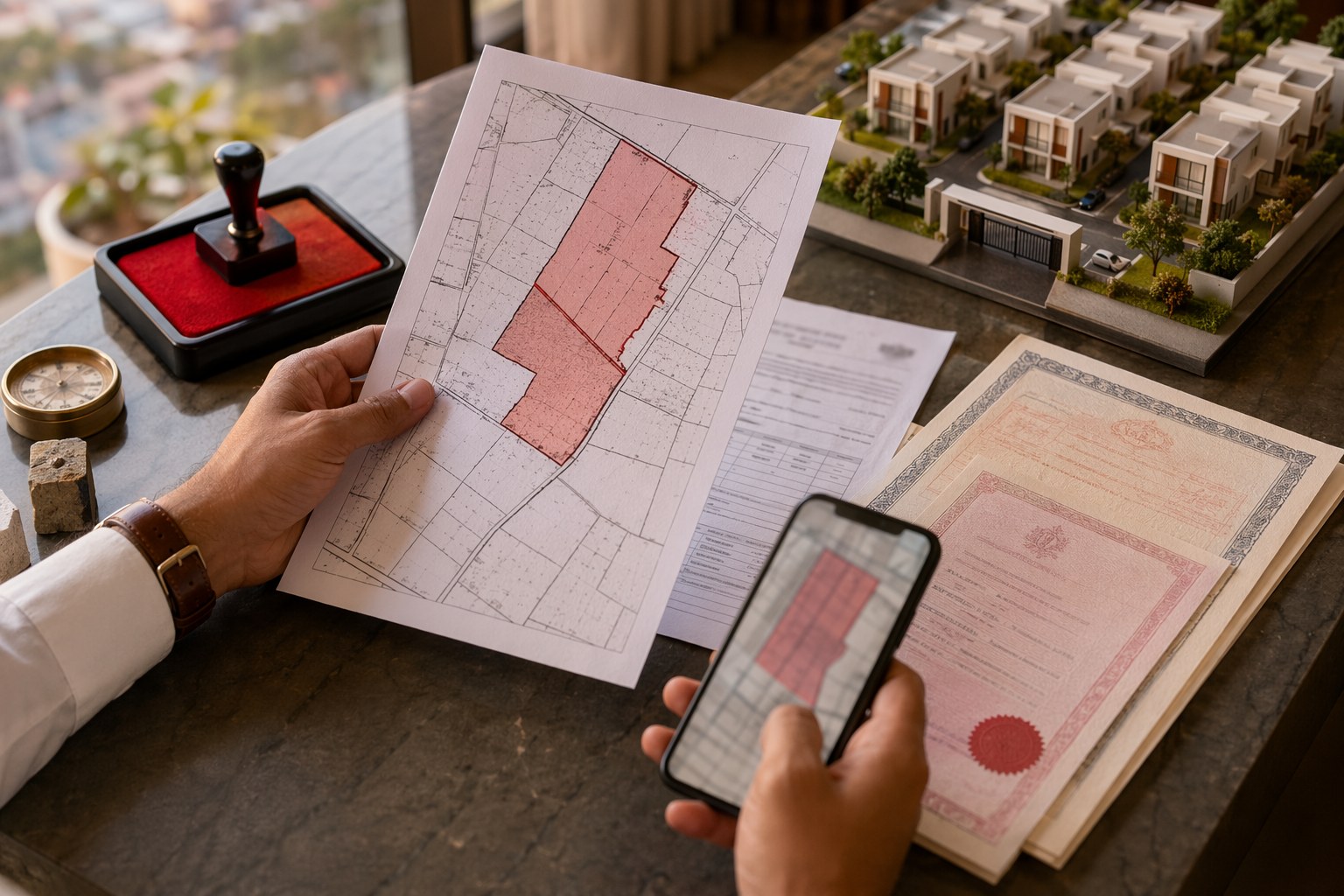



Telangana Home-Loan Securitisation May Screen 22-A Titles as banks, housing finance companies and investors sharpen collateral checks before pooling mortgages into securitisation deals. The practical issue is simple: if a home loan is backed by a property later found to be under Section 22-A prohibited status, that loan may look weaker inside a mortgage-backed pool.
As per latest IGRS data available in our database, Telangana has 3,076,153 prohibited properties under Section 22-A. That number is too large for loan originators, trustees and investors to treat title screening as a small back-office item. In our experience, this is where legal due diligence, SRO records, dharani entries, pahani history and encumbrance checks start moving from buyer-level verification to portfolio-level risk review.
Telangana Home-Loan Securitisation May Screen 22-A Titles Before Pooling
In a typical home-loan securitisation, a lender pools housing loans and sells the cash-flow rights to investors through a structured transaction. The investor is not visiting each flat in Kondapur or every villa plot in Mokila. They rely on the lender’s underwriting, title checks, valuation process and representations made in the deal documents.
That is exactly why Telangana 22-A status may become a collateral-quality filter. A single disputed title may be manageable in a normal retail loan book. But when loans are bundled, even a small set of weak titles can raise questions from rating teams, trustees and institutional investors. The issue is not only whether the borrower is paying EMI today. The issue is whether the underlying security can be enforced cleanly if the loan turns bad.
For Hyderabad and surrounding growth markets, this matters across locations like Kokapet in Gandipet mandal, Tellapur and Osman Nagar near Ramachandrapuram belt, Kondapur and Gachibowli in Serilingampally, Patancheru, Shamshabad, Medchal, Shankarpally and Maheshwaram. These are active mortgage markets. They are also areas where survey number history, layout approvals, old agricultural entries and SRO jurisdiction can make title review more layered.
Our view: 22-A will not stop every genuine transaction. But it can slow down loans, reduce investor comfort, and force lenders to demand cleaner documentary proof before securitisation.
Why Telangana Home-Loan Securitisation May Screen 22-A Titles More Strictly
Section 22-A entries are not ordinary spelling errors in a deed. They are restrictions linked to registration of certain categories of property. Depending on the entry and background, the land may be shown as government land, assigned land, endowment land, waqf-related property, ceiling surplus land, or another restricted category under official records. Buyers often discover the problem only when they go for registration, mutation, bank loan processing or resale.
For a housing finance company, a 22-A flag can create three concerns:
- Enforceability risk: If the lender has to enforce security, the title should not be blocked by a prohibited-property entry.
- Marketability risk: A property that cannot be freely registered may have lower resale comfort, even if the borrower is genuine.
- Documentation risk: Investors may ask whether the originator checked EC, SRO records, survey number mapping and dharani status before disbursing the loan.
This is where tools matter. A buyer or lender can start with a Section 22-A Prohibited Property Check, match the survey number through the Survey Number Finder, and review past transactions using the Encumbrance Certificate Search. These checks do not replace a lawyer’s title report, but they help catch obvious red flags early.
What The 3,076,153 Prohibited Properties Figure Means For Mortgage Investors
The database figure of 3,076,153 prohibited properties gives the securitisation market a clear signal: Telangana title filtering cannot depend only on sale deed possession and tax receipts. In a mortgage-backed pool, the investor may ask for a sample title audit or a stronger warranty from the lender that the collateral is not hit by Section 22-A.
| Due diligence checkpoint | Why it matters in a home-loan pool |
|---|---|
| 22-A prohibited status | Helps identify properties where registration or enforceability may face official restrictions. |
| Encumbrance Certificate | Shows registered transactions, mortgages, releases and other recorded interests at the SRO. |
| CERSAI charge | Helps detect existing secured lender charge against the property. |
| Guideline value | Supports valuation review using government market value records and ready reckoner logic. |
| SRO jurisdiction | Prevents mismatch between property location, village, mandal and registration office records. |
For individual homebuyers, this sounds technical. But the effect can be very real. If lenders tighten collateral screening before selling loan pools, they may ask borrowers for extra documents at sanction stage itself. We have seen buyers in outer Hyderabad get stuck because the bank’s legal team asks for old link documents, mutation proof, pahani copies, conversion proceedings, layout approval, and SRO clarification at the same time.
A practical pre-loan checklist should include the CERSAI Charge Check, Market Value / Guideline Value Search, and Find Your SRO Office. If the property is in a plotted layout or under-construction apartment project, the RERA Project Lookup is also useful.
How 22-A Screening Can Affect Hyderabad Buyers And Builders
For builders, clean land aggregation is becoming more than a project approval issue. If apartments sold in a project are financed by multiple banks, those loans may later sit inside securitised portfolios. Investors can push lenders to prove that the underlying land title was reviewed properly. That can make project-level title reports, conversion orders, approved layout plans and revenue records more valuable during loan tie-ups.
For buyers, the message is sharper. Do not assume that a bank sanction means every land record is perfect. Banks do legal checks, yes, but buyers should still verify basic records independently. A flat in a branded project at Nanakramguda or Narsingi may pass quickly because the project has centralised title documentation. A resale flat in an older society in Kukatpally or a plot near Shankarpally may need closer review of link documents and survey boundaries.
There is also a valuation angle. Securitisation investors generally prefer predictable collateral. If two loans have similar repayment performance, the one backed by clearer title will usually be easier to place in a pool. In that sense, 22-A status can become a silent sorting mechanism. Clean title, clean EC, clear SRO trail and correct guideline value will carry more weight.
What Lenders May Ask Before Securitising Telangana Home Loans
We expect lenders and diligence teams to become more specific in Telangana mortgage files. Instead of a broad legal opinion saying title is acceptable, investors may ask for evidence that the property was checked against prohibited-property records. They may also ask whether the EC covers the right period, whether the survey number matches the village and mandal, and whether any government restriction appears in registration systems.
For a borrower, that may mean these documents are requested earlier:
- Sale deed and full link documents.
- Latest EC from the correct SRO.
- Survey number confirmation and village mapping.
- Mutation, pahani or dharani-related extracts wherever applicable.
- Approved building plan, RERA details for eligible projects, and occupancy-related papers where relevant.
- CERSAI search result for existing charges.
For investors, this is not only a legal issue. It is portfolio hygiene. A loan pool with stronger collateral documentation is easier to review. A pool with unclear titles, old revenue disputes or possible 22-A entries invites more questions.
Verified.RealEstate View On 22-A And Loan Pools
My reading is that Telangana’s mortgage market will not stop because of 22-A scrutiny. Hyderabad’s housing demand remains spread across IT corridors, ORR growth nodes and district headquarters. But securitisation brings a second layer of discipline. The first lender may accept a title after internal review. The later investor may ask tougher questions because they are buying exposure to hundreds or thousands of loans, not one borrower relationship.
That is why buyers should treat title verification as a financial decision, not only a legal formality. Before paying token advance, check prohibited status, EC, SRO, survey number and government market value. If the property is under a society, layout or old gram panchayat approval, ask for the entire file. If anything looks mismatched, pause before registration.
For Telangana home-loan securitisation, the next quality marker may not be only borrower credit score or EMI history. It may be this simple question: is the property free from a 22-A problem in official records?
Frequently Asked Questions
Can a 22-A property be used for a home loan in Telangana?
It depends on the exact entry, property history and lender policy. Many banks will not accept collateral if the property is clearly restricted under Section 22-A unless the issue is legally resolved and reflected in official records.
Why does 22-A matter in home-loan securitisation?
When home loans are pooled and sold to investors, the collateral must be clean and enforceable. A 22-A flag can raise concerns about registration, resale and recovery if the borrower defaults.
How can I check if my Telangana property is under Section 22-A?
You can start with the Section 22-A Prohibited Property Check, then verify EC, survey number, SRO jurisdiction and revenue records. For high-value purchases, take a local property lawyer’s written title opinion.
Is an Encumbrance Certificate enough for title verification?
No. EC is useful, but it only shows registered transactions and charges. Buyers should also check 22-A status, dharani or pahani records where relevant, link documents, approvals, CERSAI and SRO details.
Will stricter securitisation checks delay home-loan approvals?
In some cases, yes. If the lender wants clearer proof on survey number, SRO records or 22-A status, borrowers may need to submit extra documents before final sanction or disbursement.