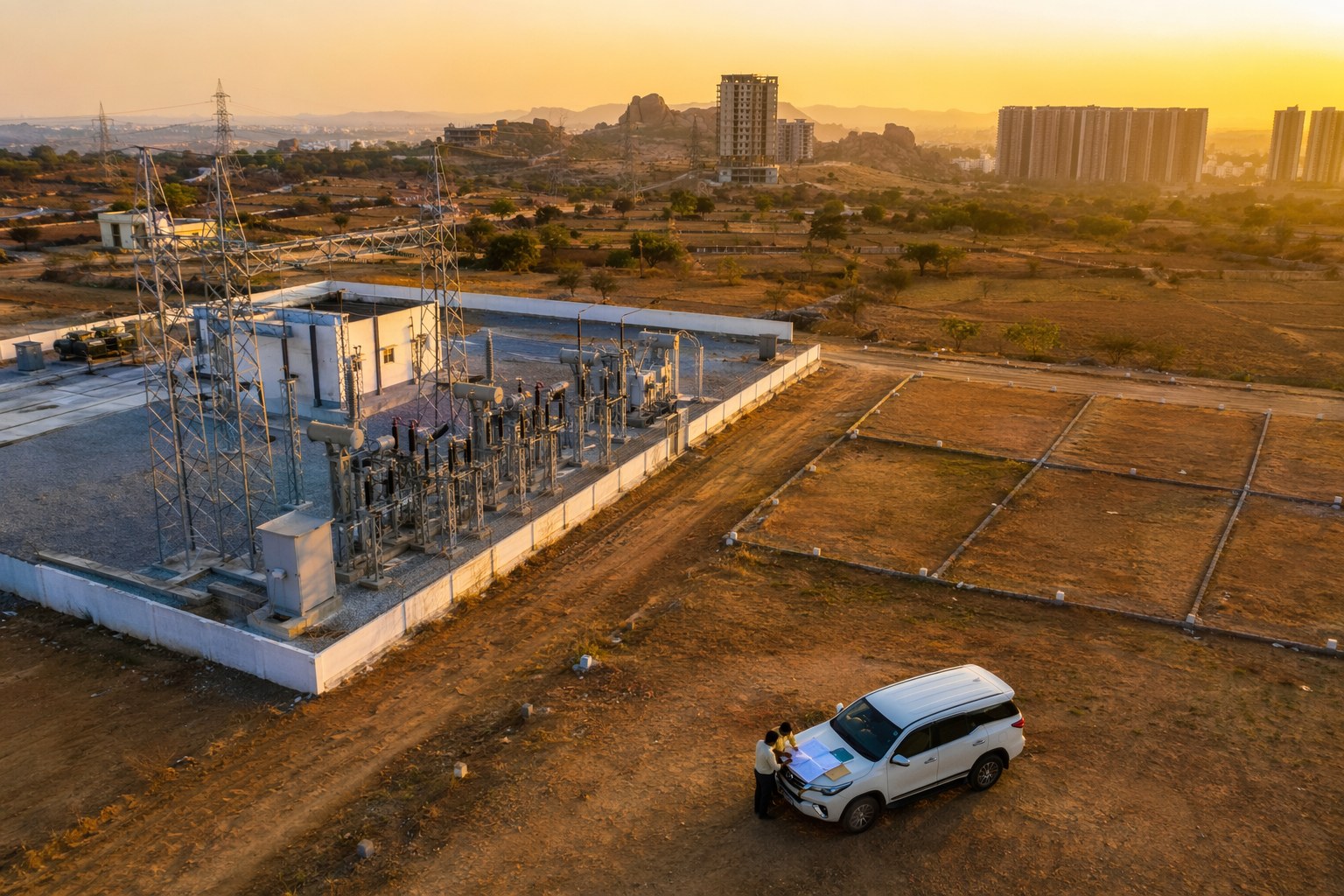



Telangana stamp duty forecasts may need a closer look at the State’s large Section 22-A prohibited property base, because registrations blocked at the SRO stage do not convert into stamp duty collections. As per latest IGRS-linked property data, Telangana has 3,076,153 prohibited properties under Section 22-A. For a finance department or registration department trying to estimate transaction volumes, that is not a small footnote. It can influence revenue planning, buyer behaviour, lender checks and even how brokers price risk in fast-moving Hyderabad corridors.
In our experience, the issue is not only about land being “blocked”. It is about uncertainty. A buyer may see a plot in Gachibowli, Kokapet, Narsingi, Shamshabad, Uppal or Hayathnagar, negotiate an advance, check the guideline value, arrange funds and only then discover a 22-A remark linked to the survey number or title history. That failed transaction never reaches clean registration, and the expected stamp duty does not come in.
Telangana stamp duty forecasts now need 22-A sensitivity
Stamp duty forecasting usually depends on expected registrations, ready reckoner movement, locality-wise demand and the market value captured for registration. But when a large prohibited property list sits in the background, the forecast also needs a “registrability” filter. Land may be physically available, commercially attractive and even actively marketed, yet it may not be legally transferable through normal registration if it is recorded under 22-A.
Section 22-A entries typically cover categories such as government land, assigned land, endowment land, wakf-related properties, ceiling surplus land, certain court-disputed entries and other notified prohibited categories. The exact reason has to be checked against the relevant village, mandal, survey number, pahani, Dharani record and SRO data.
For buyers, the first practical step is simple: before paying a token advance, check the survey number through the Section 22-A Prohibited Property Check. If the property is a flat or villa, the land parcel behind the project still matters. For plotted layouts, it matters even more.
My view is that stamp duty planning in Telangana cannot be treated only as a demand-side exercise. The supply of legally registrable property is just as critical, especially around Hyderabad’s expansion belts.
How Telangana stamp duty forecasts get affected by prohibited land
The revenue impact is not always visible from the outside. A failed 22-A transaction may not appear like a normal sale deed. It may stop at due diligence, bank legal verification, draft sale agreement, SRO objection or mutation review. That means the economic intent existed, but the legal registration did not.
This matters in active corridors such as Serilingampally mandal, Gandipet mandal, Rajendranagar mandal, Shamshabad mandal, Medchal side growth pockets, Patancheru belt and Hayathnagar stretch. These areas see interest from end-users, investors and developers. A single 22-A remark attached to a survey number can change deal timing, loan sanction, layout saleability and the stamp duty pipeline.
| Forecasting issue | How 22-A land blocks affect it | Practical check |
|---|---|---|
| Expected registrations | Some negotiated deals do not reach registration because the SRO may not accept the document. | Check 22-A status before agreement. |
| Stamp duty revenue timing | Revenue may shift to a later period if the buyer waits for rectification, NOC or court clarity. | Track title and mutation changes. |
| Guideline value estimates | Ready reckoner value may exist, but registrability can still be blocked. | Use market value search along with title checks. |
| Buyer confidence | Unclear land records can reduce transaction velocity in a micro-market. | Verify survey number, EC and SRO jurisdiction. |
For a buyer, the Market Value / Guideline Value Search is useful, but it should not be treated as a title clearance certificate. Guideline value tells you the value used for registration calculation. It does not guarantee that the land is free from prohibition, encumbrance or litigation.
Telangana stamp duty forecasts and buyer due diligence are now linked
The connection between government revenue and individual buyer due diligence is closer than many people realise. When buyers become cautious, weak-title properties take longer to sell. When banks refuse funding due to title risk, registration gets delayed. When SROs raise objections, the stamp duty expected from that deal is pushed out or lost.
Before purchasing land in Telangana, I would check at least five things. First, the survey number and village. Second, the mandal and SRO jurisdiction. Third, the Dharani record or relevant revenue record. Fourth, the 22-A status. Fifth, the encumbrance history. For this, buyers can use the Survey Number Finder, Encumbrance Certificate Search and Find Your SRO Office.
For flats in Hyderabad, people often focus only on carpet area, amenities and loan eligibility. That is risky. If the project land has an unresolved issue, it can affect resale, mortgage and future approvals. A RERA check is also sensible through the RERA Project Lookup, especially for under-construction projects.
Why 3,076,153 prohibited properties are a planning signal
The figure 3,076,153 is significant because it represents a large base of properties where ordinary registration may be restricted or requires deeper verification. It does not mean every entry is a live market transaction. It also does not mean every entry is in Hyderabad. But for forecasting, the number is a warning: transaction potential and registrable supply are not the same thing.
In a clean market, a rise in enquiries, sale agreements and guideline values may support higher stamp duty expectations. In a market with title blocks, those indicators need discounting. Revenue teams may need to separate urban apartment registrations, agricultural land transactions, plotted layout sales, open plots near ORR, and inherited property transfers where 22-A flags can create different levels of friction.
Hyderabad’s western belt is a good example. In Kokapet, Narsingi, Tellapur, Kollur and Mokila, demand can be strong, but buyers still have to check the village record, survey number, layout approval, land use zone and SRO acceptance. In older pockets like Uppal, LB Nagar, Secunderabad surroundings and parts of Rajendranagar, the title chain can be longer, and old revenue entries may need extra care.
What buyers should do before paying stamp duty
Stamp duty is usually calculated after the parties arrive at a transaction value and the applicable market value is checked. But payment should come only after legal due diligence is complete. If there is a 22-A issue, paying expenses too early can create avoidable stress.
- Check 22-A first: Use the Section 22-A Prohibited Property Check before token advance.
- Confirm the market value: Use the Market Value / Guideline Value Search to understand the ready reckoner basis.
- Estimate registration cost: Use the Stamp Duty Calculator after confirming registrability.
- Read the EC carefully: Use the EC Analyzer if the transaction history is long or confusing.
- Track changes: For sensitive deals, use the Property Change Tracker until registration is completed.
A clean due diligence file should include link documents, EC, pahani or revenue extract where applicable, Dharani status, layout approval if it is a plot, building permission if it is a constructed property, tax receipts and identity documents of the seller. For agricultural land, mandal-level revenue verification is still valuable. For urban property, SRO and municipal records both matter.
What this means for developers, banks and the State
Developers need to treat 22-A screening as a pre-acquisition financial control, not only as a legal checklist. If a land parcel is blocked, project launch timelines, cash flow projections and customer collections can be hit. Banks and housing finance companies also have reason to tighten pre-sanction title checks, especially where collateral value depends on clear registration and mortgage creation.
For the State, better visibility on how many proposed registrations are blocked due to 22-A can improve stamp duty forecasting. It can also help identify where genuine errors in prohibited lists are slowing legitimate transactions. We have seen buyers lose months because an old entry was not reconciled properly across revenue and registration records.
The smarter approach is not to ignore such land, and not to panic either. Check the category of prohibition, see whether any government clarification or court order exists, verify the current revenue record and speak to a competent property lawyer before committing money. Some issues may be correctable. Some are hard stops. The difference matters.
For Telangana’s property market, Section 22-A is now a financial variable. It affects not just legal risk, but also revenue timing, transaction confidence and the quality of stamp duty forecasts.
Frequently Asked Questions
How many prohibited properties are recorded under Section 22-A in Telangana?
As per latest IGRS-linked property data used here, Telangana has 3,076,153 prohibited properties under Section 22-A.
Can a property with a 22-A entry be registered at the SRO?
Usually, a 22-A entry restricts normal registration. The exact outcome depends on the category of prohibition, survey number, village record, SRO view and any valid legal clarification or order.
Does guideline value confirm that a land parcel is legally clear?
No. Guideline value or ready reckoner value helps calculate registration value and stamp duty. It does not confirm title, 22-A status, encumbrance position or litigation risk.
Which checks should Hyderabad buyers do before paying an advance?
Buyers should check the survey number, mandal, SRO jurisdiction, EC, Dharani or revenue record, 22-A status, layout approval and seller title documents before paying an advance.
Why do 22-A properties matter for Telangana stamp duty forecasts?
They matter because blocked properties may generate buyer interest but may not convert into registered sale deeds. That affects transaction volume, revenue timing and forecast accuracy.