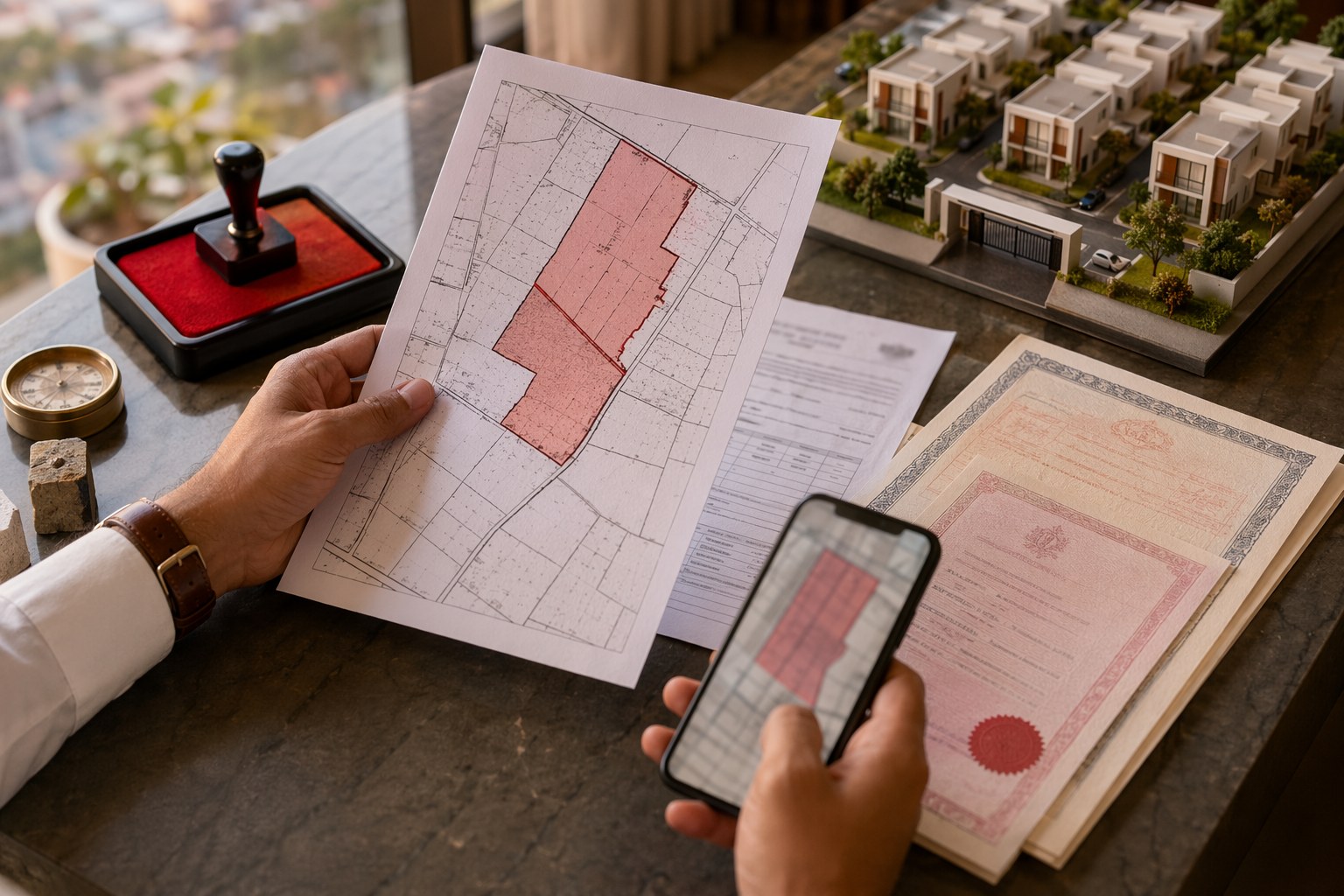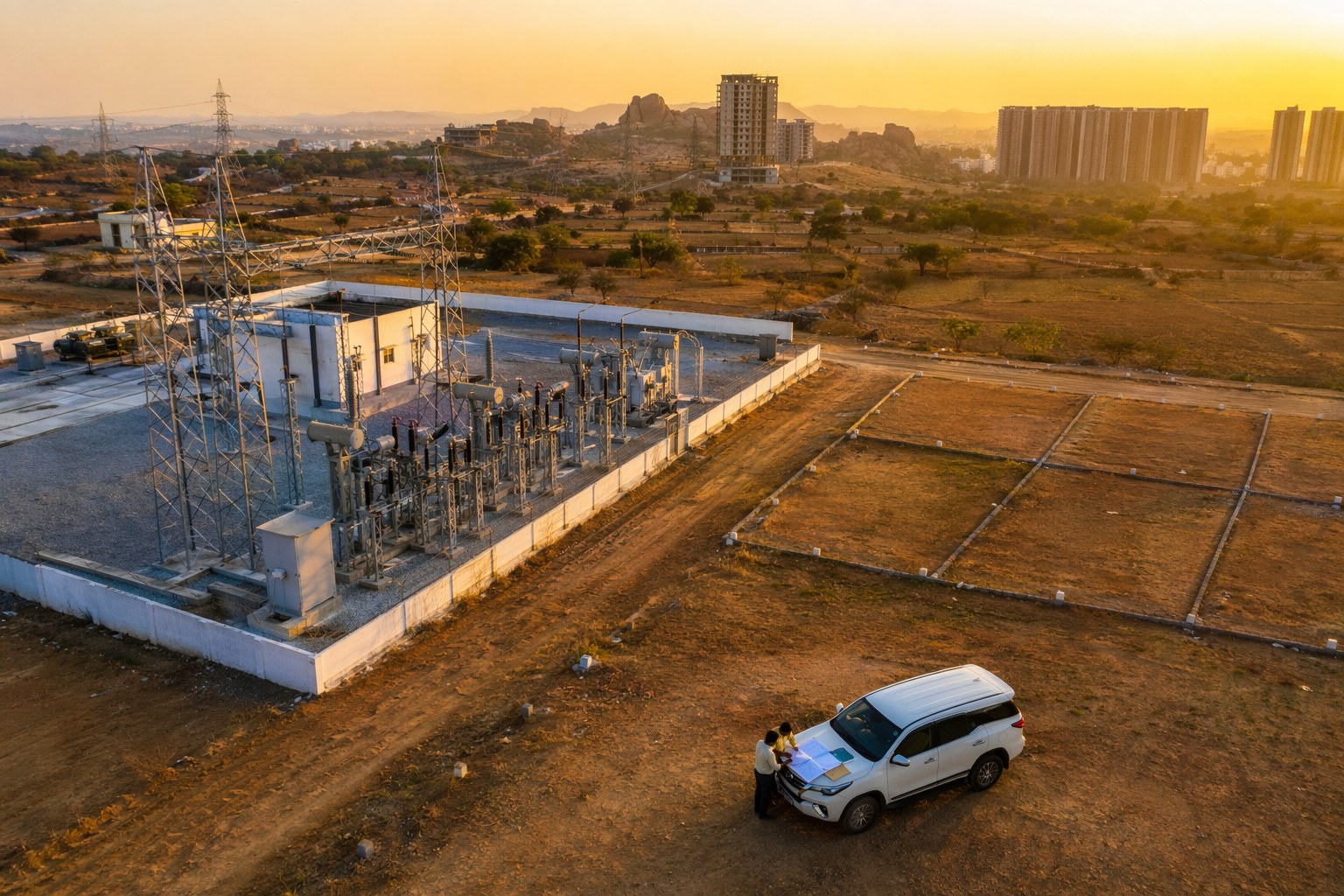
REIT Sponsors May Screen Telangana Land Banks for 22-A Exposure is becoming a very real conversation in Hyderabad’s institutional property market. As per latest IGRS data available in our database, Telangana has 3,076,153 prohibited properties under Section 22-A. For yield-focused investors, this is not a small legal footnote. It can affect land aggregation, mortgageability, exit timelines, rental asset creation and investor confidence.
The immediate financial-market reading is simple: any Telangana land bank being pitched to a REIT sponsor, warehousing platform, data centre investor, office developer or long-hold family office may now face a deeper title filter. Earlier, many investors looked at location, FSI, road width, zoning and demand. Now, 22-A exposure is likely to sit near the top of the diligence checklist.
REIT Sponsors May Screen Telangana Land Banks for 22-A Exposure Before Capital Commitment
Section 22-A entries are properties restricted from registration due to reasons such as government land classification, assigned land issues, endowment-related concerns, waqf claims, ceiling surplus questions, court disputes or other notified restrictions. In practice, a buyer may like the land, agree on commercials, and still get blocked at the SRO if the survey number is on the prohibited list.
For a retail buyer, this is painful. For a REIT sponsor or institutional platform, it is a portfolio risk. A single blocked parcel inside a larger land assembly can disturb access, contiguity, development phasing and financing. We’ve seen serious investors become cautious when even one survey number in a proposed aggregation has unclear Dharani or registration status.
This is especially relevant around Hyderabad’s growth corridors. Land banks near Kokapet, Narsingi, Gandipet mandal, Tellapur, Kollur, Mokila, Shankarpally mandal, Shamshabad, Maheshwaram, Ghatkesar, Medchal and Patancheru are often evaluated for future office parks, logistics, plotted layouts, mixed-use projects and rental-yield assets. In these markets, the land story is no longer only about location. It is also about whether every survey number can survive legal, revenue and registration scrutiny.
Our view: REIT-style capital will not reject Telangana because of 22-A risk. It will simply price the risk harder, demand cleaner documentation, and avoid land banks where prohibited-property exposure is not mapped upfront.
Why REIT Sponsors May Screen Telangana Land Banks for 22-A Exposure Like a Credit Risk
A REIT sponsor thinks differently from a normal land trader. The end asset must generate stable income, attract lenders, satisfy trustees, withstand audit checks and remain saleable or refinancable. If the underlying land has a 22-A shadow, even a strong rental story can become difficult to underwrite.
Yield investors usually ask three basic questions. Can the asset be legally built? Can it be leased and financed? Can it be exited without title objections? A prohibited property entry can disturb all three.
- Registration risk: The SRO may not register a transaction if the property is covered by Section 22-A.
- Financing risk: Banks and NBFCs usually become conservative when title or transferability is uncertain.
- Development risk: Permissions can become slower if land classification, revenue records or ownership chain is disputed.
- Exit risk: Future institutional buyers may ask for indemnities, price discounts or full exclusion of affected parcels.
- Valuation risk: A clean land parcel and a restricted land parcel cannot be valued in the same way, even if both sit beside the same road.
That is why 22-A screening may start looking like a credit-risk check. Before accepting any projected rental yield or future cap-rate assumption, investors may insist on survey-number level verification.
The 3,076,153 Number Changes the Diligence Mood
The database figure of 3,076,153 prohibited properties under Section 22-A gives the market a scale reference. It does not mean every growth corridor parcel is risky. It also does not mean every 22-A entry is permanent or impossible to resolve. But the size of the dataset tells investors that casual title checking is not enough.
In Hyderabad land deals, many mistakes happen because buyers check only the parent document, EC and layout plan. That is not sufficient for institutional money. A serious diligence team should connect the dots between pahani, Dharani record, survey number, village map, SRO jurisdiction, land use, road access, RERA status where applicable, and prohibited-property lists.
For a first-level check, investors can use our Section 22-A Prohibited Property Check, then verify the chain through the Encumbrance Certificate Search and cross-check registration jurisdiction with Find Your SRO Office. For land aggregation, the Survey Number Finder is also useful because the real risk sits at survey-number level, not in brochure-level location names.
Hyderabad Land Banks: Where the Screening May Become Sharper
The first areas to face sharper screening are likely to be high-value institutional corridors. Kokapet and Narsingi attract office and premium residential capital because of proximity to the Financial District and Outer Ring Road. Tellapur, Kollur and Mokila draw long-hold residential and villa-project investors. Shamshabad and Maheshwaram are watched for airport-linked logistics, warehousing, plotted development and future commercial activity. Medchal, Kompally and Ghatkesar often come up in industrial, logistics and affordable housing discussions.
In these locations, land banks are rarely made up of one clean parcel. They are usually assembled from multiple pattadars, family partitions, old sale deeds, agricultural records, conversion files and layout permissions. One weak link can affect the full structure. In our experience, this is where institutional diligence becomes stricter than local market practice.
Investors will also compare government market value with deal assumptions. Before agreeing to a transaction structure, they can check the Market Value / Guideline Value Search and estimate duty impact through the Stamp Duty Calculator. Where a project is already marketed as an apartment, villa or plotted development under regulation, the RERA Project Lookup should also be part of the review.
What REIT Sponsors May Ask Developers and Land Aggregators
Developers seeking institutional capital may need to prepare cleaner data rooms. A glossy master plan will not be enough. REIT sponsors and their legal teams may ask for a survey-wise title matrix, 22-A status, mutation history, Dharani extracts, pahanis, ECs, court-case declarations, land conversion papers and planning permission trail.
A practical institutional checklist may look like this:
| Screening Area | What Investors May Check | Why It Matters |
|---|---|---|
| 22-A status | Survey number and village-wise prohibited-property check | Confirms whether registration may be blocked |
| Revenue record | Pahani, Dharani ownership and mutation trail | Shows whether the seller’s claim matches government records |
| Registration history | EC, parent deeds and SRO records | Identifies prior transfers, mortgages and disputes |
| Planning fit | Land use, road width, FSI and layout status | Tests whether the proposed income asset is buildable |
| Exit readiness | Clean title opinion and lender comfort | Supports refinancing or sale to another institutional buyer |
For development feasibility, investors can also use the Land Use Zone Finder, Road Width Check and FSI/FAR Calculator. These do not replace legal opinion, but they help investors ask better questions before money is blocked.
Pricing Impact: Clean Land May Command Better Confidence
There is a clear market opinion forming here. Clean land with transparent revenue records, non-prohibited status, proper access and usable zoning should attract better institutional confidence than a parcel where the seller says, “Sir, small issue is there, we will manage.” That line may work in a local negotiation. It will not work with REIT-grade capital.
Does this mean disputed land has no value? Not always. Some issues can be clarified, corrected or legally resolved. But yield-focused investors are not paid to take open-ended title risk. They usually prefer certainty, even if the entry price is higher. For them, time lost in litigation or SRO-level blockage can damage the internal investment case.
Developers with large Telangana land banks may therefore start doing self-audits before approaching financial investors. They may separate clean parcels from questionable ones, obtain updated legal opinions, and prepare survey-level clarifications. This can make fund-raising smoother and reduce last-minute valuation cuts.
What This Means for Smaller Investors
Retail buyers and HNIs should watch this institutional behaviour carefully. When REIT sponsors tighten their filters, the broader market slowly follows. If a large investor refuses a land parcel due to 22-A concerns, smaller buyers should not blindly step in only because the rate looks attractive.
Before buying agricultural land, plotted land or an under-construction unit linked to a land parcel, check the basic chain. Use the Property Verification Tool, read the EC carefully, confirm SRO jurisdiction, and ask for the exact survey number. If the seller gives only a venture name and not the revenue details, be cautious.
My advice is simple: in Telangana, location gives upside, but clean title protects capital. For REIT sponsors, 22-A exposure may become a formal screening point. For individual buyers, it should already be a non-negotiable check.
Frequently Asked Questions
What is Section 22-A in Telangana property records?
Section 22-A refers to properties that are prohibited from registration due to notified restrictions. These may include government land, assigned land, endowment-related land, disputed land or other categories recorded by authorities.
Why should REIT sponsors worry about 22-A exposure?
REIT sponsors need clear, financeable and transferable assets. If a land parcel is under 22-A restriction, registration, development, refinancing or exit may become difficult.
How many prohibited properties are recorded in Telangana?
As per latest IGRS data available in our database, Telangana has 3,076,153 prohibited properties under Section 22-A.
Can a 22-A property issue be resolved?
Some entries may be clarified or corrected depending on the nature of the restriction and available documents. Buyers should take legal advice and verify revenue and SRO records before proceeding.
Which tools can help before buying Telangana land?
Start with a Section 22-A check, EC search, survey number verification, SRO identification and guideline value search. These checks help you identify risk before paying advance.