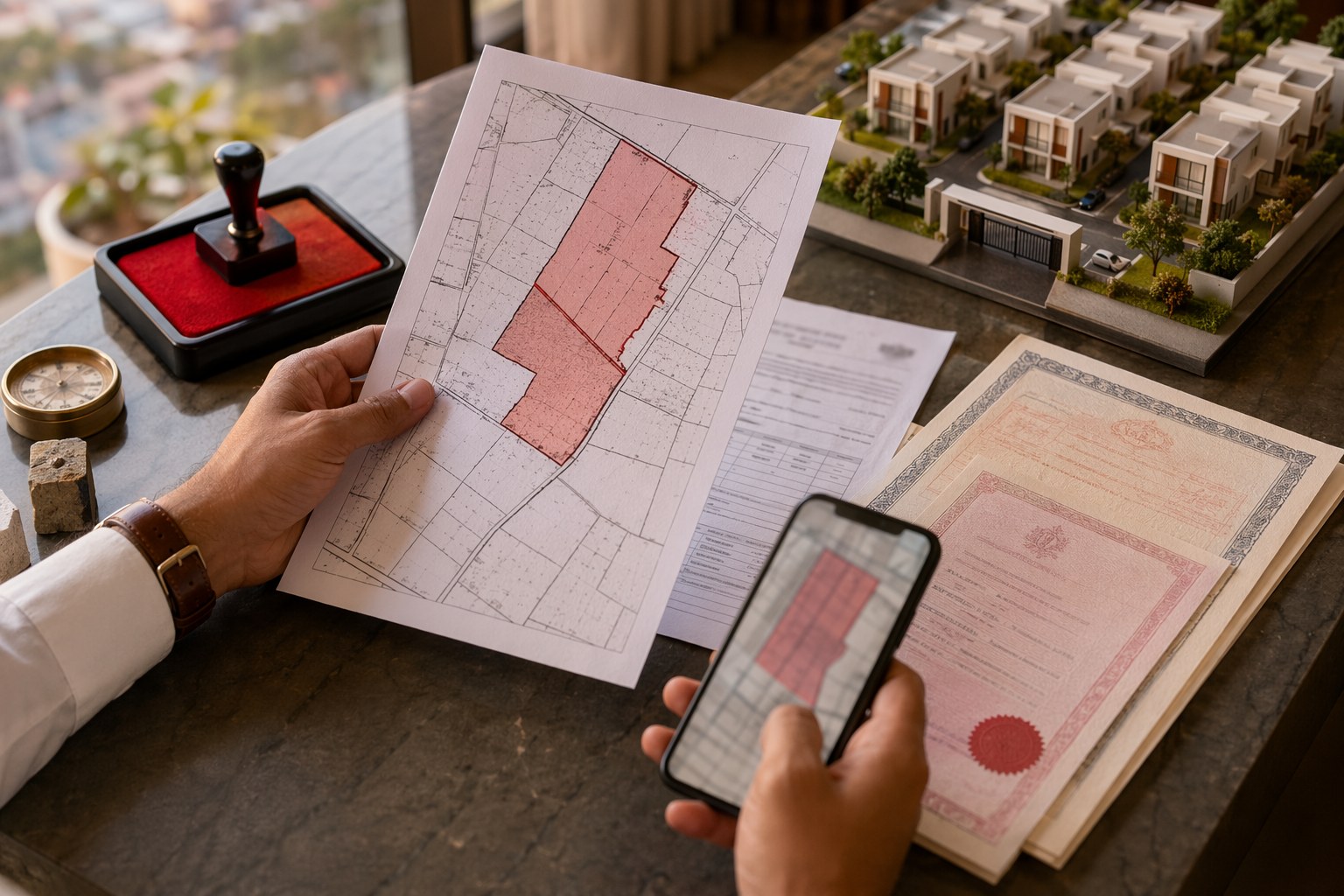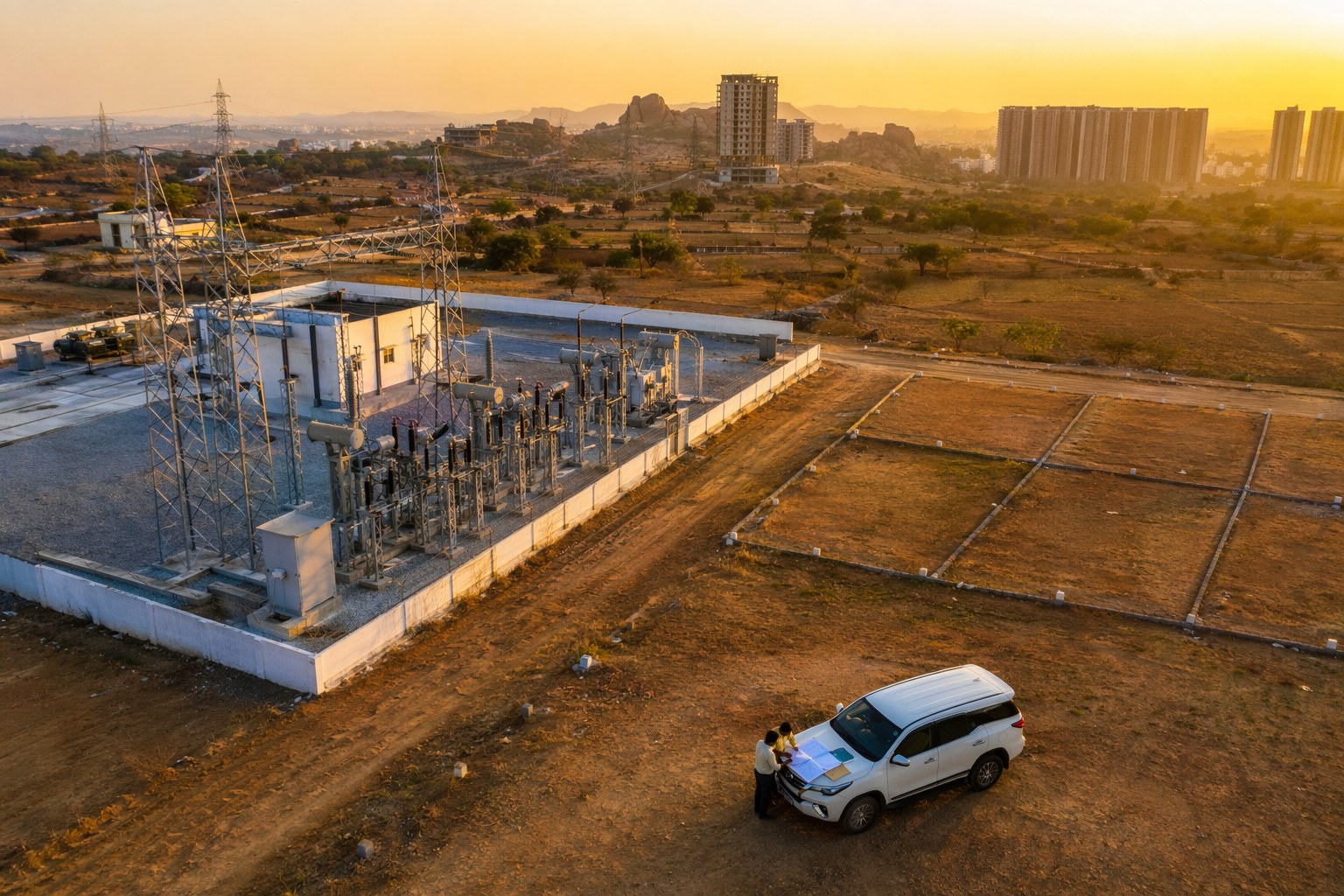
Telangana Land Funds are likely to become far more selective on land acquisitions after fresh attention on the State’s large Section 22-A prohibited properties universe. As per latest IGRS-linked data available with Verified.RealEstate, Telangana has 3,076,153 prohibited property records. For land funds, plotted developers, warehousing players and joint development investors, that is not a small compliance footnote. It directly affects valuation, negotiation power, deal timelines, lender comfort and exit pricing.
In simple terms, a parcel touching a 22-A entry can move from “hot land bank” to “haircut discussion” very quickly. We’ve seen this especially around fast-moving Hyderabad growth corridors where buyers are keen, but documentation is not always clean.
Telangana Land Funds Face A Valuation Question Around 22-A
Section 22-A entries are not just another search item before registration. They can block registration, trigger legal review, delay funding drawdowns and make institutional committees nervous. When the prohibited properties list is as large as 3,076,153 records, the market starts pricing not only the land, but also the probability of a document problem.
For a retail buyer, the question is usually: “Can I register this plot?” For a land fund, the question is broader: “Can we acquire, aggregate, develop, borrow, sell and exit without a title event?” That difference matters. Funds do not buy one plot in isolation. They often evaluate multiple survey numbers, access roads, buffer strips, assigned land histories, government land boundaries, ceiling cases, endowment links and older pahani entries.
In Hyderabad’s western belt, this concern becomes sharper in places such as Kokapet and Narsingi in Gandipet mandal, Tellapur and Kollur near Ramachandrapuram and Patancheru influence areas, and Shankarpally-side land parcels where old revenue records need careful reading. On the southern side, Tukkuguda, Adibatla, Maheshwaram and Shamshabad see steady fund interest due to airport and ORR connectivity. In the north and east, Medchal, Ghatkesar, Keesara and Yadadri-side acquisition proposals can also turn document-heavy very quickly.
Our reading is straightforward: funds will not stop looking at Telangana land. But they will ask for cleaner title, stronger indemnities and a price cushion wherever 22-A exposure is not fully ruled out.
Telangana Land Funds May Demand Discounts For Unresolved 22-A Risk
A prohibited property flag can change the tone of a negotiation. Sellers usually speak about location, frontage, road width, future zoning and nearby launches. Funds will now spend more time on survey number history, SRO records, dharani status, old pattadar names, mutation trail and whether any portion overlaps with a prohibited category.
Where the land is clean, sellers may still command strong interest, especially in micro-markets close to infrastructure, employment clusters and plotted development demand. But where 22-A doubts remain, the buyer’s side may push for one or more of these:
- Lower acquisition price until the entry is clarified or removed through proper government process.
- Deferred payment linked to registration milestones and revenue record correction.
- Escrow-backed structures instead of full upfront payout.
- Seller indemnity for title defects, government claims or registration refusal.
- Exclusion of disputed survey extents from the main transaction.
- Longer due diligence period before signing a binding agreement.
This is where many family-owned land parcels around Hyderabad get stuck. The current market value may look attractive on a Market Value / Guideline Value Search, but if the survey number requires 22-A clarification, the fund’s investment committee will not treat it as a clean asset. In our experience, documentation risk can reduce urgency faster than price can create urgency.
Why The 3,076,153 Prohibited Property Records Matter
The number 3,076,153 is significant because it tells investors that prohibited property checking cannot be handled at the end of due diligence. It has to come at the first screening stage. A land fund looking at a village-level aggregation cannot wait until registration week to discover that one survey number is restricted.
Section 22-A typically becomes relevant where property is barred from registration due to government, assigned, endowment, wakf, ceiling, court or other notified restrictions. Each case needs its own reading. A blanket assumption is dangerous. Some entries may relate to full survey numbers, some to portions, and some may need updated interpretation from revenue authorities.
For that reason, a good fund team will map the following before pricing:
- Survey number and sub-division match with dharani and SRO records.
- Latest pahani, old pahanis and ownership flow.
- EC trail through Encumbrance Certificate Search and document-level review using EC Analyzer.
- 22-A status through Section 22-A Prohibited Property Check.
- Village and SRO mapping through Find Your SRO Office.
- Physical boundaries, road access and land use fitment.
For retail investors, this may look like overchecking. For institutional capital, this is normal discipline. A fund cannot explain later that it relied only on a broker’s assurance or a photocopy of an old sale deed.
Capital Deployment Could Shift To Cleaner Mandals
The immediate impact may not be a collapse in land interest. Telangana remains a preferred land market because Hyderabad’s expansion is still visible on ground. But capital may move more decisively towards mandals where documentation is easier to verify and sellers can produce clean records quickly.
Funds may prefer smaller but cleaner parcels over large aggregations with patchy title. This is already a practical issue in parts of Rangareddy, Sangareddy, Medchal-Malkajgiri and Yadadri Bhuvanagiri where growth is real, but village record histories can be uneven. In a committee room, a clean parcel in a slightly less fashionable mandal can beat a marquee location with unresolved 22-A risk.
Developers planning plotted layouts will also study impact on approvals, mortgageability and end-buyer confidence. If future buyers cannot comfortably verify the land, sales velocity suffers. Banks and NBFCs may ask sharper questions before funding land purchase or project development. A RERA-registered project can still benefit from independent land checks, so buyers should use RERA Project Lookup along with land-level tools.
How Deal Pricing May Change In Hyderabad Land Corridors
Pricing discussions may now split into two tracks: location value and title certainty. A seller in Kokapet, Narsingi, Tellapur, Kollur, Tukkuguda or Shankarpally may point to demand, access and future upside. A fund will ask whether every survey number is free from 22-A restriction, whether the road portion is valid, whether conversion is proper, and whether the land use supports the intended project.
The ready reckoner or guideline value is only one part of valuation. The market may pay a premium for strategic frontage or road access, but it will also deduct for uncertainty. If the SRO cannot register, the valuation model becomes theoretical. That is why 22-A status has moved from legal annexure to pricing input.
| Risk area | Fund response | Likely pricing effect |
|---|---|---|
| Clean title and no 22-A concern | Faster committee review and stronger seller position | Normal market negotiation |
| Partial survey number doubt | Carve-out, legal opinion and conditional payment | Discount or deferred payout |
| Active prohibited property entry | Deal pause until clarification | Heavy haircut or no bid |
| Unclear old revenue trail | Extra pahani, dharani and SRO verification | Longer timeline and cautious pricing |
Investors should also remember transaction cost. Even if a parcel clears title review, stamp duty and registration cost must be modelled before final offer. Buyers can cross-check using the Stamp Duty Calculator and assess overall feasibility using tools such as Composite Value Calculator and FSI/FAR Calculator where development potential is part of the thesis.
What Sellers Should Do Before Approaching Telangana Land Funds
Sellers who want institutional money must prepare like institutional sellers. Do not wait for the buyer’s lawyer to find gaps. Before approaching a fund, landowners should keep ready the latest pattadar passbook details, pahani copies, link documents, EC, mutation records, survey sketch, village map extract where available, tax receipts and any government correspondence related to classification.
If there is a 22-A issue, hiding it is a poor strategy. Funds will find it. A better approach is to disclose the issue, explain status, show filings or orders if any, and price the transaction accordingly. Serious buyers respect clarity, even when the asset has a problem. They dislike surprises.
For survey-level checking, the Survey Number Finder and Property Verification Tool can help create an early checklist before legal counsel gets involved. These tools do not replace a lawyer or government order, but they reduce blind spots at the first stage.
Bottom Line For Telangana Land Funds
The presence of 3,076,153 prohibited property records means land capital in Telangana will become more disciplined. Not negative, but disciplined. Funds will still chase well-located land in Hyderabad’s growth corridors. The difference is that 22-A exposure may now sit directly inside valuation memos, not only in legal due diligence reports.
For sellers, clean documentation can become a pricing advantage. For buyers, early verification can prevent expensive mistakes. For the market, this may be healthy. Telangana land is valuable, but valuable land needs verifiable title. That is the line institutional capital will keep repeating.
Frequently Asked Questions
What is Section 22-A in Telangana property records?
Section 22-A refers to properties that are prohibited from registration due to notified restrictions such as government, assigned, endowment, wakf, ceiling, court-related or other barred categories. Each entry needs survey-level verification.
Why are Telangana Land Funds concerned about 22-A exposure?
Land funds need clean acquisition, financing, development and exit. A 22-A entry can delay or block registration, affect lender comfort and reduce the price a fund is willing to pay.
How many prohibited property records are there in Telangana?
As per latest IGRS-linked data available with Verified.RealEstate, Telangana has 3,076,153 prohibited property records.
Can a property with a 22-A issue still be sold?
It depends on the nature of the entry and whether it can be legally clarified or removed. Buyers should not proceed only on verbal assurance. SRO, dharani, pahani and legal checks are needed.
Which tools can buyers use before investing in Telangana land?
Buyers can start with the Section 22-A Prohibited Property Check, Encumbrance Certificate Search, Market Value / Guideline Value Search, Survey Number Finder and Property Verification Tool on Verified.RealEstate.