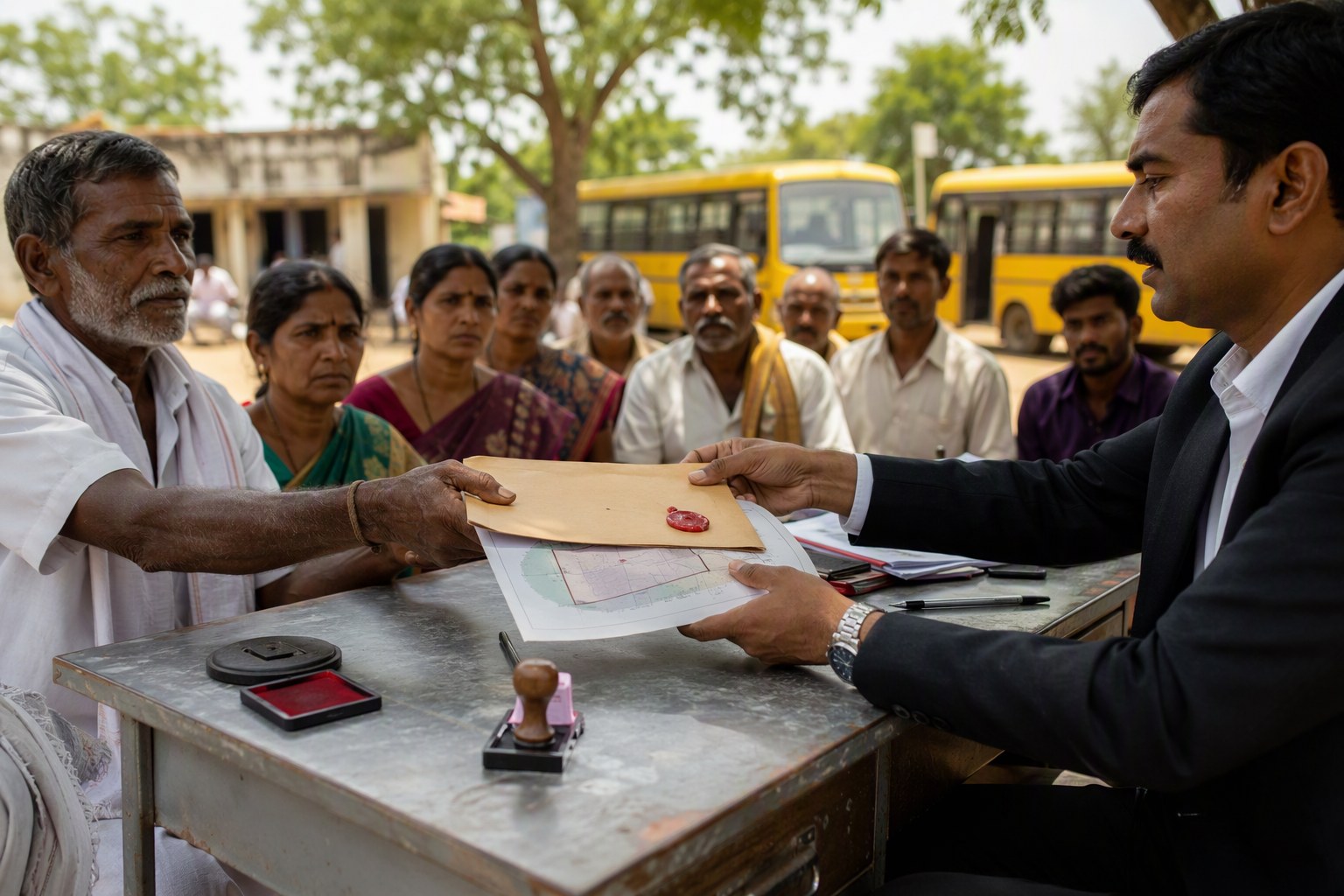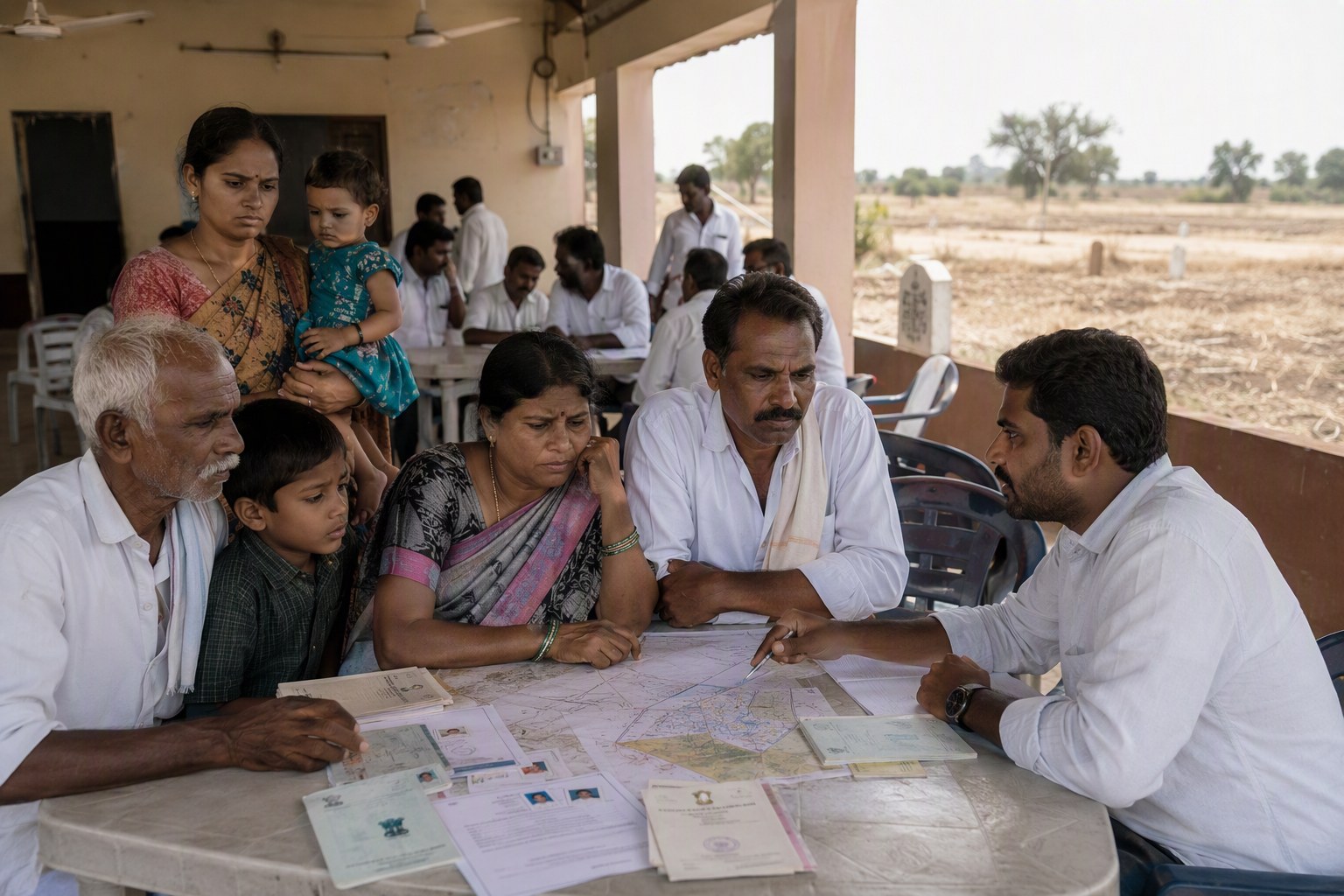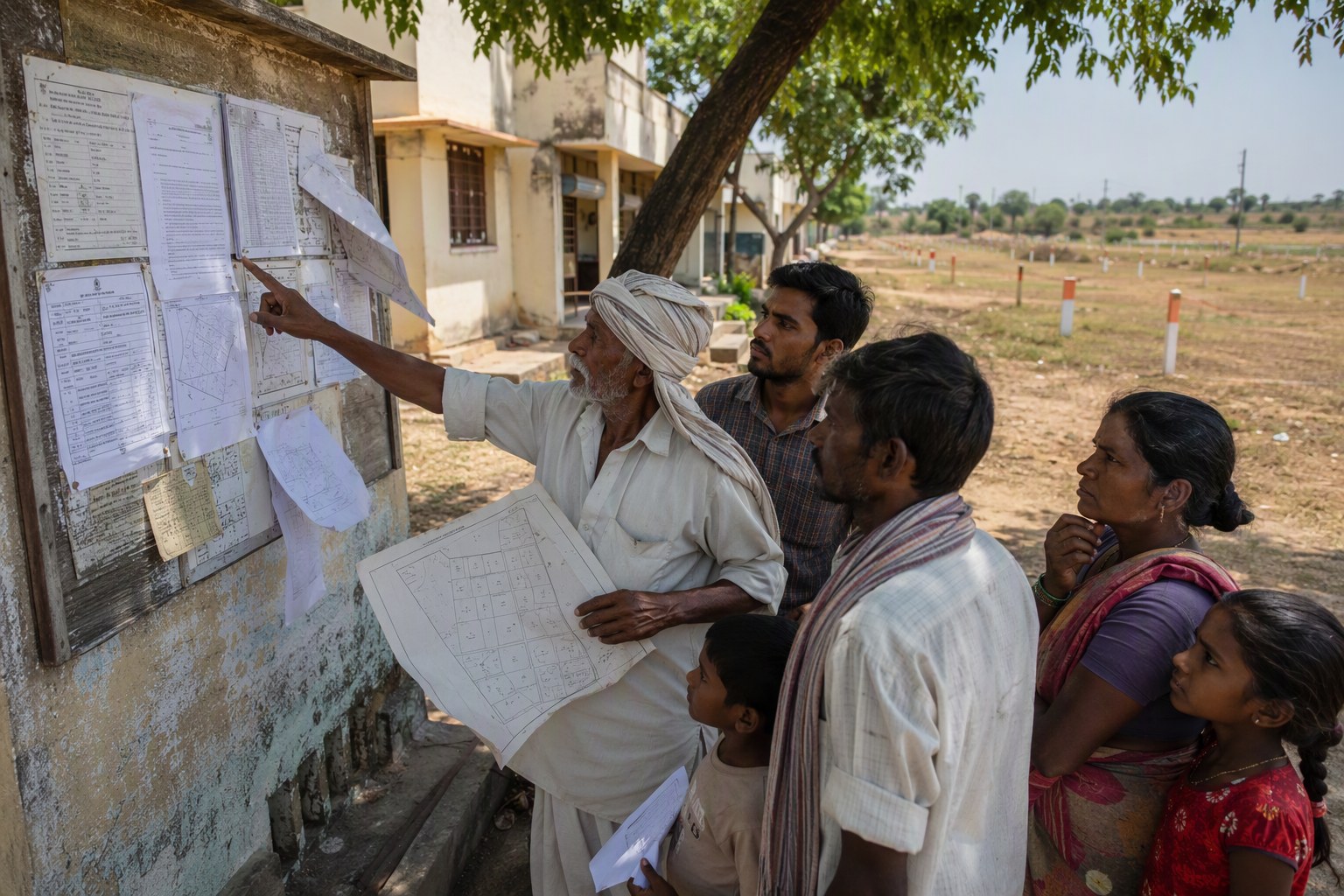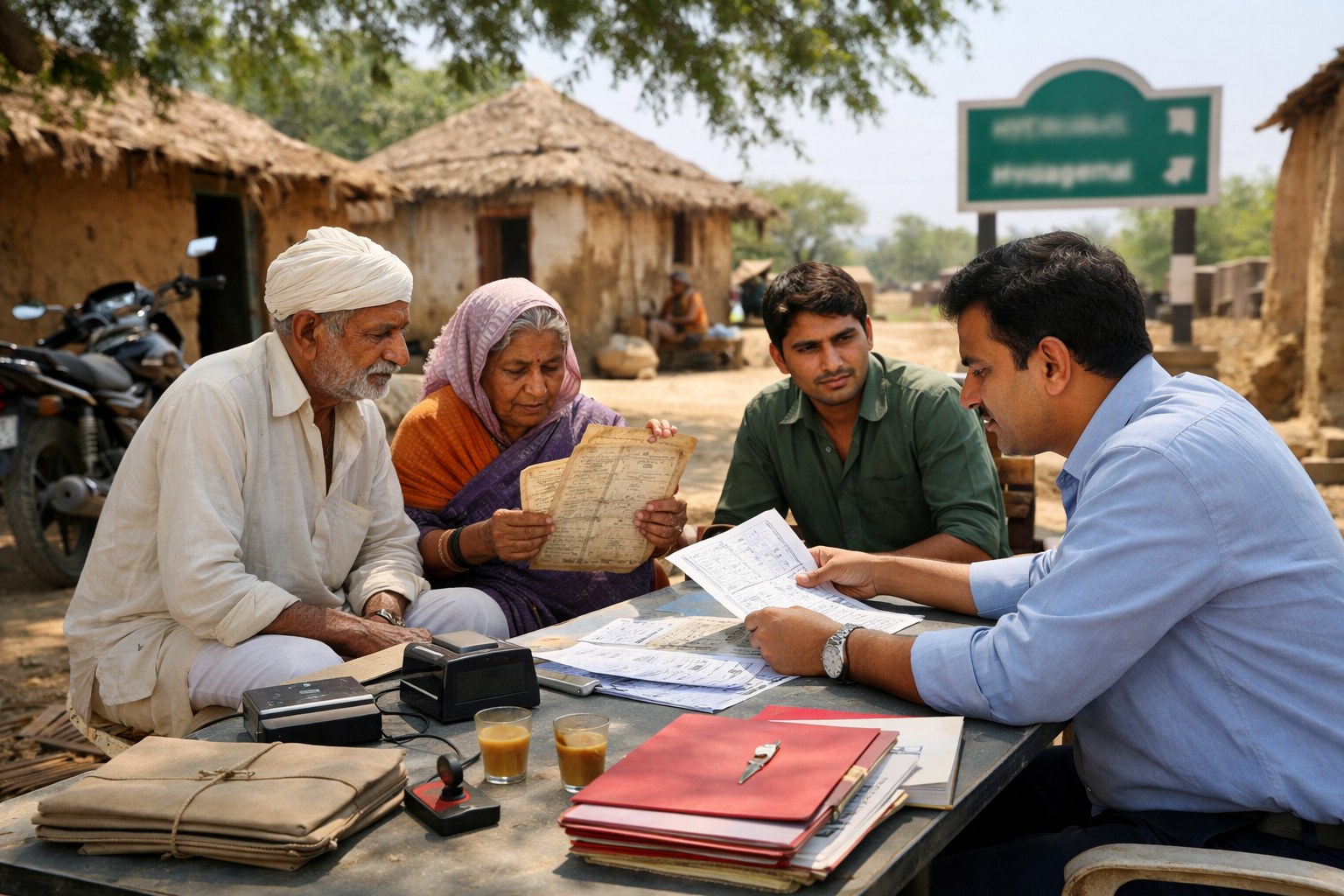
Telangana Panchayats Plan Doorstep Checks for 22-A Lands could become a practical relief measure for families dealing with land sale, partition, gift deed or inheritance matters in villages around Hyderabad and across the state. With 147,934 prohibited properties listed under Section 22-A, the real burden is not only at the Sub-Registrar Office. It is at home, where families often discover the problem only after talks with buyers, advances, family settlements or bank loan discussions have already started.
The idea being discussed in local governance circles is simple: take basic record-check support closer to people through gram panchayats, instead of making every elderly landholder, widow, farmer or NRI family run first to the SRO, then to the mandal office, then to Dharani support. In our experience, that first village-level check can prevent plenty of social damage.
For many families, a 22-A entry is not just a legal obstacle. It can stop a daughter’s marriage funding, delay medical expenses, block inheritance mutation, or break trust between siblings.
Telangana Panchayats Plan Doorstep Checks for 22-A Lands: Why this matters now
Section 22-A properties are lands or properties prohibited from registration. These can include government lands, assigned lands, endowment lands, wakf-related properties, ceiling surplus lands, disputed survey numbers and other categories notified by authorities. Once a property is on this list, the SRO generally cannot register sale, gift or transfer documents unless the prohibition is removed or clarified through the proper process.
The number itself tells the story: 147,934 prohibited properties is not a small administrative file. It means lakhs of people may be indirectly touched — owners, heirs, buyers, lenders, tenants, relatives and brokers. In Hyderabad’s expanding edges like Shankarpally, Mokila, Moinabad, Gandipet, Shamshabad, Maheshwaram, Abdullapurmet, Hayathnagar, Medchal, Dundigal, Patancheru and Ghatkesar, one survey number can involve several families and multiple plots.
We’ve seen many cases where the owner believes the land is clear because pahani shows their name or because tax was paid for years. But when a buyer’s document writer checks at the SRO stage, a 22-A block appears. By then, advance money is paid, family expectations are fixed, and tempers rise. A panchayat-level pre-check can catch this early.
Telangana Panchayats Plan Doorstep Checks for 22-A Lands before sale and inheritance deals
The strongest use case is not fancy digitisation. It is basic social protection. Before a village family enters a sale agreement, partition discussion or inheritance transfer, the panchayat can help them check a few essential records:
- Survey number and sub-division number as per Dharani or old revenue records
- Village, mandal and district mapping, especially after reorganisation
- Whether the land appears in Section 22-A prohibited property records
- Whether the land is assigned, government, endowment, wakf or ceiling-related
- Current market value or guideline value for stamp duty planning
- Correct SRO jurisdiction for document registration
- Latest EC entries, if available, for previous transactions
This is not a replacement for legal due diligence. It is an early warning system. A gram panchayat secretary or trained village-level assistant need not give a legal title opinion. They can simply help residents see whether there is a red flag before money changes hands.
For a buyer in Kollur or Tellapur, a lawyer’s title search is normal. But for a small landholder in a village near Toopran, Ibrahimpatnam or Chevella, the first point of trust is still the local office or known panchayat staff. That is why doorstep checks can work if done carefully.
What should a doorstep 22-A land check include?
A good doorstep check should be short, documented and easy to understand. In my view, panchayats should not overpromise. They should give a basic record-screening slip saying whether the survey number needs further verification.
| Check point | Why it matters | Useful public tool |
|---|---|---|
| Section 22-A status | Identifies whether registration may be blocked | Section 22-A Prohibited Property Check |
| Survey number confirmation | Prevents mistakes in village, mandal or sub-division number | Survey Number Finder |
| SRO jurisdiction | Shows where the document will be registered | Find Your SRO Office |
| Guideline value | Helps families estimate minimum registration value | Market Value / Guideline Value Search |
| EC review | Shows registered transaction history and possible encumbrances | Encumbrance Certificate Search |
For families planning a sale, the financial side also matters. Telangana sale deed registration cost is usually calculated using stamp duty, transfer duty and registration fee on the market value or consideration value, whichever is higher. Before agreeing on a price, sellers and buyers can estimate costs through the Stamp Duty Calculator. If the land is part of a layout or building plan discussion, the Land Use Zone Finder and Road Width Check can also reduce later surprises.
The social burden behind 147,934 prohibited properties
When we speak about 147,934 prohibited properties, it sounds like a land administration number. On the ground, it becomes a family problem.
A widow in a gram panchayat near Shamshabad may want to transfer land to children. A farmer in Maheshwaram may plan to sell one acre for a son’s education. Brothers in Medchal may want to divide inherited land before building houses. An NRI family from Serilingampally may depend on relatives to check records for ancestral land in Vikarabad district. If the 22-A issue is detected late, every party suspects the other.
The damage is not only financial. Many families enter oral agreements based on trust. Some take token advance. Some spend advance money quickly for medical bills or debt repayment. If registration fails later, refund pressure starts. In rural Telangana, this can become a village-level dispute within days.
Doorstep checking through panchayats can reduce this tension by creating a culture of “check first, commit later”. That is a small behavioural change, but it can protect vulnerable households.
Hyderabad peri-urban villages need this more than anyone
The pressure is highest around Hyderabad’s growth corridors. Land values in mandals like Gandipet, Shankarpally, Moinabad, Shamshabad, Maheshwaram, Ibrahimpatnam and Keesara have changed quickly because of road access, layouts, farm plots, warehouses and villa projects. Where prices rise fast, old record problems surface faster.
In places like Mokila, Nandigama, Kandukur, Tukkuguda, Adibatla and Ghatkesar, buyers often check HMDA layout permissions, RERA status and road width. But village families selling inherited agricultural land may still depend on pahani copies, Dharani entries and local memory. That gap is where mistakes happen.
For apartment or villa buyers, checking project registration through the RERA Project Lookup is now common. Land buyers should treat 22-A verification with the same seriousness. Before paying a token amount, use the Property Verification Tool along with official revenue and registration records.
How panchayats can run the checks without creating confusion
The biggest risk is that people may treat a panchayat check as final title clearance. That should not happen. Panchayats must clearly say that their role is support, not adjudication.
A workable system can follow five steps:
- Collect basic details: owner name, survey number, extent, village, mandal and document number if available.
- Check public records: Dharani, SRO-related information, 22-A list and village revenue references.
- Issue a simple note: “No visible 22-A flag found in checked records” or “Further verification required due to possible prohibited entry”.
- Refer difficult cases: send families to the tahsildar, district collectorate, endowment office, wakf board or legal counsel depending on the issue.
- Maintain a register: record who requested the check, date, survey number and outcome to avoid misuse.
That last point matters. Land is emotional and political in villages. A written register can protect both the family and panchayat staff from later allegations.
What buyers and heirs should do before signing anything
If you are buying land or inheriting property in Telangana, do not rely only on one document. Pahani, Dharani passbook, old sale deed, mutation entry and tax receipt each show only part of the story. The SRO record, 22-A list and court or department restrictions can still change the outcome.
Before signing a sale agreement, check the survey number, SRO, EC, guideline value and 22-A status. If the property is in Hyderabad’s fast-moving zones like Kokapet, Narsingi, Tellapur, Kollur, Tukkuguda, Adibatla or Ghatkesar, do the checks even before price negotiation. A lower price sometimes hides a record problem.
For inheritance, families should check 22-A status before preparing partition deeds, gift deeds or release deeds. If the land is prohibited, registration may not happen as planned. Better to know early and start correction or clarification steps.
Our view: panchayat checks can save families from late shocks
Telangana has already moved much land administration online through Dharani and registration systems. Still, access is uneven. A tech-savvy buyer in Hyderabad can run checks in minutes. A senior citizen in a village may not know which mandal record to search after district changes. This is where panchayats can make a real difference.
The plan for doorstep checks for 22-A lands should be treated as a public service, not as another certificate counter. If panchayats provide early warnings, families can avoid bad advances, broken deals, quarrels between heirs and unnecessary SRO visits.
With 147,934 prohibited properties in the system, Telangana cannot expect every citizen to understand land law before making family decisions. Basic verification must move closer to the people. That is sensible governance, especially for vulnerable families who cannot afford repeated travel, legal fees or failed transactions.
Frequently Asked Questions
What are 22-A lands in Telangana?
22-A lands are properties prohibited from registration under Section 22-A. They may include government land, assigned land, endowment land, wakf-related land, ceiling surplus land or other notified properties.
Can a gram panchayat remove a 22-A entry?
No. A gram panchayat cannot remove a 22-A prohibition. It can only help residents do basic record checks and guide them to the correct authority such as the tahsildar, collectorate or concerned department.
Should I check 22-A status before paying advance for land?
Yes. Always check 22-A status before paying token advance or signing a sale agreement. If the land is prohibited, registration may be blocked at the SRO.
Which records should I verify for inherited land?
Check the survey number, pahani, Dharani entry, old title deeds, EC, SRO jurisdiction, guideline value and 22-A status before preparing partition, gift or release deeds.
Is an online 22-A check equal to legal title verification?
No. An online check is an early warning tool. For purchase, inheritance dispute or high-value land, take a proper legal title opinion and verify records with the relevant government offices.