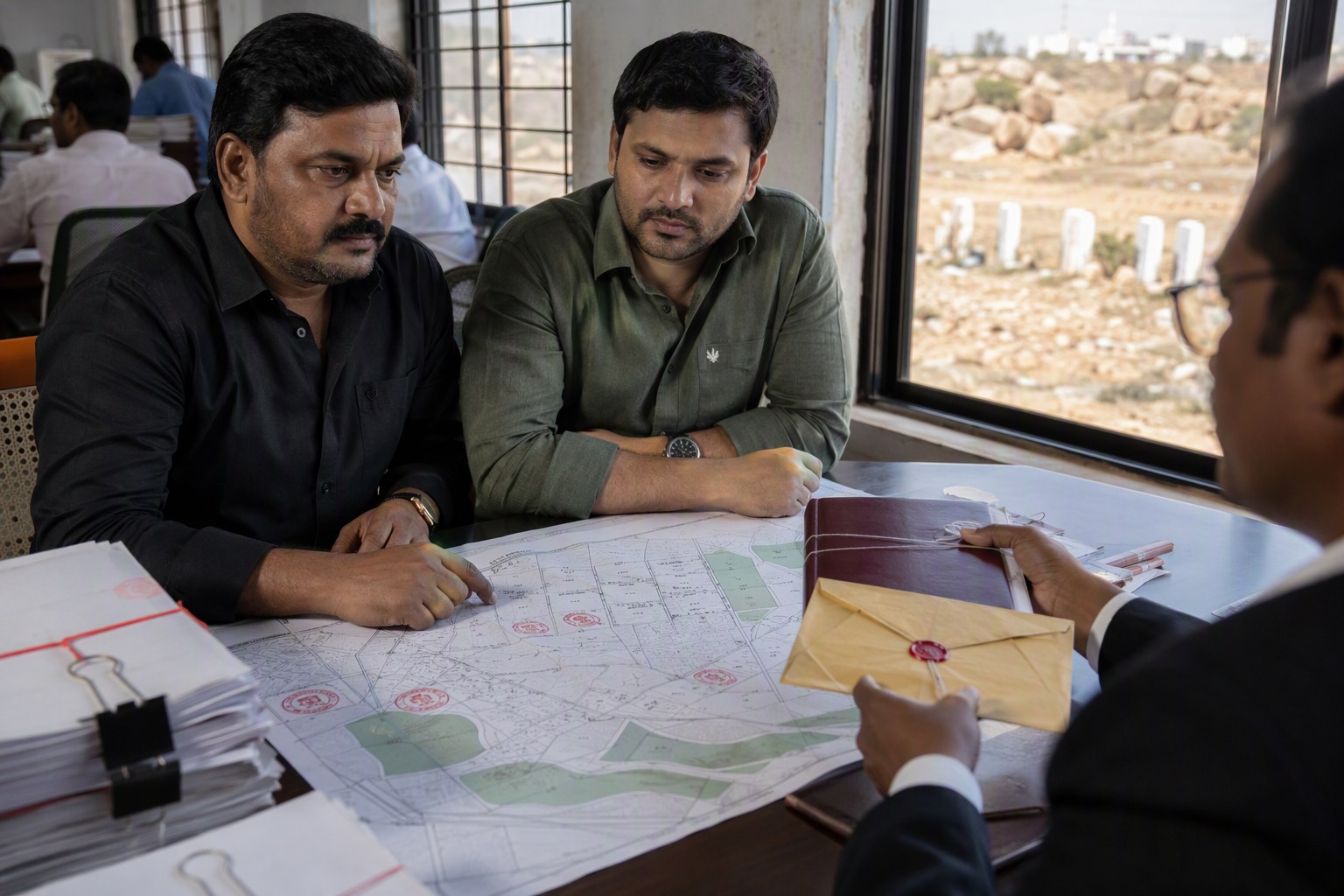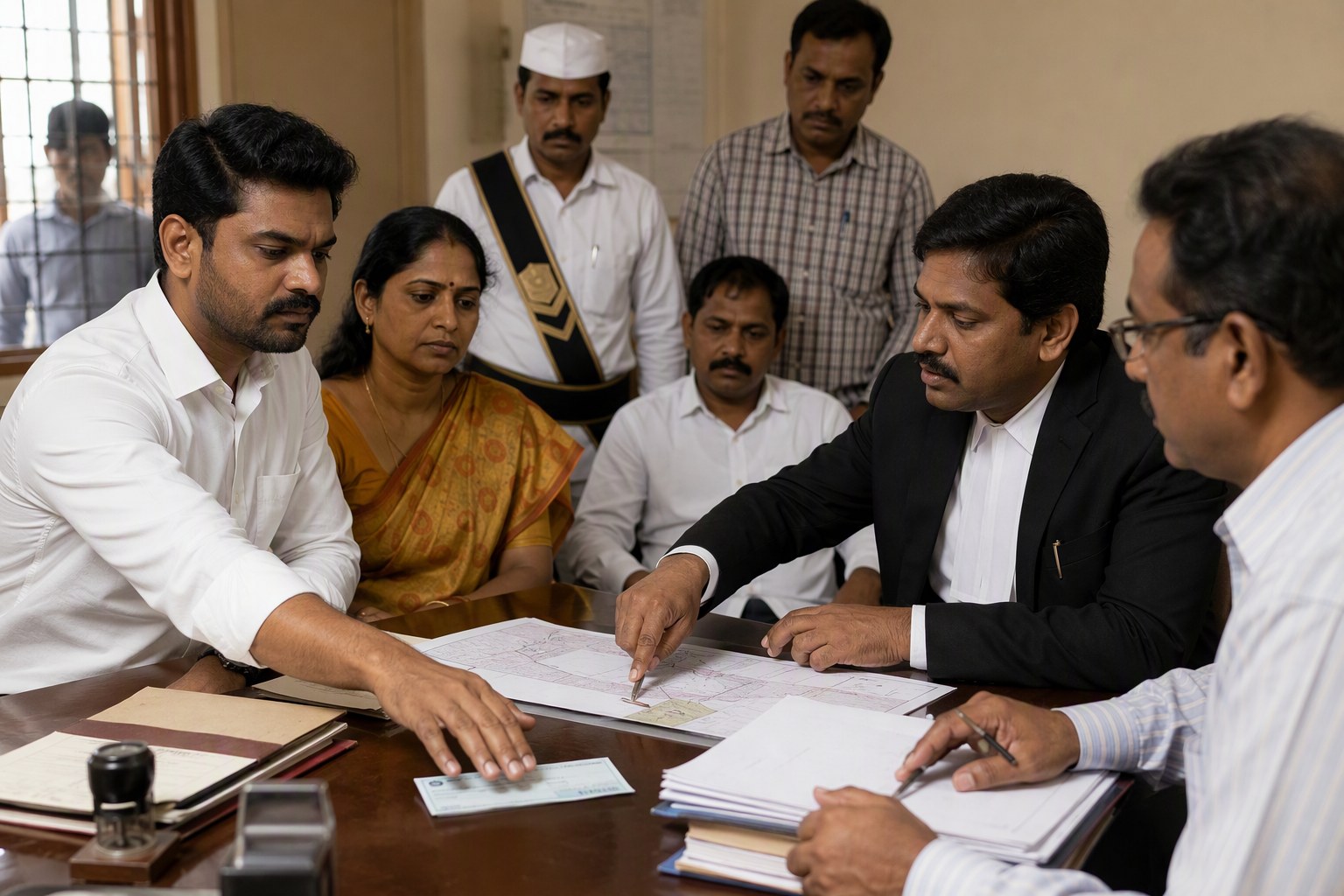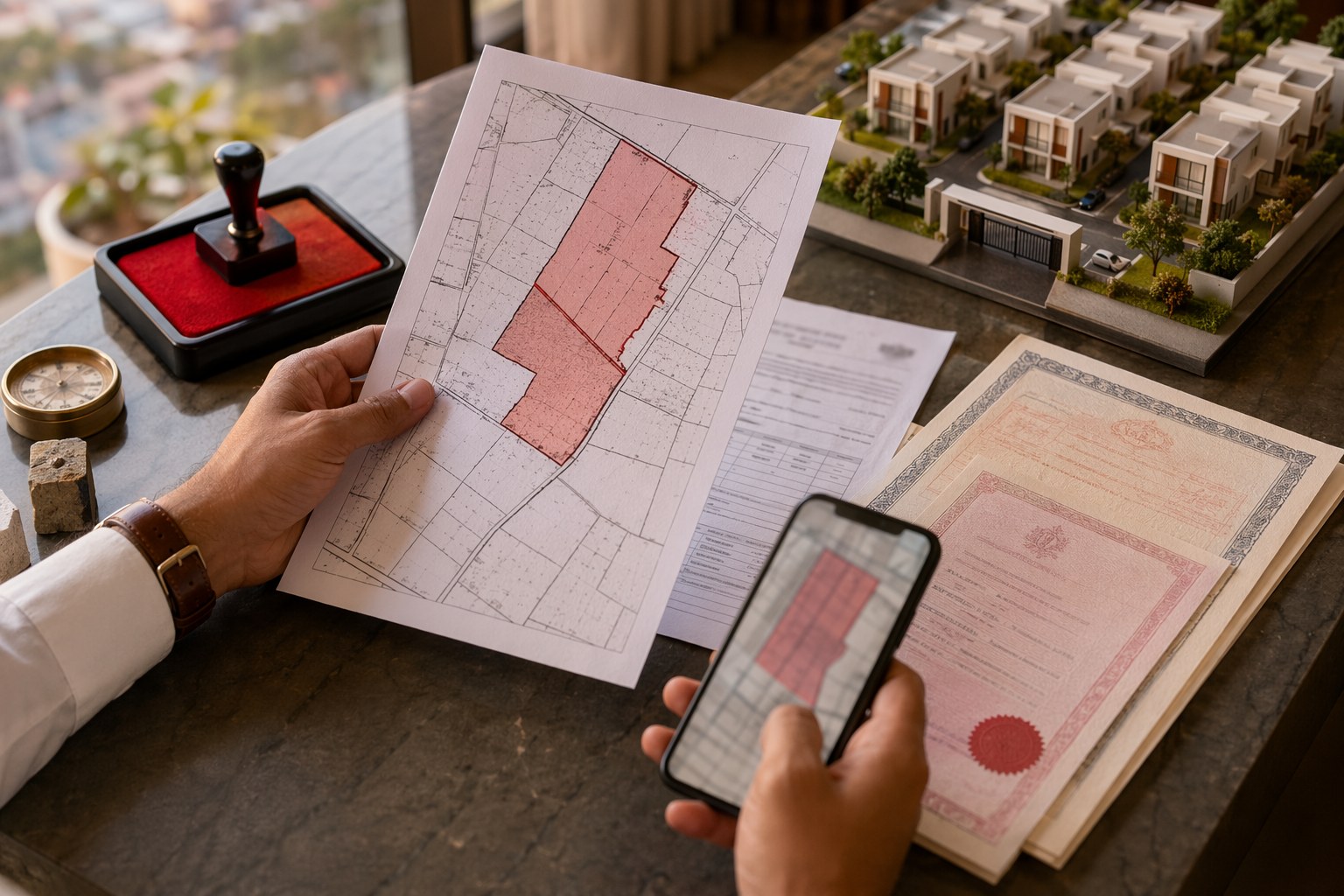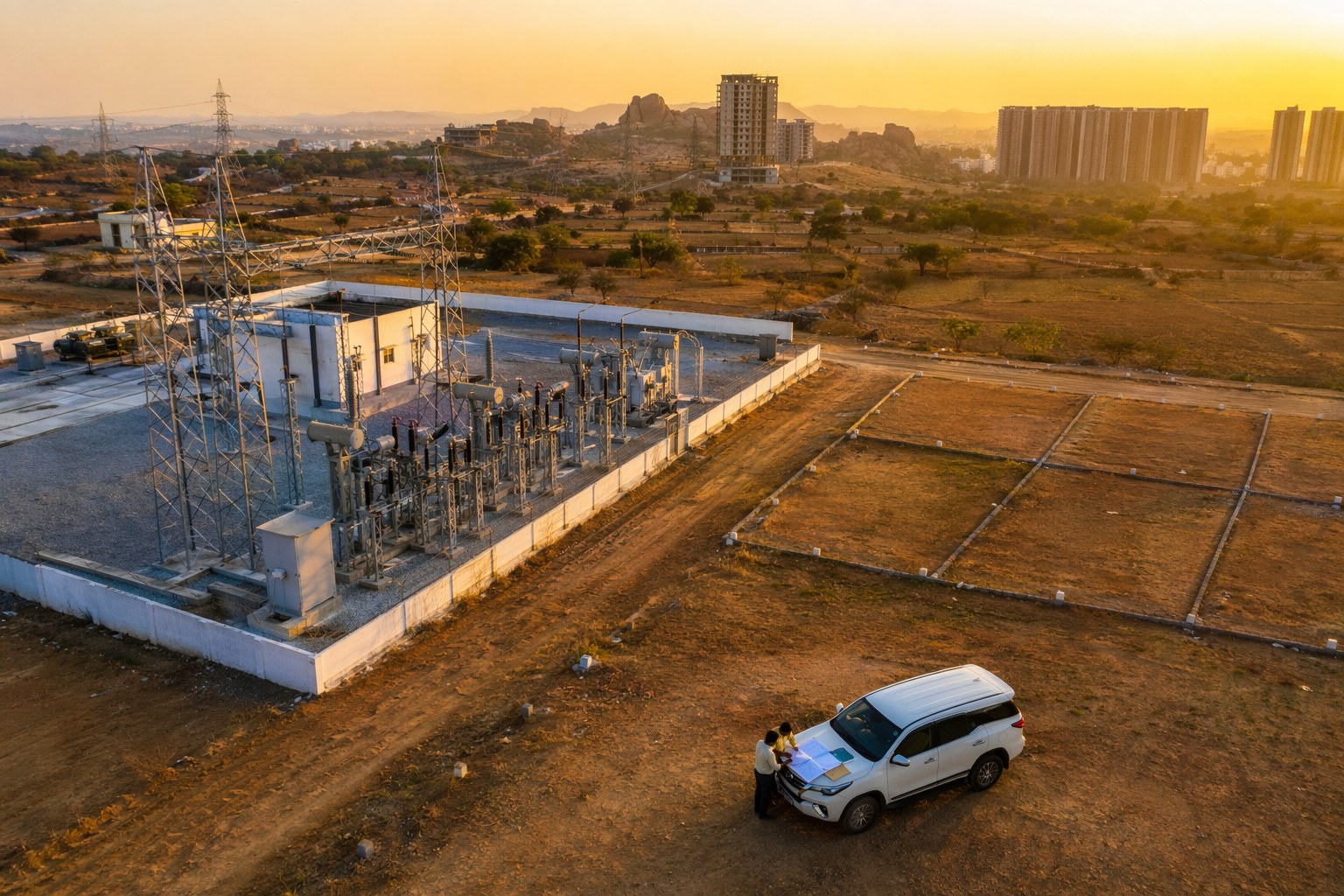
Telangana Industrial Land Swap Deals are set to face sharper legal drafting as buyers, industrial park operators and land aggregators look again at Section 22-A risk. With 147,934 prohibited properties recorded under Section 22-A, big-ticket industrial transactions in Telangana can no longer treat title checks as a last-mile formality. In our experience, the next wave of land swap agreements around Hyderabad will carry tighter 22-A warranties, reverse-transfer clauses, escrow-style deferred payouts and survey-number level checks before possession changes hands.
The discussion has become active in corridors where industrial land is assembled: Patancheru and Pashamylaram in Sangareddy district, Sultanpur near Ameenpur, Kandukur and Maheshwaram on the Pharma City side, Medchal and Shamirpet in the north, and Choutuppal-Bhongir along the Warangal highway. These are not casual residential plot deals. One wrong survey number in a swap can freeze an entire manufacturing expansion plan.
For industrial land, title risk is not only about ownership. It is also about whether the land can be registered, converted, mortgaged, used for industry and transferred again without a Dharani or SRO objection.
Telangana Industrial Land Swap Deals: why 22-A is now centre-stage
Section 22-A of the Registration Act allows certain properties to be barred from registration. In Telangana, this generally covers government land, assigned land, ceiling surplus land, endowment land, wakf property, certain court-disputed entries and other notified categories. Once a survey number is flagged, the Sub-Registrar Office may refuse registration even if the private parties have agreed on price, possession and timelines.
The number matters: 147,934 prohibited properties is not a small risk pool. Many entries are old. Some may be wrong. Some may be partly affected, where only a portion of a survey number is under restriction. But in industrial land assembly, even a partial 22-A hit can disturb the entire layout, access road, buffer strip or utility corridor.
That is why deal lawyers are moving beyond standard title warranty lines. We are seeing draft term sheets ask for specific declarations that each survey number is free from 22-A, assigned land restrictions, endowment claims, wakf notifications, ceiling proceedings and government poramboke classification. Earlier, many agreements only said the seller has good and marketable title. That wording is now too thin for a ₹50 crore or ₹200 crore industrial land transaction.
How Telangana Industrial Land Swap Deals may change in drafting
Land swap is attractive when two parties hold parcels that suit each other better. For example, an industrial operator in Patancheru mandal may swap frontage land for contiguous rear land needed for expansion. A developer near Kandukur may exchange scattered holdings for land closer to a proposed internal road. A logistics player near Medchal may prefer a single parcel with better highway access rather than multiple odd-shaped bits.
The legal problem is simple: unlike cash sale, a swap creates two transfers. If one side later faces a 22-A block, the other side may already have transferred its clean land. That is where reverse-transfer clauses are entering the conversation.
| Deal clause | What it tries to solve | Why it matters in Telangana |
|---|---|---|
| 22-A warranty by survey number | Seller confirms every survey number is not prohibited | Dharani and SRO records can block registration at the last stage |
| Reverse-transfer clause | Clean land must come back if swapped land is later found restricted | Useful when one side has already transferred possession |
| Deferred payout or escrow | Part of value is paid after mutation and EC confirmation | Protects buyer from post-registration objections |
| Indemnity for 22-A and government claims | Seller bears loss, litigation cost and value erosion | Industrial land disputes can affect project finance |
| Condition precedent on SRO opinion | Registration steps begin only after local SRO verification | Each SRO may read notified lists and survey history closely |
In my view, deferred consideration will become normal in large swaps. A buyer may agree to release 70% of value on execution, 20% after mutation in Dharani, and 10% after a clean encumbrance certificate is generated post-registration. Some parties may keep a non-cash security deposit instead. The exact structure depends on bargaining power, but the direction is clear.
22-A clauses in Telangana industrial land: due diligence is shifting to survey-number level
Industrial land due diligence cannot stop at the parent document. The working file should include pahani, ROR, Dharani extract, village map, survey sketch, FMB, mutation history, EC, link documents, conversion orders, land use confirmation and SRO-level check. For buyers, the starting point should be a Section 22-A Prohibited Property Check and then a Survey Number Finder review to ensure the correct parcel is being tested.
After that, check the local SRO through Find Your SRO Office. This is practical, not academic. A parcel at Sultanpur may fall under a different registration office from what a buyer assumes. A village boundary near Ameenpur, Patancheru or Ramachandrapuram can create confusion if the transaction team works only from Google Maps.
Before signing, parties should also run an Encumbrance Certificate Search. EC will not solve every 22-A issue, but it tells you whether prior mortgages, sale deeds, court attachments or release deeds exist. For industrial use, the Land Use Zone Finder is equally relevant. A clean title on agricultural land is still not enough if the proposed use conflicts with zoning, master plan roads, conservation buffers or local planning restrictions.
Rates, duties and commercial risk in Hyderabad-side industrial swaps
One reason these clauses are getting attention is the value involved. Around Hyderabad, industrial and warehousing land is no longer a cheap asset class. In active belts such as Patancheru, Pashamylaram, Sultanpur, Medchal, Shamirpet, Kandukur, Maheshwaram and Choutuppal, buyers often compare land on road width, truck access, power availability, zoning and distance from ORR or national highways. Even a small title defect can change the commercial value sharply.
For pure sale transactions in Telangana, parties usually factor a total registration outgo of around 7.5%, made up of stamp duty, transfer duty and registration fee. In swap or exchange structures, the instrument and valuation treatment need careful checking with the SRO. Do not assume the duty impact only from a broker’s WhatsApp message. Use the Stamp Duty Calculator and cross-check the base value through Market Value / Guideline Value Search before the term sheet is frozen.
Ready reckoner value is not the same as market value, but it can still affect duty, capital gains planning and negotiations. If one party gives land in a high-demand stretch near ORR connectivity and receives land in a less liquid village pocket, the equal-acreage swap may not be equal in value. That is where the agreement must spell out balancing consideration, TDS responsibility, capital gains treatment and default consequences. The Capital Gains Tax Calculator helps parties estimate tax impact before they sign a binding document.
What lenders and industrial buyers will insist on
Banks and NBFCs financing industrial acquisitions are likely to be stricter than private buyers. They will ask whether the land can be mortgaged without SRO objection. They may insist on a title search report covering 30 years, a 22-A confirmation, latest pahanis, mutation entries, tax receipts and physical possession certificate. For land near water bodies or nalas, they may ask for layout overlays and road access proof.
In our experience, lenders get uncomfortable when the transaction depends on a later correction in Dharani. Yes, some wrong entries can be corrected. But industrial project timelines do not wait kindly for revenue office follow-up. A manufacturer planning a unit near Kandukur or a warehouse operator near Medchal needs certainty on civil works, approvals, power connection and bank disbursement. A pending 22-A clarification can hold all of that.
For this reason, the best-drafted deals will treat 22-A clearance as a condition precedent, not a post-closing promise. If the seller says the entry is a clerical mistake, let the seller get it removed before closing or keep a sizeable portion unpaid till the issue is fully resolved.
What sellers should prepare before entering a land swap
Sellers also benefit from better preparation. A landowner with clean documents can command a stronger position if the file is ready. Keep link documents, death certificates if inheritance is involved, family settlement papers, pattadar passbook copies, mutation orders, pahanis, EC and tax receipts in one place. If the land has been converted from agriculture to non-agriculture use, keep the conversion order and challans handy.
For industrial parcels, road width and access matter. A parcel may have clean title but poor approach road. Use a Road Width Check before representing that the land is suitable for logistics or heavy vehicle movement. If built-up potential is part of the negotiation, the FSI/FAR Calculator can help compare parcels beyond acreage alone.
The market is moving from handshake understanding to document-heavy closing. That is healthy. Telangana has strong industrial demand, but serious capital will pay only when title, registration and land use are clear.
The larger signal for Telangana industrial real estate
The 147,934 prohibited-property figure tells us one thing plainly: title risk is not a corner issue. It sits at the centre of industrial land transactions. The next phase of Telangana Industrial Land Swap Deals will reward parties who verify early, draft tightly and price risk honestly.
For buyers, the safest approach is to check each survey number before signing. For sellers, clean up revenue records before inviting bids. For lawyers, generic warranties are no longer enough. The clause must say what happens if a 22-A restriction appears after execution, after mutation, or before project finance is drawn.
Hyderabad’s industrial expansion will continue across Sangareddy, Medchal-Malkajgiri, Rangareddy and Yadadri-Bhuvanagiri. But the smarter money will not move on acreage alone. It will move on clean survey numbers, clean SRO records and contracts that give a real remedy when title risk appears.
Frequently Asked Questions
What is Section 22-A in Telangana property registration?
Section 22-A allows certain properties to be barred from registration, including government land, assigned land, endowment land, wakf property and other notified categories. If a survey number is listed, the SRO may refuse registration.
Why are 22-A clauses important in Telangana industrial land swap deals?
A land swap involves two transfers. If one parcel is later found prohibited under 22-A, the other party may have already transferred clean land. Strong clauses give rights to reverse the transfer, claim indemnity or hold back payment.
How can buyers check whether industrial land is prohibited?
Buyers should check the survey number through a prohibited property search, verify Dharani records, obtain EC, review pahani and mutation history, and confirm with the relevant SRO before signing.
Is a clean Encumbrance Certificate enough for industrial land purchase?
No. EC is useful for checking registered transactions and charges, but it may not fully confirm 22-A status, land use, ceiling issues, assignment conditions or government claims. It should be one part of a wider due diligence file.
Should payment be deferred in a Telangana land swap?
For large industrial deals, deferred payout is sensible. A portion can be released after mutation, clean EC and confirmation that no 22-A restriction affects the transferred survey numbers.