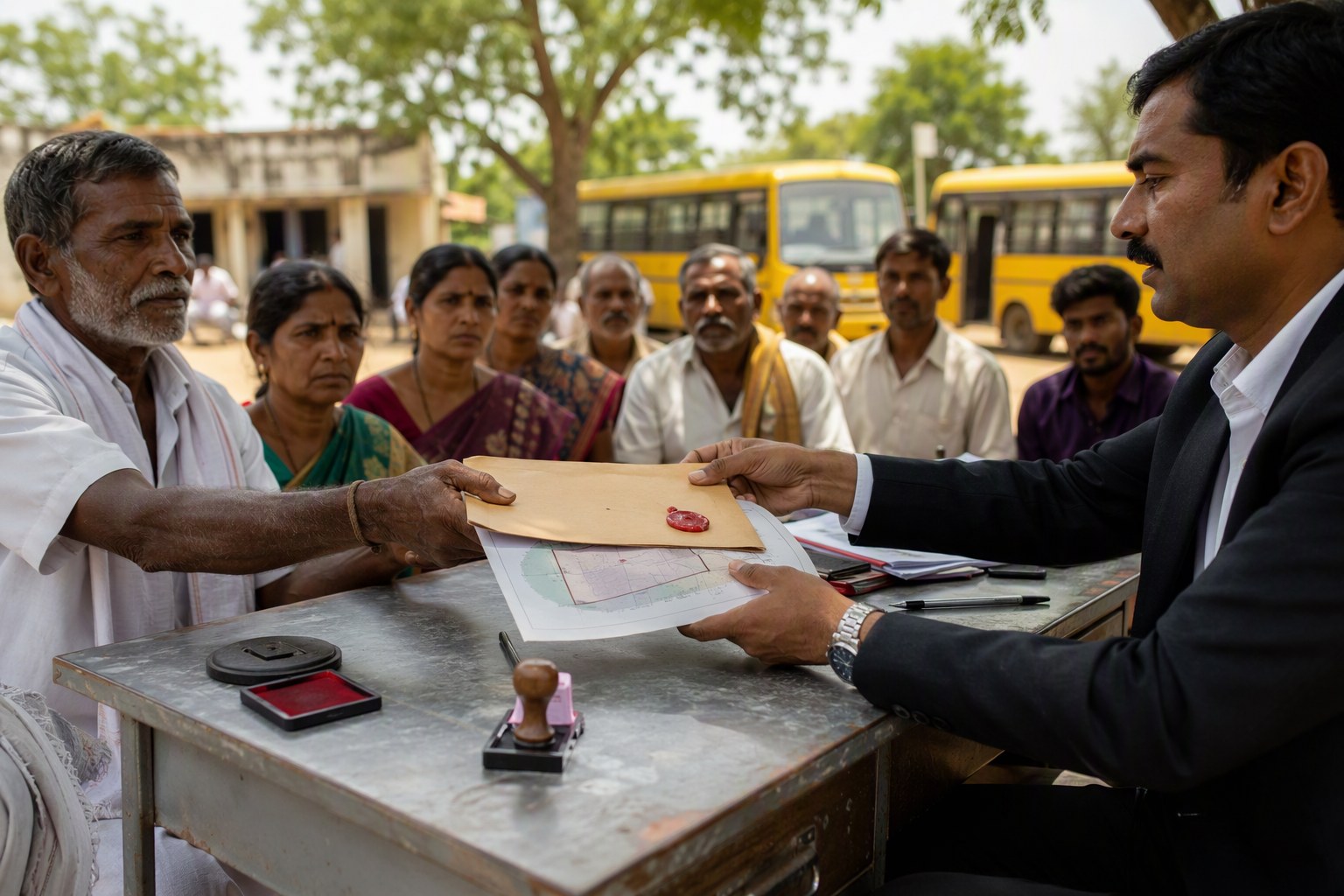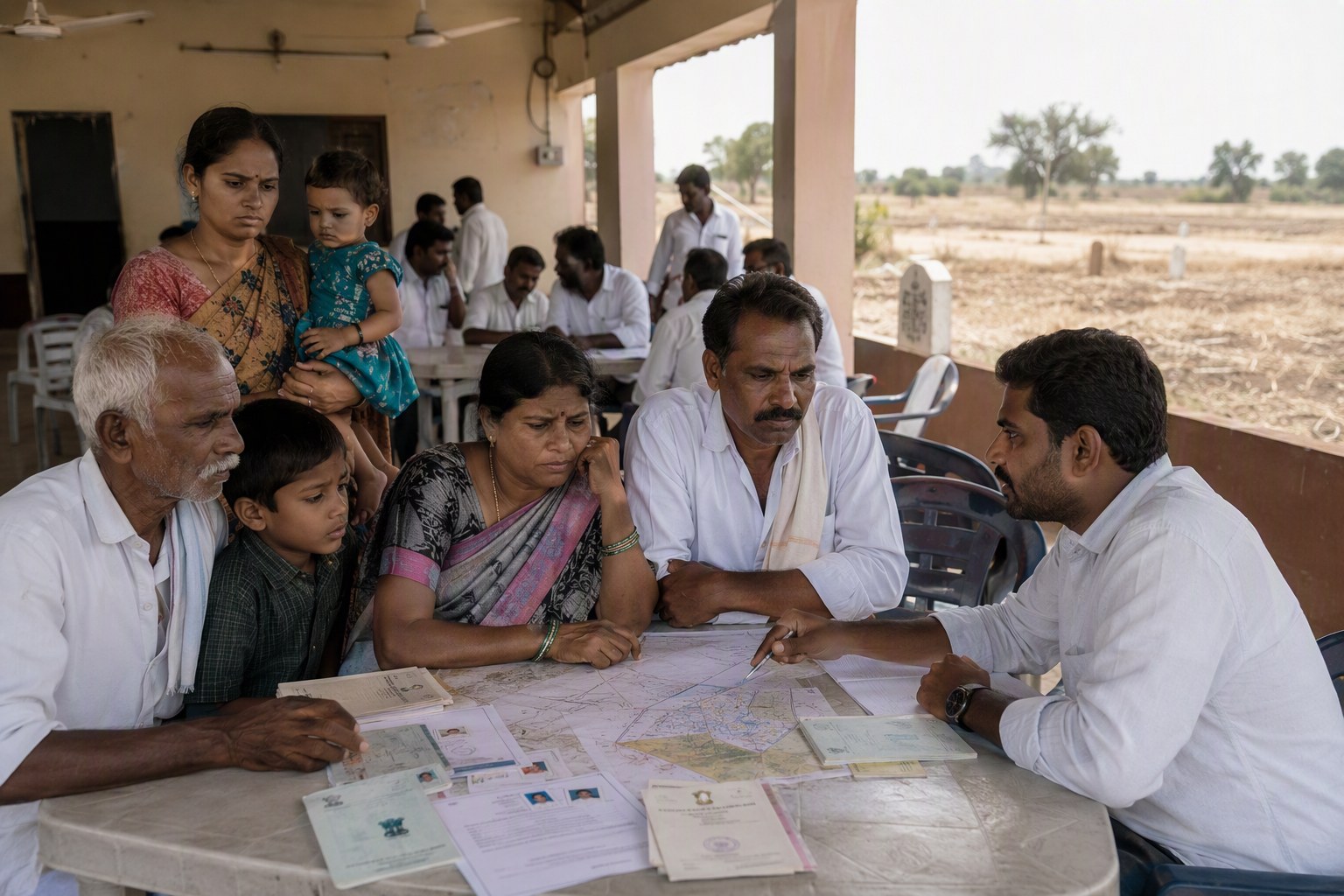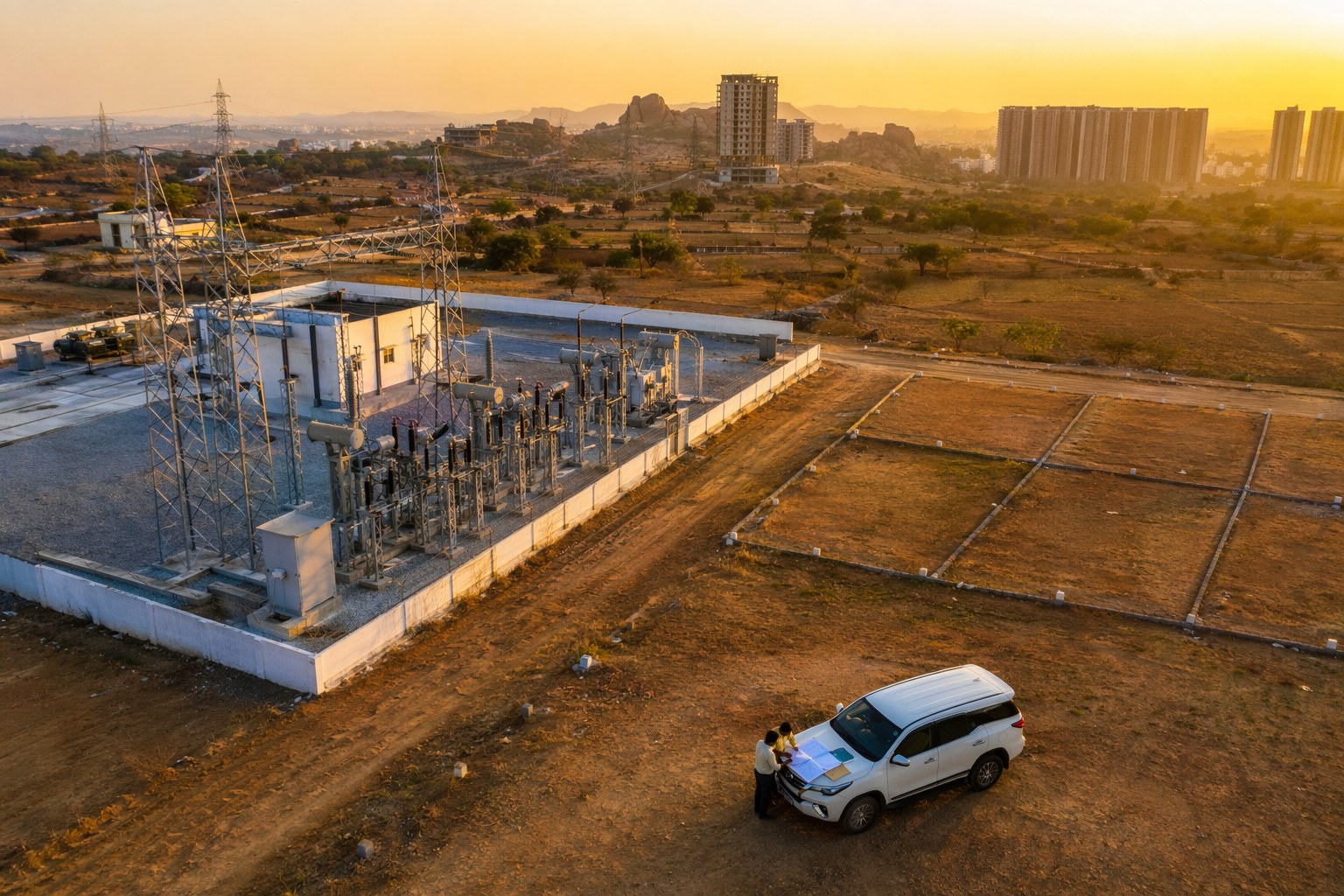
Telangana Gram Sabhas are set to become a practical local checkpoint for landowners as Section 22-A prohibited property alerts move closer to the village level. For many families in Rangareddy, Sangareddy, Medchal-Malkajgiri, Yadadri and other districts, this can reduce a common shock: reaching the SRO for a gift deed, sale deed or family partition, only to learn that the survey number is blocked for registration.
The scale is not small. Telangana has 1,47,934 prohibited properties under Section 22-A, as per the current database count. These are properties where registration is restricted due to categories such as government land, assigned land, endowment land, wakf-related entries, court disputes, land acquisition notifications or other notified prohibitions. When such information is read out or displayed at gram sabhas, the biggest benefit is simple: villagers get risk information before spending money on brokers, stamp papers, travel and documentation.
In our experience, the most affected people are not large developers. They are elderly pattadars, widows, siblings dividing ancestral land, and families trying to transfer 2 acres or 200 square yards within the family.
Telangana Gram Sabhas and 22-A Land Alerts: What Is Changing?
The idea behind gram sabha-level 22-A alerts is to bring the prohibited property warning closer to the people who actually hold the land. Till now, many landowners depended on the Dharani portal, mee-seva operators, document writers, village revenue staff, or the SRO counter to understand whether a survey number had a restriction. That system works for tech-friendly owners. It does not work well for an 82-year-old pattadar in Chevella mandal or a family in Maheshwaram trying to do a simple gift deed.
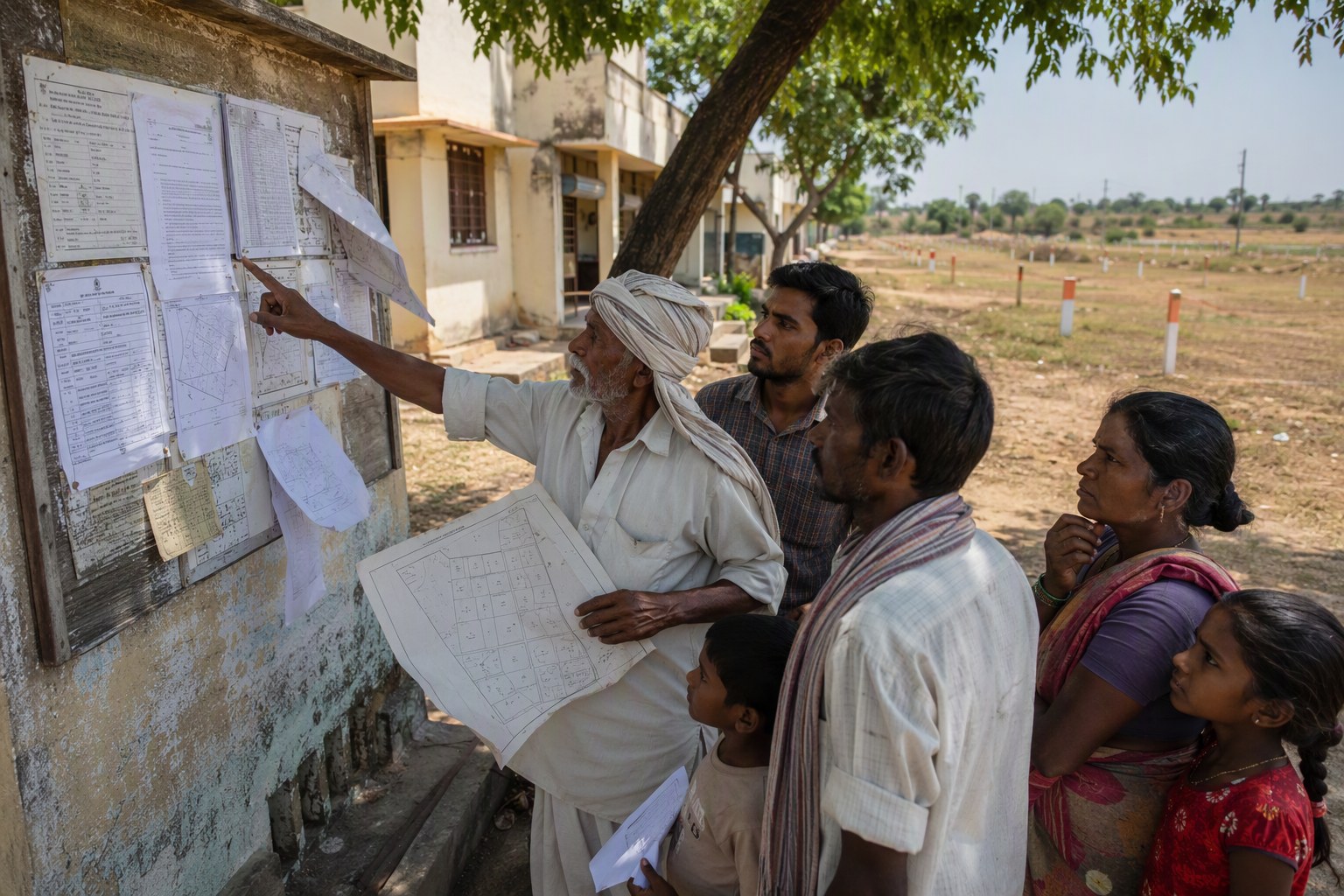
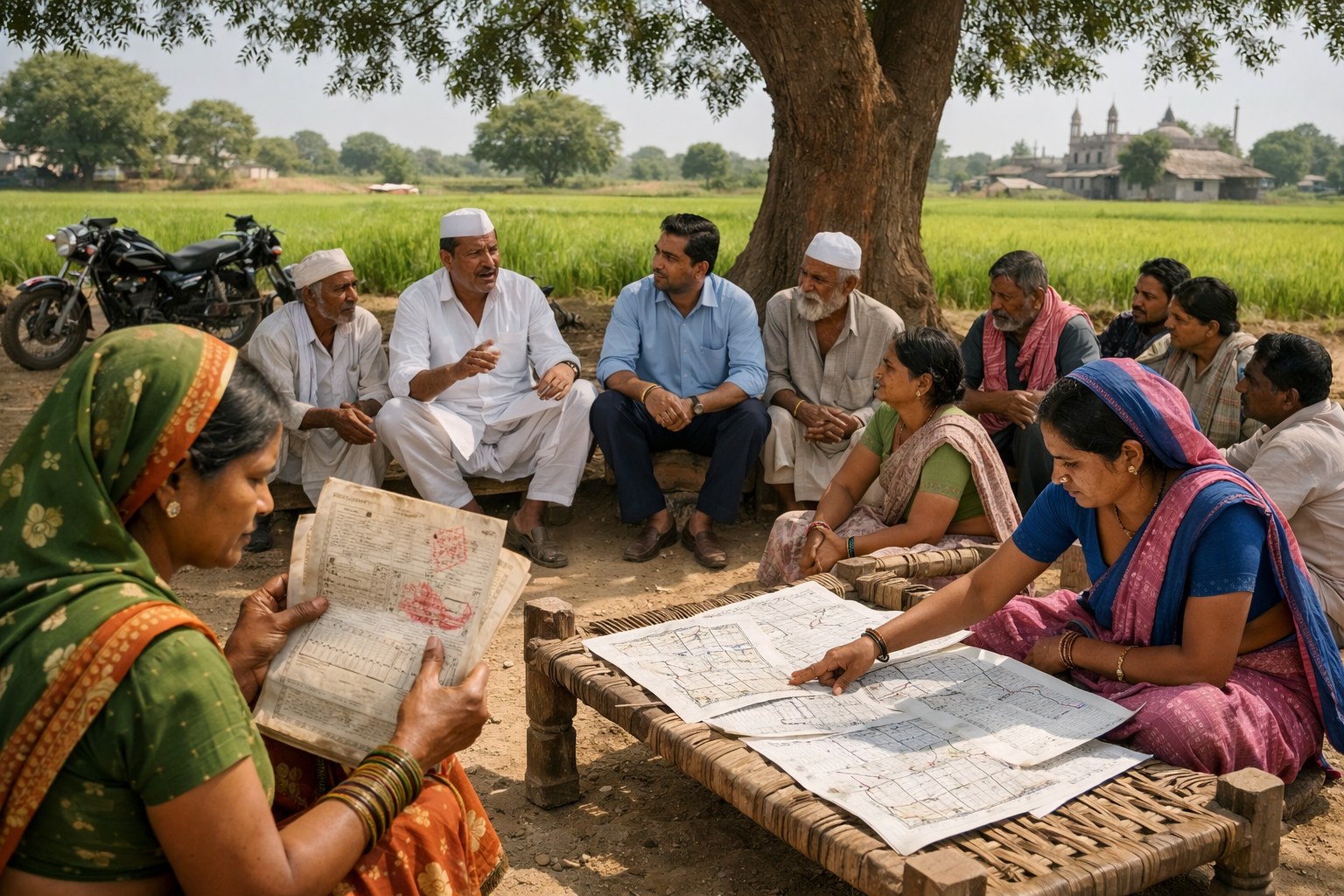
A gram sabha notice can make the issue public in the village itself. If a survey number in Moinabad, Shankarpally, Ibrahimpatnam, Kandukur, Shamirpet or Hayathnagar is listed under 22-A, the owner can raise questions locally instead of discovering it during registration. This is especially useful in peri-urban Hyderabad belts where land values have moved sharply and even a small classification error can freeze a property worth crores.
Take Kokapet in Gandipet mandal as a benchmark. HMDA’s Neopolis auction in 2023 touched a high bid of around ₹100.75 crore per acre. That is an extreme auction number, yes, but it shows why clarity on title and prohibition status matters near Hyderabad. In areas like Tellapur in Ramachandrapuram mandal, Mokila in Shankarpally mandal, Tukkuguda in Maheshwaram mandal and Bachupally in Medchal-Malkajgiri, families are not discussing land as a sleepy village asset anymore. They are discussing education funding, marriage expenses, medical treatment, apartment redevelopment and inheritance planning.
Telangana Gram Sabhas Can Help Elderly Owners Avoid SRO Surprises
One of the quiet problems in Telangana land administration is the timing of information. A family may prepare an agreement, collect old pahanis, apply for an EC, check Dharani entries, arrange the buyer’s token amount and then go to the Sub-Registrar Office. If the survey number is under 22-A, the registration may not move. By then, relations between buyer and seller are already tense.
Gram sabha-level alerts can reduce this damage. If the list is read in the village, put on a notice board and explained in simple Telugu, owners get a fair chance to verify the reason. Was it classified as government land? Is it an assigned land entry? Is only part of the survey number affected? Was the land acquired for a road, lake buffer, public purpose or institutional use? These questions matter.
We have seen cases where one portion of a large survey number is clean, while another portion is restricted. We have also seen families panic because the entire survey number is spoken about casually in the village, though the actual restriction may apply only to a sub-division or old extent. That is why the alert should be treated as a starting signal for verification, not as the final legal answer.
What Section 22-A Means for Small Transfers in Telangana
Section 22-A of the Registration Act is the provision used to stop registration of certain categories of properties. For ordinary owners, the impact is very direct: the SRO may refuse to register a sale, gift, exchange, partition or development document if the property is in the prohibited list.
This is where small family transfers get stuck. A father in Abdullapurmet may want to gift a house plot to his daughter. Siblings in Shamshabad may want to partition agricultural land before converting part of it for residential use. A widow in Keesara may want to sell a small inherited parcel to pay hospital bills. If the property is flagged, the family needs to know why and where to appeal or seek correction.
For first-level checking, owners can use the Section 22-A Prohibited Property Check. It is also sensible to verify the survey details through the Survey Number Finder and then match the land with past transactions using the Encumbrance Certificate Search. If the family is preparing for registration, the Find Your SRO Office tool helps identify the correct registration office.
Where Telangana Gram Sabhas Matter Most Around Hyderabad
The impact will be strongest in village-to-urban transition zones. These are places where land records still carry village-style history, but market demand is driven by Hyderabad expansion, ORR access, pharma corridors, logistics parks, IT offices and villa layouts.
| Area | Mandal / District | Why 22-A Alerts Matter |
|---|---|---|
| Kokapet, Narsingi | Gandipet, Rangareddy | High-value land, HMDA auction benchmarks, rapid apartment and commercial growth |
| Mokila, Shankarpally | Shankarpally, Rangareddy | Villa plots and farmland conversions create frequent title checks |
| Tellapur, Osman Nagar | Ramachandrapuram, Sangareddy | IT corridor spillover, layouts, apartment projects and family land sales |
| Tukkuguda, Maheshwaram | Maheshwaram, Rangareddy | ORR, airport access and industrial growth have increased land enquiries |
| Bachupally, Bowrampet | Bachupally, Medchal-Malkajgiri | Residential demand is strong, but older village records still need careful checking |
In such places, even the ready reckoner or market value check is only one part of the story. Before calculating stamp duty, families should first ask whether the land is transferable. The Market Value / Guideline Value Search and Stamp Duty Calculator are useful once the property status is clear.
Why Public Reading of 22-A Lists Builds Trust
Land information often becomes powerful because it is not equally available. A broker with local connections may know that one survey number is under dispute. An elderly owner may not. A document writer may warn a buyer, but only after collecting papers. Gram sabhas can correct this imbalance to some extent.
Public reading of 22-A alerts also creates social verification. Villagers know old boundaries, tank beds, burial grounds, assigned land histories and temple lands better than many office files. If an alert is wrong, the affected owner can gather older pahanis, Sethwar records, mutation orders, registered documents and tax receipts. If the alert is correct, the village avoids repeated failed transactions.
But there is a caution. Public lists must be specific. A vague announcement like “Survey No. 45 is prohibited” can cause panic if the survey has many sub-divisions. Officials should ideally mention the village, mandal, survey number, extent, nature of prohibition and the authority that notified it. Without that detail, rumours will travel faster than the correction process.
Telangana Gram Sabhas Should Be Linked With Digital Checks
The best model is not offline versus online. It is both. Gram sabha alerts can inform villagers, while digital tools can help families cross-check before making any decision.
- Check 22-A status first: Use the Section 22-A Prohibited Property Check before committing to a sale or gift deed.
- Confirm the survey number: Old village names, new mandal boundaries and sub-divisions can confuse families. Use the Survey Number Finder.
- Look at transaction history: An Encumbrance Certificate Search helps identify mortgages, past sales and registered claims.
- Check registration office: Use Find Your SRO Office before visiting the wrong SRO.
- Estimate costs only after status is clear: Then use the Stamp Duty Calculator and Guideline Value Search.
For apartments or villa projects, buyers should also use the RERA Project Lookup. A RERA registration does not automatically clear every land-title concern, but it gives project-level disclosures and promoter details. For open plots, farmhouse lands and gram panchayat layouts, land verification remains even more critical.
What Families Should Do If Their Land Appears in a 22-A Alert
First, do not rush into a distress sale. A 22-A alert may be valid, partially valid, or in some cases based on an old entry that needs correction. The next step is document collection.
- Collect old pahanis, title deeds, Dharani passbook details and mutation proceedings.
- Check whether the survey number, sub-division and extent match the alert.
- Take an EC for the relevant period and compare past registered transactions.
- Visit the mandal revenue office or district authority to understand the source of prohibition.
- Speak to the SRO only after carrying complete property details, not just the village name.
- If the land is part of an inherited property, keep family tree and succession documents ready.
In my view, the government should also ensure that every gram sabha alert mentions the correction route. Villagers should know whether to approach the Tahsildar, RDO, Collector, Endowments, Wakf Board, irrigation department, municipal body or court, depending on the nature of the entry. A warning without remedy can become another layer of anxiety.
The Community Impact of Telangana Gram Sabhas on Land Risk
The biggest social impact may be on bargaining power. When land-risk information is public, elderly owners are less dependent on middlemen. Daughters and sons living in Hyderabad, Bengaluru, Pune or the Gulf can ask their parents to verify the gram sabha notice and then cross-check online. Small buyers can avoid paying advances on land that cannot be registered.
This is not a full cure for Telangana’s land-record disputes. Assigned lands, court cases, lake buffer disputes, old layout approvals, missing link documents and family litigation will still exist. But bringing 22-A alerts to gram sabhas is a practical step. It puts the first warning where the land actually sits: in the village.
For Hyderabad’s expanding edges, that matters. A land parcel in a village today can become a gated community, logistics warehouse, school site or apartment cluster tomorrow. Before that change happens, the owner deserves to know whether the government’s own records allow transfer. With 1,47,934 properties already in the prohibited category, public alerts are not a minor administrative exercise. They are a community protection tool.
Frequently Asked Questions
What are Telangana Gram Sabhas 22-A land alerts?
They are village-level alerts that inform people whether certain survey numbers are listed as prohibited properties under Section 22-A, meaning registration may be restricted.
How many prohibited properties are listed under Section 22-A in Telangana?
The current database count shows 1,47,934 prohibited properties under Section 22-A in Telangana.
Can I sell land if it appears in a 22-A list?
Usually, registration may be blocked unless the prohibition is removed or clarified. Check the exact survey number, extent and reason before signing any agreement.
Which tool should I use before visiting the SRO?
Start with the Section 22-A Prohibited Property Check, then verify the survey number, EC and correct SRO office before preparing registration documents.
Do 22-A alerts apply only to agricultural land?
No. They can affect agricultural land, plots, village sites and other properties depending on the notification, ownership history and government records.