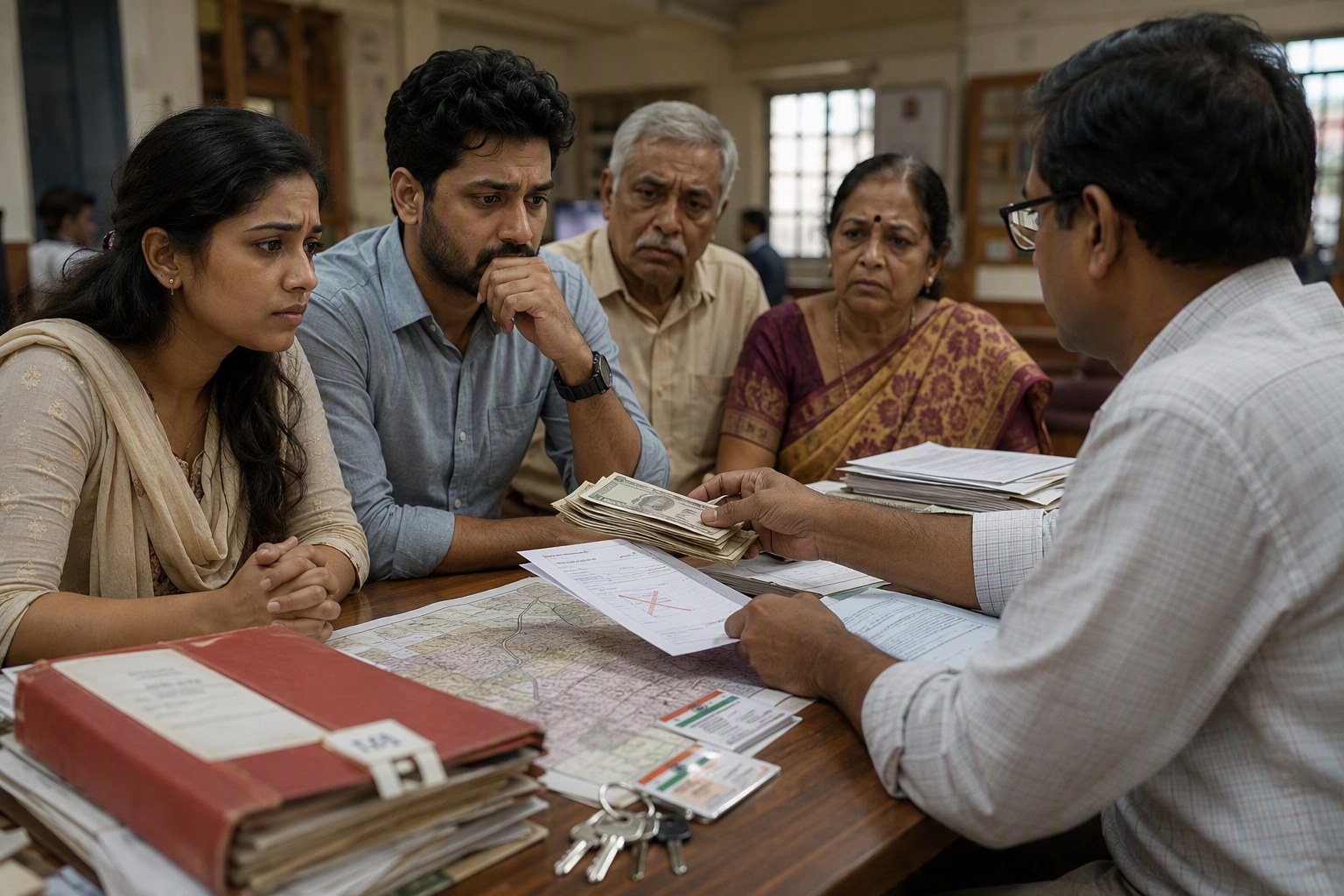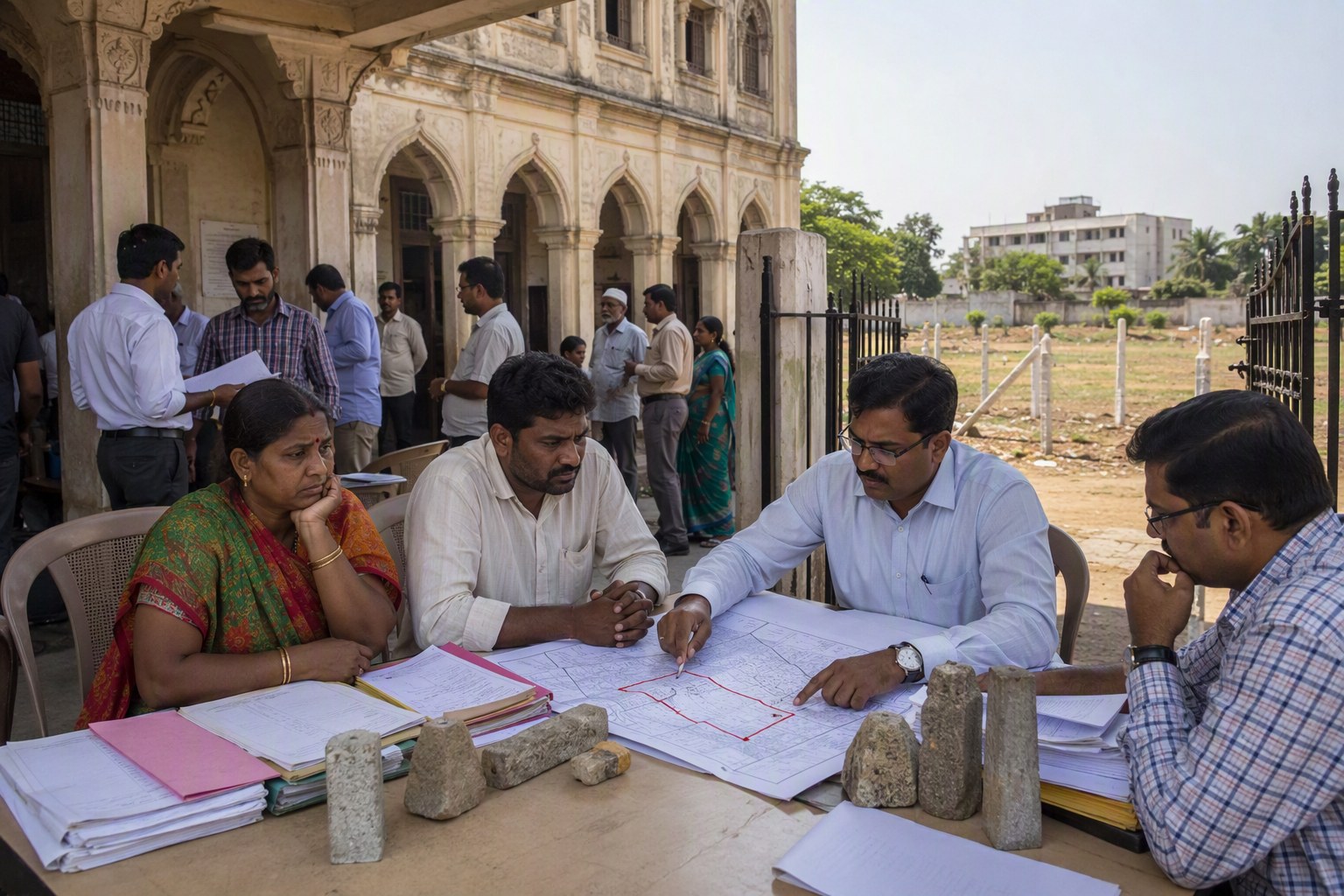



Telangana May Route 22-A Appeals Through MeeSeva Centres, a move that could make prohibited property correction requests easier for land owners who now depend on revenue offices, SRO visits, and informal follow-ups. If the plan is implemented, owners may get a proper filing receipt, a clearer trail of documents submitted, and a simpler way to track the status of their Section 22-A appeal.
For Hyderabad and surrounding districts, this is not a small administrative tweak. According to government records, Section 22-A prohibited properties stand at 3,076,153. That number includes entries where registration may be blocked due to government land claims, assigned land status, court orders, endowment issues, waqf-related entries, ceiling matters, or old revenue record mismatches.
Our view: MeeSeva filing will help only if the back-end decision process is also time-bound and transparent. A receipt is useful, but owners need a reasoned order, not just another queue.
Telangana May Route 22-A Appeals Through MeeSeva Centres: What changes for owners?
At present, many owners discover a 22-A problem only when they try to sell, gift, mortgage, partition, or regularise a property. The shock usually comes at the SRO stage. The buyer is ready, the token is planned, the agreement is signed, and suddenly the property appears as prohibited.
In Hyderabad’s active corridors like Kokapet, Narsingi, Manikonda, Kondapur, Gachibowli, Shamshabad, Adibatla, Tellapur, Mokila, and Bachupally, even a small mismatch in survey number or village record can put a transaction on hold. The problem is sharper in peri-urban mandals such as Gandipet, Rajendranagar, Serilingampally, Shankarpally, Moinabad, Maheshwaram, Hayathnagar, Abdullapurmet, Medchal, and Quthbullapur, where old pahani records, layout conversions, assignments, and government land boundaries often overlap in public records.
If MeeSeva becomes the first filing point, the immediate benefit is access. A land owner in a village need not depend only on repeated visits to mandal offices or the registration department counter. The appeal can be filed with scanned documents and an acknowledgement. That acknowledgement matters because owners, banks, buyers, and lawyers can refer to a dated receipt instead of depending on verbal updates.
Telangana May Route 22-A Appeals Through MeeSeva Centres: Why this matters in Hyderabad deals
We’ve seen many Hyderabad transactions collapse not because the title is bad, but because the record trail is messy. A survey number may have a clean sale deed chain, but the same survey number may also appear in a prohibited list due to a wider old entry. Sometimes only part of a survey number is affected. Sometimes a layout plot is caught because the parent survey number was never properly split in accessible records.
For example, a buyer checking a villa plot near Mokila or a flat-linked land share in Tellapur should not stop with the sale deed. The buyer should check whether the survey number, sub-division, village, and mandal match across the sale deed, EC, Dharani record where applicable, approved layout documents, and SRO data. Before paying a major advance, use the Section 22-A Prohibited Property Check and then cross-check the chain using the Encumbrance Certificate Search.
For apartments, the issue can still arise at the land level. A flat in Gachibowli or Kondapur may look straightforward, but the underlying land parcel may have an older classification issue. If the project is under RERA, buyers should also verify project details through the RERA Project Lookup. For open plots and agricultural-to-non-agricultural conversion cases, the Survey Number Finder is a useful starting point.
What is Section 22-A in Telangana property registration?
Section 22-A refers to property categories where registration can be prohibited by the government or competent authority. In practical terms, if a property is listed under 22-A, the SRO may refuse registration until the entry is corrected, clarified, or removed through the proper process.
Owners often use phrases like “blocked land”, “prohibited survey number”, “22-A problem”, or “registration stop”. The legal and revenue reason may differ from case to case. One owner may be facing an assigned land entry. Another may be facing a government land classification. A third may be stuck because an old court or department reference was never updated in the registration system.
This is why a MeeSeva route can be useful. It can standardise the first step. Instead of every applicant being told a different document list at different counters, a defined filing window can collect the appeal, basic identity proof, land records, sale deeds, EC, pahani copies, layout approvals, mutation details, and supporting orders where available.
Documents owners should keep ready before filing a 22-A appeal
The final checklist will depend on the government’s notified process, but owners can start organising their file now. In our experience, messy document bundles slow down correction requests. A clean chronology helps the official understand what exactly went wrong.
| Document | Why it matters |
|---|---|
| Registered sale deed or link documents | Shows title flow and ownership claim |
| Encumbrance certificate | Shows registered transactions and charges recorded at the SRO |
| Pahani, ROR, Dharani extracts where applicable | Helps compare revenue classification and possession entries |
| Survey number and village details | Prevents confusion between similar survey numbers in nearby villages |
| Layout approval, building permission, or conversion order | Useful for HMDA, DTCP, municipal, and gram panchayat-linked cases |
| Earlier government orders or court orders | Needed where the prohibited entry is based on an old proceeding |
Before filing, check the market value status through the Market Value / Guideline Value Search and identify the correct registration jurisdiction using Find Your SRO Office. If you are evaluating a purchase, run a broader title check through the Property Verification Tool. These checks do not replace a lawyer’s title opinion, but they reduce blind spots.
Receipt-based filing can reduce informal follow-ups
The biggest everyday pain in 22-A matters is not only the correction itself. It is the absence of a clear tracking trail. Owners keep asking: Has my file reached the right office? Is any document missing? Was the appeal rejected or is it still pending? Who has to issue the final clarification?
A MeeSeva receipt can create a basic accountability layer. It gives the applicant a date, application reference, and list of submitted documents. If status tracking is integrated, owners can avoid repeated physical visits. NRIs with land in places like Shankarpally, Moinabad, Maheshwaram, and Medchal will especially benefit, because they often depend on relatives or agents for every follow-up.
That said, the real test is not the front counter. The appeal must move to the correct authority, and the final decision must be reflected in registration systems. If the prohibited entry is removed on paper but not updated at the SRO, the owner still cannot register. The process should connect revenue, registration, and local body records wherever the case needs cross-verification.
Buyers should not treat a pending appeal as clearance
One common mistake in Hyderabad property deals is accepting “appeal filed” as proof that the land is safe. Filing is only the start. Until the prohibited entry is officially corrected or clarified, registration risk remains. Banks may also hesitate to lend where 22-A status is unresolved.
If you are buying in a high-demand pocket like Kokapet, Narsingi, Tellapur, Bachupally, Adibatla, or Shamshabad, insist on written proof. Ask for the latest EC, current SRO status, relevant revenue extracts, and any order removing the property from the prohibited list. For agreement drafting, parties can use the Legal Document Generator, but a lawyer should review conditions relating to 22-A clearance, refund, and timelines.
For sellers, my advice is simple: check the property before listing it. A 22-A surprise after taking advance creates unnecessary disputes. Use the Property Change Tracker for ongoing monitoring if the property is valuable or located in a fast-changing growth corridor.
What the government should get right
Routing through MeeSeva can make the system more citizen-friendly, but only if the appeal workflow is clear. The application should show which officer is handling the file, what deficiency was raised, and what order was passed. Rejections should mention reasons, not just a generic status update.
There is also a need for careful classification. Genuine government land protection should not be weakened. At the same time, private owners should not suffer for years because of broad survey-level entries or outdated records. Telangana’s land market depends heavily on trust in registration data. When 22-A entries are wrong, liquidity gets locked. When entries are correct, they protect public land. The system has to balance both.
For now, owners should treat the possible MeeSeva route as a welcome administrative step, not as automatic relief. Prepare documents, verify survey details, track SRO status, and avoid paying or accepting large advances until the 22-A position is clear in writing.
Frequently Asked Questions
What does Telangana May Route 22-A Appeals Through MeeSeva Centres mean?
It means Telangana may allow property owners to file appeals or correction requests for Section 22-A prohibited property entries through MeeSeva centres, with a receipt and trackable application reference.
Will filing a 22-A appeal through MeeSeva remove the prohibited status automatically?
No. Filing is only the first step. The competent authority must examine the documents and pass an order. The registration system must also reflect the correction before a transaction becomes safe.
How can I check whether my land is listed under Section 22-A?
You can start with the Section 22-A Prohibited Property Check on Verified.RealEstate, then verify the EC, survey number, village, mandal, and SRO jurisdiction before making any deal decision.
Should buyers proceed if the seller says a 22-A appeal is pending?
Be careful. A pending appeal is not clearance. Ask for the final order removing or clarifying the prohibited entry, and take a legal title opinion before paying a major advance.