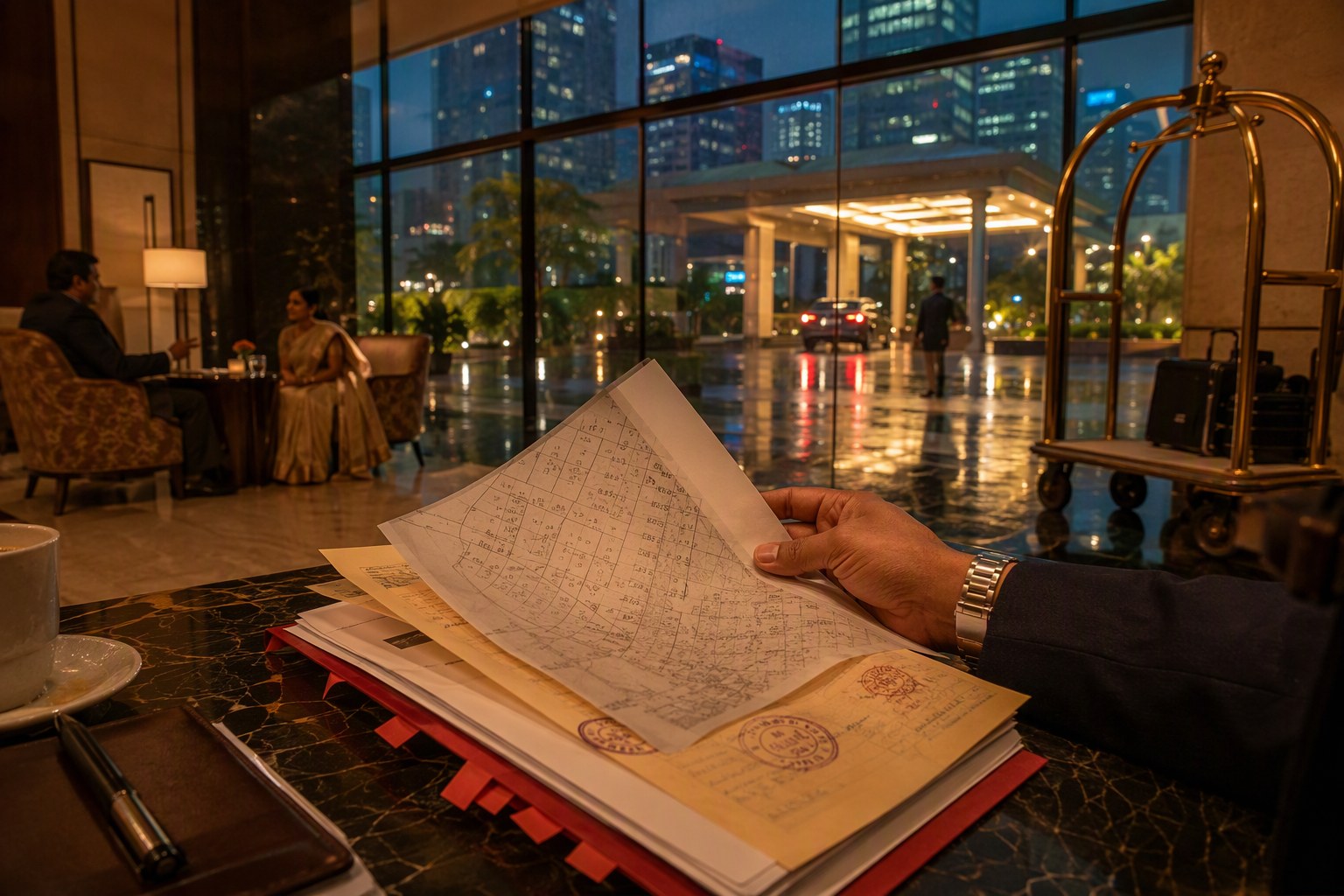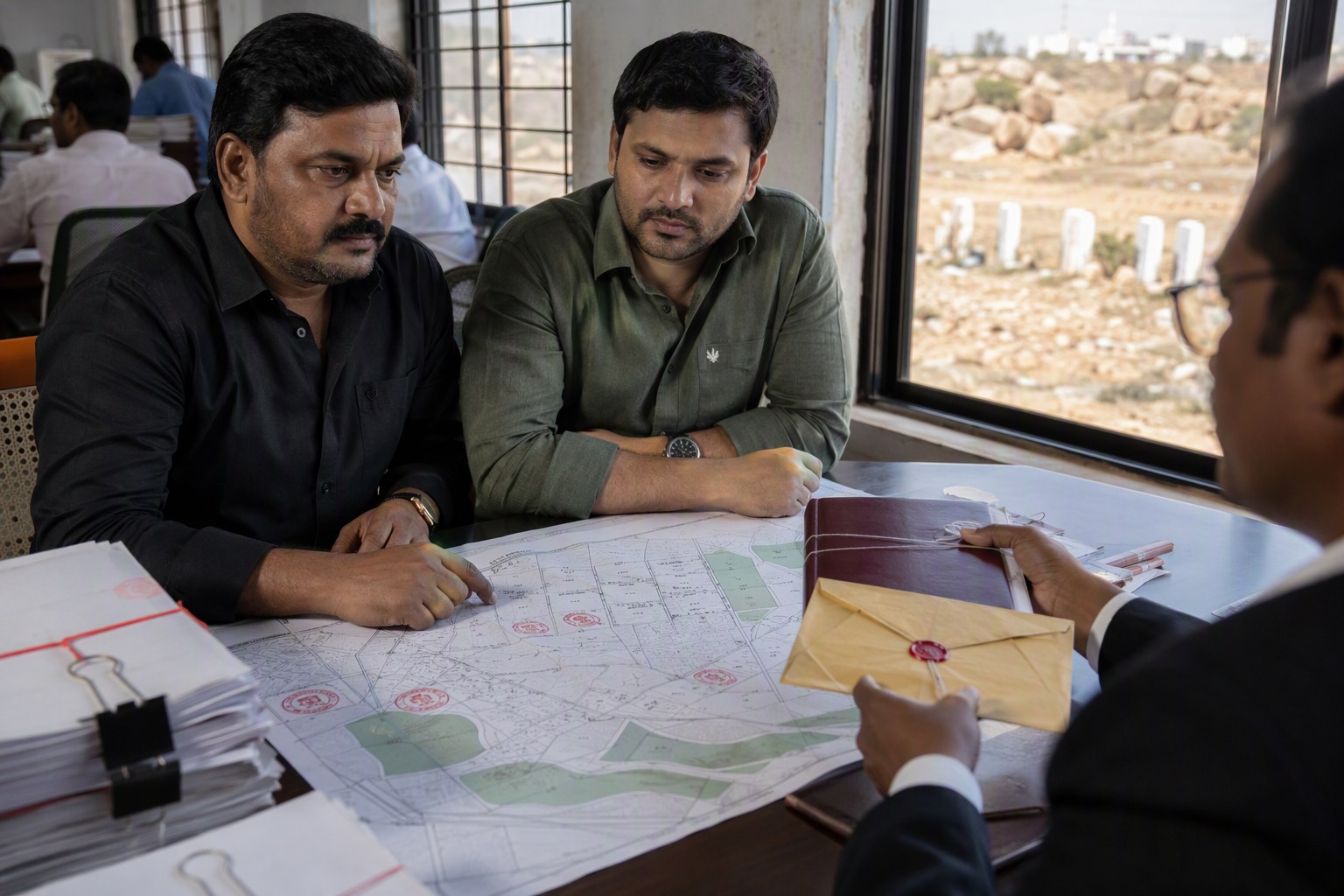
Hyderabad Mall Portfolio Deal Adds 22-A Holdback Clause is the kind of transaction detail that usually stays inside law-firm redlines. This time, it deserves wider attention. A large Hyderabad retail real estate portfolio transaction is reportedly being structured with part of the seller payout held back until Section 22-A risk is cleared at the registration level. The reason is simple: Telangana has 147,934 prohibited properties recorded under Section 22-A, and big-ticket buyers no longer want title surprises after paying top money.
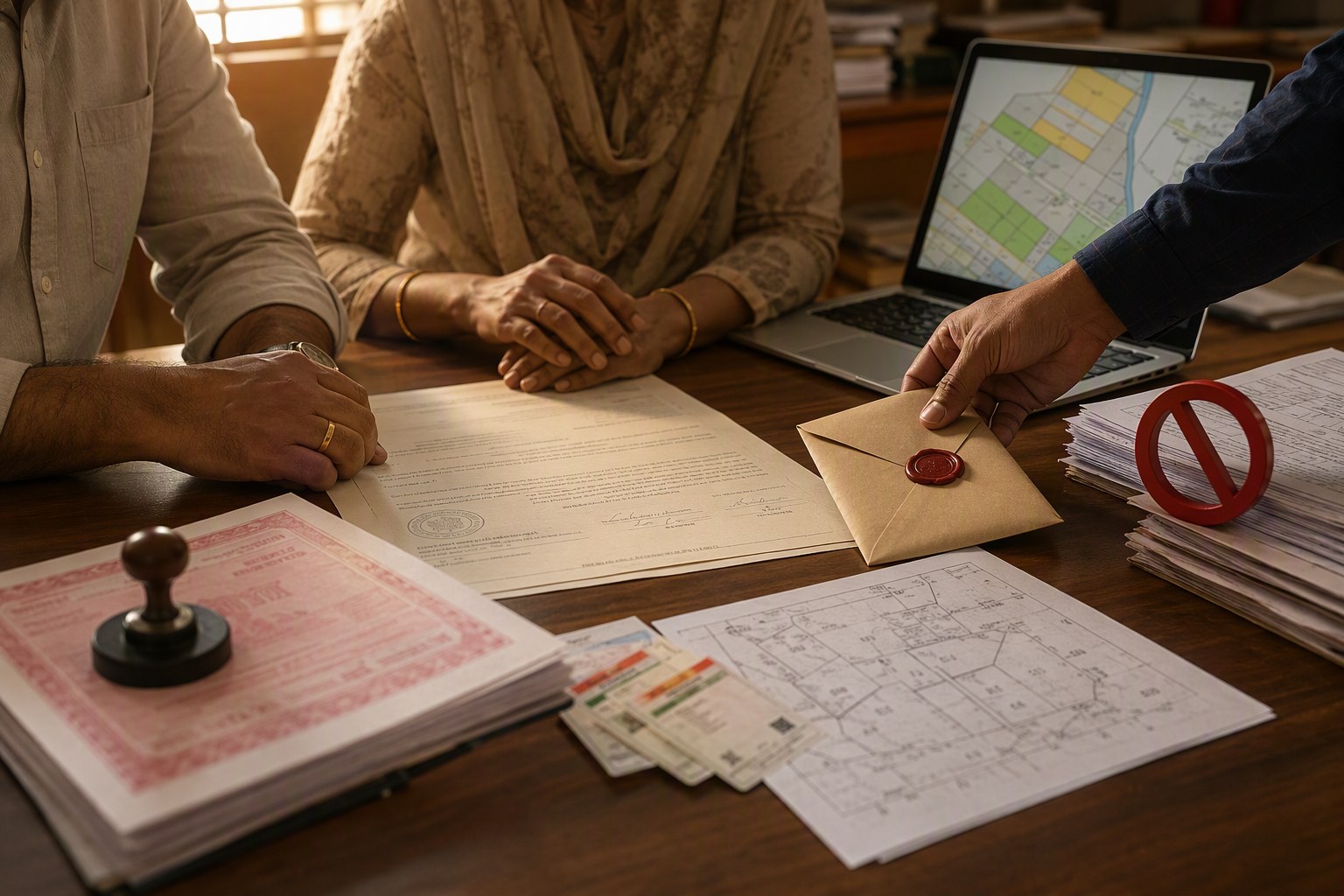
In plain English, a 22-A holdback means the buyer does not release the full consideration on signing or even on initial closing. A portion is parked, usually in escrow or under a deferred payment clause, until the seller proves that the concerned land parcels, survey numbers, link documents and SRO records are free from prohibited property entries.
Our view at Verified.RealEstate: this is not a small legal footnote. It signals a shift in Hyderabad commercial real estate. Earlier, buyers checked title and negotiated price. Now, buyers are negotiating the timing of money itself.
Hyderabad Mall Portfolio Deal Adds 22-A Holdback Clause: what is changing?
The reported portfolio transaction involves mall-led income assets in Hyderabad, with due diligence said to be focused not only on rentals, footfalls and anchor tenants, but also on historical land records. For shopping malls, this matters because the land story is often older than the building. A mall in Madhapur, Kukatpally, Uppal or L.B. Nagar may look like a clean institutional asset today, but the original land chain could run through agricultural pahani records, conversion proceedings, layout approvals, ULC checks, court orders, assigned land claims or government land notings.
Section 22-A of the Registration Act allows the State to prohibit registration of certain properties. These can include government lands, assigned lands, endowment lands, wakf properties, ceiling-surplus lands and other notified categories. Once a property or survey number appears in the prohibited list, the Sub-Registrar Office can refuse registration. For a mall buyer investing hundreds or thousands of crores across a portfolio, even one blocked land component can delay refinancing, REIT-style structuring, share transfer comfort, mortgage creation or future exit.
This is why the 22-A holdback clause is commercially sensible. If the seller says the title is clear, the seller gets paid when the clear title is proved in hard records. We have seen similar thinking in land aggregation deals around Shamshabad, Kokapet, Tellapur and Medchal, but seeing it in a mall portfolio context is a sharper market signal.
Hyderabad Mall Portfolio Deal Adds 22-A Holdback Clause because 147,934 entries are not a rounding error
The number that should worry every serious buyer is 147,934. That is the recorded count of prohibited properties under Section 22-A in Telangana. For small buyers, the risk shows up as a failed registration. For institutional buyers, the risk can disturb the entire transaction model.
Take a typical Hyderabad mall asset. It may sit on 4 to 12 acres, have multiple survey numbers, a basement parking component, service roads, common area rights, sub-lease arrangements, long-term anchor tenant agreements, mortgage NOCs and development permissions. If even one linked survey number is flagged in the prohibited list, the buyer’s lawyer will ask: can we register the sale deed, create security, transfer development rights, renew leases, or sell later without discount?
That is why the holdback is not just a penalty clause. It is a risk-pricing tool. It converts uncertain land risk into a defined commercial condition.
Where Hyderabad mall assets face the sharpest title scrutiny
In our experience, title scrutiny becomes especially strict in corridors where land values have moved faster than old revenue records. Hyderabad’s retail-led commercial assets are no longer limited to Abids and Punjagutta. Serious capital is chasing Gachibowli, Hitec City, Kondapur, Kukatpally, Nizampet, Uppal, Nagole, L.B. Nagar, Kompally, Kokapet and Shamshabad.
Here is the market context we are seeing in active commercial corridors. These are broad market ranges discussed by brokers, valuers and deal teams; the government ready reckoner or market value has to be checked separately before any registration.
| Corridor / locality | Relevant mandal | Commercial land / asset market signal | Why 22-A check matters |
|---|---|---|---|
| Hitec City, Madhapur, Kondapur | Serilingampally / Shaikpet side influence | Prime commercial land often discussed above ₹2.5 lakh to ₹4.5 lakh per sq yd depending on frontage and access | Older village records, link documents and conversion history need close review |
| Gachibowli, Nanakramguda, Financial District | Serilingampally / Gandipet side influence | Large institutional parcels and income assets trade at premium cap rates; land often benchmarked in crores per acre | High-value mortgages require clean SRO and revenue record comfort |
| Kukatpally, KPHB, Nizampet | Kukatpally / Bachupally | Retail-facing plots can range around ₹1.5 lakh to ₹3 lakh per sq yd on busy stretches | Layout history, common areas and old survey subdivisions can create documentation gaps |
| Uppal, Nagole, Ramanthapur belt | Uppal | Main-road commercial values have risen sharply after Metro connectivity | Revenue entries, municipal permissions and road widening impact need verification |
| L.B. Nagar, Kothapet, Saroornagar | Saroornagar / Hayathnagar side | Retail assets benefit from high residential catchment and Metro access | Older ownership chains and multiple heirs are common in legacy parcels |
| Kompally, Suchitra, Medchal highway | Medchal | Highway retail and mall formats are seeing strong land demand | Agricultural-to-commercial conversion and Dharani record matching are key |
A buyer checking only rental income will miss half the story. For large mall deals, the diligence stack now includes pahani, ROR, Dharani data, mutation entries, town planning permissions, building occupancy certificate, fire NOC, mortgage releases, tenant estoppels and SRO-level search.
How a 22-A holdback clause may be written in Hyderabad deals
While the exact agreement in the reported Hyderabad mall portfolio deal is not public, market practice usually follows a few patterns. The buyer may hold back 5% to 20% of consideration, depending on the seriousness of the title issue. In some cases, the amount is linked to the specific asset where the defect is found. In stronger buyer-led contracts, the holdback stays until the seller obtains deletion from the prohibited list, clarification from the competent authority, or a clean registration confirmation from the concerned SRO.
Some clauses also include a long-stop date. If the 22-A issue is not resolved within that period, the buyer may get price adjustment, indemnity protection, exit rights, or the right to complete only the clean assets. This structure is common when one portfolio includes multiple malls or mixed-use assets across different mandals.
For readers tracking their own property, start with a Section 22-A Prohibited Property Check. Then match the survey number using the Survey Number Finder. For registration history, use an Encumbrance Certificate Search. If you are unsure which registration office controls the property, check through Find Your SRO Office.
Why this matters beyond one mall portfolio
Hyderabad’s real estate market has matured. Office parks in Gachibowli, malls in Kukatpally, warehousing in Medchal, plotted ventures near Shankarpally, villas in Tellapur and mixed-use projects near Kokapet are all attracting professional capital. But professional capital behaves differently. It does not accept verbal assurances like, “Sir, registration will happen, no problem.” It wants documentary proof.
This is where Section 22-A becomes a boardroom issue. A family buyer may discover the issue at the SRO counter. A private equity buyer discovers it during due diligence and converts it into a price condition. That is the difference.
For sellers, the message is equally clear. If you are preparing to sell a large commercial asset, clean the title file before entering the market. Get updated ECs, reconcile Dharani and physical possession, verify the market value using the Market Value / Guideline Value Search, estimate registration cost through the Stamp Duty Calculator, and run a broader check with the Property Verification Tool.
Hyderabad Mall Portfolio Deal Adds 22-A Holdback Clause: buyer takeaway
The biggest takeaway is this: 22-A risk is now a deal term, not a post-deal headache. In high-value Hyderabad transactions, buyers are not only asking whether the asset earns rent. They are asking whether every survey number can support registration, financing and future exit.
That is healthy for the market. It may slow down some deals, but it also reduces bad surprises. Hyderabad has enough depth in retail consumption, Metro-led access, IT corridor spending and residential catchments to keep mall assets attractive. Clean title will decide which assets get premium pricing and which assets face discounting.
We have seen buyers pay aggressively for assets in Madhapur and Gachibowli when documents are clean. We have also seen attractive-looking land in peripheral mandals get stuck because one old entry in revenue records did not match the seller’s story. The reported 22-A holdback in a mall portfolio deal simply brings that ground reality into the headline.
Frequently Asked Questions
What is a 22-A holdback clause in a Hyderabad property deal?
It is a clause where part of the sale consideration is held back until the seller clears Section 22-A prohibited property risk and proves that registration can happen without objection.
Why are prohibited properties a concern in Telangana?
Telangana has 147,934 prohibited properties recorded under Section 22-A. If a property is listed, the SRO may refuse registration, which can affect sale, mortgage and future exit.
How can I check if my Hyderabad property is under Section 22-A?
You can start with the Section 22-A Prohibited Property Check, then verify survey number, EC, Dharani records, pahani and the relevant SRO records before paying advance.
Does Section 22-A apply only to land and not malls?
No. A mall is built on land, and the underlying survey numbers still matter. If the base land has a prohibited entry, the completed commercial asset can also face transaction risk.
Should sellers clear 22-A issues before marketing a commercial asset?
Yes. Sellers who clear title issues early usually get better pricing, faster diligence and fewer holdbacks in large Hyderabad commercial real estate transactions.