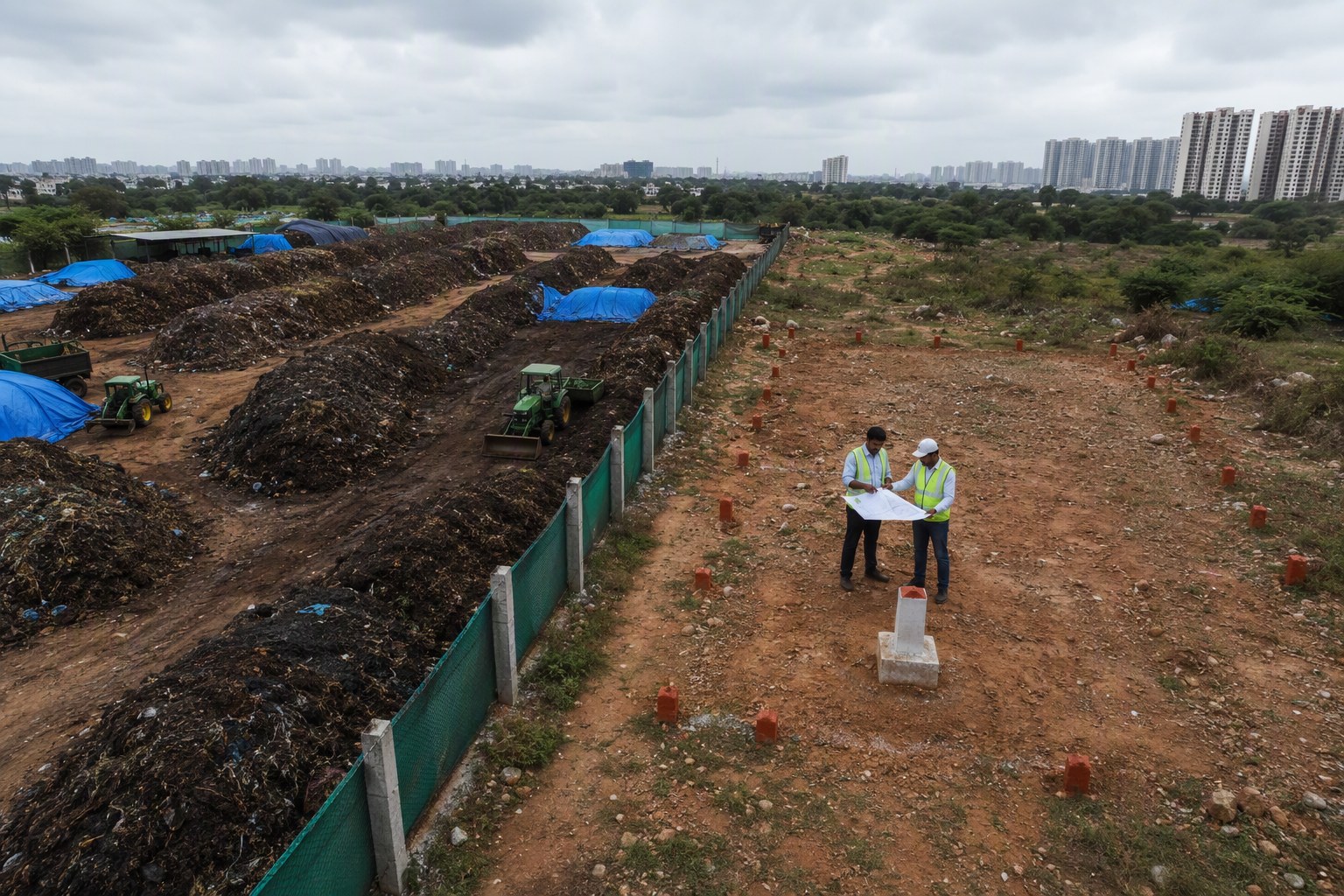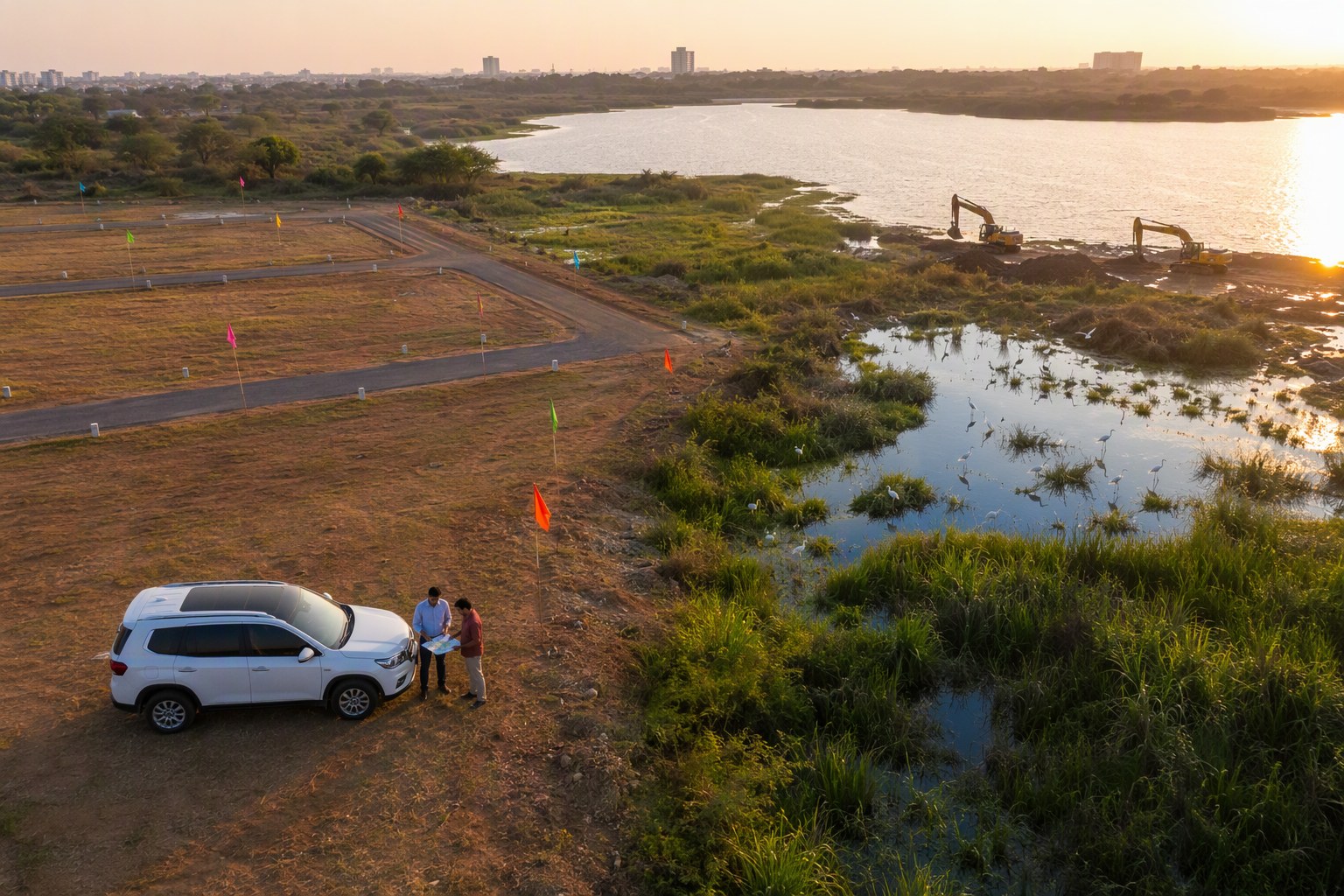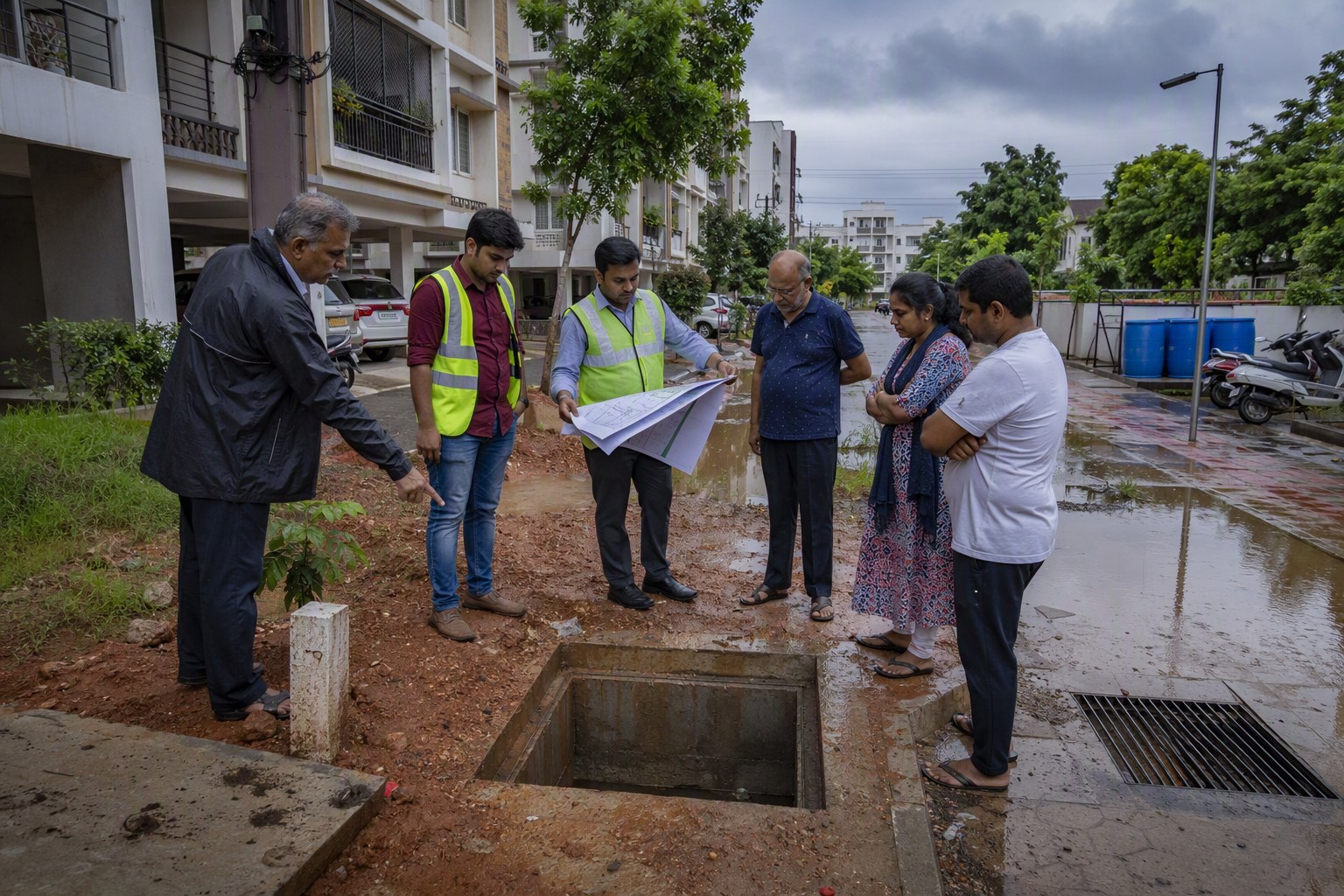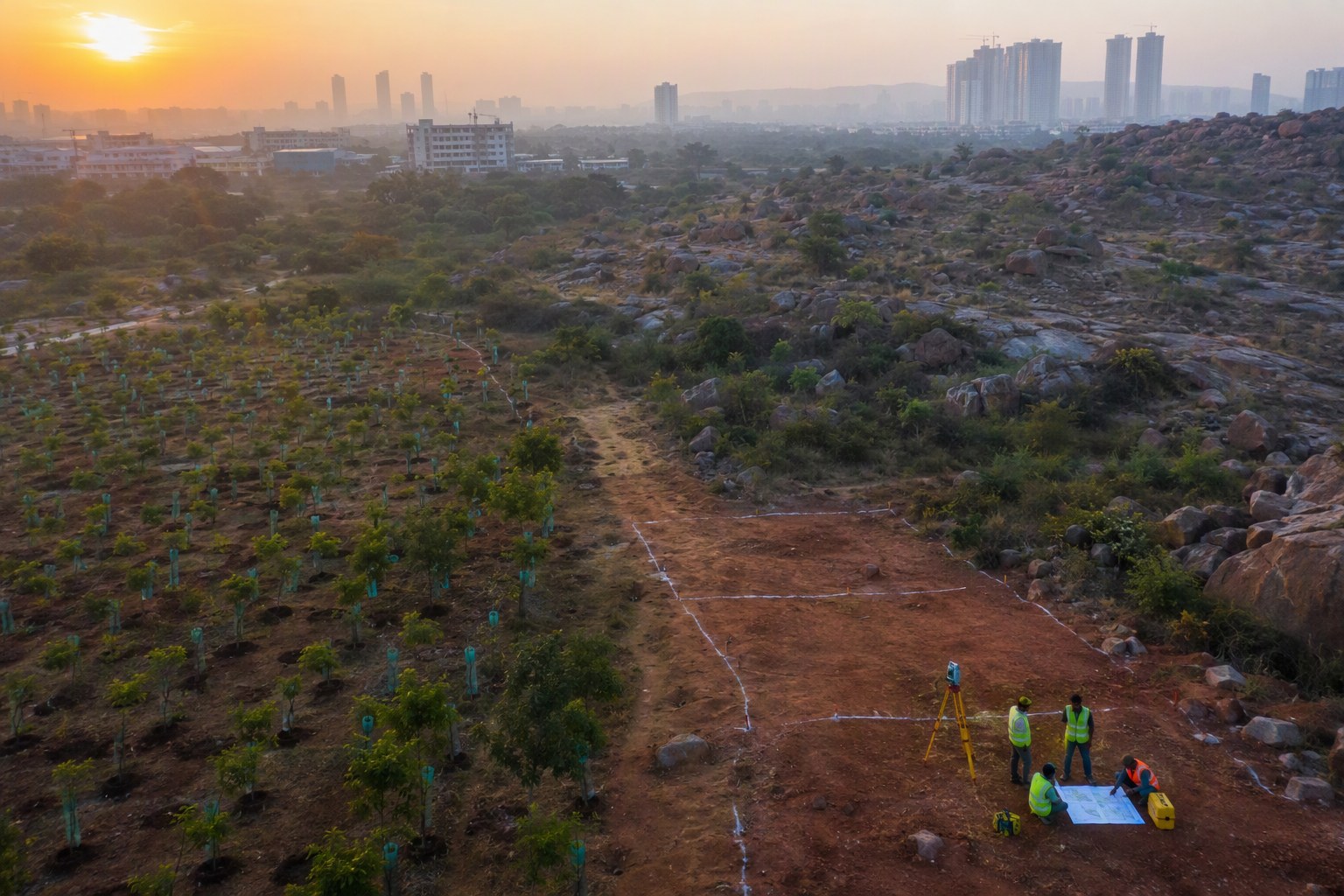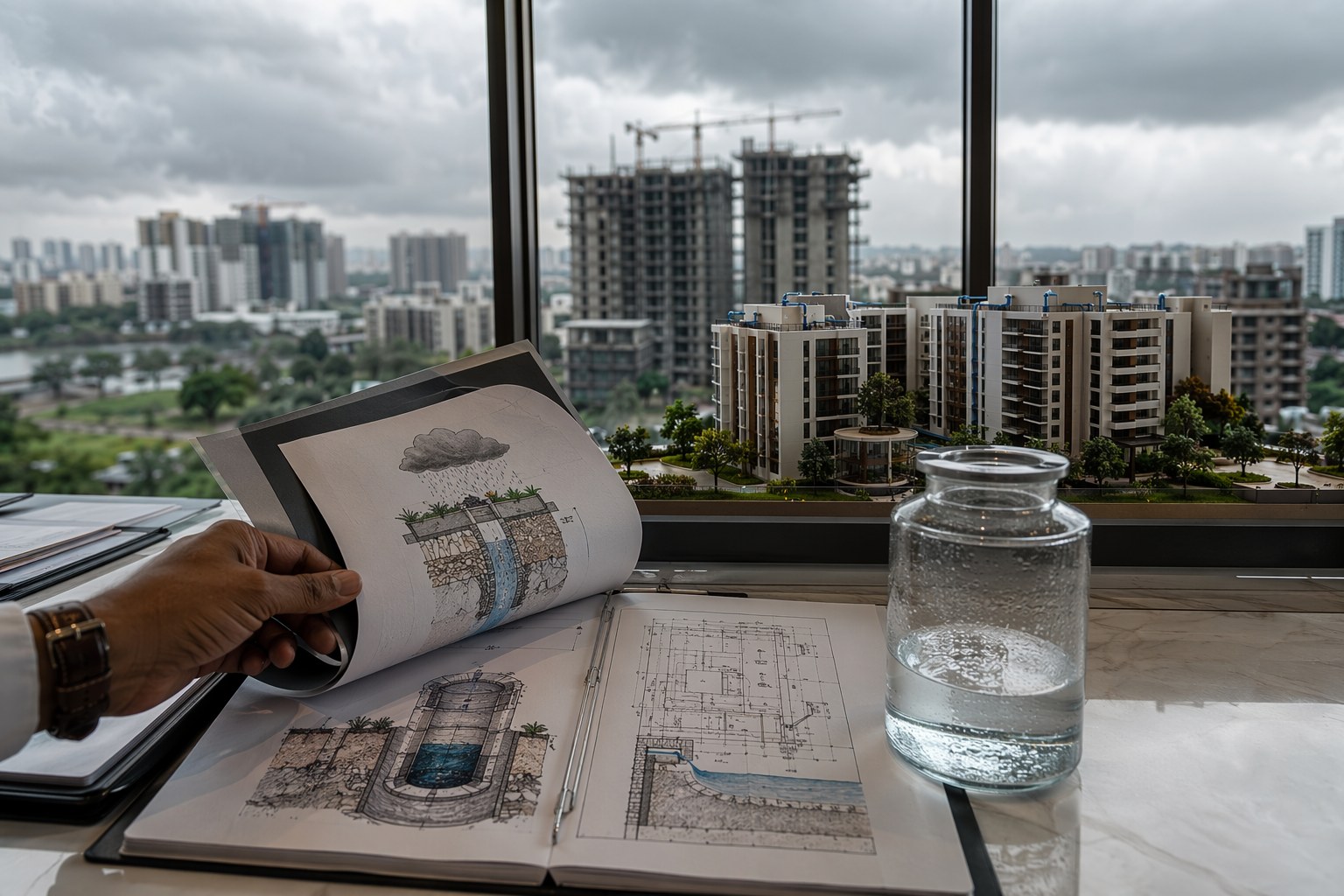
Hyderabad homebuyers may soon start asking for rainwater proofs in project files, not just glossy brochures, RERA numbers and carpet area statements. After repeated waterlogging complaints across Hyderabad’s growth corridors, stormwater readiness is becoming a practical due-diligence item for flats, villas and plotted layouts. In our experience, buyers in Kokapet, Narsingi, Tellapur, Miyapur, Bachupally, Kondapur and Puppalaguda are no longer satisfied with only club house renders. They want to know where rainwater will go when the first heavy spell hits.
The shift is not only about environmental good sense. It is also about resale value, maintenance bills, basement safety and day-to-day living. A project file that clearly shows rainwater harvesting pits, stormwater drain connection, site slope, driveway levels and open space treatment can give a buyer far more comfort than a verbal promise from a sales team.
Hyderabad Homebuyers May See Rainwater Proofs in Project Files: What Is Changing
The news angle is simple: rainwater harvesting and stormwater readiness are moving from engineering back-end documents into the buyer’s checklist. Until recently, most homebuyers checked sale deed flow, RERA registration, amenities, UDS, parking and loan approval. Now, especially in western and northern Hyderabad, the question is sharper: Will this project handle rain properly?
We have seen this concern grow in high-density apartment belts of Serilingampally mandal, Gandipet mandal, Bachupally mandal and parts of Medchal-Malkajgiri. These are not remote locations. They are active residential markets where families are buying homes with long-term EMIs. When roads flood or basements take water, the issue is not cosmetic. It affects lifts, electrical rooms, parking floors, compound walls and society maintenance collections.
For a serious buyer, the project file should ideally answer five plain questions:
- Is there a sanctioned rainwater harvesting plan?
- Where are recharge pits or collection points located on the site?
- Does the project have a proper stormwater drain outlet?
- Are basement ramps and entry points protected from surface runoff?
- Has the builder shown natural slope, road level and neighbouring land level?
This is where homebuying in Hyderabad is becoming more technical, but not difficult. Buyers need not become civil engineers. They only need to ask for the right pages and cross-check them with approval, land and registration records.
Hyderabad Homebuyers May See Rainwater Proofs in Project Files Alongside RERA, EC and 22-A Checks
Rainwater readiness should not replace legal verification. It should sit next to it. Before looking at drainage drawings, buyers should still verify whether the project is registered, whether the title chain is clean, whether the land is affected by any prohibition, and whether the SRO record matches what is being sold.
As per latest IGRS data available with Verified.RealEstate, Telangana has 3,076,153 prohibited properties under Section 22-A records. That number alone tells us why a buyer should never depend only on a site visit or sales office assurance. A well-paved approach road and a neat model flat cannot cure a title problem, and a good title alone cannot save a poorly drained basement.
For the legal side, start with RERA Project Lookup, then check past transactions using Encumbrance Certificate Search. If you are dealing with land, plots or redevelopment, run the survey details through Section 22-A Prohibited Property Check. For registration planning, use Market Value / Guideline Value Search and locate the correct office with Find Your SRO Office.
Our view is clear: a safe Hyderabad home purchase now needs two checks — legal safety and rain safety. One protects ownership. The other protects living quality.
What Rainwater Proofs Should Buyers Ask From Builders?
When a buyer asks for “rainwater proof”, it does not mean a random WhatsApp photo of a pit under construction. It means documents or drawings that form part of the approval or engineering file. In larger apartment projects, this may be handled by the architect, structural consultant, plumbing consultant or project engineer. In smaller ventures, the builder may have simpler drawings, but the buyer can still ask for clarity.
| Document or proof | Why it matters for buyers |
|---|---|
| Rainwater harvesting layout | Shows pit locations, recharge points and how terrace or surface water is handled. |
| Stormwater drain plan | Shows whether water is discharged properly instead of collecting inside the site. |
| Site level and road level drawing | Helps buyers understand if the project sits lower than the road or nearby land. |
| Basement ramp protection details | Important for parking floors, lift lobbies and electrical panels. |
| Open space and paving plan | Too much hard paving can increase surface runoff inside the project. |
| Occupancy or completion-related file, where available | Helps confirm whether approved systems were actually built. |
For plotted layouts, the checklist changes slightly. Buyers should look at road camber, side drains, low-lying pockets, nala proximity, open space reservation and final plot levels. In places like Shankarpally, Mokila, Kollur and Patancheru side, site level differences can be large from one parcel to another. A plot may look level in summer and behave very differently during rains.
Localities Where This Checklist Matters More
This rainwater checklist matters across Hyderabad, but some micro-markets need closer attention because construction density, road widening, lake influence or natural slope can change quickly.
- Kokapet and Narsingi, Gandipet mandal: Premium apartment and villa activity is high. Buyers should check basement design, driveway slope and external drain connection.
- Puppalaguda and Manikonda belt: Sloping terrain is common in pockets. Water flow from neighbouring higher land can affect lower projects.
- Kondapur, Gachibowli and Nanakramguda side: Dense built-up areas need proper internal drains and basement protection.
- Miyapur and Bachupally: Large gated communities and mid-rise projects should be checked for road levels and stormwater outflow.
- Tellapur and Osman Nagar belt: Rapid development means buyers should verify layout drainage, approach road condition and open space treatment.
- Uppal, Nagole and LB Nagar stretches: Older urban pockets may have mixed drainage conditions, so ground inspection after rainfall is useful.
We are not quoting any rupee rate here because the supplied database extract does not carry locality-wise transaction values. For ready reckoner or market value checks, buyers should use official records and tools like Stamp Duty Calculator and Composite Value Calculator before finalising cost sheets.
How To Read A Project File Without Getting Lost
A Hyderabad project file can be intimidating. There may be approvals, drawings, title papers, RERA disclosures, EC, link documents, pahani copies, mutation records, mortgage papers and bank NOC documents. Do not try to read everything in one sitting. Break it into three folders.
1. Ownership and registration folder
This includes sale deeds, link documents, EC, pattadar details where relevant, dharani extracts for agricultural-origin land, SRO references and prohibited property checks. If the land moved from agricultural to non-agricultural use, ask how that conversion was handled.
2. Planning and approval folder
This includes sanctioned building plan, land use, road width, setbacks, FSI/FAR and open space details. Buyers can use FSI/FAR Calculator, Road Width Check and Land Use Zone Finder to understand whether the numbers shown by the builder broadly make sense.
3. Rain and site engineering folder
This is the newer habit buyers must build. Ask for rainwater harvesting layout, stormwater line, terrace drainage route, basement pump details if any, and site level drawings. If the builder says these are “technical documents”, that is fine. Ask for a meeting with the project engineer or request a simple marked copy.
Red Flags Homebuyers Should Not Ignore
Some answers deserve caution. If the sales team says “water will go outside” but cannot show an outlet, pause. If the site is visibly lower than the main road and the basement entry slopes inward without protection, inspect again. If recharge pits are shown only on paper but the paved area leaves no practical access for maintenance, ask how the society will clean them later.
Another red flag is a project sitting near a nala, lake buffer or low-lying natural drain path without clear explanation. Not every such project is bad. Hyderabad has many sites near water bodies and natural channels. But the buyer must know the exact boundary, land use and approval position. Tools like Survey Number Finder, Property Verification Tool and Geo Insights can help you ask better questions before paying token advance.
In our experience, good builders do not mind informed questions. They may take time to arrange drawings, but they usually explain. Trouble starts when every technical question gets pushed aside with “sir, all approvals are there”. That sentence is not enough anymore.
What This Means For Builders And Resident Welfare Associations
For builders, rainwater proofing is now a trust issue. Buyers are comparing projects not only by clubhouse size but by liveability during rains. A developer who keeps drainage drawings ready, marks recharge pits on site visits and explains maintenance access can stand out in a crowded market.
For resident welfare associations, this checklist can reduce future disputes. Many societies discover drainage gaps only after handover. By then, rectification costs become a society burden. If buyers start asking early, builders will be pushed to document and execute better systems before possession.
Hyderabad’s real estate market is mature enough for this shift. We have buyers who understand EC, RERA, UDS and SRO. Now the next sensible question is about rainwater. A home should not become a stress point every monsoon.
Practical Buyer Checklist Before Paying Advance
- Check the RERA project record and match tower, phase and possession details.
- Run EC and Section 22-A checks before token payment, not after agreement drafting.
- Ask for sanctioned plan pages showing setbacks, open space and rainwater harvesting.
- Visit the site after rainfall if possible, especially for basement-heavy projects.
- Confirm road level, site level and stormwater outlet with the project engineer.
- For plots, verify survey number, approach road, drains and low-lying pockets.
- Keep screenshots and copies of all shared drawings in your purchase file.
The best homebuyers in Hyderabad are becoming boringly thorough. That is a compliment. A little checking before agreement can save years of frustration after possession.
Frequently Asked Questions
Should Hyderabad homebuyers ask for rainwater harvesting proof before booking?
Yes. Ask for the rainwater harvesting layout, stormwater drain plan and site level details before paying a major advance. It is a practical check, especially for basement parking and low-lying sites.
Is RERA approval enough to confirm stormwater readiness?
No. RERA registration is important, but buyers should still review sanctioned drawings and ask the builder how rainwater is collected, recharged and discharged from the project site.
Which Hyderabad areas need closer rainwater checks?
Kokapet, Narsingi, Puppalaguda, Kondapur, Miyapur, Bachupally, Tellapur, Osman Nagar, Uppal and LB Nagar pockets need careful checks depending on site level, road level, density and nearby drains.
What legal checks should be done along with rainwater checks?
Check RERA details, EC, link documents, survey number, SRO records and Section 22-A status. Telangana has 3,076,153 prohibited properties in latest IGRS data, so legal verification cannot be skipped.
Can buyers verify all this without technical knowledge?
Yes. Buyers can ask for simple marked drawings and use property tools for RERA, EC, guideline value, survey number and road width checks. For complex sites, take help from a civil engineer or legal verifier.