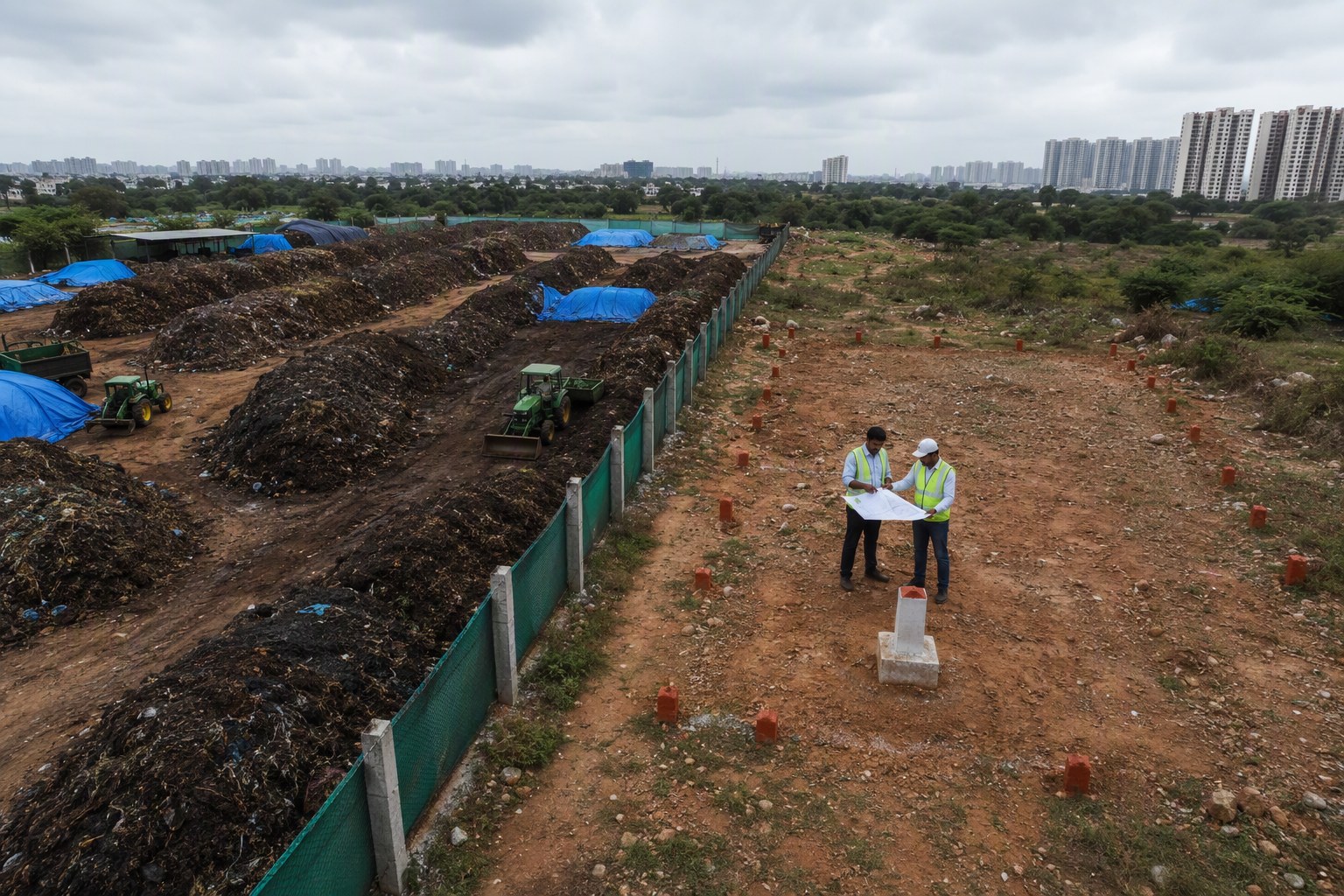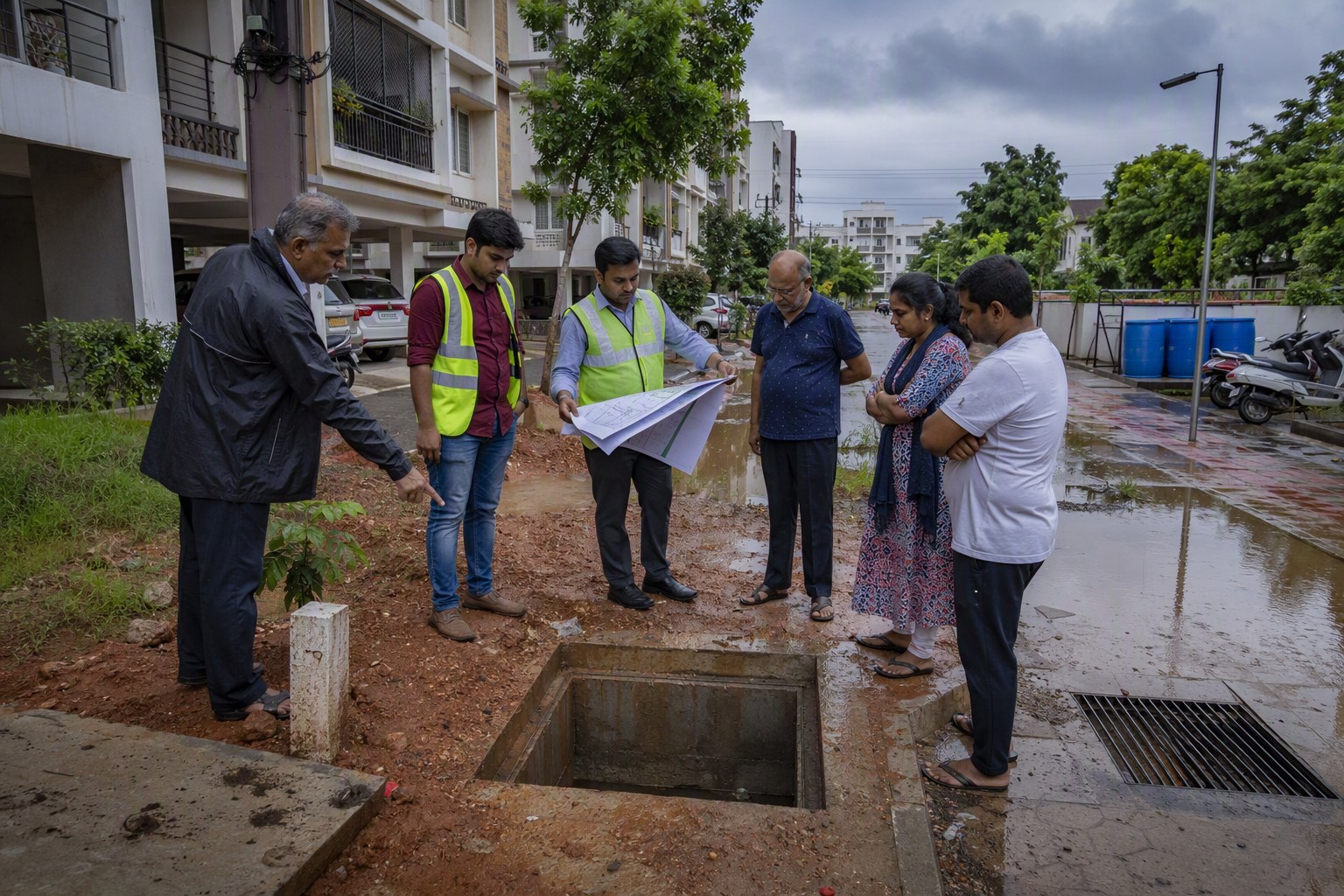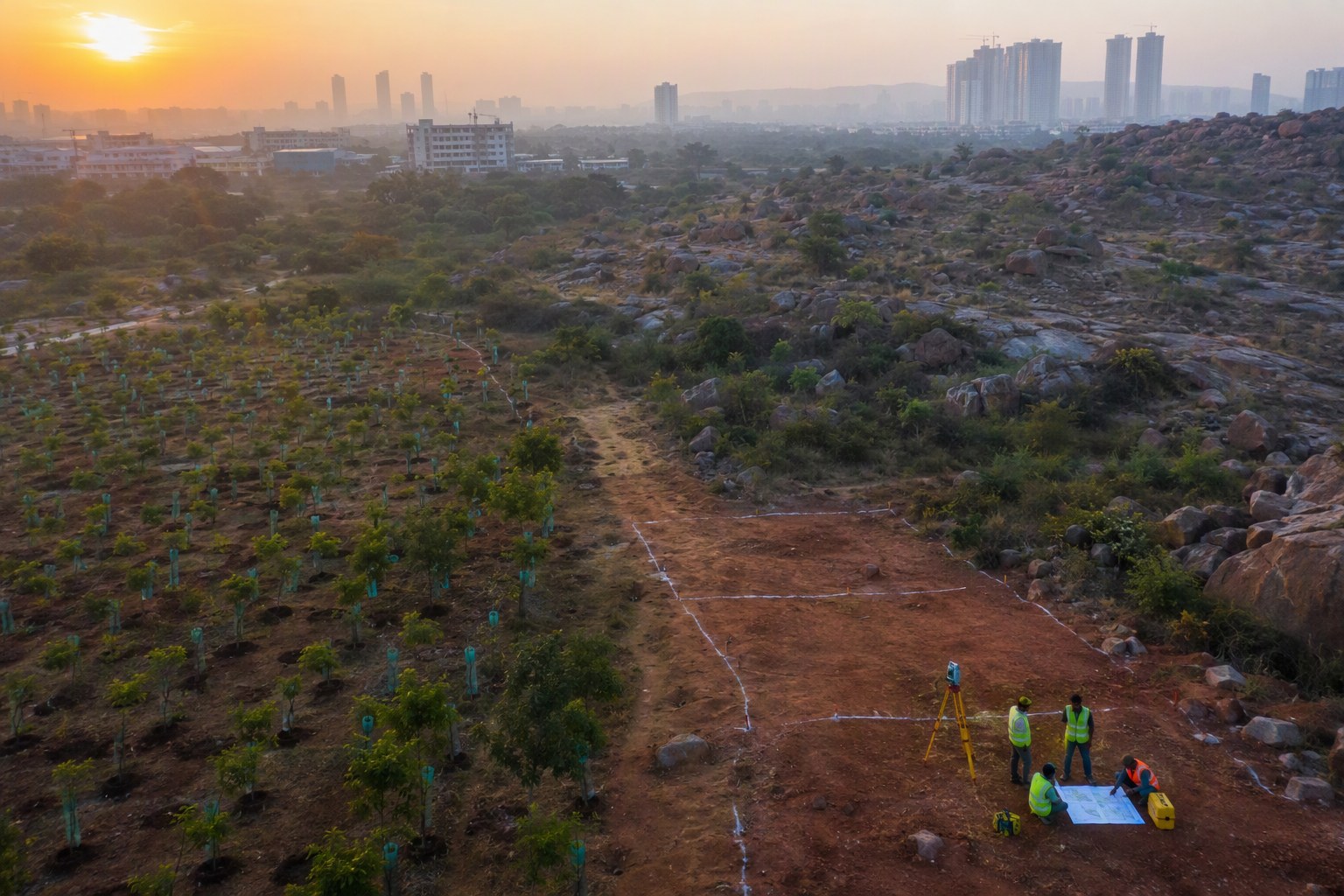
Green Home Ratings May Ask for 22-A Land Proof in Telangana is becoming a serious discussion point in Hyderabad real estate circles. The reason is simple: as per latest IGRS data, Telangana has 30,76,153 Section 22-A prohibited property entries. If a residential project is marketed as green, sustainable or responsible, buyers may soon expect the rating process to look beyond solar panels, STPs and rainwater harvesting. Land status, survey number clarity and SRO-level verification may become part of the trust test.
At present, green labels usually focus on energy use, water saving, materials, ventilation and waste management. These are all necessary. But in our experience, a project cannot be called truly responsible if the land itself has unresolved restrictions, unclear title history or a prohibited-property risk under Section 22-A. For Hyderabad buyers, especially in fast-growing pockets like Kokapet, Tellapur, Kollur, Mokila, Maheshwaram, Shadnagar, Bachupally and Medchal belt, this shift can make a real difference.
A sustainable building on legally risky land is still a risky purchase. That is the uncomfortable truth the market may have to accept.
Green Home Ratings May Ask for 22-A Land Proof in Telangana: why this matters now
The trigger is the scale of Telangana’s prohibited property records. 30,76,153 entries under Section 22-A is not a small background issue. It is a major due-diligence subject for developers, lenders, homebuyers and rating agencies.
Section 22-A generally deals with properties where registration may be prohibited or restricted due to government interest, assigned land issues, endowment or wakf claims, court disputes, ceiling matters or other notified categories. The exact reason has to be checked at the property level, not assumed from hearsay.
In Hyderabad and surrounding districts, a buyer may see a glossy brochure saying “green community”, “eco-living”, “low-carbon homes” or “water-positive design”. But before paying token advance, the buyer must still ask: What is the survey number? Which village and mandal? Which SRO? Is the land showing any 22-A alert? Is the EC clean? Is the RERA registration aligned with the land documents?
That is where the green-rating conversation is changing. Sustainability is not only about the building after construction. It is also about responsible land sourcing before construction.
Green Home Ratings May Ask for 22-A Land Proof in Telangana before giving stronger labels
If this expectation becomes market practice, green home rating files may start including land-status documents along with environmental drawings. The rating agency may not become a title certifier, but it can still ask for basic proof that the project land has been checked against government records.
For example, a project in Gandipet mandal may submit energy modelling and water calculations. In future, the same file may also need proof of survey number verification, EC review, RERA details and a Section 22-A check. A villa layout near Mokila may show avenue plantation and recharge pits, but the rating may carry more weight if the land is also free from prohibited-property flags.
This is not only useful for end users. It protects developers too. Many serious builders already do legal due diligence before launch. If green-rating systems formally recognise such checks, clean-title developers will get a better market signal.
What Section 22-A proof can look like for a project
For a practical Hyderabad transaction, 22-A proof should not be a vague statement from a sales team. It should be document-backed and survey-number specific. Buyers should ask for checks at the village, mandal and SRO level.
- Survey number and village confirmation: The land parcel should match revenue records, pahani details and layout approvals.
- Section 22-A status: The specific survey number should be checked against prohibited property records.
- Encumbrance Certificate: EC should be reviewed for past transactions, mortgages, releases and unusual gaps.
- RERA project details: The RERA record should match the project name, promoter, land extent and approval documents.
- SRO mapping: Buyers must know the correct Sub-Registrar Office, especially where village boundaries and jurisdiction confusion exists.
On Verified.RealEstate, a buyer can start with the Section 22-A Prohibited Property Check, then cross-check title movement through Encumbrance Certificate Search and verify the project listing using RERA Project Lookup. For land identification, the Survey Number Finder is also useful when the brochure gives only a marketing name and not the revenue particulars.
Hyderabad localities where buyers should be extra alert
The caution is not limited to one side of the city. We have seen buyers becoming more careful in western Hyderabad because ticket sizes are high, but 22-A checks matter across the metropolitan growth zone.
In Kokapet, Neopolis side, Narsingi and Financial District surroundings, the issue is often not lack of demand; it is the need to match premium pricing with clean legal paperwork. In Tellapur, Osman Nagar, Kollur and Velimela, buyers must carefully compare project approvals with village and survey details. Around Mokila, Shankarpally and Kondakal, land conversion, layout history and road access need close reading.
On the southern side, Maheshwaram, Tukkuguda, Adibatla and Shadnagar attract plot and villa buyers. Here, agricultural-to-non-agricultural conversion, pattadar records, assigned land history and HMDA or DTCP approval status should be checked properly. In northern Hyderabad, Medchal, Kompally, Gundlapochampally and Bachupally also require careful SRO and EC verification because many micro-markets have mixed land histories.
A green label can add confidence, but it should not replace local land due diligence. In Telangana, the words mandal, pahani, dharani, SRO and ready reckoner are not technical decoration. They decide whether a purchase is safe.
How this may change developer disclosures
If rating bodies and buyers start asking for 22-A proof, developers may have to improve disclosure at the pre-launch and launch stage. We may see project information packs carrying land due-diligence summaries, SRO details, survey number schedules, EC extracts and RERA references.
That would be a healthy move. Many buyers currently depend on WhatsApp PDFs, sales-office assurances and bank-loan approval as a shortcut. Bank approval is useful, but it is not a personal title guarantee. A green-rating disclosure backed by land-status checks can push the market towards cleaner documentation.
| Current green-rating focus | Possible next-level check | Why it helps buyers |
|---|---|---|
| Energy efficiency | Land status verification | Reduces legal uncertainty before purchase |
| Water conservation | Section 22-A check | Flags prohibited-property risk early |
| Waste management | EC and SRO review | Shows transaction history and jurisdiction |
| Landscape and open spaces | RERA-land document match | Confirms project disclosures are aligned |
For cost planning, buyers can also use the Stamp Duty Calculator and check government market benchmarks through the Market Value / Guideline Value Search. These tools do not replace a lawyer, but they help buyers ask sharper questions before signing.
Will land proof become a formal part of green certification?
No blanket rule should be assumed unless it is officially notified by the relevant rating body or government authority. But market pressure can move faster than regulation. Once homebuyers, NRIs and lenders start asking whether a green-rated project has also cleared a 22-A screen, developers will respond.
In my view, this is the right direction for Telangana. A project that saves water but sits on disputed or prohibited land cannot be celebrated as fully responsible. Sustainability has to include legal sustainability. That means clean title, transparent approvals, accountable land acquisition and clear buyer disclosure.
The better builders in Hyderabad will not object to this. They already maintain legal files. The weaker players may find it uncomfortable because land-status questions expose gaps that brochures usually hide.
What buyers should do before trusting a green label
Before booking a flat, plot or villa in a green-rated project, ask the sales team for the exact land details. Do not stop at the project name. Ask for survey numbers, village name, mandal, SRO and RERA registration. Then run independent checks.
- Check whether the survey number appears in prohibited-property records.
- Read the EC for the relevant period and ask a lawyer to review unusual entries.
- Compare RERA details with the sale agreement and brochure.
- Verify whether the land use and approval type match the promised project.
- Track later changes if you are buying during construction.
For ongoing monitoring, the Property Change Tracker, Find Your SRO Office and Property Verification Tool can help buyers organise checks before payment milestones.
The headline for Telangana is clear: green homes are welcome, but clean land is non-negotiable. With 30,76,153 Section 22-A prohibited property entries in the state records, land proof is no longer a side question. It may become one of the strongest trust markers for the next phase of Hyderabad real estate.
Frequently Asked Questions
Will green home ratings officially require 22-A land proof in Telangana?
No official blanket requirement should be assumed unless notified. But buyers and rating agencies may increasingly ask for Section 22-A checks as part of responsible project disclosure.
What is Section 22-A in Telangana property registration?
Section 22-A covers properties where registration may be prohibited or restricted due to government records, assigned land issues, endowment or wakf claims, disputes or other notified reasons. The status must be checked for the exact survey number.
Can a green-rated project still have land-title problems?
Yes. A green rating may focus on energy, water, materials and design. Unless land-status verification is included, buyers should separately check EC, RERA details, SRO records and Section 22-A status.
Which Telangana property tools should buyers use first?
Start with a Section 22-A prohibited property check, EC search, RERA project lookup and survey number verification. These checks give a better picture before paying advance or signing an agreement.