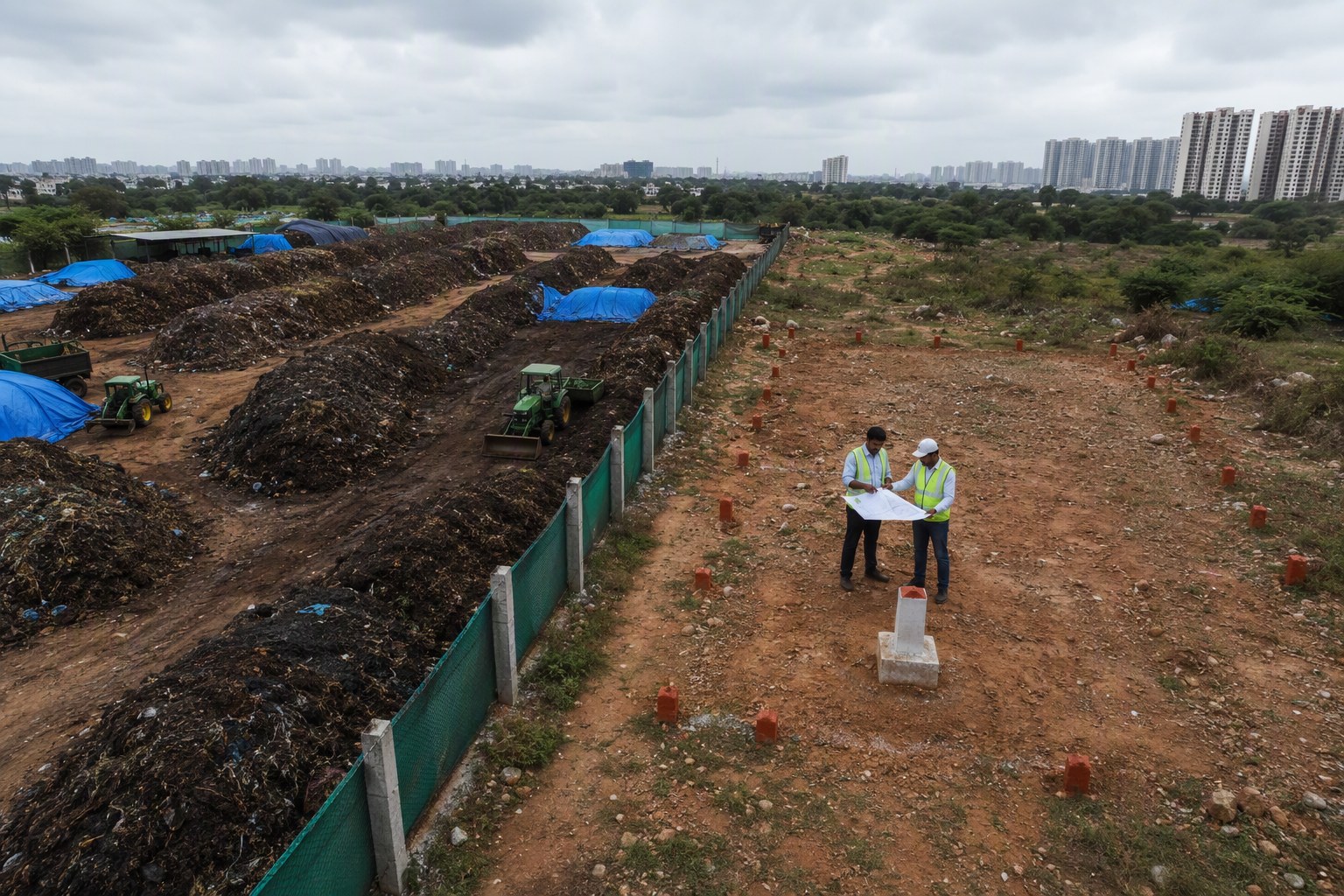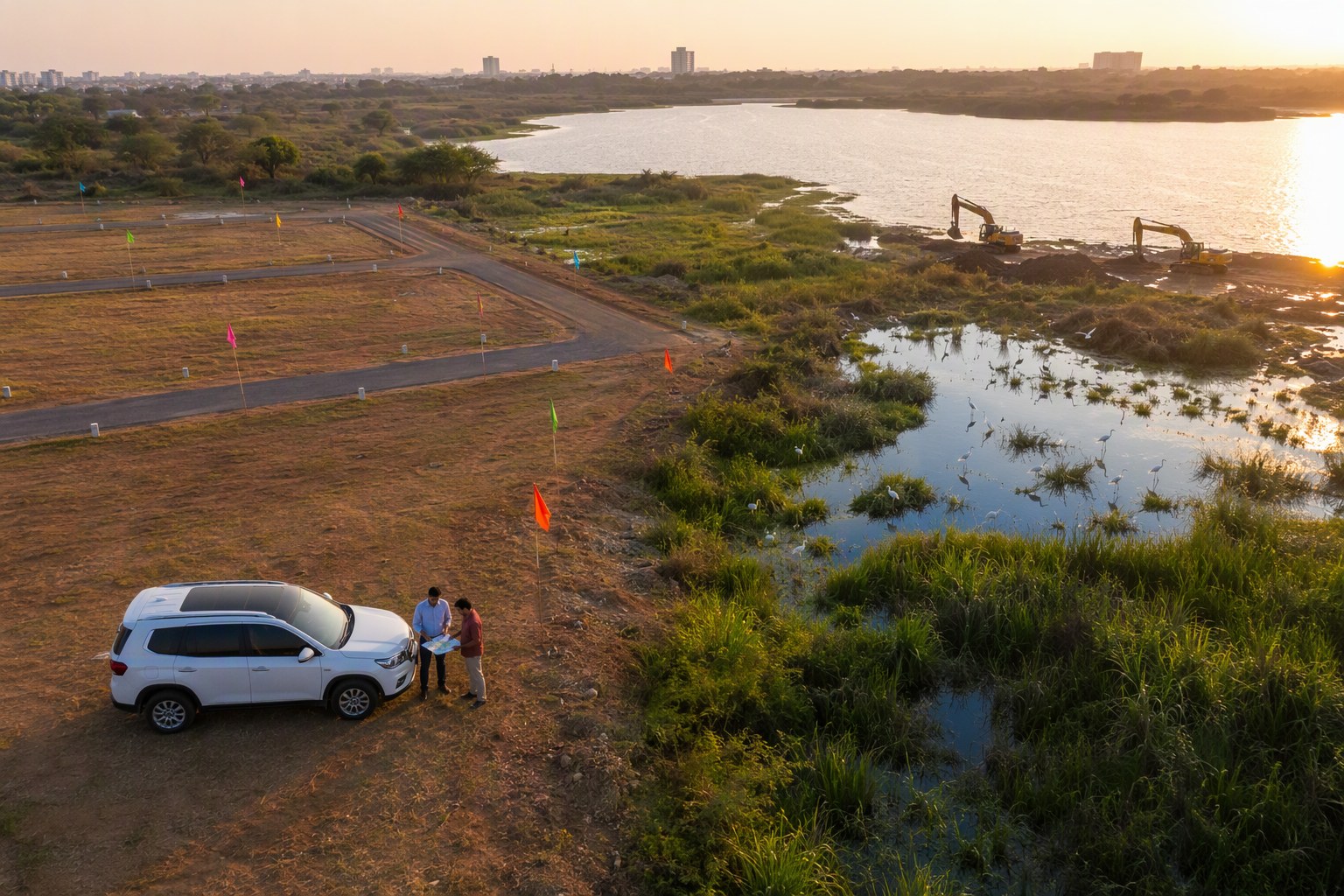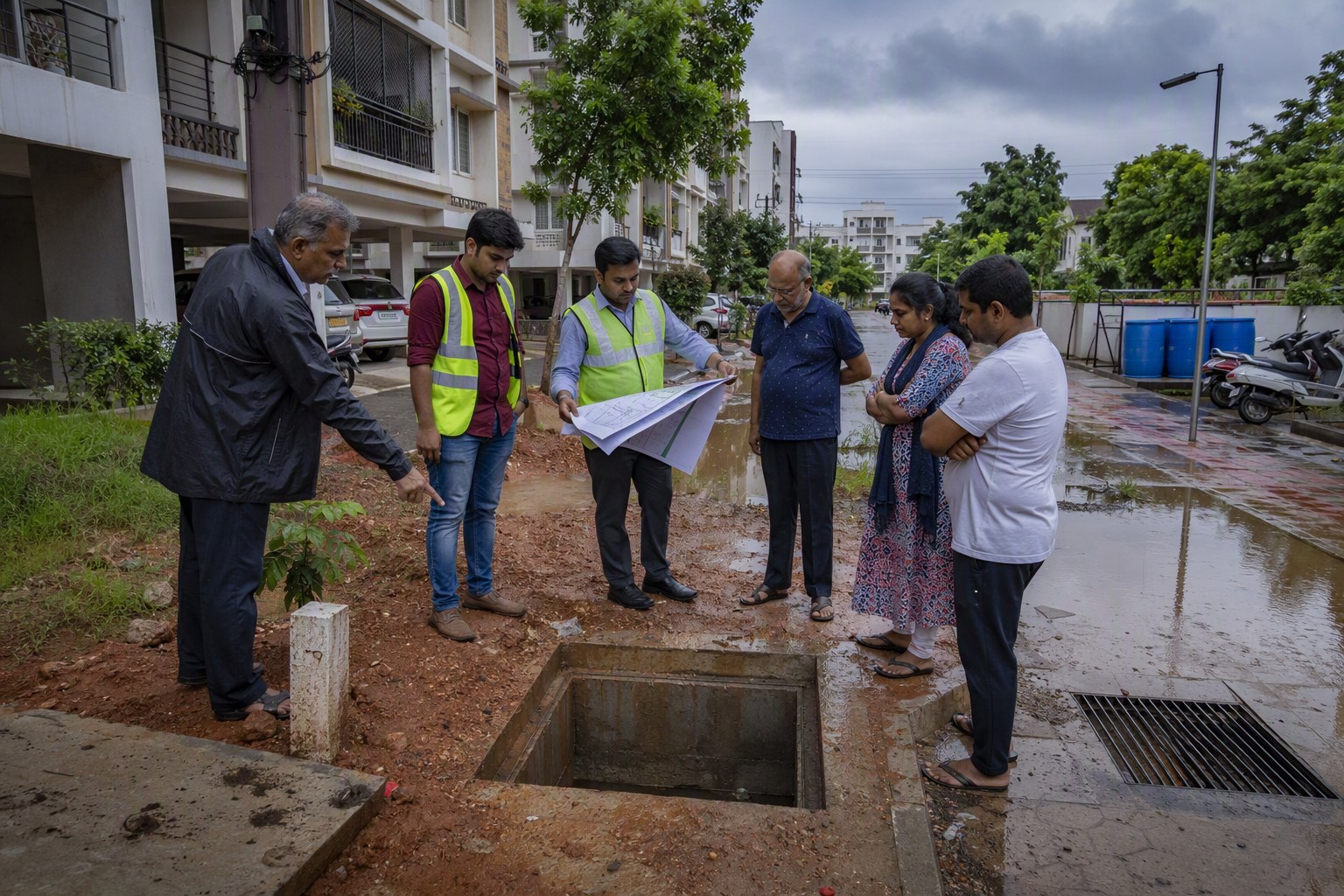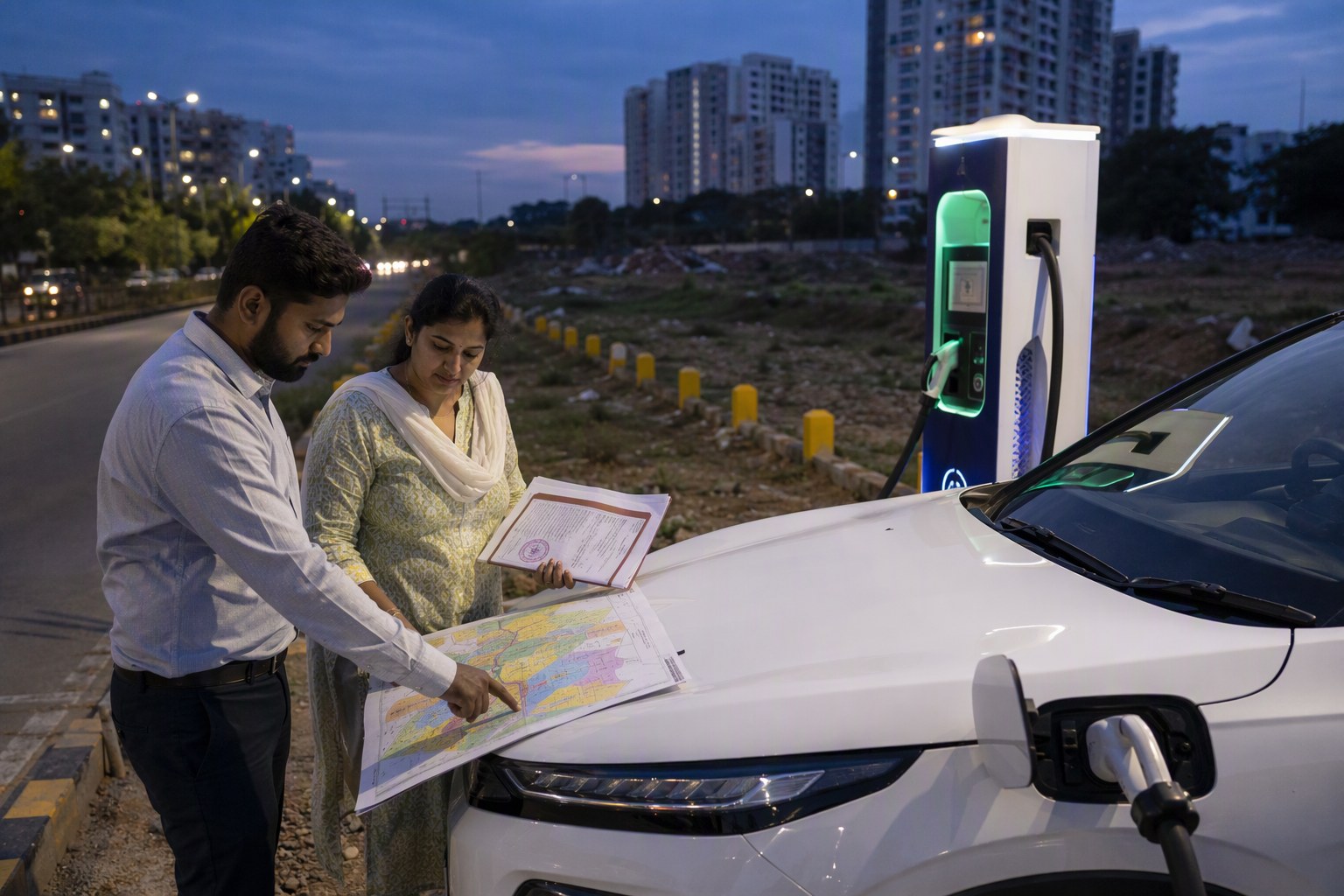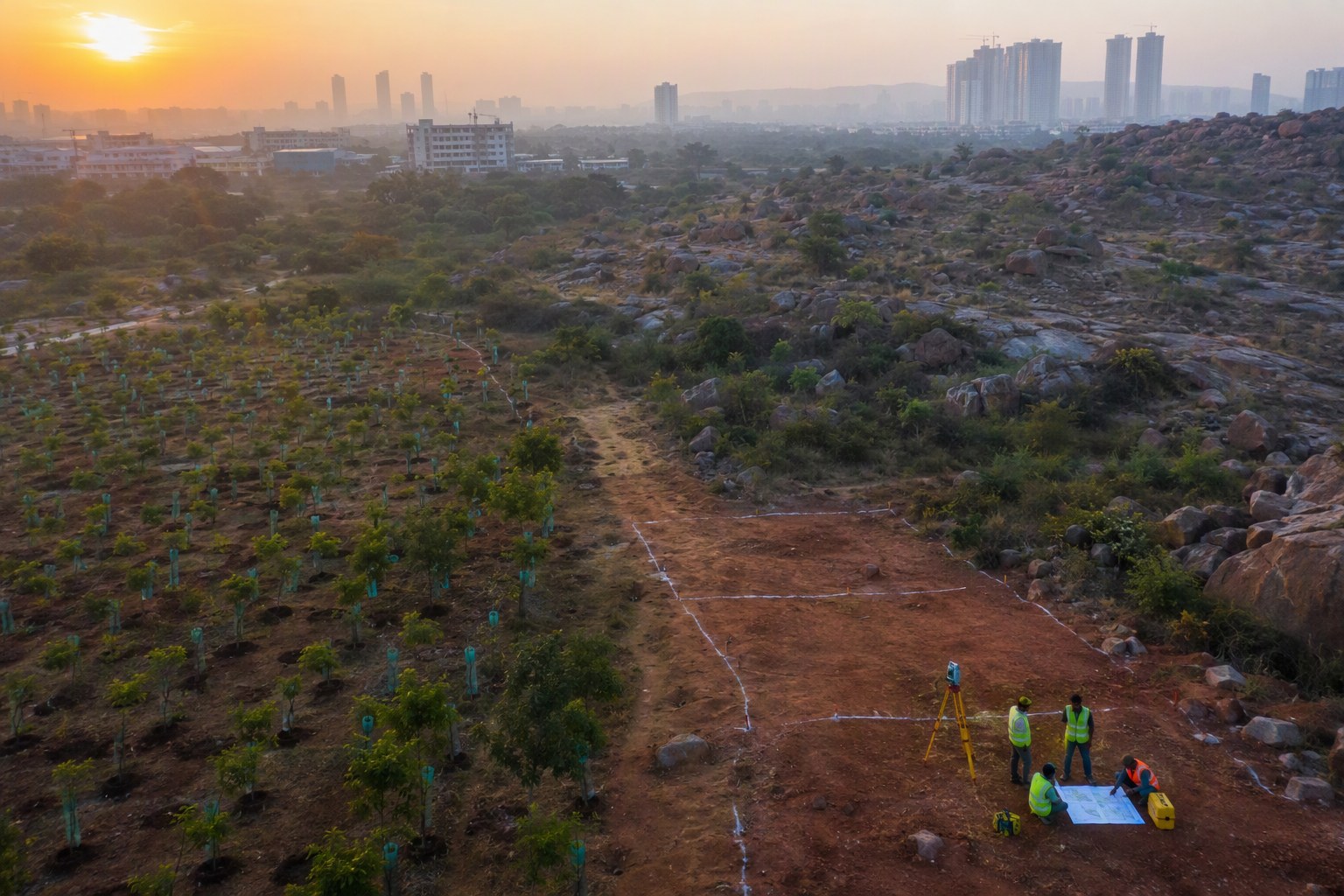
Hyderabad air-quality zoning could become the next big due-diligence layer for homebuyers and developers, especially in fast-growing belts like Kokapet, Financial District, Patancheru, Uppal, Kompally and Shamshabad. The discussion is still at a policy and planning stage, but the direction is clear: future housing approvals may not be judged only by title, RERA status, road width and land use. Air quality, traffic load, industrial influence and construction dust exposure may also start influencing project scrutiny, disclosures and buyer risk assessment.
For years, property verification in Telangana has largely meant checking Dharani records, pahani, survey number, SRO registration history, EC, RERA and whether the land falls under Section 22-A. That last point is not small. Telangana has 147,934 prohibited properties listed under Section 22-A, and buyers already need to screen those before paying token advance. Now, environmental zoning may sit beside these title checks as a practical approval and investment filter.
Hyderabad Air-Quality Zoning: What May Change For Housing Approvals
The likely impact of Hyderabad air-quality zoning is simple: projects in poorer air-quality belts may face deeper questioning at the approval stage. This may include traffic impact, dust-control plans, basement excavation management, green-buffer commitments, ventilation design and the distance from industrial or high-emission corridors.
In our experience, buyers usually ask three questions first: “Is the title clear?”, “Is it RERA approved?” and “What is the rate per sft?” Very few ask, “What is the air-quality profile of this micro-market?” That may change, particularly for families buying in dense corridors such as Gachibowli-Nanakramguda, Madhapur-Hitec City, Miyapur-Bachupally, Uppal-Nagole, Kompally-Dulapally and Patancheru-Isnapur.
Planning authorities may not stop approvals only because a zone has poor air readings. That would be too blunt. But they can ask for better mitigation. For example, a high-rise in a congested arterial stretch may be asked to show better access design, parking circulation, construction dust control, on-site greenery and compliance with environmental clearance conditions wherever applicable.
My view: air-quality zoning will not replace title verification. It will add a second lens — whether the project is liveable over the next 10 to 15 years, not just legally transferable today.
Why Hyderabad Air-Quality Zoning Matters Beyond Section 22-A Checks
Section 22-A screening remains non-negotiable. If a land parcel is prohibited, assigned, government-owned, endowment-linked or otherwise restricted, a buyer should not move ahead casually. Telangana’s 147,934 prohibited properties show the size of that problem. Use the Section 22-A Prohibited Property Check before any advance payment, especially in peri-urban mandals where old agricultural land has moved into plotted layouts and villa projects.
But air-quality zoning addresses a different question. A property can have a clean title and still be exposed to daily dust, diesel traffic, industrial emissions or road-widening disruption. This is where buyers must combine legal checks with environmental checks.
Take Patancheru mandal. Residential demand is strong because of ORR access, industrial employment and relatively lower ticket sizes compared to west Hyderabad. Apartment asking rates in Patancheru and Isnapur often sit around ₹5,000 to ₹7,000 per sft depending on builder, access road and stage of construction. But buyers must ask whether the project is near industrial activity, heavy truck movement or a lake-buffer concern. The rate may look attractive, but the micro-location matters.
Now compare that with Kokapet and Nanakramguda. New gated-community apartments commonly quote around ₹9,000 to ₹13,000 per sft, with premium towers going above that. Land values shot into national headlines after HMDA’s Neopolis auctions crossed ₹100 crore per acre in 2023. Here the air-quality concern is less about industry and more about construction dust, traffic congestion, high-rise density and road capacity.
How Developers May Need To Disclose Air-Quality And Site Risks
If Hyderabad air-quality zoning becomes part of the approval conversation, developer disclosures may become sharper. RERA filings already capture project details, approvals, timelines and sanctioned plans. Buyers can check those through the RERA Project Lookup. In future, buyers may also expect project brochures and sale agreements to say more about nearby land use, major roads, industrial pockets, STPs, lakes, nala buffers and environmental permissions.
For serious buyers, the practical checklist should include:
- Check RERA registration and sanctioned plan details.
- Verify land use through the Land Use Zone Finder.
- Check survey number and village records through the Survey Number Finder.
- Run an EC using the Encumbrance Certificate Search.
- Confirm whether the parcel is blocked under Section 22-A.
- Review road width, access and density using the Road Width Check and FSI/FAR Calculator.
For builders, the pressure may be highest in mixed-use growth belts. Tellapur, Kollur and Mokila in Shankarpally and Ramachandrapuram surroundings are seeing rapid residential development. Kompally, Suchitra and Medchal have NH-44 influence. Uppal, Pocharam and Ghatkesar have ORR, Metro, warehousing and institutional demand. Shamshabad and Adibatla have airport, logistics and aerospace-linked growth. Each location has a different environmental profile.
Locality-Wise Impact: West Hyderabad, North Hyderabad And Industrial Belts
West Hyderabad will remain the strongest demand engine, but zoning can affect how projects are compared. In Financial District, Kokapet, Narsingi and Gachibowli, buyers already accept higher prices for job access. If air-quality maps start showing construction-heavy pockets, buyers may prefer projects set back from main roads, with better internal open space and lower tower crowding.
North Hyderabad is more price-sensitive. In Kompally, Gundlapochampally, Medchal and Shamirpet, apartment and villa demand is driven by larger homes at lower prices than Madhapur or Kondapur. Current apartment asking bands in many Kompally projects are roughly ₹5,000 to ₹7,000 per sft, while villas vary widely based on plot size and gated-community quality. Here, road dust, highway exposure and nearby industrial pockets can influence resale value.
East Hyderabad has its own story. Uppal, Nagole, Pocharam and Ghatkesar benefit from Metro connectivity, Warangal highway access and relatively affordable housing. Asking rates in many Uppal-Nagole apartment pockets sit around ₹5,500 to ₹8,000 per sft. If air-quality zones identify traffic-heavy stretches, buyers may pay more attention to setback, green buffers and internal circulation.
South Hyderabad around Shamshabad, Rajendranagar and Adibatla is still uneven. Some layouts are excellent for long-term growth; some are speculative and weak on civic readiness. Air-quality zoning can make this difference more visible, especially near logistics routes, airport-linked traffic and industrial-use parcels.
Approval Costs, Guideline Values And Buyer Budgeting
Environmental zoning may not directly change stamp duty tomorrow. Telangana property registration costs are generally calculated on the higher of consideration value or market value, with stamp duty, transfer duty and registration charges applicable. Before registration, buyers should compare transaction pricing with official market values using the Market Value / Guideline Value Search and estimate charges through the Stamp Duty Calculator.
The more subtle effect will be on pricing. Projects in cleaner, less congested pockets may command a premium if zoning data becomes public and trusted. Projects in high-dust or high-traffic zones may need to offer better specifications, stronger maintenance systems or price flexibility.
| Buyer Check | Why It Matters | Useful Tool |
|---|---|---|
| Section 22-A status | Telangana has 147,934 prohibited properties; avoid blocked assets | Prohibited Property Check |
| RERA status | Confirms project registration, promoter details and declared timelines | RERA Project Lookup |
| Land use | Shows whether residential use matches planning permissions | Land Use Zone Finder |
| Road width and FSI | Helps assess density, access and approval feasibility | Road Width Check |
| Registration value | Prevents under-budgeting for duty and charges | Stamp Duty Calculator |
What Buyers Should Do Before Booking In An Air-Quality Sensitive Zone
Do not reject a project just because the area is busy. Hyderabad is an employment-led city. The best appreciation often comes in corridors with offices, roads and infrastructure. But don’t buy blindly either.
Visit the site at three different times: morning school-office traffic, afternoon construction hours and evening peak traffic. Check dust levels on balconies of nearby completed buildings. Speak to residents in older societies. Ask whether windows remain shut most of the day. See if there are ready-mix plants, stone activity, garbage transfer points, truck parking or industrial sheds nearby.
Then do the paperwork. Use the Property Verification Tool for a wider check, locate the relevant registration office through Find Your SRO Office, and track any ownership or document changes through the Property Change Tracker. In a market where buyers pay ₹80 lakh to ₹2 crore for typical urban apartments, this extra half-day of verification is not overthinking. It is basic discipline.
Hyderabad air-quality zoning, if implemented well, can make the housing market more transparent. It can push builders to design better, make authorities ask sharper questions and help buyers compare two similar-looking projects more intelligently. Title will still come first. But liveability is no longer a soft issue. It is becoming part of the property value itself.
Frequently Asked Questions
Will Hyderabad air-quality zoning stop new housing approvals?
Not necessarily. It may lead to stricter scrutiny, better disclosures and added mitigation conditions in certain locations, rather than a full stop on approvals.
Should I still check Section 22-A if air-quality zoning is introduced?
Yes. Section 22-A is a title and transferability issue. Telangana has 147,934 prohibited properties, so this check remains essential before paying any advance.
Which Hyderabad areas may face closer environmental scrutiny?
High-growth and mixed-use belts such as Kokapet, Nanakramguda, Patancheru, Uppal, Kompally, Medchal, Shamshabad and Adibatla may see closer review based on traffic, dust, industrial influence and density.
Can air-quality zoning affect property prices?
Yes, over time. Cleaner, better-planned pockets may command a premium, while projects in congested or high-dust stretches may need stronger specifications or more competitive pricing.
What should buyers verify apart from air quality?
Check RERA registration, EC, land use, survey number, SRO records, guideline value, road width, FSI and Section 22-A status before booking.