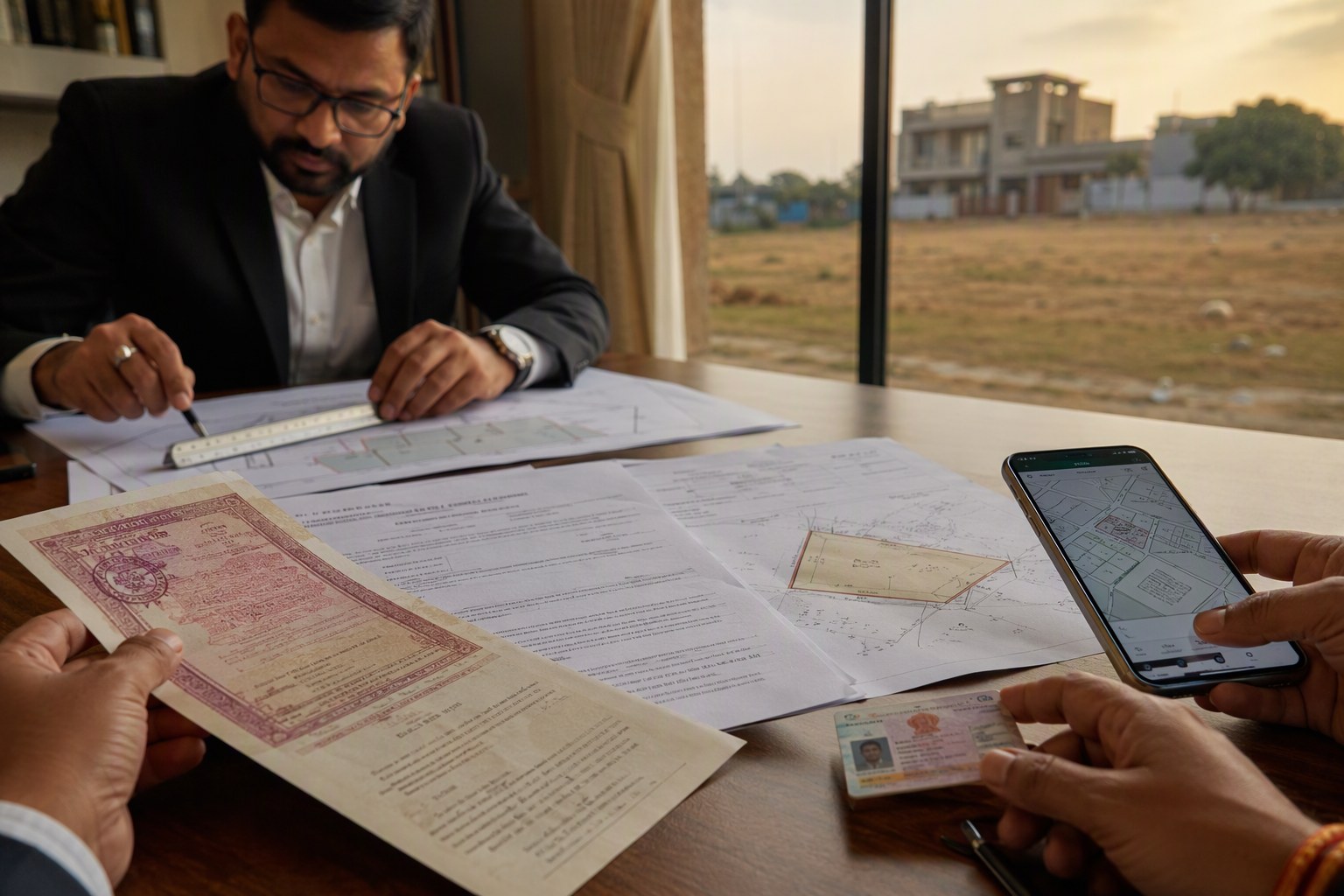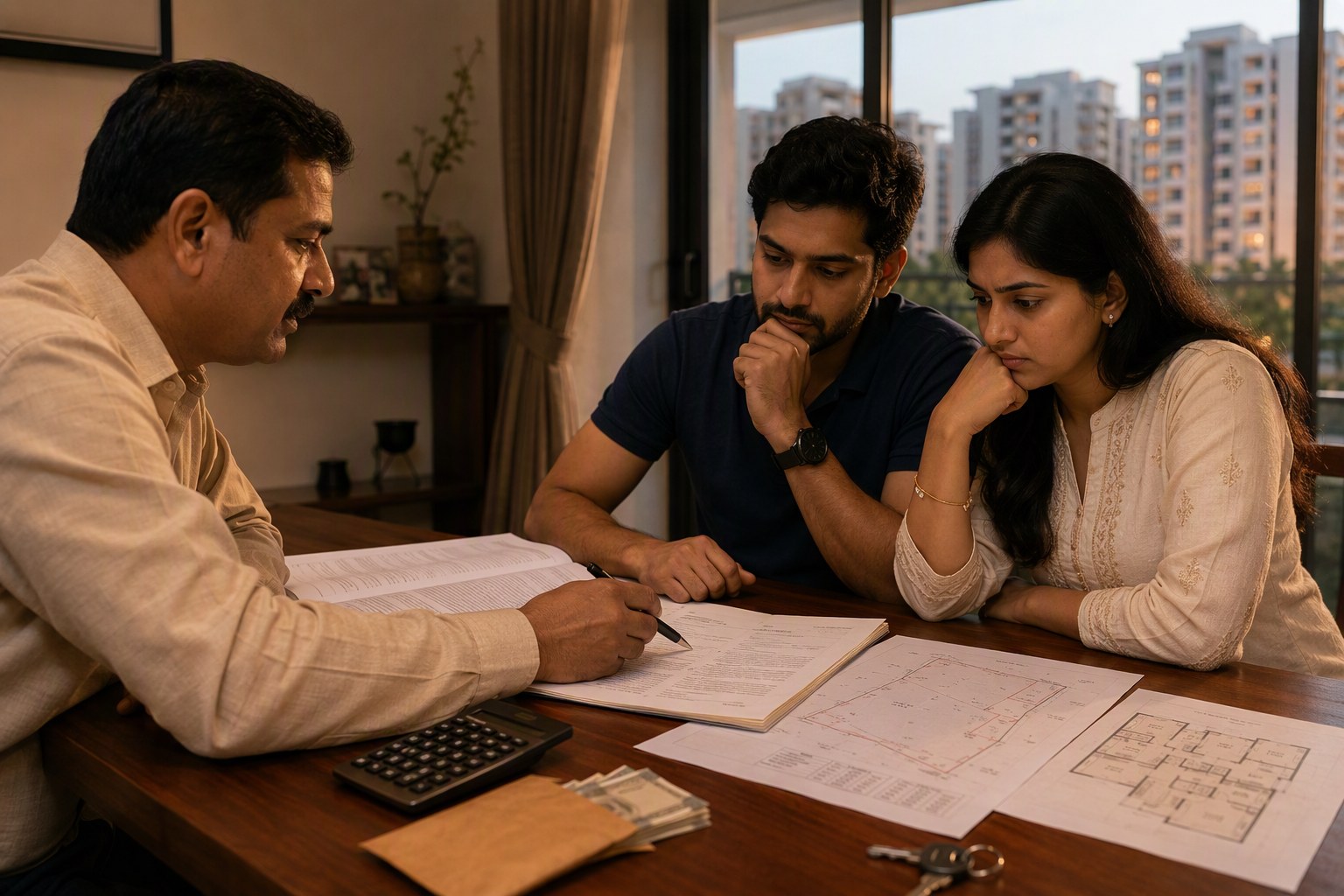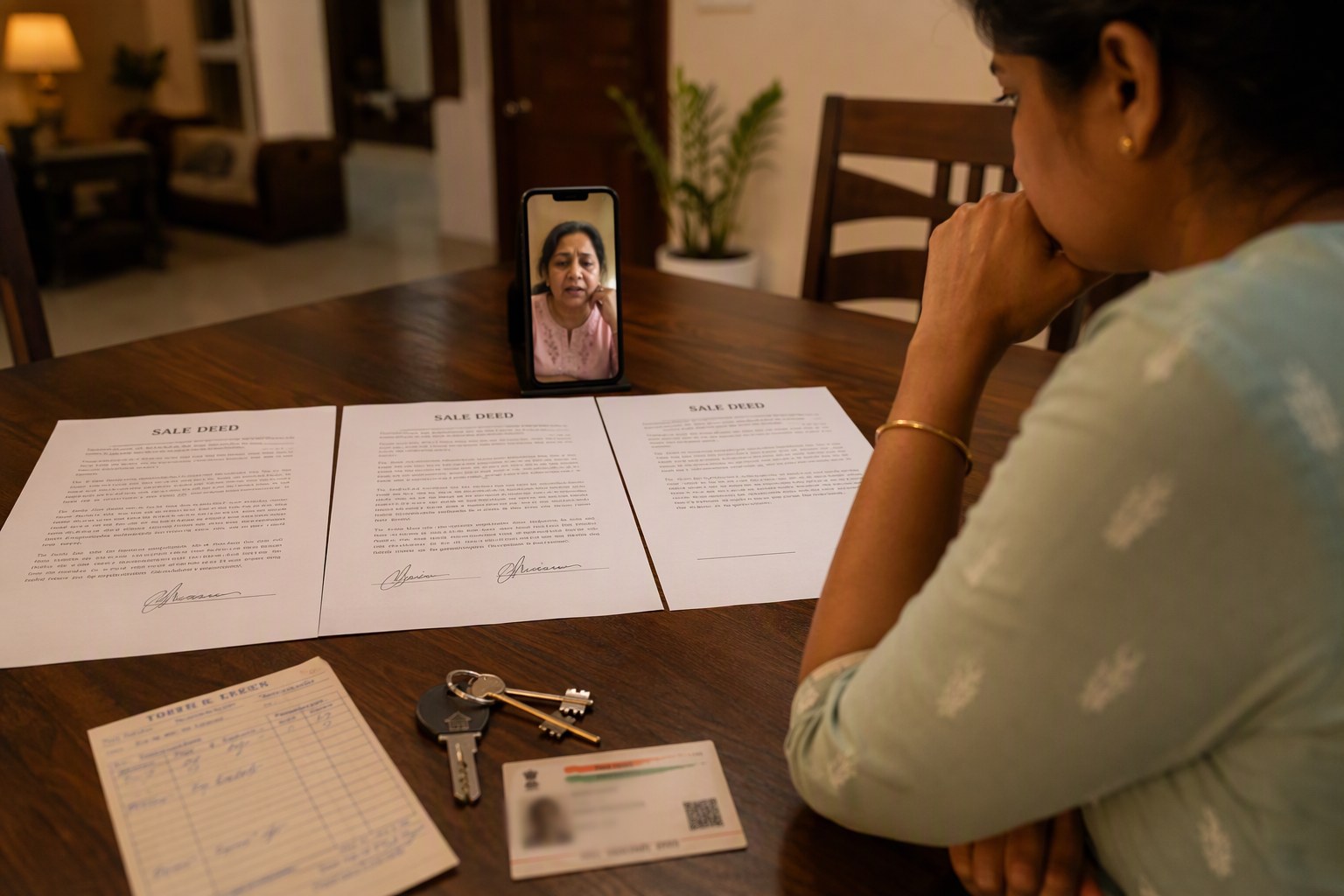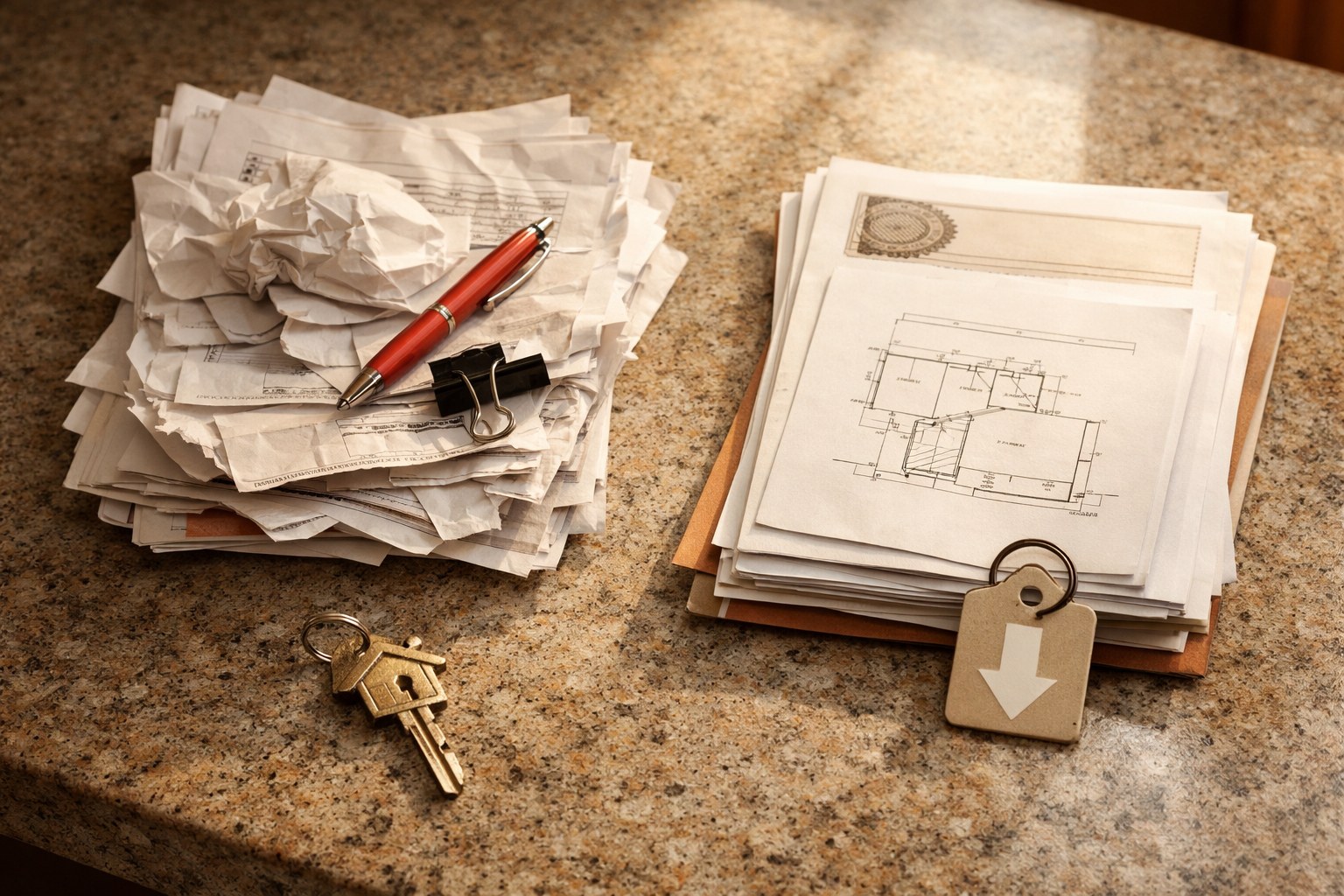
For a Telangana Seller, the hardest call before listing is not always the asking price. It is whether to reduce the price and pull more buyers, or fix paper gaps first and protect the value. I will be blunt: in Hyderabad and surrounding mandals, a clean file can sell faster than a discounted file. Buyers are checking ECs, Dharani entries, survey numbers, SRO jurisdiction and Section 22-A status far earlier than before, especially after Telangana has 147,934 prohibited property records in the system.
So the comparison is simple. A price cut improves attention. A paper fix improves trust. Both can work, but they solve different problems. If your Kondapur flat is priced ₹1,000 per sq ft above the market, reduce it. If your Mokila plot has a survey number mismatch between pahani and sale deed, do not try to hide it under a discount. It will come out during verification, and by then the buyer will bargain harder.
Our experience is that serious buyers in Hyderabad do not walk away only because of price. They walk away when the seller cannot explain the papers calmly.
Telangana Seller: Price Cut vs Paper Fix — the core comparison
A seller in Narsingi, Gandipet mandal, may think a ₹7 lakh reduction on a ₹1.45 crore resale flat will create movement. It may. But if the EC still shows an unreleased bank charge, the buyer’s loan team will stop the file. A seller in Tellapur, Ramachandrapuram side, may reduce a plot from ₹1.25 lakh per sq yd to ₹1.15 lakh per sq yd. But if the layout approval is unclear or the link deed chain has a missing document, the buyer will either ask for another big cut or disappear.
| Seller path | What it fixes | What it does not fix | Best used when |
|---|---|---|---|
| Reduce asking price | Low enquiry, overpricing, competing inventory, slow resale movement | Title defects, prohibited property flags, survey mismatch, old mortgage entries | The property is legally clean but priced above local market |
| Fix papers before listing | Buyer confidence, bank loan clearance, registration readiness, negotiation strength | A genuinely weak location, poor access road, bad building condition | The price is fair but buyers may find document gaps |
In local terms, price is a market conversation. Papers are a risk conversation. A buyer may negotiate price. But if the risk looks unclear, the buyer will not negotiate; he will simply move to another flat in Kokapet, another plot in Shankarpally, or another villa in Kollur.
When a price cut is the smarter move for a Telangana Seller
There are situations where no amount of document polishing can save an unrealistic quote. Hyderabad sellers sometimes price based on the highest WhatsApp forward in the colony, not on closed transactions. That is dangerous. In active micro-markets, buyers compare very quickly.
Take common resale apartment ranges we are seeing in buyer conversations: Kondapur and Gachibowli resale flats often sit around ₹8,000 to ₹12,000 per sq ft depending on age, builder and amenities. Narsingi and Kokapet may range roughly from ₹8,500 to ₹14,000 per sq ft for better gated communities. Miyapur and Bachupally are often discussed around ₹5,500 to ₹8,500 per sq ft. LB Nagar, Uppal and Nagole can vary widely, but good units near metro access command a premium over inner-lane properties.
For plots, the spread is even sharper. Mokila and Shankarpally side plots may be discussed anywhere from ₹35,000 to ₹75,000 per sq yd depending on road width, layout approval and distance from the main corridor. Tellapur and Osman Nagar can move much higher, often ₹80,000 to ₹1.40 lakh per sq yd for stronger locations. Kompally and Medchal side plotted property may sit in the ₹45,000 to ₹90,000 per sq yd bracket depending on HMDA layout quality and access.
These are not registration department values. They are market conversation ranges, and every lane can be different. Before fixing your ask, check the official baseline through the Market Value / Guideline Value Search. Then compare it with actual local demand. The ready reckoner value is not the selling price, but it tells you whether your stamp duty and registration numbers will shock the buyer.
Price cut makes sense when:
- Your property is 8% to 15% above similar listings in the same gated community or layout.
- The flat is older than 10 years and newer towers nearby are quoting close to your price.
- The unit has a less preferred floor, west-facing issue for some buyers, poor ventilation, or visible maintenance backlog.
- The land has narrow access, no proper compound, or is too far inside from the main road.
- You need a time-bound sale due to relocation, loan closure, business need or family settlement.
In these cases, do a controlled correction, not panic selling. For example, a Bachupally 2BHK listed at ₹82 lakh when similar sold units are around ₹74 lakh to ₹78 lakh may need a sensible reset. A seller who reduces to ₹77 lakh with clean papers will look serious. A seller who keeps ₹82 lakh and says negotiable will waste three months.
When paper fixing beats a price cut
Now comes the part many sellers underestimate. A ₹5 lakh price cut cannot repair a doubtful title. In fact, it can make the buyer more suspicious. In Telangana, buyers have become alert because prohibited property data, Dharani checks, EC searches and SRO-level questions are no longer restricted to lawyers. Even a first-time buyer in Ameenpur can run basic checks before paying token advance.
The biggest red flag is Section 22-A prohibited property status. Telangana has 147,934 prohibited property records. That number matters because buyers now ask whether the survey number is free from government land, assigned land, endowment land, Wakf, ceiling, court or acquisition-related restrictions. If your land falls in a flagged survey number, registration can be blocked or delayed. A discount will not solve that.
Before listing any land parcel, use the Section 22-A Prohibited Property Check. If you do not know the exact survey number, start with the Survey Number Finder. For apartments and villas, buyers will still check parent land, approvals and project status, especially where the land history is complicated.
Paper fix is the better path when:
- The EC shows an old mortgage, but the bank release deed was not registered properly.
- The owner name differs between sale deed, property tax, electricity bill and society records.
- The link document chain has a missing sale deed, partition deed, gift deed or rectification deed.
- The survey number in the sale deed does not match the pahani, Dharani entry or layout plan.
- There is no clear NALA conversion for agricultural-to-non-agricultural use where required.
- The property came through inheritance, but legal heir, succession or family consent papers are weak.
- The layout has an LP number, but the seller cannot show HMDA, DTCP or gram panchayat approval history properly.
We have seen sellers in Shamirpet, Moinabad and Abdullapurmet lose genuine buyers because they waited for the buyer’s advocate to discover the gap. That is the worst timing. If the seller himself says upfront that a rectification deed is being completed, the buyer may wait. If the buyer finds it, trust drops.
Telangana Seller: Price Cut vs Paper Fix in Section 22-A risk areas
Section 22-A is not some small clerical point. It directly affects registration. If the property appears in prohibited records, the SRO can refuse registration. In Hyderabad outskirts, where old agricultural land became plots over many years, survey-level checking is non-negotiable. This is especially relevant in pockets of Shankarpally, Chevella, Moinabad, Shamshabad, Maheshwaram, Ibrahimpatnam and Medchal side, where land histories may include assigned land, government land claims, court cases or old layout conversions.
For a Telangana Seller holding land, the correct sequence should be: identify survey number, check Dharani and pahani, check Section 22-A, check EC, confirm SRO, then decide price. Many sellers do the reverse. They decide price based on neighbour talk, collect token, then start checking papers. That is how disputes begin.
Use the Encumbrance Certificate Search before you list. Then confirm registration jurisdiction with Find Your SRO Office. If the buyer is taking a loan, the bank’s legal team will anyway ask for these. Better you know the answer before the buyer asks.
If a land parcel is clean, say it confidently and show documents. If it is not clean, do not sell it like a clean property. That is where litigation starts.
What buyers are checking before paying token advance
Earlier, many buyers paid token after one site visit. Now, especially in Hyderabad’s higher-ticket zones, they check first and visit second. In Kokapet, a ₹2 crore flat buyer will ask for RERA, occupancy certificate, property tax, EC and loan closure proof. In Patancheru or Ameenpur, a plot buyer will ask for layout approval, link documents and road width. In Shamshabad or Maheshwaram, land buyers will ask for survey sketch, Dharani status and prohibited list status.
For under-construction apartments, check the project through RERA Project Lookup. For resale units, do not ignore stamp duty math. Buyers calculate total outflow, not just sale price. You can share a clean estimate using the Stamp Duty Calculator. If the buyer sees that you understand the process, the conversation becomes less defensive.
Sellers of plots should also think like buyers. Road width, land use zone and buildability affect value. A 40 feet road plot in a proper HMDA layout is not the same as an inner 25 feet road plot with uncertain access. For construction potential, tools like the FSI/FAR Calculator, Road Width Check and Land Use Zone Finder help you understand what the buyer is really paying for.
Cost comparison: ₹5 lakh discount or ₹50,000 paper fix?
Let us take a practical example. A seller in Manikonda has a 1,650 sq ft resale flat listed at ₹1.32 crore. The EC shows an old home loan entry, though the loan was closed two years ago. The seller thinks of reducing the price to ₹1.27 crore because two buyers backed out. But the real issue is not ₹5 lakh. The issue is the unreleased mortgage entry. Getting a proper release deed, bank letter and updated EC may cost time and some professional fees, but it protects the full value.
Another case: a plot in Kollur is listed at ₹95,000 per sq yd. The seller has all link documents, HMDA layout copy and clean EC. But similar plots in the same layout are closing near ₹88,000 to ₹90,000 per sq yd. Here, the paper file is fine. The price is the problem. A correction to market level can bring genuine buyers.
| Problem seen | Likely buyer reaction | Better seller action |
|---|---|---|
| Price 10% above similar property | Low visits, casual bargaining | Reduce asking price after checking local comparables |
| Old mortgage visible in EC | Loan buyer stops file | Register release deed and refresh EC |
| Survey number mismatch | Buyer asks for major discount or exits | Get rectification, survey clarification and revenue record alignment |
| Section 22-A doubt | No serious buyer will proceed | Check prohibited status and resolve with competent authority if possible |
| Missing OC for flat | Buyer worries about loan, tax and resale | Collect builder/society approvals and disclose status honestly |
How to prepare your sale file before listing
A good sale file is not fancy. It is organised. Keep scanned copies ready, but also keep originals accessible. A serious buyer should not wait one week for a basic sale deed copy.
For a flat or villa in Hyderabad
- Sale deed and link documents.
- Mother deed or parent document where available.
- Latest EC, preferably covering 30 years for older properties.
- Occupancy certificate, building permission and approved plan.
- Property tax receipt, electricity bill and water bill.
- Society NOC, maintenance dues statement and parking allotment proof.
- Loan closure letter and registered release deed if the property was mortgaged.
- RERA details for applicable projects.
For land or plot
- Sale deed chain and link documents.
- Survey number, sub-division details and location sketch.
- Pahani, Dharani details and pattadar passbook where relevant.
- HMDA, DTCP or layout approval copy.
- NALA conversion order if applicable.
- Latest EC and tax receipts.
- Section 22-A check result.
- Road access proof and boundary clarity.
If you want a wider pre-listing review, start with the Property Verification Tool. It gives you a structured way to think through risk instead of depending only on broker confidence.
Negotiation advantage: clean papers change the tone
When your papers are clean, you can negotiate from strength. You can say, the EC is clear, the SRO is confirmed, the release deed is registered, the layout approval is available, and the Section 22-A check is clean. That sentence itself is worth money. The buyer may still bargain, but he cannot use uncertainty as a weapon.
When papers are weak, every small issue becomes a discount point. Missing link deed? Minus ₹3 lakh. Name mismatch? Minus ₹2 lakh. No OC? Bigger cut. Survey doubt? Buyer will ask for legal opinion, hold token, or insist on a conditional agreement. By the time you fix it under pressure, your bargaining position is already damaged.
Also think about tax. If you are selling a high-value property in Kokapet, Jubilee Hills, Financial District, Tellapur or Nallagandla, capital gains planning should start before the sale agreement. Check likely tax outflow using the Capital Gains Tax Calculator. Many sellers agree to a number and later realise their net amount is lower than expected.
My practical call for Telangana sellers
If the property is clean but overpriced, reduce the price. Do it clearly, not as a desperate last-minute offer. Mention the revised price in your listing and tell buyers the documents are ready for verification.
If the property has paper gaps, fix them before listing. Do not assume the buyer will not check. Hyderabad buyers, NRIs from Telangana, bank panels and local advocates are all sharper now. The 147,934 prohibited property records under Section 22-A have made people cautious, and rightly so.
The best listing is not always the cheapest listing. It is the property where the buyer feels safe paying advance. In our experience, a well-priced property with clean documents sells with less drama than a discounted property with confusing papers.
So before you cut ₹5 lakh or ₹10 lakh, spend one weekend checking your EC, SRO, survey number, guideline value, Dharani status and approvals. You may find that your real problem is not price. It may be one missing paper standing between you and a clean sale.
Frequently Asked Questions
Should a Telangana seller reduce price before checking documents?
No. First check EC, SRO, survey number, approvals and Section 22-A status. If papers are clean and enquiries are weak, then consider a price correction.
What is Section 22-A and why does it affect sale?
Section 22-A covers prohibited properties where registration may be restricted, such as certain government, assigned, endowment, Wakf or disputed lands. Telangana has 147,934 such records, so buyers are careful.
Can a discount solve a missing link document problem?
Usually no. A buyer may accept a small clerical issue, but missing link documents affect title comfort and bank loan approval. Fix the chain before listing if possible.
Which documents should I keep ready for a Hyderabad flat sale?
Keep sale deed, link documents, latest EC, OC, approved plan, property tax receipt, society NOC, loan closure proof and parking allotment proof ready before showing the property.
How do I know if my asking price is too high?
Compare similar sold or active properties in the same locality, check guideline value, speak to local brokers, and adjust for age, floor, amenities, road access and document quality.