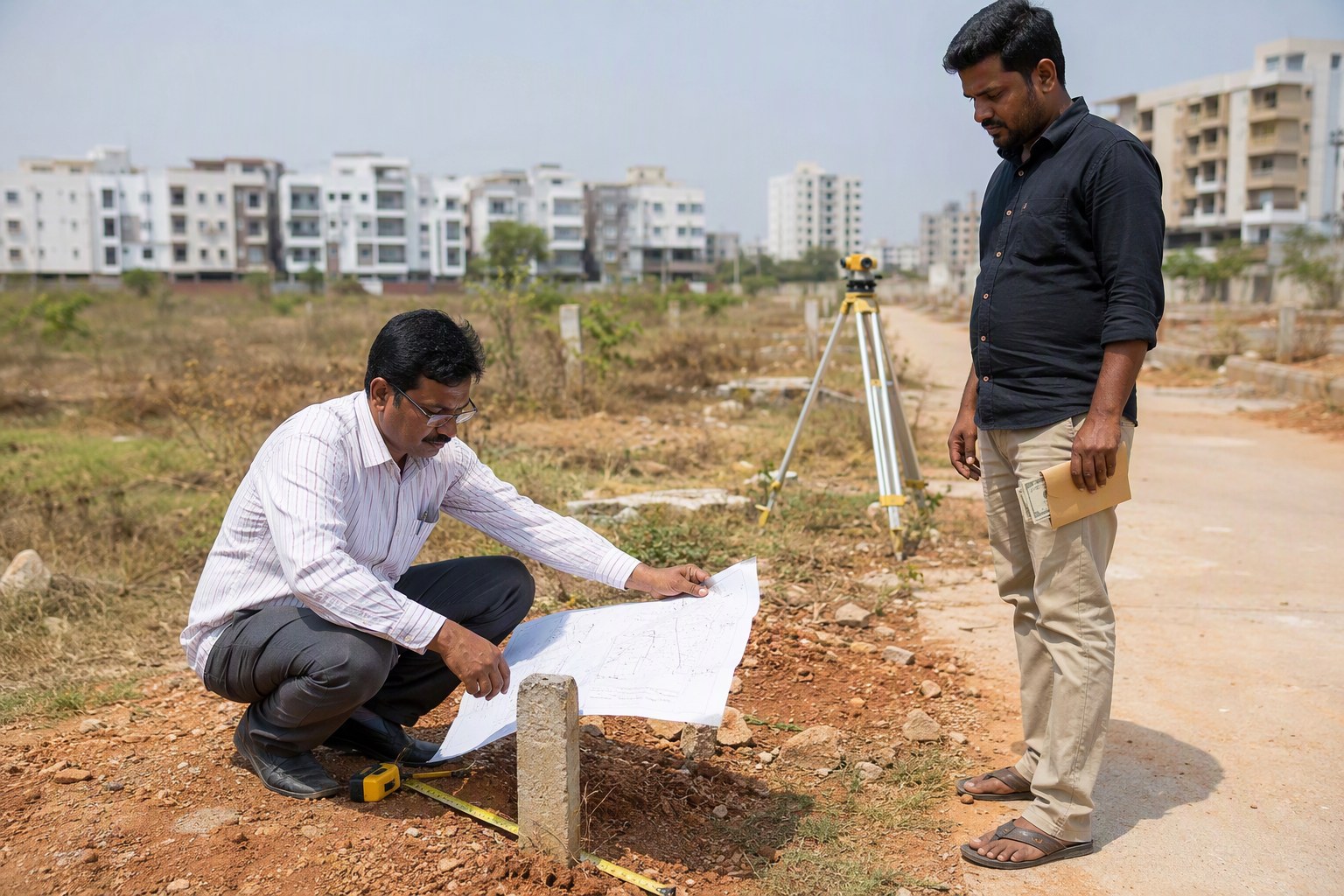
Telangana 22-A: why 1.48 lakh entries should make every buyer slow down
Telangana 22-A is not some small technical column that only lawyers should worry about. As per the available property prohibition data, Telangana has 147,934 properties listed under Section 22-A prohibited category. That is roughly 1.48 lakh properties where registration may be refused or seriously questioned at the SRO level.
For a buyer in Hyderabad, Rangareddy, Medchal-Malkajgiri, Sangareddy, Yadadri-Bhuvanagiri, or Vikarabad, this number should change the way token advances are paid. We have seen buyers in Kokapet, Narsingi, Tellapur, Mokila, Shankarpally, Shamshabad, Maheshwaram, Ghatkesar and Patancheru get excited by a site visit, bargain for two evenings, and then transfer ₹2 lakh or ₹5 lakh as token before one basic check: whether the survey number is clean for registration.
For this article, I am framing the issue as a property lawyer interview. The lawyer’s core advice is simple: before you pay even one rupee as token, ask uncomfortable questions. Ask the seller. Ask the agent. Ask the document writer. Ask the SRO-side person who is promising quick registration. If their answers are vague, pause the deal.
“A genuine seller will not get angry when you ask for 22-A, pahani, link documents, EC and Dharani checks. Only a weak file needs hurry.”
You can run your first-level screening using Verified.RealEstate tools like the Section 22-A Prohibited Property Check, Encumbrance Certificate Search, Survey Number Finder and Find Your SRO Office. These checks will not replace a lawyer’s opinion, but they help you avoid walking blindly into a risky transaction.
Telangana 22-A: what does it mean for a buyer?
Section 22-A is used to restrict registration of certain properties. In practical terms, if a property is found under prohibited lists, the Sub-Registrar may refuse registration. The reasons can include government land, assigned land, endowment land, waqf land, ceiling surplus land, court-attached property, prohibited survey numbers, or land affected by specific government notifications.
Buyers often misunderstand one point. They think, “If the seller has a sale deed, then the property must be safe.” That is not always correct. A sale deed only proves that a transaction was registered at some point. It does not automatically clear present-day restrictions, revenue classification issues, pending litigation, boundary problems, or Dharani mismatches.
In our experience, the 22-A risk is sharper in fast-moving edge markets where land values have risen quickly. For example, around Mokila and Shankarpally mandal, layouts and farm plots get marketed aggressively because of western Hyderabad growth. Around Maheshwaram and Kandukur mandals, sellers use airport corridor and Pharma City narratives. In Ghatkesar, Bibinagar and Bhuvanagiri belts, investors chase ORR and regional ring road stories. In these areas, title clarity matters more than brochure language.
The lawyer I spoke to put it bluntly: “In Hyderabad’s land market, the risk is not only fake documents. The bigger risk is half-truths. A seller may show one survey number, mention another in old pahani, use a third number in layout sketch, and still say everything is manageable.”
Telangana 22-A questions to ask the seller before token money
When buyers meet the seller, the talk usually goes towards price, payment schedule and registration date. A smart buyer should first bring the discussion back to title and classification. These are the exact questions a property lawyer wants you to ask.
1. What is the exact survey number, sub-division number and extent?
Do not accept “near Survey No. 120” or “part of old Survey No. 88” as an answer. Ask for the present survey number, old survey number if any, sub-division, village, mandal, district and exact extent. In villages around Moinabad, Shamshabad, Chevella, Shamirpet and Medchal, old and new survey references can create confusion.
Use the Survey Number Finder to cross-check the survey details. If the seller hesitates to share the survey number before token payment, that itself is a warning sign.
2. Is the land patta, assigned, government, endowment, waqf or ceiling land?
This is the main question. The seller may say, “Patta land only, sir.” Ask for documentary proof. In Telangana, revenue records such as pahani, ROR/1-B extracts, Dharani passbook details and mutation history help establish the nature of land. If the land ever carried assigned status, lavoni status, shikam classification, poramboke reference, endowment connection or government claim, the deal needs deeper legal review.
In mandals like Hayathnagar, Abdullapurmet, Maheshwaram, Rajendranagar and Shankarpally, we have seen buyers rely on layout maps without checking land classification. That is poor due diligence.
3. Has the property ever appeared in a prohibited property list?
Ask this directly. Do not ask, “Registration will happen, right?” That gives room for a casual answer. Ask, “Has this survey number ever appeared in Section 22-A prohibited property records, court disputes, government claims or SRO objections?”
Then independently check using the Section 22-A Prohibited Property Check. If the seller says the property was earlier under 22-A but “now cleared”, ask for the written proceedings, gazette/order reference, collector-level communication or updated SRO record.
4. Who is in physical possession today?
Possession is not the same as ownership, but it matters. If the seller says the land is vacant, visit the site with a local person. Check fencing, approach road, borewell, neighbouring boundaries and any cultivation. In peri-urban villages, possession disputes often start after advance payment, not before.
5. Are all link documents available from the root owner?
For open plots and agricultural lands, ask for link documents for at least 30 years where possible. For flats in Gachibowli, Kondapur, Manikonda, Nallagandla, Miyapur or Bachupally, ask for the mother deed, development agreement, GPA if any, building permission, occupancy certificate where applicable and RERA details for registered projects.
For ongoing projects, use the RERA Project Lookup. For land and resale properties, use the Encumbrance Certificate Search to check registered transactions.
Questions to ask the agent before believing the sales pitch
Agents are part of the market. A good agent saves time and filters weak properties. A careless agent creates pressure and hides risk behind urgency. The lawyer’s view is clear: “Treat an agent’s statement as a lead, not as legal verification.”
1. Which SRO will register this property?
Every buyer should know the correct SRO before planning registration. A property in one village may fall under a different SRO than what a casual agent assumes. This matters because SRO-level prohibited lists, market value references and document scrutiny are tied to jurisdiction.
Use the Find Your SRO Office tool before preparing sale agreement drafts. In Hyderabad and surrounding districts, SRO jurisdiction confusion is common in border areas between Gandipet, Rajendranagar, Serilingampally, Medchal, Quthbullapur and Patancheru zones.
2. Why is the seller giving this price?
If land near a hot corridor is being offered much below the local ready reckoner or prevailing market trend, do not celebrate too early. Ask why. Sometimes there is a family urgency. Sometimes there is a litigation smell. Sometimes road access is weak. Sometimes the plot is in a restricted survey number.
Check the official value using the Market Value / Guideline Value Search. For budgeting stamp duty and registration cost, use the Stamp Duty Calculator. These numbers help you compare the seller’s quote with the registration value environment.
3. Can you share previous sale deeds in the same layout or survey number?
This question tests market reality. If other plots in the same layout got registered recently, ask for document numbers or EC references. But remember, one registration does not guarantee every remaining plot is safe. Layout boundaries, survey splits and extent mismatches can still cause trouble.
4. Is this HMDA, DTCP, gram panchayat or unapproved layout?
In Hyderabad outskirts, the approval type can change the buyer’s risk profile. HMDA and DTCP approvals carry planning scrutiny, but the land title still needs checking. Gram panchayat layouts and old unapproved layouts require extra care. In places like Adibatla, Tukkuguda, Kothur, Shadnagar, Isnapur and Bhanur, many buyers hear only “venture is running fast” and skip approval reading.
If you are buying for construction, also check road width and zoning using Road Width Check and Land Use Zone Finder. A clean title with poor planning feasibility can still become a bad investment.
Questions to ask the document writer before signing any draft
Many buyers meet the document writer only on registration day. That is too late. A document writer may prepare the sale deed, but the buyer must ensure the deed reflects the actual property, correct parties and correct title flow.
| Person | Question to ask | Why it matters |
|---|---|---|
| Seller | Is this survey number free from Section 22-A prohibition? | Registration can be refused if the property is prohibited. |
| Agent | Which SRO will register the document? | Jurisdiction affects scrutiny, market value and registration process. |
| Document writer | Have you matched the deed schedule with pahani, EC and link documents? | Wrong boundaries or extent can create future disputes. |
| Seller | Are all legal heirs consenting? | Family claims are common in inherited land sales. |
| Agent | Is there road access shown in revenue or layout records? | Physical road and legal access are not always the same. |
1. Is the schedule of property copied correctly?
The schedule is the heart of the deed. It should show correct survey number, plot number if any, extent, village, mandal, district and boundaries. Mistakes in north-south-east-west boundaries are not small typing errors. They can affect resale, bank loan and mutation.
2. Does the deed mention the full title flow?
The draft should not simply say “vendor is absolute owner” without explaining how the vendor got the property. Was it through sale, gift, partition, succession, release deed, court decree or development agreement? Each route has its own document trail.
3. Are there minors, deceased owners or GPA holders in the chain?
If a minor’s share was sold without proper permission, if a deceased owner’s legal heirs are not all part of the deed, or if a GPA is old, unregistered or revoked, the buyer may face future claims. In Telangana land transactions, family settlement history is often more complicated than what the seller says during site visit.
4. Is the EC clean for the right period and right property?
An EC with a wrong survey number or short period gives false comfort. Ask for a reasonable period search and match document numbers. Run your own first check using Encumbrance Certificate Search. If there are mortgages, agreements of sale, court attachments or previous transfers, your lawyer must review them before token.
Token advance: what a property lawyer wants in writing
Token money is where many buyers lose negotiating power. Once money is paid, the seller and agent may start pushing timelines. The lawyer’s advice is to keep token small and conditional.
Your token receipt or memorandum should clearly mention that the payment is subject to legal verification, Section 22-A check, EC review, link document review, revenue record verification, approval verification and bank/legal opinion where applicable. It should also mention refund terms if title is defective or registration is refused.
Avoid cash token. Use bank transfer and mention purpose in narration. If the seller insists on cash and refuses a proper receipt, I would personally step back. In a market where 147,934 properties are sitting in prohibited property data, casual cash advances are not smart bravery; they are avoidable risk.
Telangana 22-A red flags we see often in Hyderabad outskirts
- Seller says registration is guaranteed but refuses survey number: No survey number, no due diligence.
- Agent says “many registrations happened nearby”: Nearby is not the same property.
- Very low price in a high-demand belt: Check 22-A, access, litigation and land use before getting tempted.
- Only photocopies are shown: Ask for originals during legal verification.
- Pahani extent and sale deed extent do not match: This needs explanation from a lawyer, not verbal adjustment.
- Old GPA sale chain: Review validity, registration and revocation risk.
- Layout approval shown but land title hidden: Approval is not a substitute for ownership verification.
A practical buyer checklist before paying token
Here is the short checklist I suggest for buyers in Hyderabad and Telangana districts:
- Get exact survey number, plot number, village, mandal and district.
- Check Section 22-A status using the Section 22-A Prohibited Property Check.
- Find the correct SRO using Find Your SRO Office.
- Run an EC search through Encumbrance Certificate Search.
- Compare official value using Market Value / Guideline Value Search.
- Estimate stamp duty through the Stamp Duty Calculator.
- For apartments and gated projects, verify RERA through RERA Project Lookup.
- Ask a lawyer to review link documents, pahani, Dharani details and approval papers.
- Pay only a conditional token through bank transfer.
In my opinion, the best buyers in Telangana real estate are not the ones who bargain the hardest. They are the ones who ask the right questions before emotion enters the deal. Section 22-A is a reminder that registration is not automatic just because a seller is confident and an agent is energetic.
Hyderabad’s property market has genuine opportunities. But in land, one bad survey number can wipe out years of savings. Ask first, pay later.
Frequently Asked Questions
What is Telangana 22-A in property registration?
Telangana 22-A refers to prohibited properties where registration can be restricted or refused by the SRO. These may include government land, assigned land, endowment or waqf land, ceiling surplus land, disputed survey numbers and other notified properties.
Can I buy a property if the seller says it was removed from 22-A?
Do not rely only on the seller’s statement. Ask for written clearance, updated records and legal opinion. Also verify the survey number through a prohibited property check and confirm with the relevant SRO before paying token money.
Is a registered sale deed enough to prove the land is safe?
No. A registered sale deed is only one part of title verification. Buyers should also check EC, pahani, Dharani records, link documents, land classification, approvals, legal heirs and Section 22-A status.
Which areas near Hyderabad need extra 22-A caution?
Buyers should be extra careful in fast-growing outskirts such as Mokila, Shankarpally, Tellapur, Narsingi, Shamshabad, Maheshwaram, Adibatla, Ghatkesar, Patancheru and Shadnagar, especially for open plots and agricultural land conversions.
Should I pay token before lawyer verification?
Ideally, no. If you must pay a small token, make it conditional in writing. The receipt should say the amount is refundable if title, Section 22-A, EC, revenue records or approvals are not satisfactory.