


Ready Flat vs Under-Construction: Which Exits Easier?
Ready Flat vs Under-Construction is one of the most practical investment comparisons in Hyderabad real estate. My straight answer: a ready-to-move flat usually exits easier because the buyer can see the unit, banks can value it quickly, the sale deed chain is clearer, and rental income can start immediately. Under-construction homes can still make money, especially in growth corridors like Kokapet, Narsingi, Tellapur, Bachupally and Kollur, but the exit depends heavily on project stage, RERA status, builder transfer rules, loan disbursal position and market sentiment at that exact time.
For investors, the question is not only which property appreciates. The sharper question is: when I need to sell, who will buy it, how fast can they get a loan, and what paperwork will slow the deal?
Ready Flat vs Under-Construction: the short answer for exits
If your priority is exit certainty, a ready flat has the edge. The buyer can visit the flat, check ventilation, view, parking, lifts, common areas, neighbours, maintenance standards and water situation. In places like Gachibowli, Kondapur, Miyapur, Nallagandla, Kukatpally, LB Nagar and Uppal, ready inventory attracts end-users who want immediate possession. These buyers may negotiate hard, but they move faster if papers are clean.
Under-construction property is different. You may have booked early in a project near Kokapet, Tellapur, Osman Nagar, Kollur, Bachupally, Kompally or Adibatla. The entry price may look attractive when compared with ready flats in the same micro-market. But exit before possession is not a normal resale in the full sense. It often becomes an assignment or transfer of allotment, subject to builder approval, loan closure or takeover, buyer comfort with project progress, and sometimes transfer charges. That makes the exit thinner.
In our experience, ready flats are easier to sell to both end-users and investors. Under-construction units are easier to sell only when the project has strong brand pull, visible construction progress, clean RERA disclosures and a genuine price gap against ready homes nearby.
Ready Flat vs Under-Construction cash flow timing
Cash flow is where the two options behave very differently. A ready flat begins demanding full financial discipline from day one. You pay the seller, complete registration at the SRO, take possession, start maintenance, and if the flat is not self-occupied, you can put it on rent quickly. The EMI usually starts on the full disbursed loan amount. It is heavier at the beginning, but at least the asset is usable.
With an under-construction home, payments usually follow construction milestones. The bank disburses in stages, so the early EMI or pre-EMI burden can appear lighter. Many investors like this because they can enter a larger project with lower immediate outflow. But there is no rental income until possession, and delays can stretch the no-income period. If the project is in a developing belt such as Kollur, Tellapur side, Tukkuguda or Adibatla, rental demand may also take time after possession because social infrastructure matures slowly.
| Factor | Ready-to-move flat | Under-construction home |
|---|---|---|
| Rental income | Can start soon after possession, if demand exists | Starts only after completion and handover |
| Loan burden | Full loan disbursal usually happens quickly | Stage-wise disbursal linked to construction |
| Exit buyer | End-user, investor, landlord buyer | Mainly investor or patient end-user |
| Valuation clarity | Buyer sees the actual flat and building condition | Buyer depends on plans, sample flat, progress and builder promises |
| Exit friction | Usually lower if title and society dues are clean | Higher due to builder NOC, transfer rules and pending payments |
For a salaried investor in Hyderabad, this timing matters. A ready flat in Kondapur or Nallagandla may look expensive, but it can immediately join the rental market. An under-construction flat in Kollur may look cheaper on entry, but the cash flow is locked until possession. The right choice depends on your holding power, not just your optimism.
Paperwork certainty: ready flats are easier to verify
Paperwork is the biggest reason ready flats exit faster. A ready flat should have a registered sale deed, link documents, occupancy certificate where applicable, sanctioned plan references, property tax details, electricity connection, association or maintenance records, and an encumbrance history. A buyer can check the chain before paying a serious token.
For Hyderabad and Telangana buyers, the Encumbrance Certificate is still a basic starting point. Before paying token advance, use the Encumbrance Certificate Search and review whether the seller name, registration details and past mortgages make sense. If the property has a bank loan, also check charge-related records through CERSAI Charge Check. For the registration cost side, run numbers through the Stamp Duty Calculator instead of relying only on broker WhatsApp calculations.
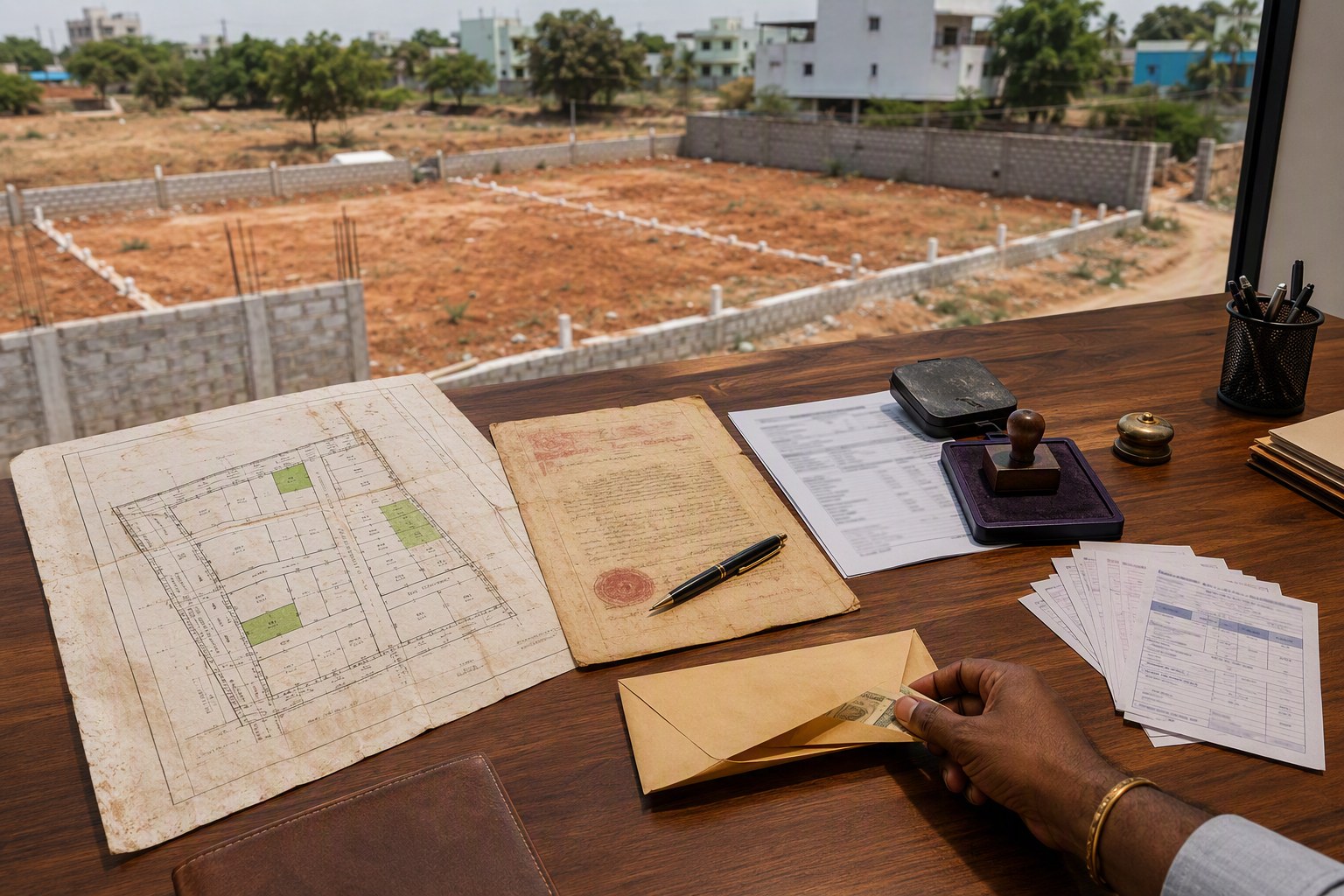
Under-construction paperwork needs a different lens. You are checking not only your unit but the entire project. RERA registration, sanctioned plan, land ownership, development agreement, GPA, mortgage permissions, phase boundaries, amenities promised, carpet area, parking allotment method and possession date all matter. The RERA Project Lookup is a must for this category. If RERA details, plan approvals and sale agreement language do not match, do not treat it as a small clerical issue.
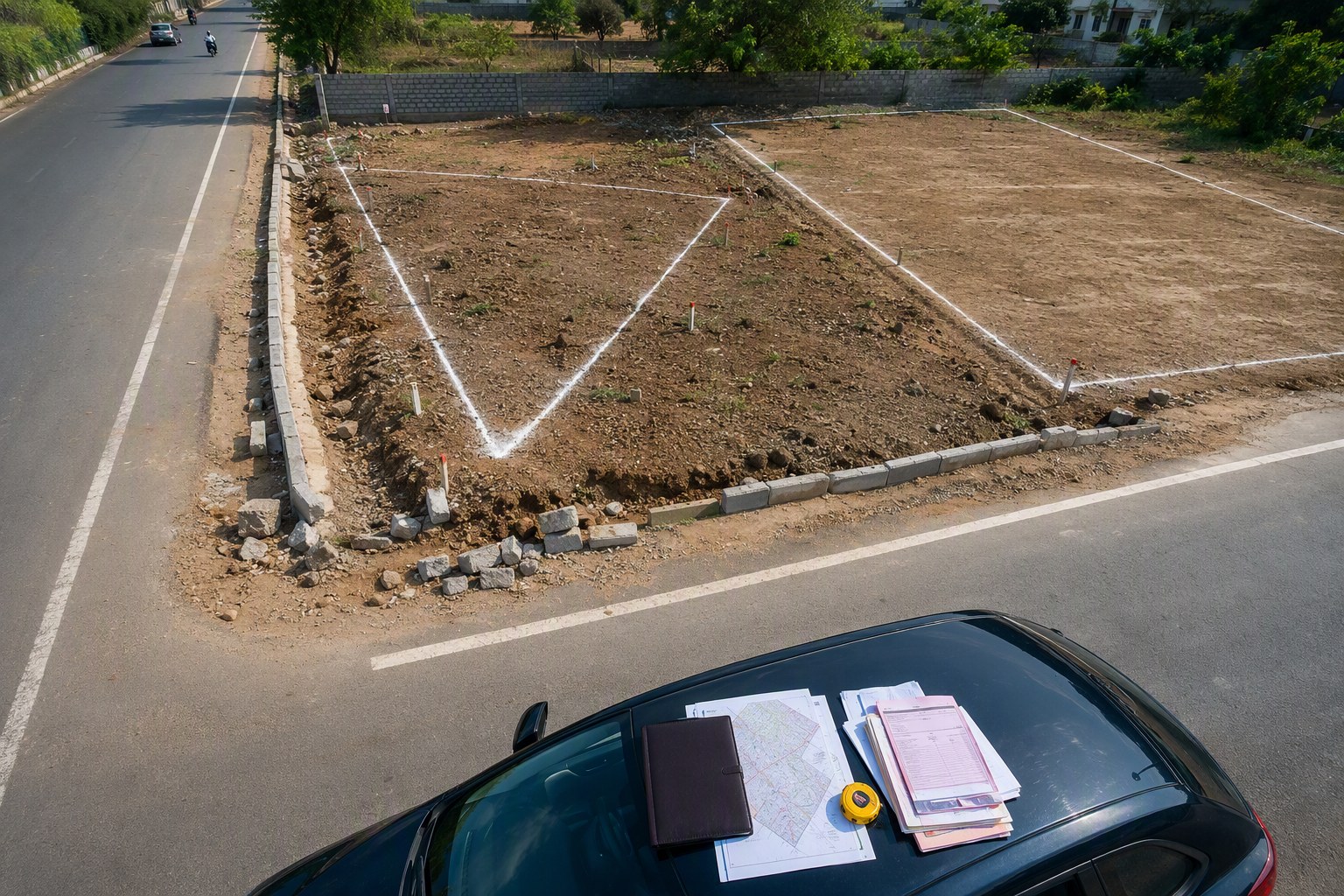
Telangana title checks also need attention because government records can create surprises. Verified database context shows 3,076,153 prohibited property entries under Section 22-A. That number is large enough to remind every investor that land status cannot be assumed, even inside urbanising corridors. Before buying into a project where the land history is not clear, run a Section 22-A Prohibited Property Check. For land-linked verification, especially in plotted development or low-rise projects, the Survey Number Finder and Property Verification Tool can help you ask better questions.
Loan disbursal: ready flats close faster, under-construction needs patience
Banks like clarity. In a ready resale flat, legal and technical teams inspect the building, verify documents, assess marketability, check the property age and approve the loan if the borrower profile is acceptable. There can still be delays, especially when old link documents are missing or the seller has an existing loan. But the workflow is familiar.
Under-construction lending is tied to the project. If the project is approved by major banks, disbursal can be smoother. If the project is not approved, or if approvals are phase-wise, the buyer may face delays. A resale buyer of your under-construction allotment may need the builder to issue NOC, confirm outstanding dues, update allotment records and coordinate with both banks if loans are involved. That is a lot of moving parts.
This is why many under-construction exits fail even when buyer and seller agree on price. The buyer’s bank may not like the project stage. The builder may delay transfer paperwork. The seller’s bank may demand closure before assignment. The new buyer may worry about possession risk. Each party waits for the other. In a ready flat sale, these issues can happen too, but the final product exists. That gives comfort.
Exit risk by Hyderabad micro-market
Hyderabad is not one market. A ready flat in a mature employment-driven location like Gachibowli, Financial District, Kondapur, Madhapur or Nallagandla behaves differently from a ready flat in a far edge location with weak rentals. Similarly, an under-construction project in Kokapet with strong office access and road connectivity may exit better than a ready flat in a building with poor maintenance elsewhere.
Here is how I look at common localities:
- Gachibowli, Kondapur, Madhapur: Ready flats get strong end-user and rental attention. Exit is usually more liquid if the society is maintained and parking is proper.
- Narsingi and Kokapet around Gandipet mandal: Under-construction demand can be strong in branded projects, but ticket size and possession timeline control exit speed.
- Tellapur, Osman Nagar and Kollur belt: Early investors may benefit from growth, but resale before possession needs patience because many competing new units may be available from builders.
- Miyapur, Kukatpally, Bachupally: Ready flats often attract family buyers due to schools, metro access in nearby stretches, and established retail. Project quality still decides resale.
- Uppal, Nagole, LB Nagar: Ready flats near transit and daily-use infrastructure can move well, but old apartment maintenance and UDS clarity must be checked.
- Adibatla and Tukkuguda side: Under-construction bets need longer holding power. Exit depends on employment demand, road access and delivery confidence.
Do not buy only because the locality name is hot. In our market, two projects on the same road can have different exit outcomes. Land title, builder reputation, unit size, floor, view, parking, maintenance charge and resident profile all affect resale.
Ready Flat vs Under-Construction paperwork checklist
Before you decide, make the comparison on paper. I prefer a simple checklist rather than emotional decision-making at the site office.
For a ready flat
- Registered sale deed and link documents
- Latest Encumbrance Certificate
- Seller identity and loan closure status
- Property tax or PTIN details where applicable
- Occupancy certificate or completion-related record where applicable
- Sanctioned plan reference and deviation risk
- Association NOC, maintenance dues and corpus details
- Car parking allotment proof
- SRO jurisdiction check through Find Your SRO Office
- Guideline value check through Market Value / Guideline Value Search
For an under-construction home
- RERA registration and project phase details
- Land title documents and development agreement
- Approved building plan and layout permissions
- Builder-buyer agreement terms
- Payment schedule linked to actual progress
- Possession date and delay compensation clause
- Transfer or assignment rules before registration
- Builder NOC process and charges
- Mortgage permissions, if project land or units are charged
- Road width, land use and planning checks using Road Width Check and Land Use Zone Finder
A ready flat has more past paperwork. An under-construction home has more future promises. That one line explains most exit risk.
When under-construction can beat a ready flat
I am not against under-construction property. Hyderabad investors have made good money by entering early in the right project and holding till possession or beyond. Under-construction can work when the builder has a clean delivery record, the project is not over-priced against nearby ready stock, construction is visibly progressing, approvals are transparent, and your own cash flow can survive delays.
It can also work when the product is scarce. For example, a well-planned gated community with strong amenities in a corridor where ready supply is limited may attract buyers even before completion. But this is not automatic. If several towers in the same locality are offering fresh inventory with easy payment plans, your resale allotment competes with the builder’s sales team. That is a tough position unless your price is clearly attractive.
One more point: investors sometimes forget GST, registration timing, interior cost, maintenance deposit and furnishing expense while comparing. I will not quote blanket amounts because they vary by property and current rules, but every buyer should build them into the exit math. Use the Composite Value Calculator and Capital Gains Tax Calculator to test the numbers before assuming profit.
When a ready flat is not a safe exit
A ready flat is easier to exit, but not every ready flat is a good investment. Old buildings without lift backup, poor water supply, weak association, unclear parking, legal disputes, heavy seepage, bad access road or high maintenance can sit unsold. A buyer will physically inspect and reduce the offer if the flat feels tired.
Ready flats in unauthorised or heavily deviated buildings can also become difficult. Loan rejection is a serious resale killer. If banks do not fund the next buyer, your exit pool shrinks to cash buyers, and cash buyers usually demand a discount. In older Hyderabad colonies, also check whether the UDS, flat number, parking and boundaries match documents. Small mismatches become big negotiation weapons during resale.
My practical verdict on Ready Flat vs Under-Construction
If you want liquidity, buy a clean ready flat in a live rental market. If you want higher risk-higher patience exposure, consider under-construction in a strong corridor after RERA, title, approvals and transfer rules are checked. The investor with short holding period should be careful with under-construction. The investor with stable income, time and appetite for paperwork can consider it, but only with a discount that compensates for risk.
For most Hyderabad families buying their second property, I would prefer a ready flat if the aim is rental plus flexible exit. For investors chasing capital appreciation in Kokapet, Tellapur, Kollur, Bachupally or Tukkuguda, under-construction may work, but the exit plan must be written before booking. Ask the builder: can I transfer before registration, what is the process, what charges apply, how long does NOC take, and will the buyer’s bank get all required documents?
The cleanest investment is not always the cheapest booking price. It is the property that another buyer can understand, verify, finance and occupy without drama.
Frequently Asked Questions
Which exits easier in Hyderabad: ready flat or under-construction home?
A ready flat usually exits easier because the buyer can inspect the actual unit, banks can process valuation faster, and registration documents are clearer. Under-construction exits depend on builder NOC, project progress, RERA status and transfer rules.
Is under-construction property a bad investment?
No. It can work well in strong corridors and good projects, especially for investors with longer holding power. The risk is higher before possession because there is no rental income and resale depends on builder and bank coordination.
What should I check before buying a ready resale flat?
Check sale deed, link documents, Encumbrance Certificate, seller loan status, property tax details, association dues, parking proof, sanctioned plan reference and SRO jurisdiction. Also verify whether banks are comfortable funding the property.
What is the biggest risk in selling an under-construction flat before possession?
The biggest risk is transfer friction. The builder may require NOC, pending dues, transfer charges and internal approval. If loans are involved, both seller and buyer banks may need coordination, which can delay or break the deal.
How do I reduce exit risk before investing?
Buy in a location with real end-user demand, verify title and RERA records, compare guideline value, check loanability, understand transfer clauses, and avoid projects or buildings where paperwork is unclear.