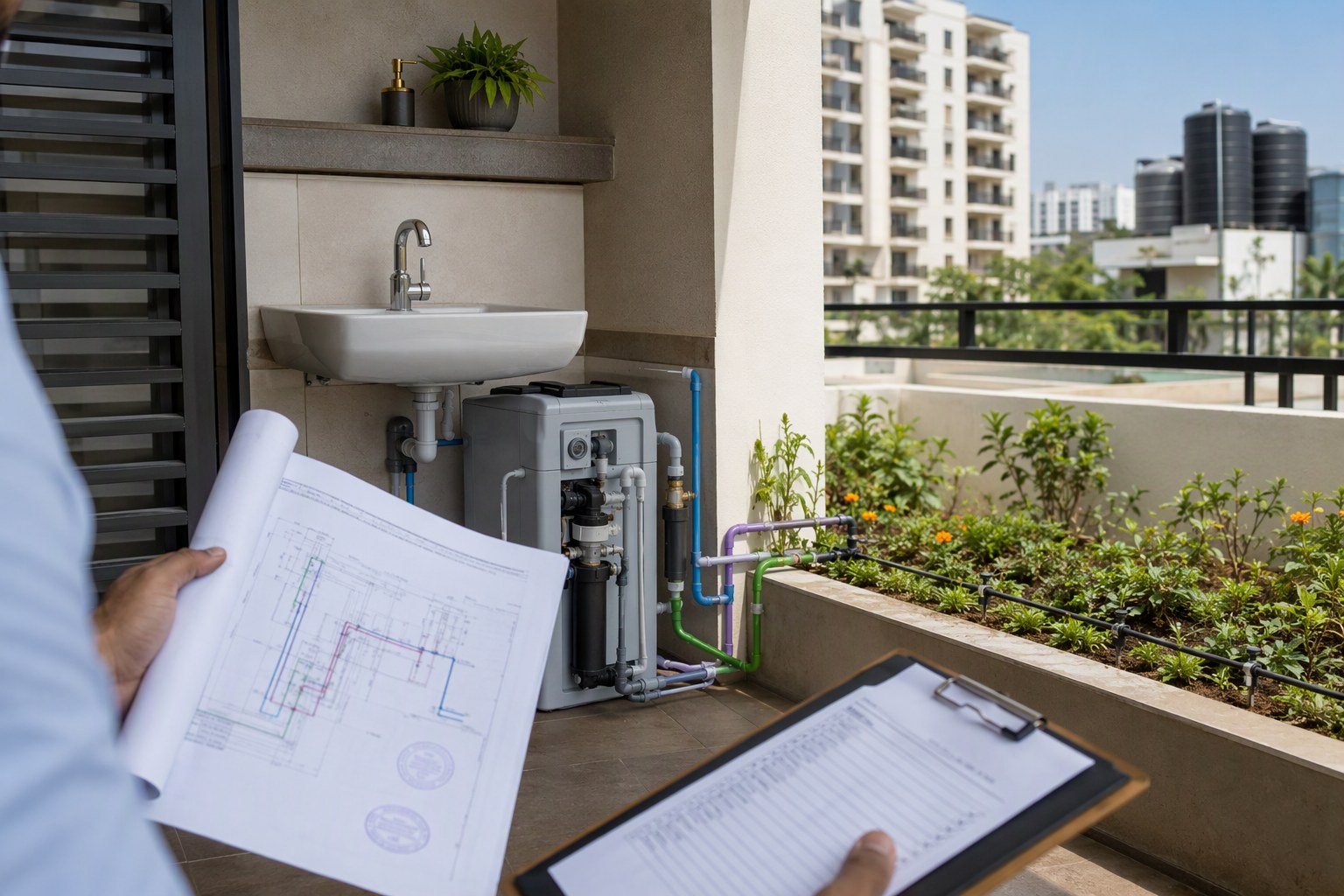
Greywater Recycling is smart only when the approval file, plumbing design, maintenance responsibility and buyer-facing documents are clean before a builder asks for any green premium. If these four items are vague, the same system can become a resale objection, association dispute or inspection headache. In Hyderabad, I would never reject greywater reuse blindly. But I would treat it like an amenity with compliance attached, not like a glossy brochure point.
We have seen buyers in Kokapet, Narsingi, Tellapur, Gachibowli, Kondapur and Kollur happily accept higher pricing for sustainable features, especially in gated communities. That demand is real. Water management matters in west Hyderabad apartments and villas. Still, the question is not whether recycled water sounds good. The question is whether the system is approved, separated, maintained and properly disclosed.
My view is simple: a greywater system should reduce water stress, not create title, plan or handover stress.
Greywater Recycling approval risk: the short answer for Hyderabad buyers
Greywater recycling usually means collecting water from showers, wash basins and sometimes laundry lines, treating it and reusing it for flushing, gardening or other non-drinking purposes. It should never be mixed casually with drinking water lines. It should never depend on undocumented jugaad after possession. It should never be sold as a premium green feature unless the buyer can see where it sits in the sanctioned plan, plumbing drawings, project specifications and maintenance plan.
For a buyer, the safe answer is this: accept greywater recycling only if the developer can show the approved design, separate pipelines, treatment equipment details, testing and handover process. In an apartment society, also check who pays for upkeep after the first association handover. In villa layouts around Mokila in Shankarpally mandal, Shamirpet side, Tukkuguda belt or the Kollur and Tellapur growth corridors, check if the system is for each house, for the whole community, or only for common landscape reuse.
The approval issue becomes sharper when a project is marketed as sustainable living. Buyers may accept higher pricing because of rainwater harvesting, solar, EV charging, STP reuse, green landscape and greywater reuse. But if the project documents do not mention the system clearly, the buyer is paying for a promise, not a deliverable.
Greywater Recycling in Telangana: what needs checking before paying a premium
In our experience, most disputes do not start because recycling is bad. They start because the responsibility is unclear. The builder says the system was provided. The association says the design is difficult to maintain. Residents complain about smell, staining or low pressure. Later, during resale, the buyer asks whether the flat has any plumbing modifications, and nobody has a clean answer.
Before accepting a green premium, ask for plain documents. Not marketing language. Actual documents.
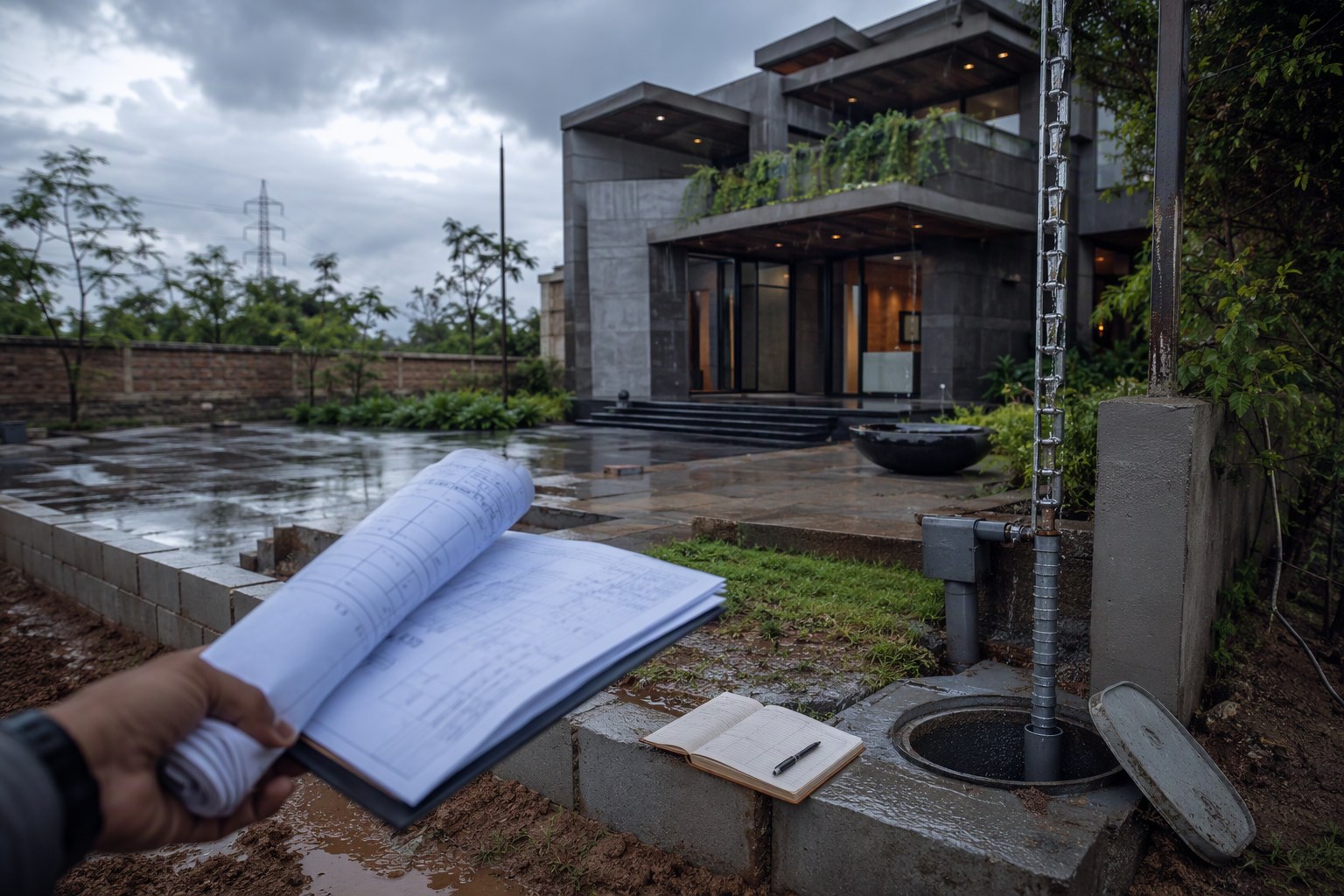
- Sanctioned plan references: The plumbing and service drawings should show the greywater collection, treatment and reuse flow.
- Separate line design: Potable water, recycled water and waste lines must be identifiable. Colour coding and labelling matter in real maintenance.
- Equipment specification: The buyer should know what treatment unit is being installed, where it is placed, and who services it.
- End-use clarity: Reused water should be clearly limited to non-potable uses such as flushing or landscaping, depending on approved design.
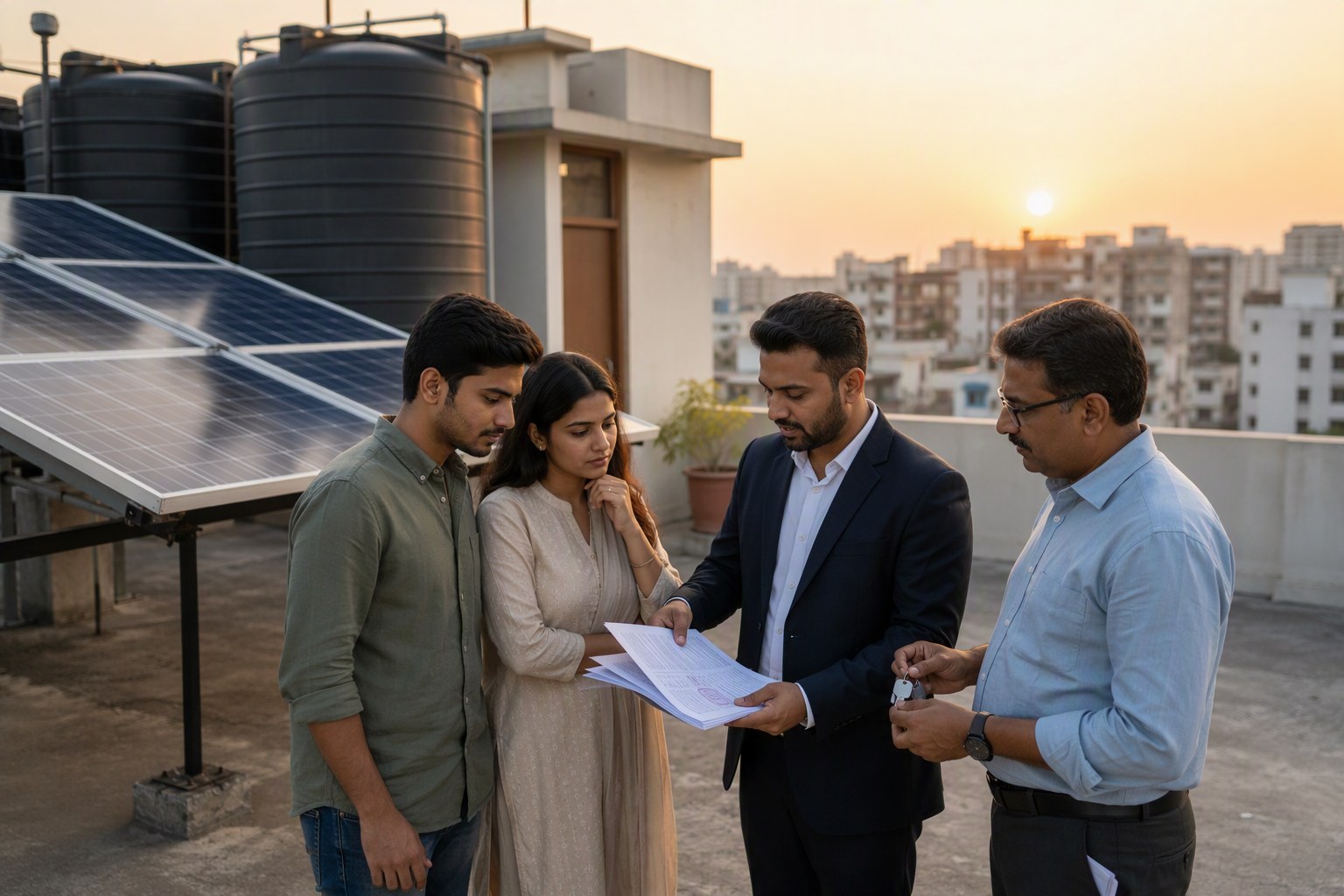
- Association handover file: The operations manual, warranty, spare parts list and service contract should come to the residents welfare association.
- Disclosure in sale documents: If the feature is part of the project promise, it should appear in the specifications or annexures, not only in the sales pitch.
For apartment buyers, cross-check the project on the RERA Project Lookup. RERA records, the agreement for sale and brochure commitments should not contradict each other. If the builder is selling greywater reuse as a sustainability benefit, the buyer should be able to locate the promise in formal papers.
Approval risk is not only about water; it also sits inside property due diligence
Many buyers treat green features separately from title checks. That is a mistake. A property can have a fancy water recycling plant and still have title, land use or registration issues. Telangana records are strict in some areas, especially around assigned lands, ceiling lands, endowment lands, Wakf claims, lake buffers and prohibited property entries.
As per latest IGRS data available in our database, Telangana has 3,076,153 prohibited properties under Section 22-A records. This number should make every buyer pause. A sustainable feature cannot fix a weak title. A greywater system cannot cure a prohibited property entry. A project brochure cannot override an SRO objection.
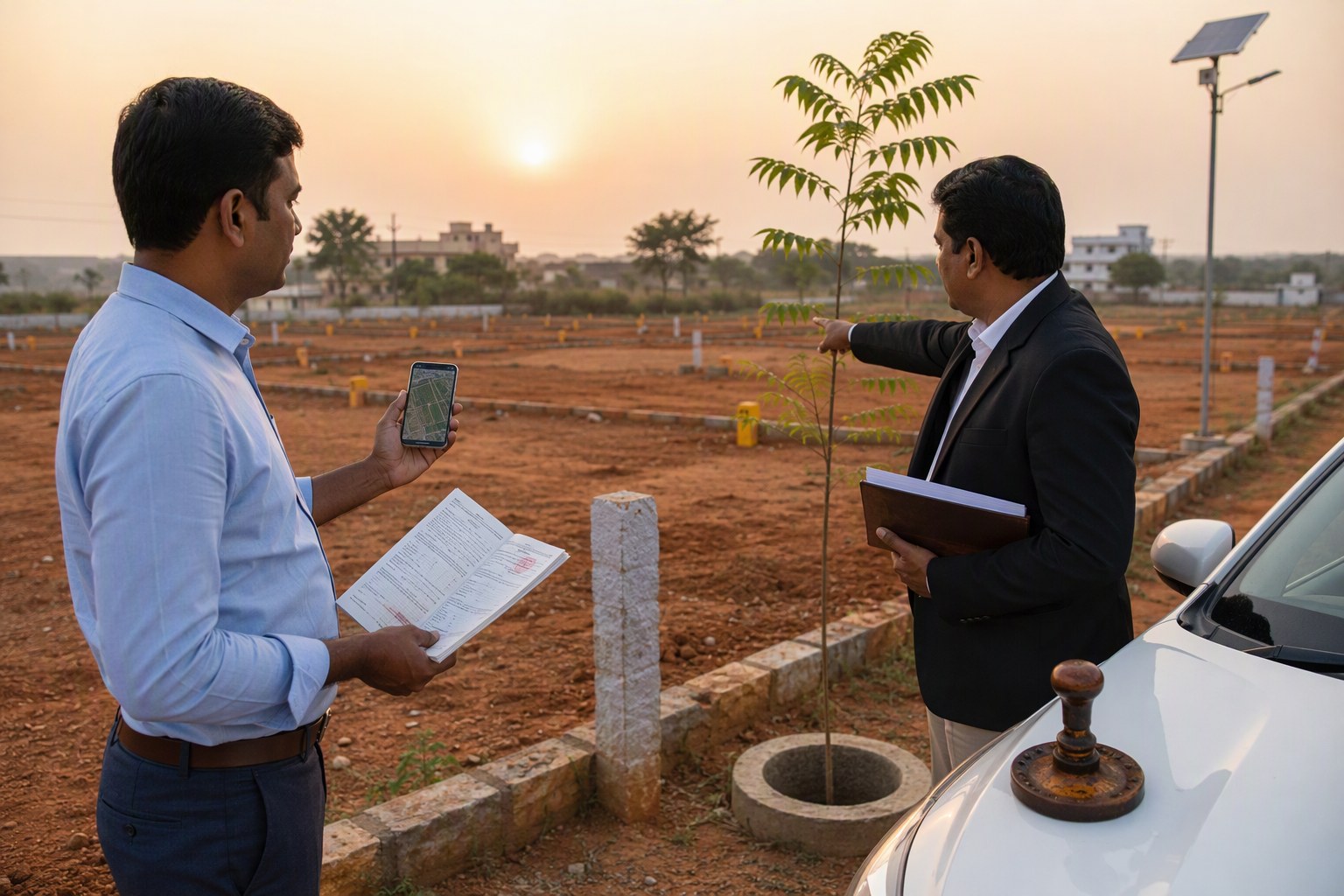
Before getting impressed by any green housing claim, run normal property checks also. Use the Section 22-A Prohibited Property Check for prohibited property risk, the Encumbrance Certificate Search for transaction history, and the Property Verification Tool for a wider title review. For open plots or villas, survey number clarity is non-negotiable; the Survey Number Finder helps when the buyer has village and mandal details but the paperwork is not neatly arranged.
This is especially relevant in fringe and expansion corridors. In Manikonda and Narsingi side, old layouts, revenue entries and conversion documents may need careful reading. In Bachupally, Tellapur, Kollur and Mokila, buyers should compare the layout approvals, land conversion, pahani history where relevant, Dharani details and SRO records. In high-rise projects at Nanakramguda, Kondapur and Gachibowli, the land may look settled, but EC and RERA checks still matter.
How greywater plumbing can go wrong in Hyderabad homes
Good greywater recycling is boring in the best way. Separate pipes, proper slope, access points, filters, odour control and clear maintenance routines. Bad greywater plumbing becomes visible only after occupation, when residents start using bathrooms, washing areas and gardens every day.
The most common risk is cross-connection. If recycled water and potable water lines are not clearly separated, future repairs can become dangerous. A plumber called by a flat owner after possession may not know the system design. If there is no colour coding or drawing, a small repair can create a bigger problem.
The next risk is smell. Greywater cannot be stored casually. If the system is undersized, poorly aerated or not maintained, odour complaints start. In Hyderabad summer, residents will not tolerate a green feature that smells near the basement, podium, garden edge or utility shaft.
Then comes blockage. Hair, soap residue and laundry discharge can load the system. If the builder has not provided cleaning access, filters and routine service responsibility, the RWA inherits a headache. This is why I keep telling buyers: sustainability is not only installation cost; it is operating discipline.
In villa communities, the risk is slightly different. A buyer may be told that each villa can reuse water for landscape. But who checks quality? Who maintains individual units? If the layout has common borewells, common STP and central greywater treatment, the association structure should explain cost sharing. If each owner is expected to manage a unit, that should be written in the sale deed annexure or handover manual.
Greywater Recycling and buyer-facing documents: what should be in writing
If a developer is confident about the system, documentation should not be a problem. A buyer should ask for written clarity before booking, not after paying the advance. The words used in brochures are often softer than the words needed in legal and technical documents.
| Document or file | What the buyer should look for | Why it matters |
|---|---|---|
| Agreement for sale | Specifications mentioning greywater recycling or water reuse features | Stops the feature from becoming a verbal promise |
| Sanctioned drawings | Service plans showing plumbing and treatment areas | Connects the amenity to the approved design |
| RERA disclosures | Project details matching the marketed amenities | Helps compare sales claims with formal filing |
| Association handover file | Maintenance manuals, vendor details and warranties | Protects residents after builder exit |
| Sale deed annexures | Clear mention of common facilities and owner obligations | Reduces resale and society disputes |
For resale buyers, the same logic applies. Ask the seller and society for maintenance records. Check whether the system is active, partly active or abandoned. We have seen amenities listed in old brochures but not functioning properly after handover. A resale buyer in Kondapur or Gachibowli should not pay extra for a green feature unless the association confirms it is being used and maintained.
While reviewing value, compare the quoted price with government market value using the Market Value / Guideline Value Search. For registration cost estimates, the Stamp Duty Calculator is useful. These tools will not certify the water system, but they help you separate property value from marketing premium.
Where this matters most: apartments, villas and plotted communities
High-rise apartments in west Hyderabad
In areas like Kokapet, Nanakramguda, Financial District, Narsingi, Gachibowli and Kondapur, sustainability claims are now common in premium and upper-mid projects. Buyers are educated and willing to ask hard questions. Here, greywater recycling usually connects to building services, basement plant rooms, STP operations, flushing lines and landscape reuse. The key is professional facility management. If the project has a large resident base and trained maintenance team, the system can work well. If the builder cuts corners, the complaints also scale up quickly.
Villa communities in growth corridors
In Mokila, Shankarpally mandal, Kollur side, Tellapur, Osman Nagar, Tukkuguda and Shamirpet belts, villa buyers often care about gardens, borewell dependence and tanker avoidance. Greywater reuse can make practical sense. But layout approvals, land conversion and common infrastructure should be checked with equal seriousness. A villa community may look premium on site, yet the buyer still needs survey number, EC, pahani where applicable, Dharani trail and SRO-linked document review.
Standalone houses and small builder floors
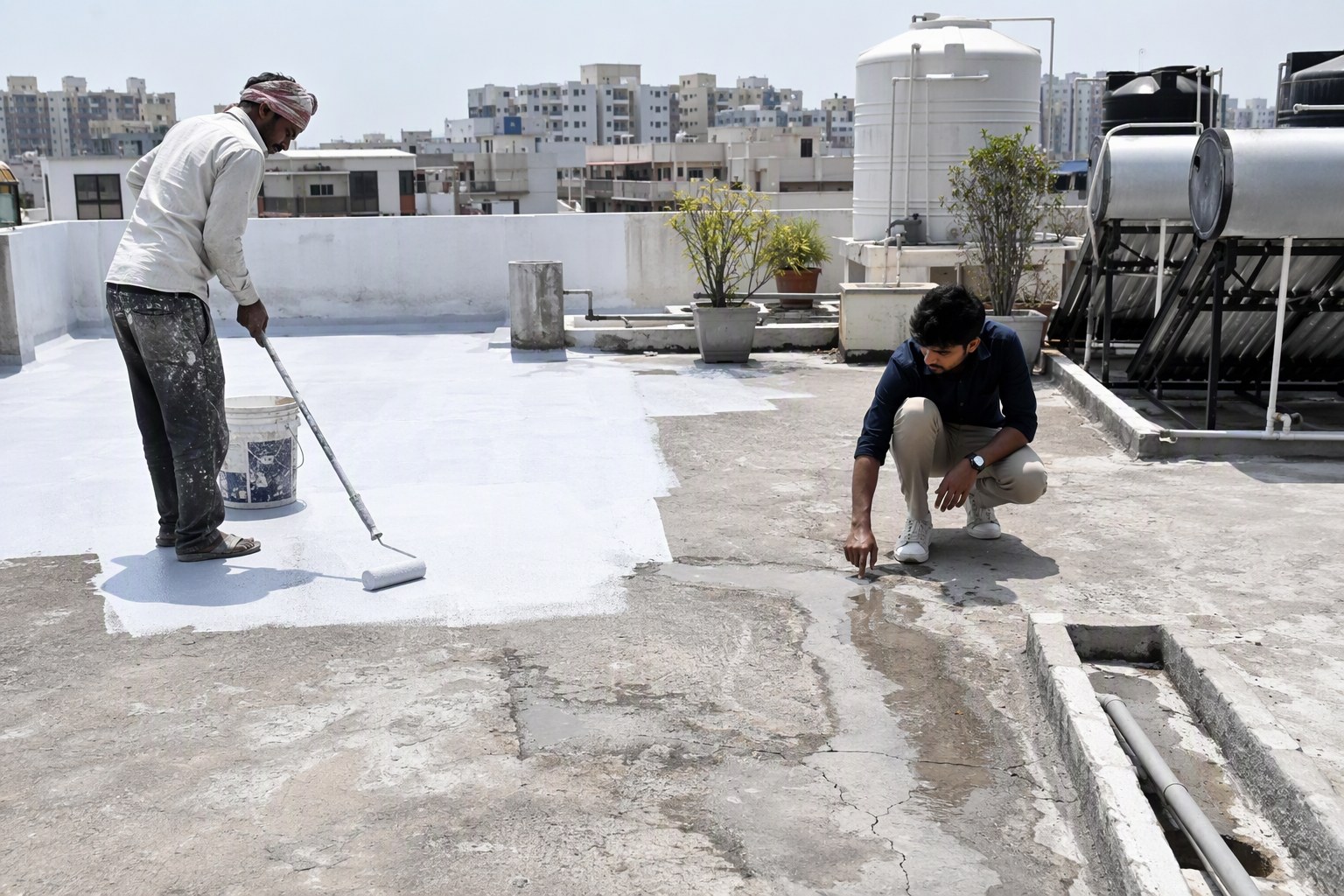
For standalone houses in older city pockets or smaller builder floors in Miyapur, Chandanagar, Uppal, LB Nagar or Sainikpuri, greywater systems are usually custom-built or limited. Here, the risk is poor execution. If the owner installs a system without proper plumbing separation, future buyers may ask for rectification before resale. Keep bills, drawings and service records. They help during negotiation.
Ready reckoner value, green premium and the common buyer mistake
One common mistake is mixing up government market value with market selling price and then adding a green premium without verification. The ready reckoner or guideline value is a registration reference. Market price depends on location, access road, builder brand, floor, view, amenities, possession status and legal comfort. A green feature may support value, but only if it is functional and documented.
Suppose a buyer is comparing a project in Tellapur with another in Narsingi. One project advertises greywater recycling, the other does not. The smarter comparison is not just brochure versus brochure. Check RERA filings, sanctioned service drawings, maintenance cost notes, association structure and sale agreement wording. Then compare the guideline value through the Market Value / Guideline Value Search and likely registration outgo through the Stamp Duty Calculator. If the built-up area claims are confusing, the Composite Value Calculator can help you understand how components may affect valuation thinking.
I would pay more for a genuinely well-run water management system in a water-stressed micro-market. I would not pay more for a green icon printed beside the clubhouse image.
Questions to ask the builder before accepting Greywater Recycling claims
Ask these questions before booking or before the next payment milestone. A serious developer will answer without irritation.
- Where is greywater collected from inside the project?
- What is the treated water used for?
- Are potable and recycled water lines physically separate and labelled?
- Is the system part of the sanctioned service plan?
- Which authority approvals or NOCs are relevant to this design?
- Who maintains the system until association handover?
- What service contract will be handed over to the association?
- Will the feature be mentioned in the agreement, specifications or handover file?
- What happens if the system stops working after possession?
- Can the buyer inspect the plant room or service area before handover?
Also ask the sales team to send answers by email. WhatsApp explanations are helpful for quick follow-up, but legal comfort comes from formal documents. If the answer keeps changing between sales, CRM and engineering teams, slow down.
How RWAs should manage greywater systems after handover
Resident welfare associations should treat greywater recycling like lifts, fire systems or STP operations. It needs budget, vendor supervision and records. The handover should not be only keys and access cards. The RWA needs drawings, manuals, vendor contacts, warranty papers and preventive maintenance schedules.
Monthly inspection notes help. So do complaint logs. If there is odour, staining or pressure variation, the issue should be recorded and escalated early. In large societies, the facility manager should mark recycled water lines and restrict untrained plumbing work. Residents doing bathroom modifications must be warned not to tamper with common service shafts.
For resale value, an active RWA record is a plus. A buyer will feel more confident if the society can say the greywater system is operational, serviced and used for defined purposes. Silence from the association usually reduces trust.
My field view: when greywater recycling is worth it
Greywater recycling is worth it when the project has scale, trained maintenance, clear approvals and honest buyer disclosure. It is especially relevant in gated communities where gardens, flushing demand and tanker dependence can be managed better through reuse. It is less convincing when the system is inserted only as a selling label, with no drawings and no maintenance plan.
Hyderabad buyers have become sharper after seeing project delays, title disputes and amenity gaps. They ask about SRO, EC, RERA, Dharani, pahani and ready reckoner values. They should ask the same level of questions about sustainable features. A green home is not only about saving water. It is also about clean paperwork, safe plumbing and predictable maintenance cost.
My recommendation is practical. Do not reject greywater recycling. Do not blindly pay for it either. Verify it like you verify title. Check RERA. Check EC. Check Section 22-A risk. Read the agreement. Ask for plumbing plans. Speak to the facility team if the project is ready. If everything is clear, greywater recycling can be a sensible water-saving feature. If the answers are vague, treat the premium as approval risk.
Frequently Asked Questions
Is greywater recycling safe for Hyderabad apartments?
Yes, it can be safe when potable water and recycled water lines are separate, labelled and maintained. The risk starts when plumbing is unclear or the system is not serviced after handover.
Should I pay extra for a project with greywater recycling?
Pay a premium only if the feature is visible in formal documents, sanctioned service drawings, RERA-linked disclosures or agreement specifications. Do not pay extra for a brochure claim alone.
What documents should I check before trusting a green housing claim?
Check the agreement for sale, project specifications, RERA record, sanctioned service drawings, association handover manual and maintenance responsibility. Also run EC and Section 22-A checks for wider property safety.
Can greywater recycling affect resale value?
It can support resale value if the system is functional, documented and maintained by the association. If it is abandoned or disputed, buyers may treat it as a liability rather than an amenity.
Is greywater recycling the same as STP treated water?
No. Greywater usually comes from sources like showers, basins and laundry, while STP treatment deals with broader wastewater streams. The exact design depends on the project, so ask for technical drawings and approved end-use details.