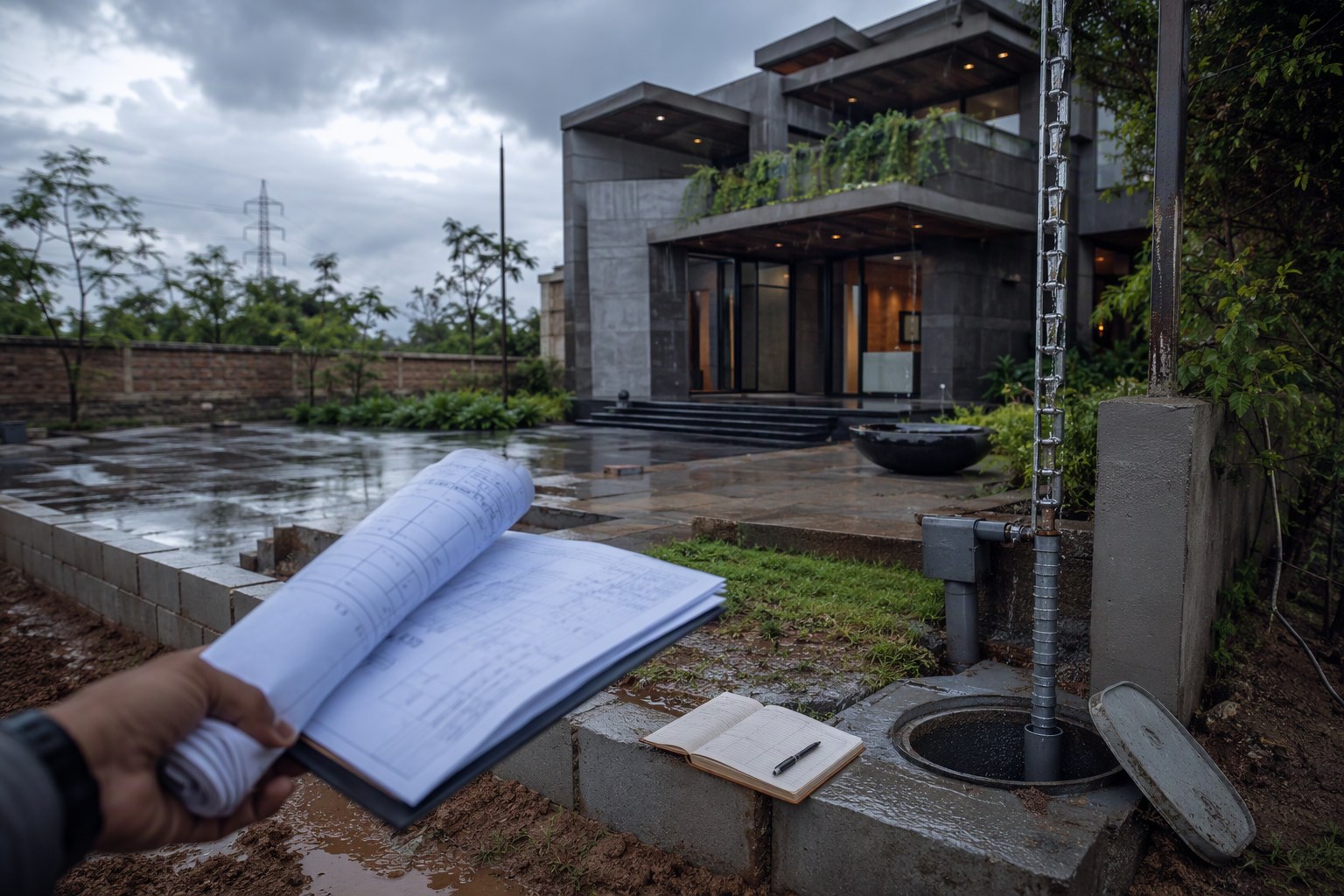
As per latest IGRS data, Telangana has 30,76,153 Section 22-A prohibited property records. That single number should make every buyer pause before getting impressed by a borewell recharge pit, a rooftop collection pipe or a glossy brochure line saying Rainwater Harvesting. A green feature is welcome, no doubt. But if the land is under a prohibition list, if the layout approval is weak, or if the maintenance liability is quietly pushed on buyers, that rainwater harvesting system can become a distraction from the real risk.
In Hyderabad’s active corridors like Kondapur, Gachibowli, Narsingi, Kokapet, Tellapur, Bachupally, Kompally, Uppal and LB Nagar, developers now routinely mention sustainability. Buyers also like the idea, especially after summer water stress and tanker dependence. In our experience, a working rainwater harvesting system can improve long-term liveability. But it does not clean up a bad title. It does not replace RERA registration. It does not prove that the project has HMDA, GHMC, DTCP or local body approval. And it certainly does not remove the need for an EC, pahani, dharani and SRO-level check.
My clear view: rainwater harvesting is a value-add only after the property passes title, approval and maintenance checks. Before that, it is just a nice-looking feature on a risky asset.
Rainwater Harvesting and Telangana Property Buying: What Should Come First?
The first job of a buyer is not to admire the recharge pit. The first job is to confirm whether the property itself is legally transferable, properly approved and correctly priced against government market value. Telangana’s 30,76,153 Section 22-A prohibited property records show why this order matters.
Section 22-A records are connected to properties that may be restricted from registration due to government land, assigned land, endowment land, waqf issues, ceiling surplus, court-related issues or other notified prohibitions. A seller may show you a site visit, a borewell, a rainwater sump and even a model flat. None of that proves that the property can be safely registered in your name.
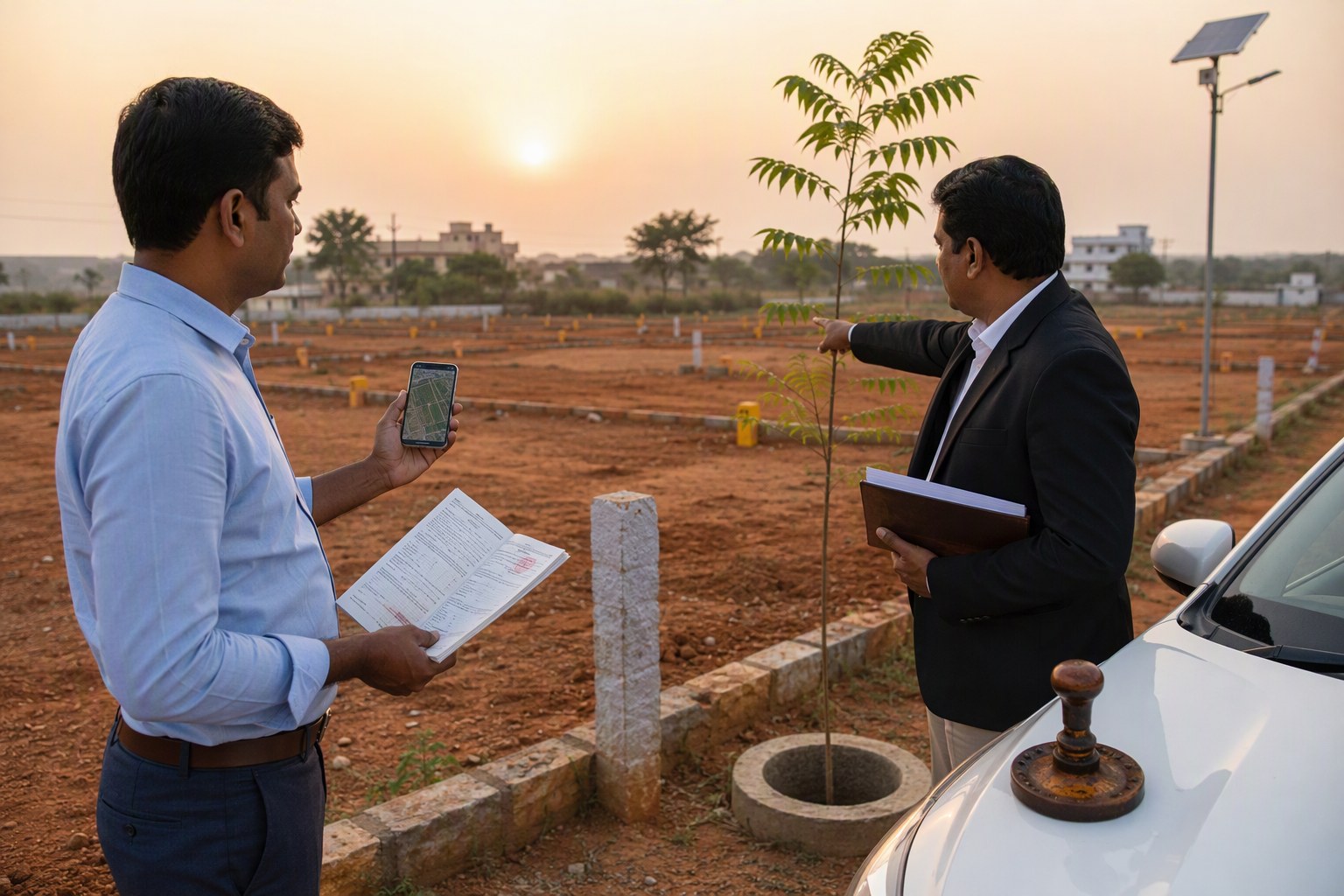
So, before token payment, use the Section 22-A Prohibited Property Check. If you know the village, mandal, survey number or document details, check the risk early. This is especially relevant in growth belts where land has changed hands multiple times: Gandipet mandal around Narsingi and Kokapet, Serilingampally mandal around Kondapur and Gachibowli, Ramachandrapuram mandal near Tellapur, Shankarpally side villages near Mokila, Dundigal-Gandimaisamma near Bachupally and Kompally stretches, and Medchal side layouts.
After that, check the title flow through the Encumbrance Certificate Search. An EC helps you see registered transactions, mortgages, releases and ownership movement. It is not the only document, but it is a basic filter. If the seller says, “Sir, rainwater harvesting is provided as per norms, why so much checking?”, take that as a warning sign. Good sellers are usually comfortable with document scrutiny.
Rainwater Harvesting Is Useful, But Only When It Actually Works
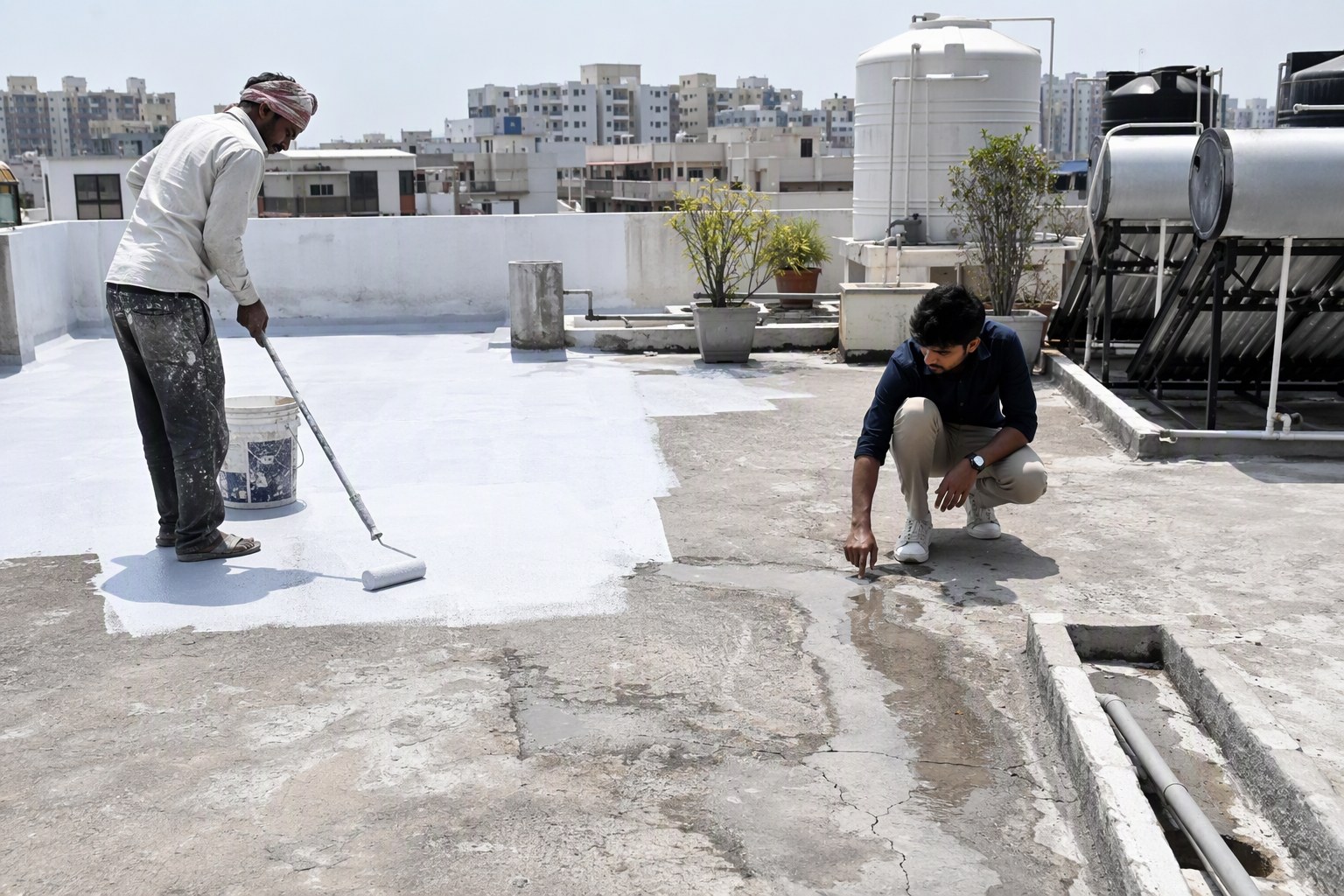
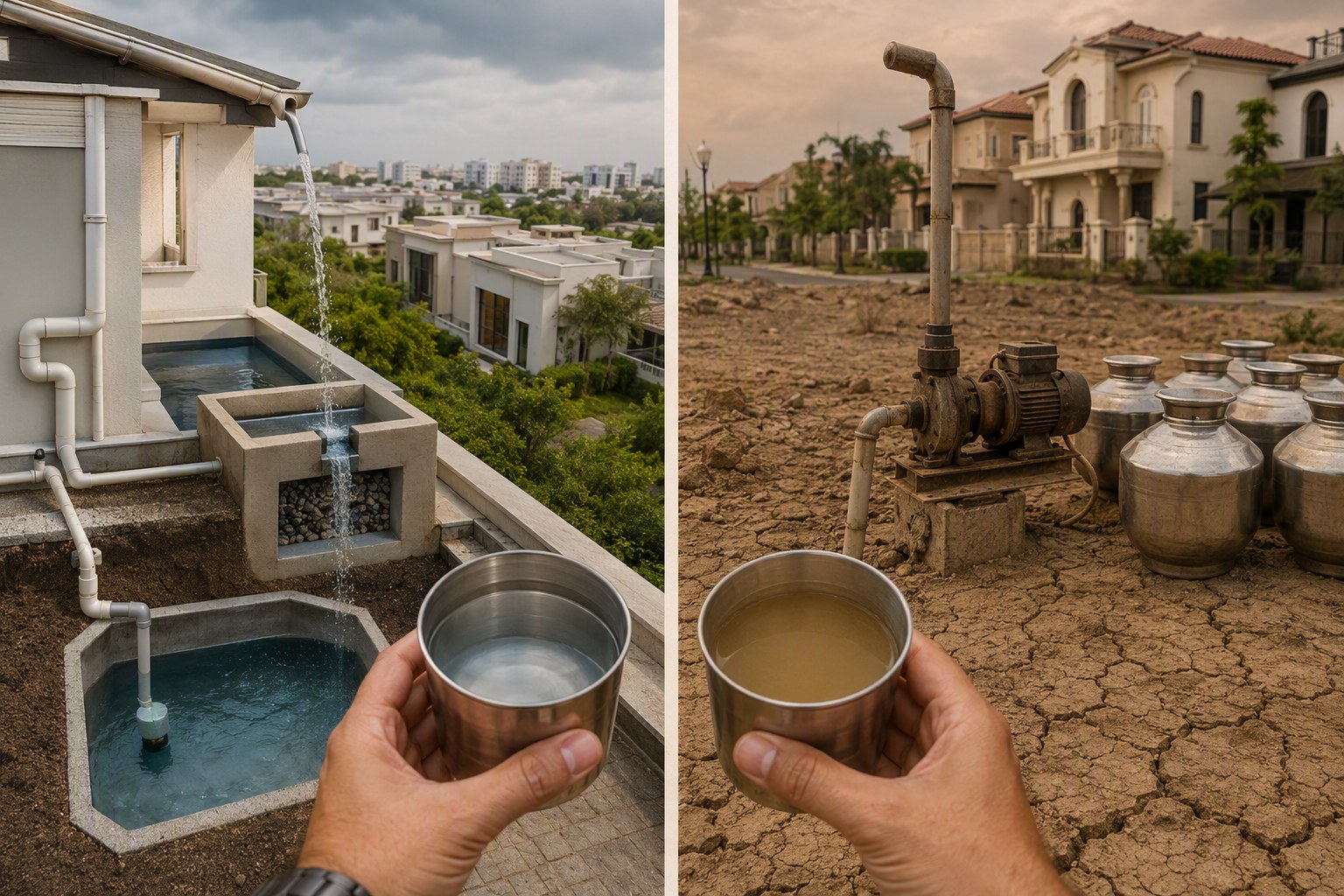
A genuine rainwater harvesting system is not just a small pit filled with stones near the gate. It should collect runoff properly, filter silt, direct water to a recharge pit or storage tank, and avoid contamination from sewage lines or basement drains. In a plotted layout, stormwater flow and road levels also matter. In an apartment, roof slope, down-take pipes, filter chambers and recharge locations matter.
Hyderabad buyers often ask us whether rainwater harvesting increases resale value. My answer is practical: it can support resale value if the system reduces water dependence and the association maintains it. But buyers rarely pay extra just because a brochure says “eco-friendly”. They pay for clear title, good location, approvals, road access, water security, sensible maintenance and resale confidence.
For example, a flat in a registered project in Gachibowli or Kondapur with functioning water management will always feel more dependable than a poorly documented unit where the builder is hiding EC gaps. Similarly, a villa in Tellapur, Narsingi or Mokila may sound attractive if it has rainwater recharge, but the buyer must still check layout approval, land use, survey number, SRO jurisdiction and registered link documents.
Rainwater harvesting becomes a real value-add when three things are visible:
- Design clarity: where water is collected, filtered, stored or recharged.
- Maintenance clarity: who cleans filters, desilts pits and repairs pipes.
- Legal clarity: whether the property is approved, transferable and free from major title issues.
Rainwater Harvesting in Apartments: Ask Who Owns the Responsibility
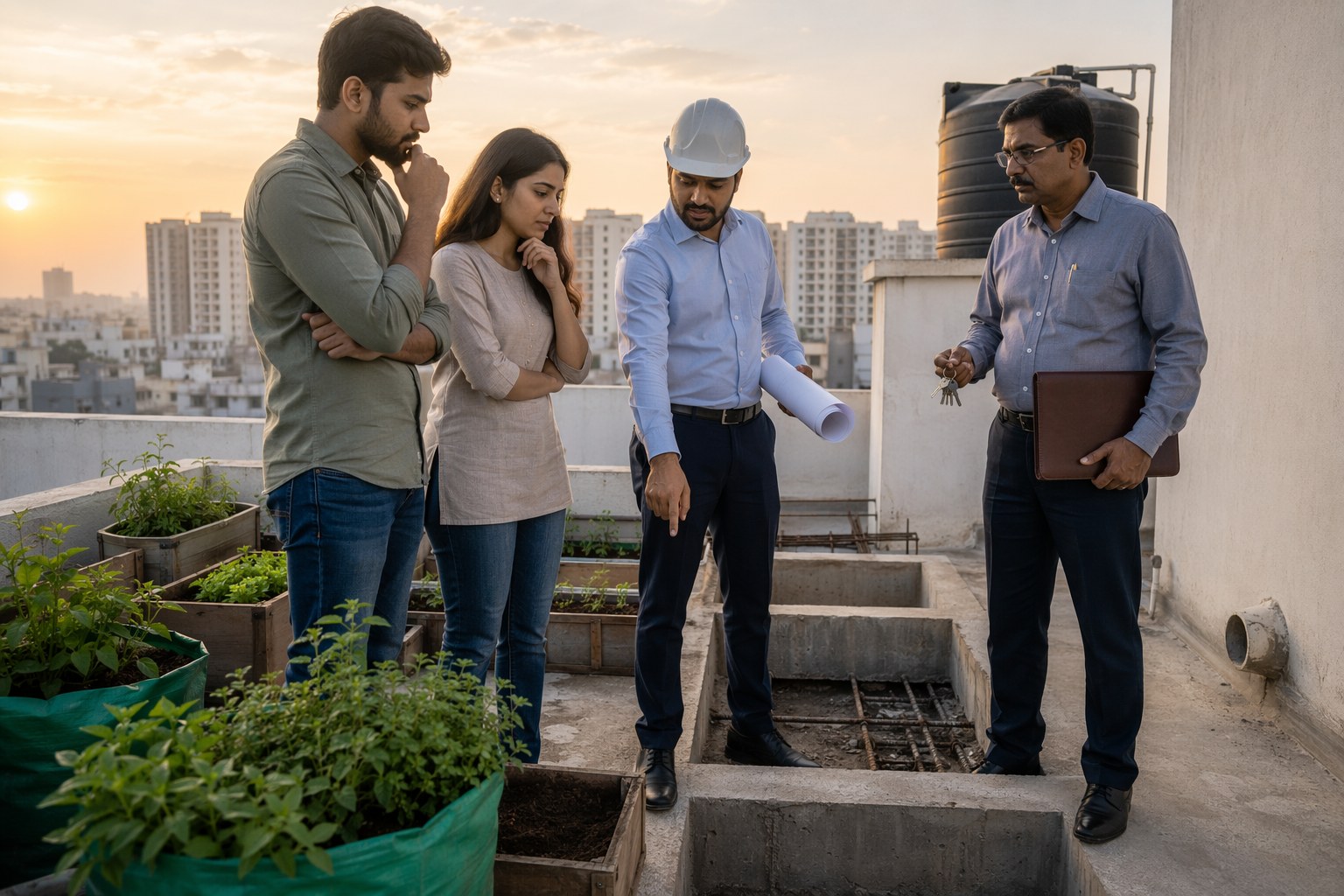
In apartment projects, buyers usually assume that the association will take care of rainwater harvesting. That may be true after handover, but the responsibility during construction, occupancy and early maintenance must be documented. Check the agreement for sale, construction agreement, association handover documents and maintenance schedule.
In GHMC areas like Madhapur, Kukatpally, Miyapur, Nallagandla, Manikonda and Attapur, rainwater harvesting may be part of building permission conditions. But a buyer should not rely only on verbal statements. Ask for sanctioned plan references, completion or occupancy-related documents where applicable, and maintenance records if it is a resale flat.
For ongoing projects, use the RERA Project Lookup to verify project registration details. RERA information will not tell you whether the recharge pit is cleaned every season, but it helps you confirm whether the project is registered and whether the basic declared details match the sales pitch.
In resale apartments, ask the association these questions before paying the token:
- Is the rainwater harvesting system functional or blocked?
- When was the last desilting done?
- Is rainwater connected to a recharge pit, storage tank or both?
- Are there any complaints about basement flooding during heavy rain?
- Is there a separate maintenance budget for water systems?
- Has the association faced notices from the local body on drainage or stormwater issues?
If the association says “builder did it, we don’t know”, be cautious. A green feature without maintenance ownership becomes another repair bill.
Rainwater Harvesting in Villas and Plots: Check Land Before Lifestyle
Villa buyers in Narsingi, Kokapet, Tellapur, Osman Nagar, Kollur, Mokila, Shankarpally, Bowrampet and Kompally often focus on lifestyle: clubhouse, internal roads, landscaping, underground cabling, borewell recharge and rainwater harvesting. These are all good, but land verification is the bigger job.
For a plotted layout or villa project, confirm the survey number and village first. Do not depend only on a marketing name like “near Financial District” or “Tellapur extension”. Actual revenue village and mandal decide which records you must check. A project may be marketed as Tellapur, but the survey number may fall in a nearby village under Ramachandrapuram or adjoining revenue limits. Same story around Kokapet, Narsingi and Gandipet mandal pockets.
Use the Survey Number Finder to organise the basic land identity. Then verify the land use through the Land Use Zone Finder. If the land use does not support the proposed development, rainwater harvesting will not save the transaction. Also check road access using the Road Width Check, because road width can affect permission, access, usability and future resale.
For agricultural-origin land, ask for old pahanis, passbook details where relevant, conversion documents, layout approval and link documents. Dharani records are useful, but buyers should not stop there. Registration history at SRO level, EC, mutation trail and physical possession must also be checked. In rural-edge locations, one missed survey number issue can create years of headache.
Title Safety Beats Every Green Feature
We have seen buyers negotiate for solar lights, rainwater pits and landscaping, but forget to check whether the seller’s name appears correctly in the chain of title. This is risky. A property purchase in Telangana should move in this order:
- Confirm exact property identity: flat number, plot number, survey number, village, mandal and SRO.
- Check Section 22-A risk before any serious payment.
- Verify EC and link documents.
- Check approvals: HMDA, GHMC, DTCP, municipality, gram panchayat legacy approvals where relevant.
- Check RERA details for applicable projects.
- Verify guideline value and stamp duty impact.
- Only then evaluate rainwater harvesting, amenities and maintenance.
The Property Verification Tool is useful when you want a structured first-pass check. For valuation and registration planning, use the Market Value / Guideline Value Search and the Stamp Duty Calculator. Ready reckoner value, SRO jurisdiction and stamp duty are practical matters; they affect your cash planning and registration readiness.
I would also suggest using the Find Your SRO Office when the property is in a border locality. Many Hyderabad buyers casually say “Kollur registration” or “Kondapur registration”, but the actual SRO depends on the village and jurisdiction. Wrong assumptions waste time during document review.
How to Inspect a Rainwater Harvesting System Before Token Payment
Do not do a token payment based only on sample flat talk. Visit the site after asking for the system location. If it is an apartment, ask the facility manager or site engineer to show the rainwater lines. If it is a villa or independent house, ask where roof water goes. If it is a plot, ask how stormwater drains are planned across the layout.
Here is a practical inspection table for Telangana buyers:
| Check | What to Ask | Why It Matters |
|---|---|---|
| Collection | Where is rainwater collected from: roof, podium, roads or open area? | Bad collection design can send dirty runoff into recharge pits. |
| Filtering | Is there a silt trap or filter chamber before recharge? | Without filtering, pits can choke quickly. |
| Recharge or storage | Is water recharged into ground, stored for reuse, or both? | The benefit depends on actual use and soil condition. |
| Maintenance | Who cleans the system and how often? | Unmaintained systems become blocked structures. |
| Flooding risk | Any basement flooding or waterlogging complaints? | Poor stormwater design can damage vehicles and common areas. |
| Documents | Is the system shown in approved drawings or handover notes? | Documented systems are easier to enforce after handover. |
For soil and location understanding, tools like the Soil Type Detector and Geo Insights can help you ask sharper questions. They are not substitutes for engineering inspection, but they are useful for early screening, especially in rocky or low-lying pockets.
Rainwater Harvesting Should Not Hide Approval Gaps
One common sales tactic is to talk loudly about green features when the approval file is not ready for scrutiny. In Hyderabad and surrounding districts, buyers must separate environmental features from legal compliance.
If a builder says the layout is “in process”, do not pay a large token. If a seller says the HMDA file is “almost approved”, wait for the approval. If a resale flat seller says the original documents are “with bank” but cannot provide copies, insist on document review. If a plotted venture has beautiful entrance arches and rainwater drains but no clear approval, be careful.
Approval checks should include:
- Sanctioned plan or layout approval copy.
- RERA registration for applicable projects.
- Land use compatibility.
- Road width and access.
- Open space and common area clarity where applicable.
- EC and link document chain.
- Section 22-A prohibited property check.
For layouts, open space and common amenities should be checked carefully. The OSR Calculator can help buyers understand open space reservation concepts. For built-up area planning, the FSI/FAR Calculator is useful when you are checking whether the proposed construction intensity looks reasonable against rules and approvals.
What About Resale Value?
Rainwater harvesting can support resale in a sensible way. A buyer walking into a well-maintained apartment in Nallagandla, Financial District side, Miyapur or Uppal will appreciate lower water stress and better common area management. But resale value is rarely decided by one feature. It is decided by the full package: title, location, access, construction quality, association strength, water, parking, lifts, fire safety, approvals and market sentiment.
For independent houses and villas, rainwater harvesting may be more visible because the owner can directly manage the system. But even there, a buyer will ask: Is the plot registered cleanly? Is the building approved? Is the road legal? Are there any bank charges? Is the seller the real owner?
Use the CERSAI Charge Check to see whether a property may have a registered security interest. Use the EC Analyzer if you want help reading encumbrance patterns. A rainwater pit is good; a hidden mortgage is not.
My Token Payment Rule for Rainwater Harvesting Homes
Here is the rule we follow with serious buyers: token payment should be small, documented and conditional. Do not pay just because the site visit went well. Do not pay because the sales executive says another buyer is waiting. Do not pay because the project looks green and modern.
Before token payment, ask for these documents and checks:
- Seller identity and ownership documents.
- Latest EC and link documents.
- Section 22-A status check.
- Approved plan or layout approval.
- RERA details where applicable.
- Survey number, village, mandal and SRO confirmation.
- Maintenance terms for rainwater harvesting and water systems.
- Draft agreement clauses on common areas and handover.
- Guideline value and stamp duty estimate.
If the seller refuses basic checks, walk away. Hyderabad has enough inventory across West, North, East and South zones. A buyer should not become emotionally locked because a project has one attractive green feature.
Rainwater harvesting is not a liability by itself. In fact, Telangana needs more responsible water management in both apartments and plotted developments. But it becomes a liability when used as a sales cover for poor approvals, weak maintenance planning or unsafe title. Buy the legal property first. Appreciate the green feature next.
Frequently Asked Questions
Is rainwater harvesting enough reason to pay a premium for a Telangana property?
No. It can be a value-add, but only after title, approvals, EC, RERA status where applicable, SRO details and maintenance responsibility are verified. Do not pay extra only for a brochure claim.
What should I check before token payment for a flat with rainwater harvesting?
Check EC, ownership documents, sanctioned plan, RERA details where applicable, Section 22-A risk, guideline value, maintenance clauses and association responsibility for cleaning the rainwater harvesting system.
Can a property with rainwater harvesting still be under Section 22-A prohibition?
Yes. A physical feature on the site has no connection with transferability. Telangana has 30,76,153 Section 22-A prohibited property records as per latest IGRS data, so buyers should check prohibition status separately.
Who maintains rainwater harvesting in an apartment after handover?
Usually the apartment association or maintenance agency handles it after handover, but the documents should say so clearly. Ask for maintenance schedules, past cleaning records in resale properties and handover notes from the builder.
Which tools should I use before buying a rainwater harvesting property in Hyderabad?
Start with Section 22-A Prohibited Property Check, EC Search, RERA Project Lookup, Guideline Value Search, Survey Number Finder and Find Your SRO Office. These checks are more urgent than amenity evaluation.