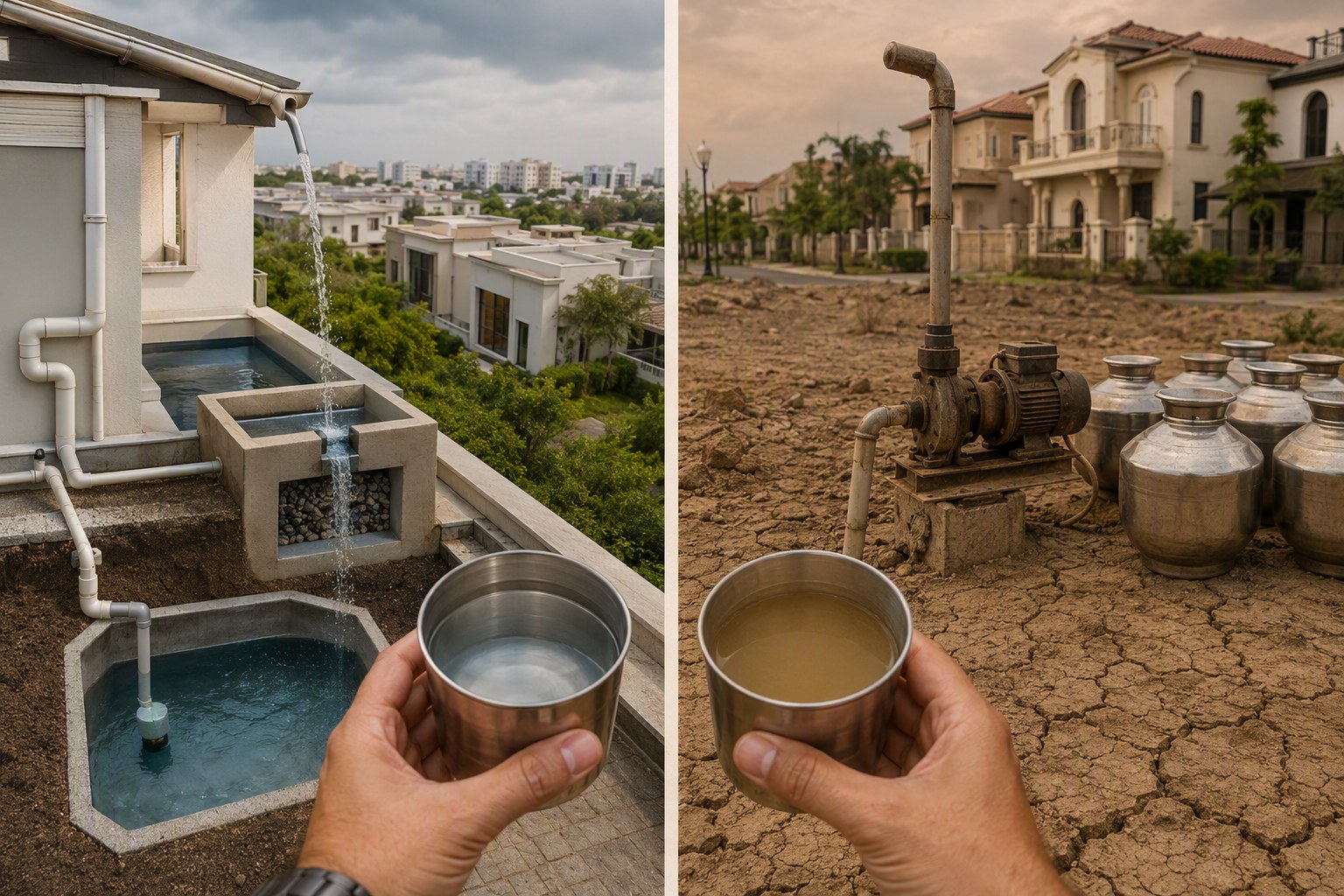
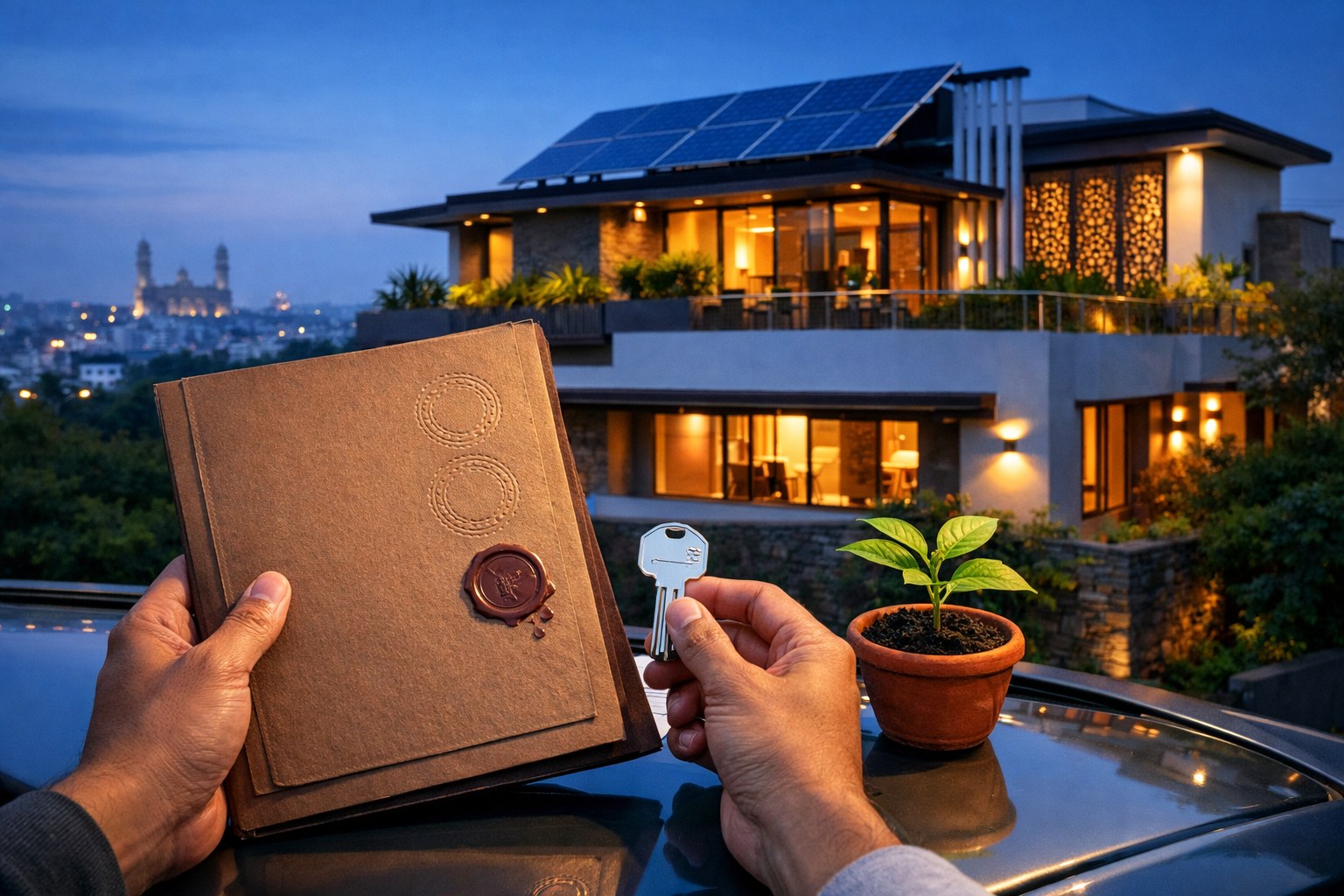
Cool Roof Paint Before Summer can be a sensible green upgrade for a Hyderabad top-floor flat, but only when it is applied properly, documented clearly, and not used to distract you from bigger property risks. I have seen buyers get impressed by a bright white terrace in Kondapur, Narsingi, Manikonda or Uppal, then forget to ask for basic papers like EC, RERA details, SRO history and Section 22-A prohibited property status. That is where mistakes happen.
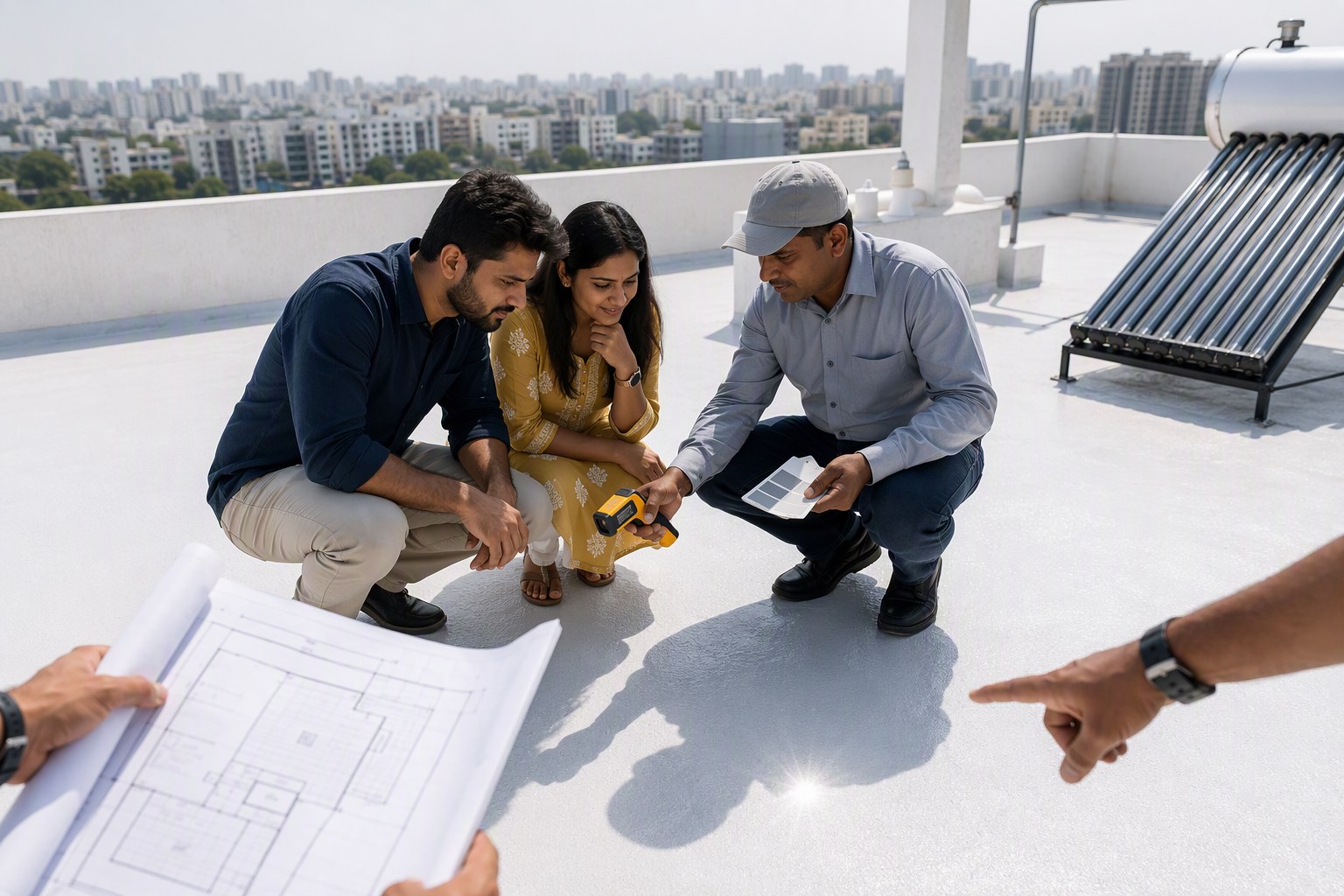
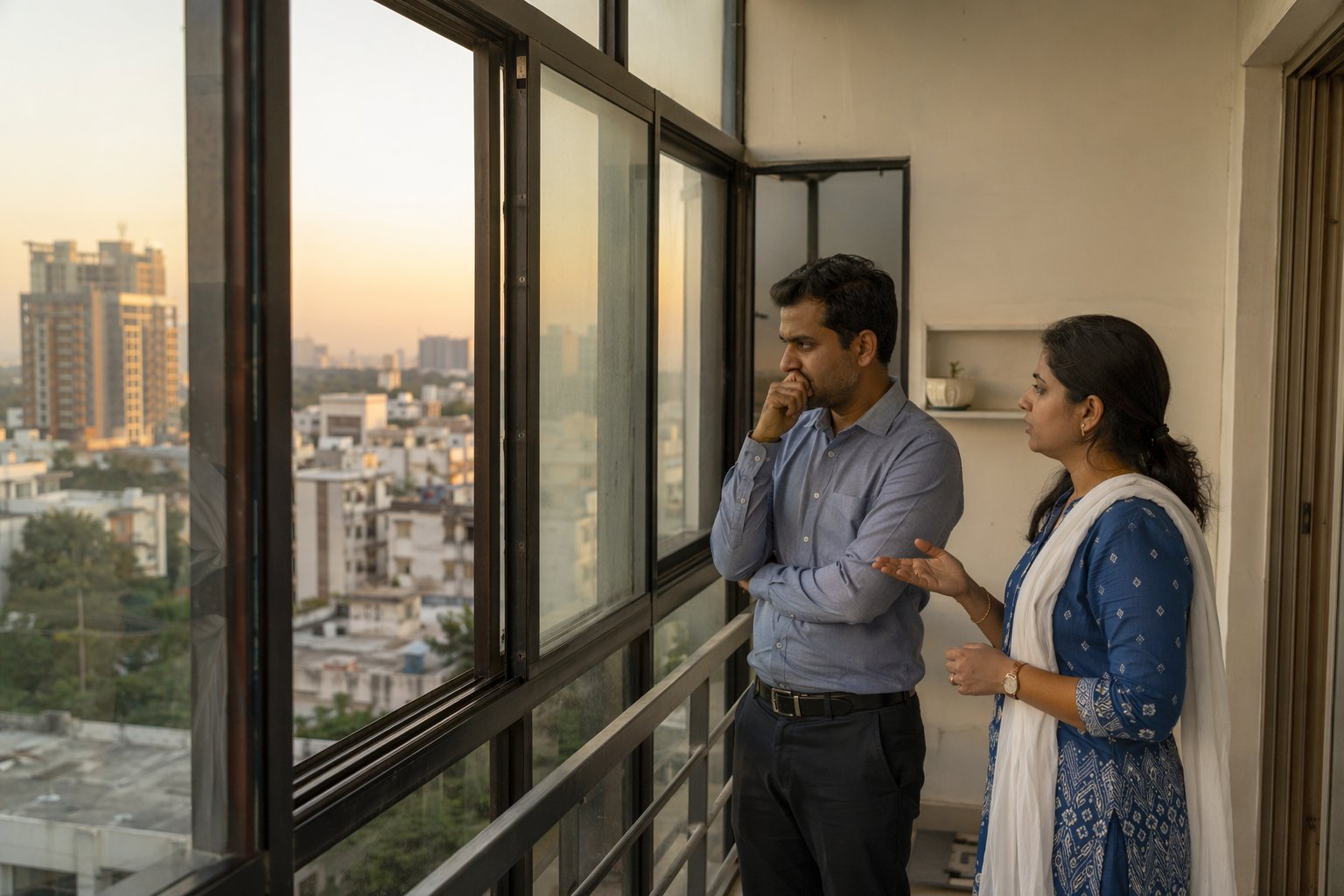
One recent site visit stayed with me. A buyer walked into a top-floor flat in Gachibowli on a harsh afternoon. The lift opened, the corridor was warm, but the flat felt surprisingly tolerable. The seller smiled and said, “Sir, cool roof paint. Summer problem solved.” Then he took the buyer to the terrace. Fresh white coating, neat edges, good first impression.
But a freshly painted terrace is like a polished car bonnet. It tells you something, but not everything. Was the terrace waterproofed before painting? Was the coating meant for heat reflection or only normal exterior paint? Did the association approve it? Is there seepage history? Is the flat legally clean? Has the project got RERA registration where applicable? Is the land linked to any prohibited category under Section 22-A?
In our experience, the smart buyer appreciates the cool roof, but verifies the building first. Sustainability is valuable. Cosmetic selling is common. Your job is to separate one from the other.
Cool Roof Paint Before Summer: What It Actually Does
Cool roof paint is usually a reflective roof coating applied on terraces to reduce heat absorption. In Hyderabad, it is mainly discussed before March, April and May because top-floor residents feel the heat first. Localities like Miyapur, Kukatpally, Nallagandla, Financial District, Tellapur, Attapur, LB Nagar and Kompally have many apartments where the terrace slab takes strong afternoon sun.
A proper cool roof coating can make the roof surface reflect more sunlight than a dark or ageing terrace surface. That may reduce heat transfer into the top-floor unit. But the result depends on many site-level factors: slab condition, waterproofing layer, roof slope, ponding water, shade from solar panels, parapet height, ventilation, ceiling height and even how many hours the flat gets direct western sun.
So, when a seller says, “This is a green home feature,” do not reject it casually. Also, do not accept it blindly. Ask for proof.
My practical rule: cool roof paint is a plus point, not a title clearance certificate, not a waterproofing guarantee, and not a substitute for proper building due diligence.
Cool Roof Paint Before Summer: Green Upgrade or Cosmetic Fix?
The difference is visible if you ask the right questions. A genuine upgrade normally has method, material and maintenance history. A cosmetic fix usually has only a fresh look and a sales pitch.
| What you see | Could be genuine green upgrade | Could be cosmetic fix |
|---|---|---|
| Fresh white terrace | Reflective coating applied after surface cleaning and crack treatment | Ordinary white paint applied just before sale visit |
| Seller claims flat stays cool | Supported by past maintenance bills or association work order | No bill, no product name, no application date |
| No visible terrace cracks | Waterproofing and slope correction done earlier | Cracks hidden temporarily under coating |
| Association involvement | Work approved by apartment association or builder maintenance team | One owner painted a patch without consent |
| Green home claim | Part of wider design: insulation, ventilation, solar, efficient fixtures | Only terrace paint used as marketing point |
In Hyderabad’s resale market, this matters a lot for top-floor flats. A top-floor unit in Shaikpet, Nanakramguda, Madhapur or Kokapet may already command buyer interest because of view, privacy and lower upper-floor noise. Sellers know that heat concern is the first objection. A cool roof story helps them answer that objection quickly.
That does not mean the seller is cheating. Many associations genuinely do terrace treatment before summer. But you need to confirm whether the work is durable and whether the flat has any hidden seepage or legal issue.
Start With the Terrace, But Don’t Stop There
When you visit the terrace, go beyond colour. Walk slowly near drain points, parapet joints, water tank bases and lift machine room walls. These are the usual weak spots. If the coating is very fresh but the side walls show damp marks, ask why. If the surface is uneven and water stagnates, paint alone will not solve the problem.
Ask these simple questions:
- Which brand or product was used for the coating?
- Was old loose material removed before application?
- Was waterproofing done separately or is the seller calling paint itself waterproofing?
- When was the work done?
- Who paid for it: association, builder, or individual owner?
- Is there any warranty or invoice?
- Has any top-floor flat reported seepage in the last monsoon?
If the seller is genuine, these questions will not irritate him. If the answer is only “Sir, no issue, full cool,” stay alert.
Hyderabad Locality Check: Why Top-Floor Verification Changes by Area
Hyderabad is not one uniform property market. A top-floor flat in an older Ameerpet apartment is very different from a new tower in Puppalaguda. A standalone building in Boduppal has a different risk profile from a gated project in Tellapur. Even within one locality, mandal and SRO mapping can change your document checks.
For example, buyers looking around Gachibowli and Kondapur often deal with Serilingampally mandal records. Manikonda and Narsingi may bring Gandipet or Rajendranagar-side documentation depending on exact location. Jubilee Hills and parts of Film Nagar come with Shaikpet-area checks. Uppal and Nagole buyers should be careful with older layouts, road widths and permissions. Hayathnagar-side properties need their own survey number and land-use review. Medchal, Kompally and Bachupally buyers often see fast-changing layouts where document chain must be checked properly.
This is why I advise buyers to identify the exact survey number, village and SRO before getting carried away by interiors or terrace paint. Use the Survey Number Finder if you are not sure about the land reference. Then verify the registration jurisdiction through Find Your SRO Office.
The Legal Check Is Not Optional: EC, RERA and Section 22-A
A cool roof can improve living comfort. It cannot clean a bad title. Before paying a token advance, check whether the property has encumbrances, pending loans, disputes, or registration restrictions.
Start with an Encumbrance Certificate. The EC gives you a transaction trail recorded at the registration level. It can show sale deeds, mortgages and other registered dealings. For a quick starting point, use the Encumbrance Certificate Search. If you already have an EC and want to read it better, use the EC Analyzer.
For under-construction or recently completed projects, check RERA details using the RERA Project Lookup. Do not rely only on the brochure or WhatsApp PDF. Project name, promoter name, approvals and declared details must be reviewed carefully.
Then comes the prohibited property risk. Telangana has a large set of properties falling under Section 22-A restrictions. As per the Verified.RealEstate database context, 3,076,153 prohibited property records are tracked under this category. That number alone should tell buyers not to take this subject lightly. A beautiful flat, good road, painted terrace and attractive price will not help if the underlying property has registration restrictions.
Before you commit, run a check through the Section 22-A Prohibited Property Check. For a broader title-risk review, use the Property Verification Tool.
How Sellers Use Cool Roof Paint in Negotiation
In resale deals, every visible improvement becomes a negotiation point. Modular kitchen, false ceiling, geysers, wardrobes, mosquito mesh, balcony grills, terrace paint — all these are used to defend the asking price. That is fair, up to a point.
But a buyer should not pay a premium only because the terrace was painted last week. Cool roof coating has value when it is part of maintenance quality. If the association has a habit of repairing cracks on time, cleaning drains, maintaining overhead tanks and handling monsoon seepage complaints, that is a stronger signal than paint alone.
When I inspect top-floor homes with buyers, I ask them to compare three things:
- Condition of the terrace above the flat
- Condition of the ceiling inside the flat
- Minutes or records of association maintenance, if available
If all three support the seller’s claim, you can treat cool roof paint as a positive feature. If only the terrace is shining and the bedroom ceiling has old patch marks, negotiate cautiously.
What Documents Should You Ask for When Cool Roof Paint Is Claimed?
You do not need a thick technical file for every small apartment. But for a serious purchase, ask for a few basic proofs.
- Invoice or bill for roof coating or waterproofing work
- Product name or coating specification
- Association approval or maintenance circular, if common terrace is involved
- Warranty paper, if the contractor issued one
- Photos of surface preparation before painting, if available
- Any seepage complaint history from the apartment association
Also check whether the terrace is a common area or attached exclusive terrace. In many apartment buildings, the terrace is a common area even if top-floor owners use it casually. If a seller claims private rights over terrace space, verify the sale deed, sanctioned plan and association rules. Do not go by “everyone knows it is ours.” Property law does not work on corridor gossip.
Ready Reckoner, Stamp Duty and the Price Conversation
Once the flat passes your comfort and legal filters, shift to valuation. The government market value, often called guideline value or ready reckoner value in buyer language, is not always the same as the market selling price. But it is still a key reference for registration and stamp duty discussions.
Instead of depending on broker talk, check the area’s base value using the Market Value / Guideline Value Search. Then estimate registration cost through the Stamp Duty Calculator. If you are comparing built-up area, undivided share and construction value, the Composite Value Calculator can help you understand the breakup better.
I would not advise paying extra merely because the roof is painted. But if the flat has good orientation, clean title, proper approvals, strong association maintenance and verified terrace treatment, it deserves a better evaluation than a neglected top-floor unit in the same micro-market.
Site Visit Checklist for a Top-Floor Flat Before Summer
Carry this checklist when visiting a top-floor flat in Hyderabad, especially from February onwards.
Inside the flat
- Check ceiling corners for old damp patches
- Look behind wardrobes and lofts for moisture marks
- Ask whether AC usage is unusually high in summer
- Check ventilation in kitchen and bedrooms
- Visit during afternoon if possible, not only evening
On the terrace
- Check slope towards drains
- Look for cracks near parapet walls
- Inspect water tank platforms
- See whether coating is uniform or patchy
- Ask who maintains the terrace and how often
Documents
- Sale deed chain
- EC
- RERA details where applicable
- Approved plan and occupancy certificate where available
- Property tax and utility records
- Section 22-A prohibited property check
This may sound like a lot, but it is easier than fighting a title problem or seepage dispute after registration.
Cool Roof Paint Before Summer in Gated Communities
In large gated communities across Nallagandla, Tellapur, Kokapet, Nanakramguda and Financial District, cool roof work is usually handled at association level or builder-maintenance level. That is better than random individual work because common-area treatment needs consistency.
Still, ask whether the entire terrace was treated or only a visible patch near the entrance. In some towers, solar panels, service equipment and water tanks occupy large portions of the roof. Coating may not cover every heat-exposed section. If your flat is directly below an untreated zone, the benefit may be limited.
Also ask whether the coating work affected waterproofing warranties. Some builders have clear maintenance rules. If residents apply material without approval, warranty arguments can start later. A green feature should not create a maintenance dispute.
Cool Roof Paint Before Summer in Standalone Buildings
Standalone apartments in areas like Chandanagar, Hafeezpet, Pragathi Nagar, Attapur, Saidabad and Dilsukhnagar need a slightly different lens. Here, terrace responsibility may be informal. There may be no strong association, no proper maintenance fund and no written record of repairs.
In such buildings, do a more physical inspection. Speak to the flat below, if possible. Ask residents how the building handled the last monsoon. Check if terrace drains are connected properly. Look at staircase headroom walls and lift shaft surroundings. These areas often reveal the truth faster than the seller’s living room.
If the seller refuses terrace access, treat it as a warning sign. For a top-floor flat, terrace inspection is not a luxury. It is basic due diligence.
When Cool Roof Paint Is a Real Plus
I see cool roof paint as a real positive when five conditions are met. First, the coating is a proper reflective product, not only decorative paint. Second, the terrace was cleaned and cracks were treated before application. Third, waterproofing and drainage are in good condition. Fourth, the association or rightful maintenance body approved the work. Fifth, the flat’s legal documents are clean.
When these conditions come together, a top-floor home can be attractive. You get better privacy, fewer footsteps above, good light and possibly better ventilation. In many Hyderabad high-rises, top floors also have stronger views. For buyers who work from home or want quieter living, that can matter.
But if the seller is using paint to hide seepage, delay questions or push a quick token advance, step back. No flat becomes safe just because the roof is white.
Final Buyer Advice: Trust the Upgrade, Verify the Property
Cool roof paint before summer is not a gimmick by default. Hyderabad needs more heat-conscious housing, and reflective terrace treatment can be a sensible step. But in a property transaction, visible sustainability features must sit on top of strong legal and technical verification.
So admire the terrace. Ask about the material. Check the ceiling. Speak to the association. Then open the documents. Run the EC. Check RERA where needed. Verify Section 22-A status. Confirm SRO and survey details. Only then discuss price and token advance.
That is how a buyer protects both comfort and capital.
Frequently Asked Questions
Is cool roof paint useful for a top-floor flat in Hyderabad?
Yes, it can be useful if it is a proper reflective coating applied on a clean, repaired terrace. But it should not be treated as proof of waterproofing or legal safety.
How do I know if cool roof paint is genuine or only cosmetic?
Ask for the product name, invoice, application date, association approval and seepage history. Also inspect terrace drains, parapet joints and ceiling corners inside the flat.
Should I check EC even if the flat looks well maintained?
Absolutely. Maintenance condition and title condition are different matters. Use an Encumbrance Certificate to review registered transactions and possible mortgage entries.
Why is Section 22-A check needed for a flat purchase?
Section 22-A covers prohibited property categories where registration can be restricted. Telangana records include 3,076,153 prohibited property entries, so buyers should verify before paying advance.
Can I pay extra for a flat because it has cool roof paint?
Pay extra only if the flat also has clean documents, good terrace condition, proper approvals and strong association maintenance. Paint alone should not decide the price.