Freehold vs Leasehold Property: Quick Buyer Answer
Freehold vs Leasehold Property is not a legal technicality you can check after paying token. It decides who truly controls the asset, whether you can sell freely, whether a bank will be comfortable, and what permissions are needed later. In Telangana, especially around Hyderabad, Rangareddy, Medchal-Malkajgiri and Sangareddy, we’ve seen buyers get attracted by location first and documents later. That order is risky.
My straight view: if you are buying for long-term family ownership, resale freedom and easier loan processing, a clean freehold property is usually more comfortable. A leasehold property is not automatically bad, but the buyer must understand the remaining lease period, transfer permission, renewal conditions, mortgage rights and conversion possibility before paying even a small token amount.
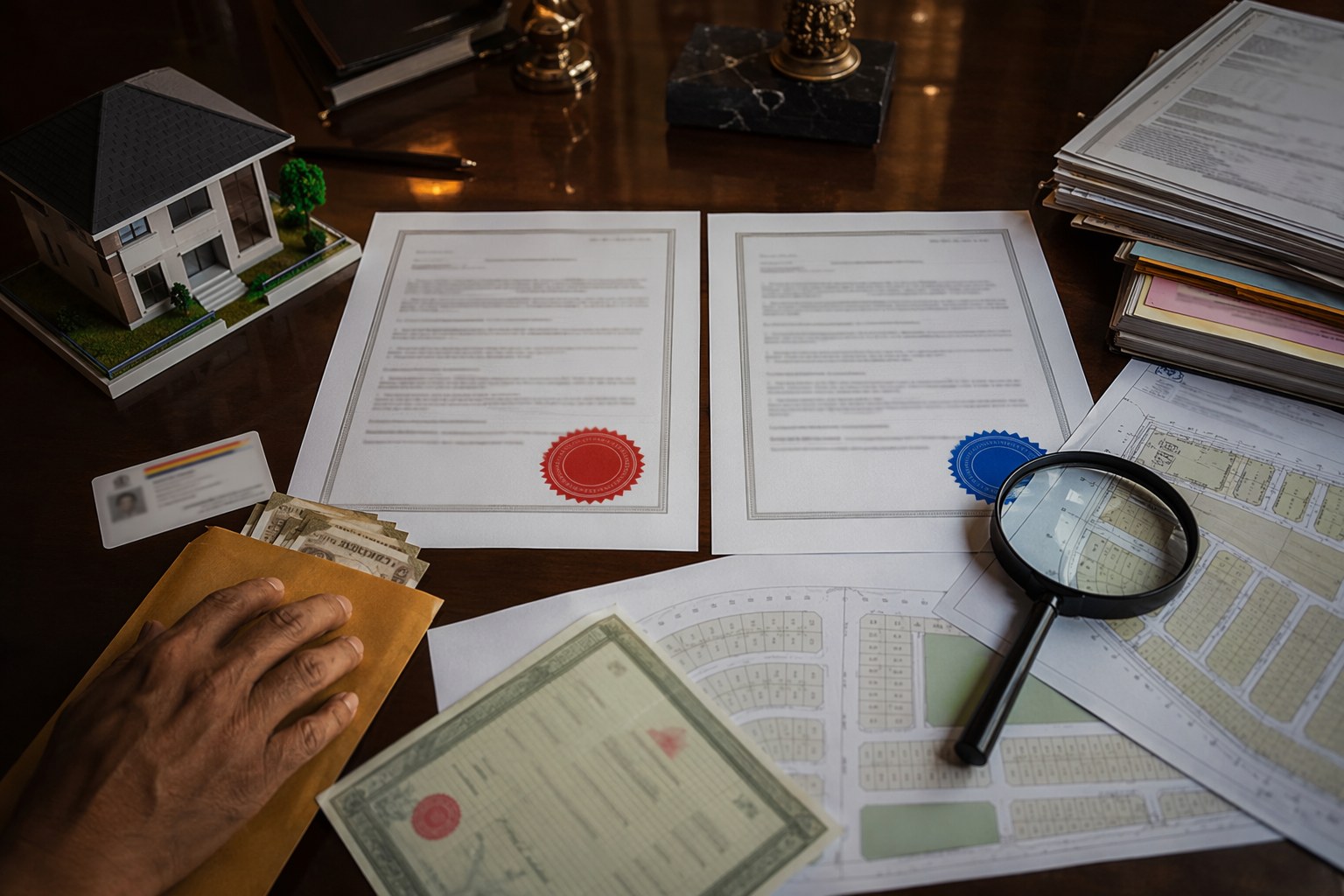
Before token, verify title nature first. Price negotiation comes after ownership clarity, not before it.
This is especially true in localities like Kokapet, Narsingi, Tellapur, Miyapur, Gachibowli, Uppal, LB Nagar, Kompally, Bachupally and Shadnagar, where layouts, government assignments, old grants, industrial allotments and private sale deeds can sit very close to each other on the ground. Two plots on the same road may have very different title comfort.
Freehold vs Leasehold Property: Side-by-Side Comparison
| Point | Freehold Property | Leasehold Property |
|---|---|---|
| Ownership control | Owner holds land or unit with wider rights, subject to law, zoning and approvals. | Lessee gets rights for a fixed period under a lease deed or allotment terms. |
| Resale flexibility | Usually easier if title chain, EC, land use and approvals are clean. | May need lessor NOC, transfer fee, authority permission or lease assignment. |
| Loan comfort | Banks are generally more comfortable when title is clear and marketable. | Banks examine lease period, transferability, mortgage clause and lessor consent closely. |
| Token risk | Main risk is hidden defect in title, litigation, prohibited status, mortgage or wrong survey number. | Main risk is paying token without knowing whether the lease can even be transferred. |
| Future redevelopment | Usually simpler, subject to municipal permissions, share of land and society rules. | Depends on lease deed, authority rules and remaining term. |
| Best suited for | End-use buyers wanting long holding period and easier resale. | Commercial users, institutional users or buyers who clearly understand lease conditions. |
In daily Hyderabad transactions, many people use “ownership” casually. A seller may say “naaku full rights unnayi” or “clear title undi”. That is not enough. The document must show whether it is freehold, leasehold, assigned land, government grant, society allotment, development agreement share, or something else.
Why Freehold vs Leasehold Property Matters Before Token
A token amount is often treated like a harmless booking gesture. In reality, it changes the psychology of the deal. Once money is paid, the buyer becomes emotionally locked. The seller and broker may start saying, “Sir, documents later, registration date fix cheddam.” That is where mistakes happen.
For freehold property, the first concern is whether the seller has a clean, transferable title. For leasehold property, the first concern is whether the seller has the right to transfer leasehold interest at all. These are different questions.
Suppose a buyer is looking at a plot near Kollur in Ramachandrapuram side, a villa plot near Mokila in Shankarpally mandal, or an apartment in Financial District/Nanakramguda belt. The physical property may look ready. The roads may be busy. The price may look attractive compared with nearby stock. Still, you need to ask: what exactly am I buying? Land ownership? Undivided share? Leasehold interest? Development right? Membership right?
For Telangana buyers, one more layer is Section 22-A prohibited property. As per the Verified.RealEstate database context, Telangana has 3,076,153 prohibited property entries under Section 22-A. That number alone should make buyers cautious. A property can look normal on site but still face registration restriction due to government records, assigned land issues, endowment claims, Wakf entries, ceiling surplus, court orders or other notified categories.
Before token, run a basic check through Section 22-A Prohibited Property Check, verify the SRO using Find Your SRO Office, and review title movement through Encumbrance Certificate Search. These three steps do not replace a lawyer, but they help you ask better questions before money leaves your account.
Freehold vs Leasehold Property: Buyer Risk in Telangana
Freehold risk is usually hidden in title history
Freehold sounds safe, but only a clean freehold is safe. In our experience, the most common problem is not the current sale deed. It is an older link document, family partition, missing consent, wrong survey number, unregistered agreement, mortgage, court attachment or land classification mismatch.
For agricultural land, check pahani, Dharani entries, pattadar details, khata, survey number, extent, nature of land and mutation history. For converted land, check conversion orders and layout approvals. For apartments, check land title, development agreement, GPA, building permission, occupancy status where applicable, UDS calculation and association records.
In Serilingampally mandal, for example, apartment buyers often focus on flat number and amenities. But title begins with the land parcel. In Gandipet mandal, buyers chasing premium villa plots near Narsingi, Kokapet and Manchirevula must check whether the layout has proper approval and whether the survey number matches revenue records. In Hayathnagar and Abdullapurmet side, older plots may have layout, regularisation or land classification questions.
Leasehold risk is usually in transfer conditions
Leasehold property needs a different reading. The lease deed or allotment document must be examined word by word. Can the lessee transfer? Is prior approval compulsory? Is mortgage allowed? Is there a lock-in? Is there a transfer fee? What happens after expiry? Can the lease be renewed? Is conversion to freehold possible? Who owns structures built on the land after lease expiry?
Some buyers assume a long lease is equal to ownership. It is not. A long lease can be valuable, especially for commercial use, but the buyer’s rights are still shaped by the lease document. If the document says transfer requires lessor consent, a private agreement between seller and buyer is not enough.
For industrial plots, institutional land, authority-allotted land and certain government-linked properties, the lessor may impose conditions on use, transfer and mortgage. If the buyer ignores those conditions, resale and bank loan can become painful.
Documents to Verify First in Freehold Property
Before paying token for a freehold property in Telangana, ask for scanned copies first. A genuine seller should not object to basic document review. If the seller says documents will be shown only after token, I treat that as a warning sign.
- Current title deed: Registered sale deed, gift deed, partition deed, settlement deed or other ownership document.
- Link documents: Previous registered documents showing how title moved to the present seller.
- Encumbrance Certificate: Check registered transactions, mortgages, releases and court-related entries where reflected.
- Dharani and pahani records: For land parcels, verify pattadar name, survey number, extent and classification.
- Mutation records: Confirm revenue records are updated in seller’s name where applicable.
- Layout approval: HMDA, DTCP, GHMC or relevant local body approval depending on location.
- Building permission: For houses and apartments, verify sanction plan and approved usage.
- Occupancy or completion status: Particularly for apartment projects and larger buildings.
- Tax receipts: Property tax, vacant land tax or other local body payments.
- Identity and family consent: Seller KYC, marital status, legal heirs and required consents.
- Prohibited property check: Verify Section 22-A status before token.
For apartments in areas like Kondapur, Madhapur, Kukatpally, Miyapur and Hafeezpet, do not stop at the flat sale deed draft. Ask for landowner documents, builder development agreement, GPA, sanctioned plan and RERA details where applicable. Use RERA Project Lookup for project-level checks. For market value comparison, use Market Value / Guideline Value Search before estimating stamp duty and registration cost.
Documents to Verify First in Leasehold Property
For leasehold property, the document checklist is shorter in one sense but more sensitive. The lease document controls the deal. You cannot assume rights beyond what is written.
- Original lease deed or allotment letter: Check lessor, lessee, property description, lease term and purpose.
- Remaining lease period: A short remaining term can reduce loan comfort and resale value.
- Transfer clause: Confirm whether assignment, sale or transfer of leasehold rights is allowed.
- Lessor NOC requirement: Many leasehold properties need prior written consent.
- Mortgage clause: Banks will check whether the leasehold right can be mortgaged.
- Renewal clause: See whether renewal is automatic, conditional, discretionary or absent.
- Use restrictions: Residential, commercial, industrial or institutional use must match actual usage.
- Default and cancellation clauses: Understand when the lessor can terminate the lease.
- Transfer fee or unearned increase: Some authorities may charge transfer-related amounts as per their rules.
- Past approvals: Check earlier transfers, NOCs, building permissions and compliance letters.
Do not pay token on leasehold property based only on a possession certificate or electricity bill. Possession is not the same as transferable interest. We’ve seen this confusion in old commercial pockets, industrial estates and authority-allotted lands. The person in possession may not always be free to sell or assign the lease.
Loan Comfort: Freehold vs Leasehold Property
Banks prefer clarity. In freehold property, the bank’s legal team looks for marketable title, proper title chain, EC, approved plan, valuation and absence of prohibitions. If these are clean, the file usually moves with fewer legal doubts.
In leasehold property, the bank examines extra points. Is the remaining lease period long enough for the loan tenure? Can the bank create mortgage on leasehold rights? Is lessor permission needed for mortgage? If the borrower defaults, can the bank enforce security? If these answers are unclear, the bank may reduce comfort or reject the file.
This is why a property can be attractive to the buyer but uncomfortable to the lender. Many buyers discover this only after paying token and applying for loan. That is too late. Before token, send the basic document set to your bank or loan advisor and ask for a preliminary legal view. A quick informal comfort is better than blind booking.
Also check existing loans. Use CERSAI Charge Check where relevant, and compare EC entries through EC Analyzer. A registered mortgage, deposit of title deeds or charge history should be understood before agreement drafting.
Resale Flexibility: Where Freehold Usually Scores Better
Resale is where freehold usually wins. A clean freehold flat in a well-known project at Gachibowli or Nallagandla, a properly approved villa in Tellapur, or a legally clear plot in a DTCP/HMDA layout near Shadnagar generally has a wider buyer base than a property with complicated transfer conditions.
Leasehold resale depends on buyer education and authority process. If every transfer needs approval, the resale cycle becomes slower. If the lease has limited remaining years, future buyers will negotiate harder. If banks are selective, cash buyers may dominate, which can affect liquidity.
That said, leasehold is not always a bad choice. Some commercial leasehold assets can work well if the location is strong, documentation is clear and the buyer understands the limited nature of rights. But I would not advise a first-time residential buyer to treat leasehold like ordinary ownership unless a property lawyer has reviewed the lease terms.
Token Amount Checklist for Freehold vs Leasehold Property
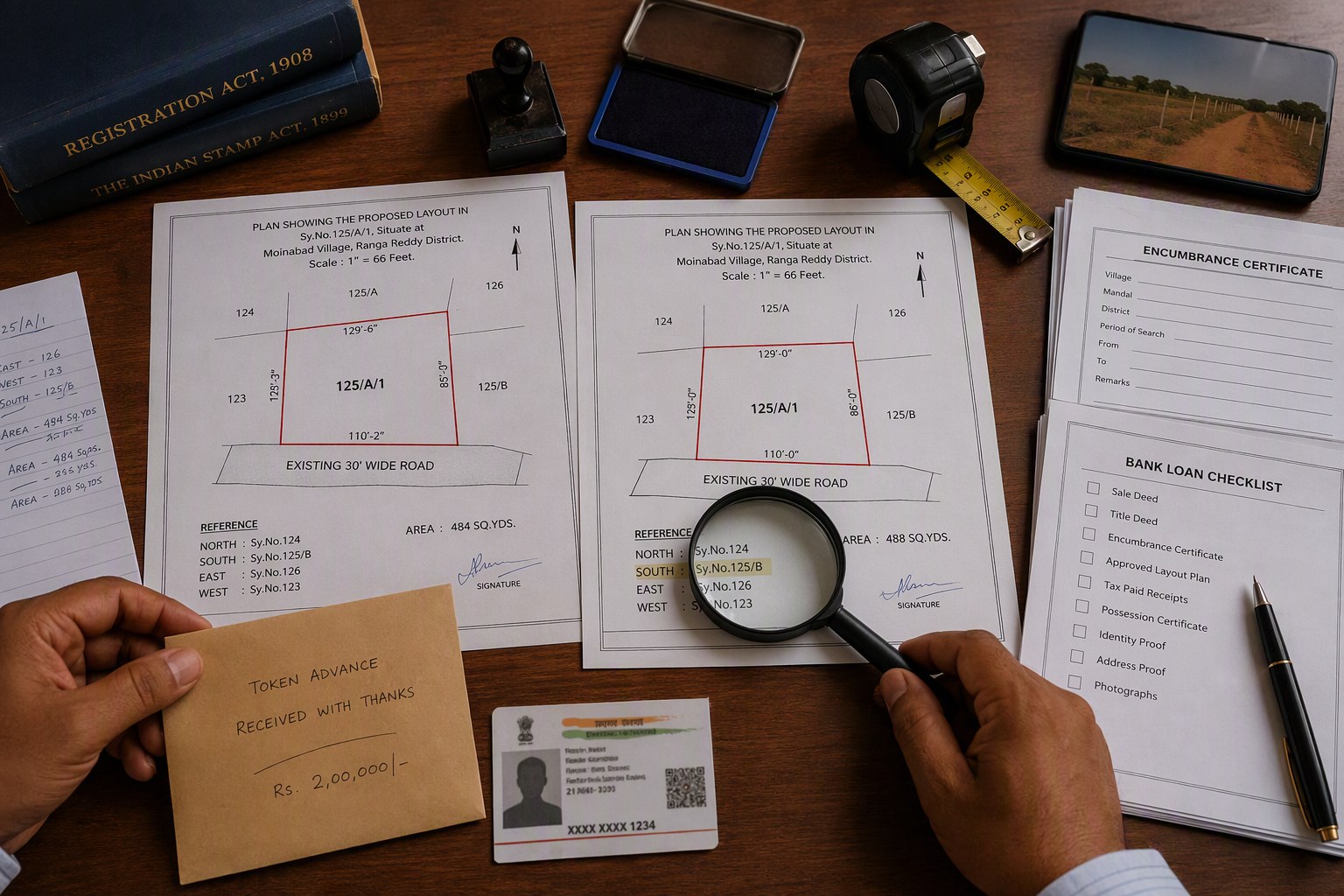
Here is the practical checklist I recommend before paying token in Hyderabad or any Telangana district:
- Confirm whether the property is freehold, leasehold, assigned, grant-based, society-held or development-share property.
- Match survey number, door number, flat number, plot number, village, mandal and SRO jurisdiction.
- Check EC for a suitable period based on lawyer advice.
- Run Section 22-A prohibited property verification.
- Check guideline value and understand stamp duty impact using Stamp Duty Calculator.
- For land, verify revenue records, pahani, Dharani status and layout approval.
- For apartments, verify RERA status where applicable, sanctioned plan, UDS and builder title documents.
- For leasehold, read transfer, mortgage, renewal and termination clauses before negotiation.
- Ask whether any NOC is required from government authority, society, lessor, bank or family members.
- Put token terms in writing, including refund condition if legal verification fails.
One small suggestion: never write a vague WhatsApp message saying “paid token for property”. Mention property details, seller name, amount, payment mode, purpose, verification condition and refund condition. Better still, use a proper receipt or draft through a lawyer. If you need a basic starting point, use Legal Document Generator and still get it reviewed by a professional for your case.
Freehold vs Leasehold Property in Hyderabad Localities
Hyderabad’s property market is not uniform. West Hyderabad buyers around Kokapet, Narsingi, Gachibowli, Financial District, Tellapur and Kollur often focus on premium gated communities and high-growth corridors. Here, land title, HMDA approvals, UDS and development agreements matter heavily.
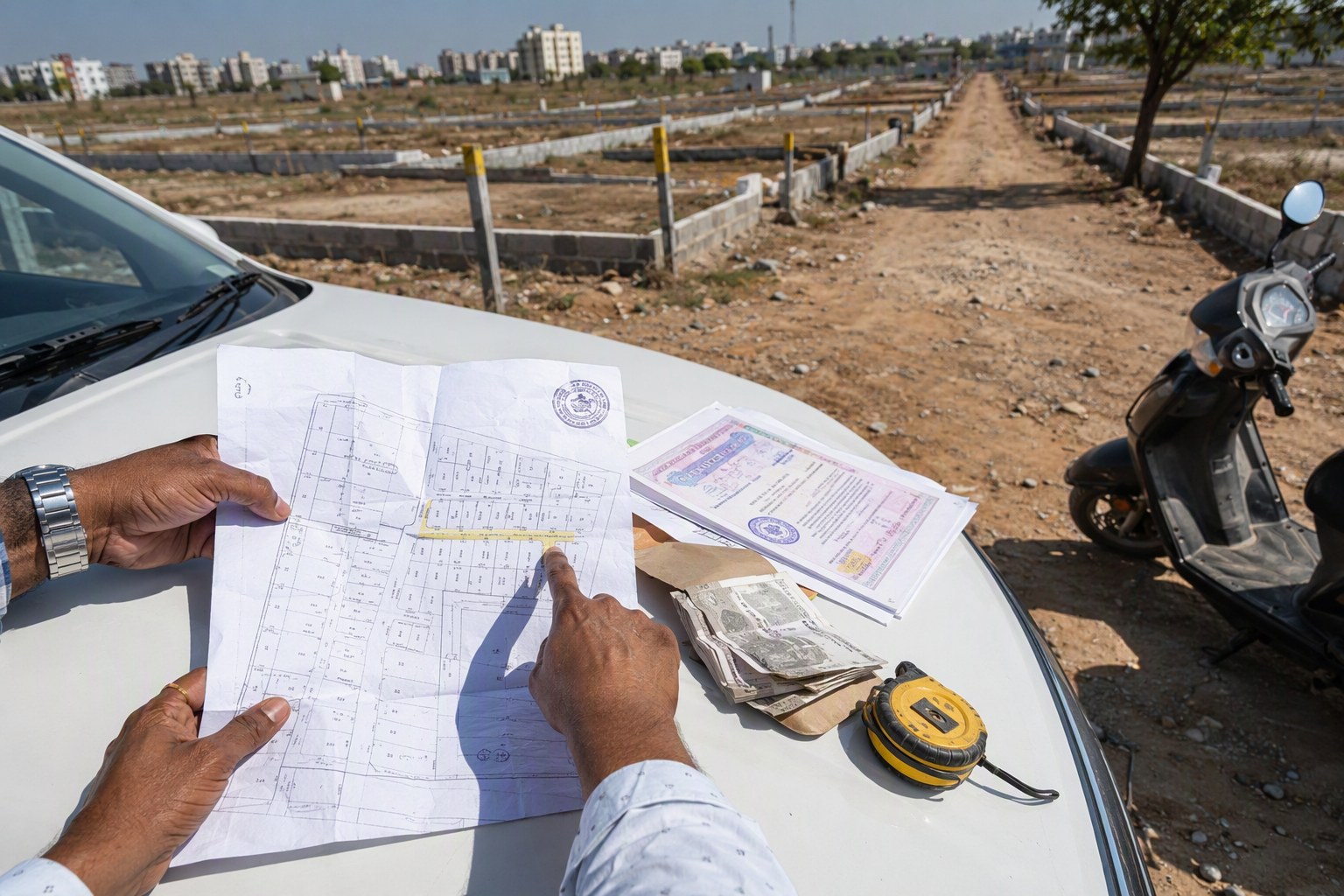
North Hyderabad buyers in Kompally, Suchitra, Medchal, Gundlapochampally and Shamirpet side should check layout approvals, village records, conversion and road access. In East Hyderabad, Uppal, Nagole, LB Nagar, Pocharam and Ghatkesar have a mix of apartments, plots and older holdings. South-side belts like Shamshabad, Maheshwaram, Tukkuguda and Shadnagar need careful land-use, survey and prohibited-property checks because large land parcels and plotted layouts are common.
For buyers comparing multiple land parcels, use Survey Number Finder, Land Use Zone Finder and Property Verification Tool. These tools help you frame questions before you sit with the seller, broker or advocate.
My Opinion: What Should a Normal Buyer Prefer?
If you are buying your first home or a family plot, prefer clean freehold unless there is a clear reason to choose leasehold. Freehold gives better emotional and practical comfort. It is easier for children to inherit, easier to mortgage in most cases, and easier to explain to the next buyer.
Choose leasehold only when the documents are strong, the remaining term is comfortable, transfer is allowed, lender comfort is available and the price reflects the limited rights. If a leasehold property is priced like a clean freehold property in the same locality, question it strongly.
Also, do not rely only on broker confidence. A good broker can help with market access, but legal risk sits with the buyer. Spend time on documents. Check SRO records. Read the lease deed. Compare government records. In property buying, boring paperwork saves exciting money.
Final Buyer Takeaway on Freehold vs Leasehold Property
Freehold vs Leasehold Property should be verified before price finalisation, not after. Freehold generally offers wider ownership control, better resale flexibility and easier loan comfort, provided the title is clean. Leasehold can still be workable, but only when transfer, mortgage, renewal and lessor permission conditions are clearly understood.
Before token, ask one simple question: “What exact right is the seller transferring to me?” If the answer is unclear, pause the deal. A genuine seller with clean documents will usually allow verification. A rushed seller asking for immediate token without papers is not giving you a discount; he may be transferring his risk.
Frequently Asked Questions
Is freehold property always safer than leasehold property?
Not always. A clean freehold property is usually more comfortable, but freehold with defective title, wrong survey number, pending litigation or Section 22-A restriction can be risky. Verification decides safety.
Can I get a home loan on leasehold property in Telangana?
It depends on the lease deed, remaining lease period, mortgage permission and lender policy. Banks usually examine leasehold files more carefully than freehold files.
What should I check before paying token for a leasehold property?
Check the original lease deed, transfer clause, lessor NOC requirement, renewal clause, mortgage rights, use restrictions and any transfer fee. Do not rely only on possession.
How do I know if a property is prohibited under Section 22-A?
You should verify the survey number or property details against prohibited property records and also check with the relevant SRO. This should be done before token or agreement.
Is token amount refundable if legal verification fails?
It is refundable only if your token receipt or agreement clearly says so. Put the refund condition in writing before payment, especially for title, loan or approval failure.