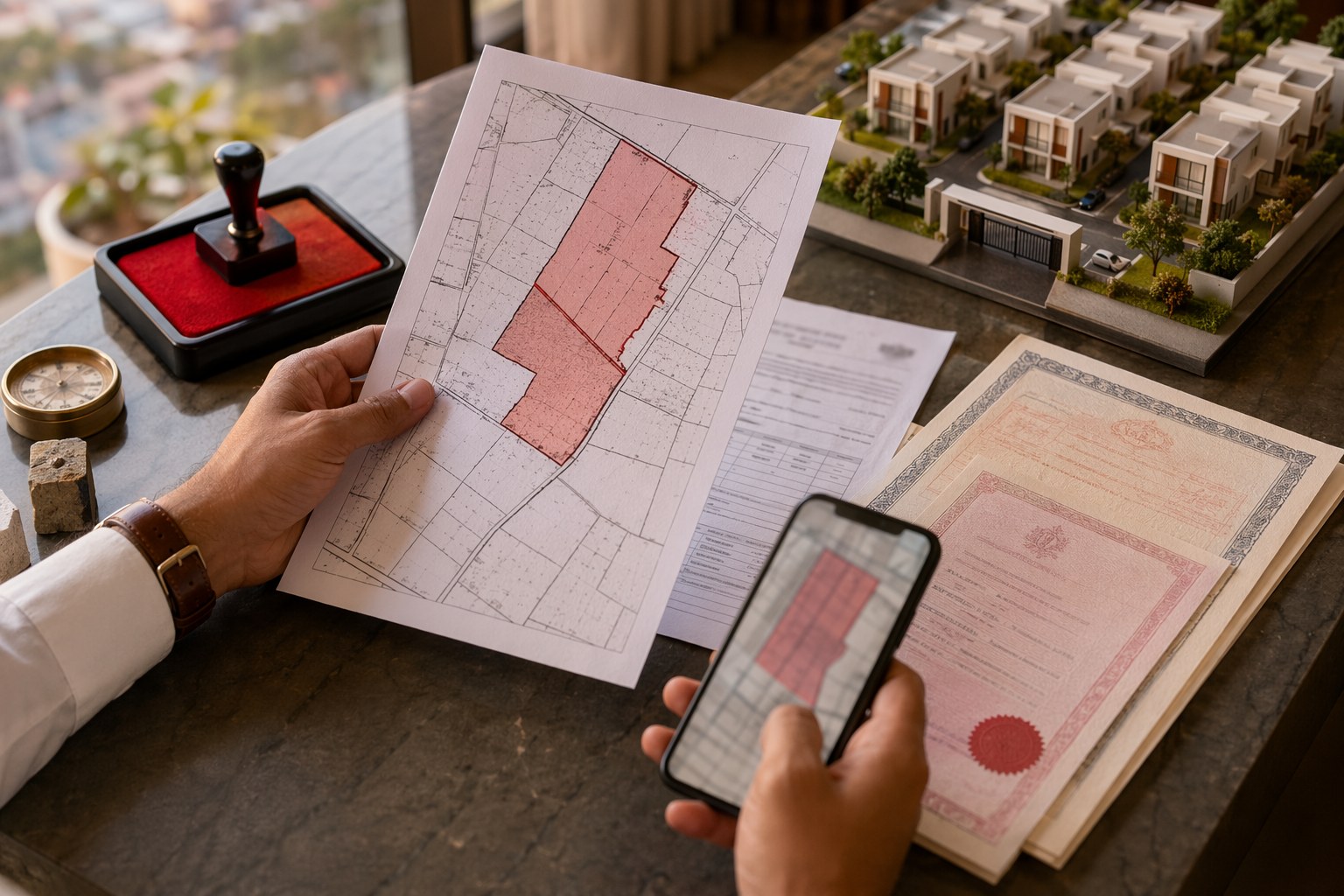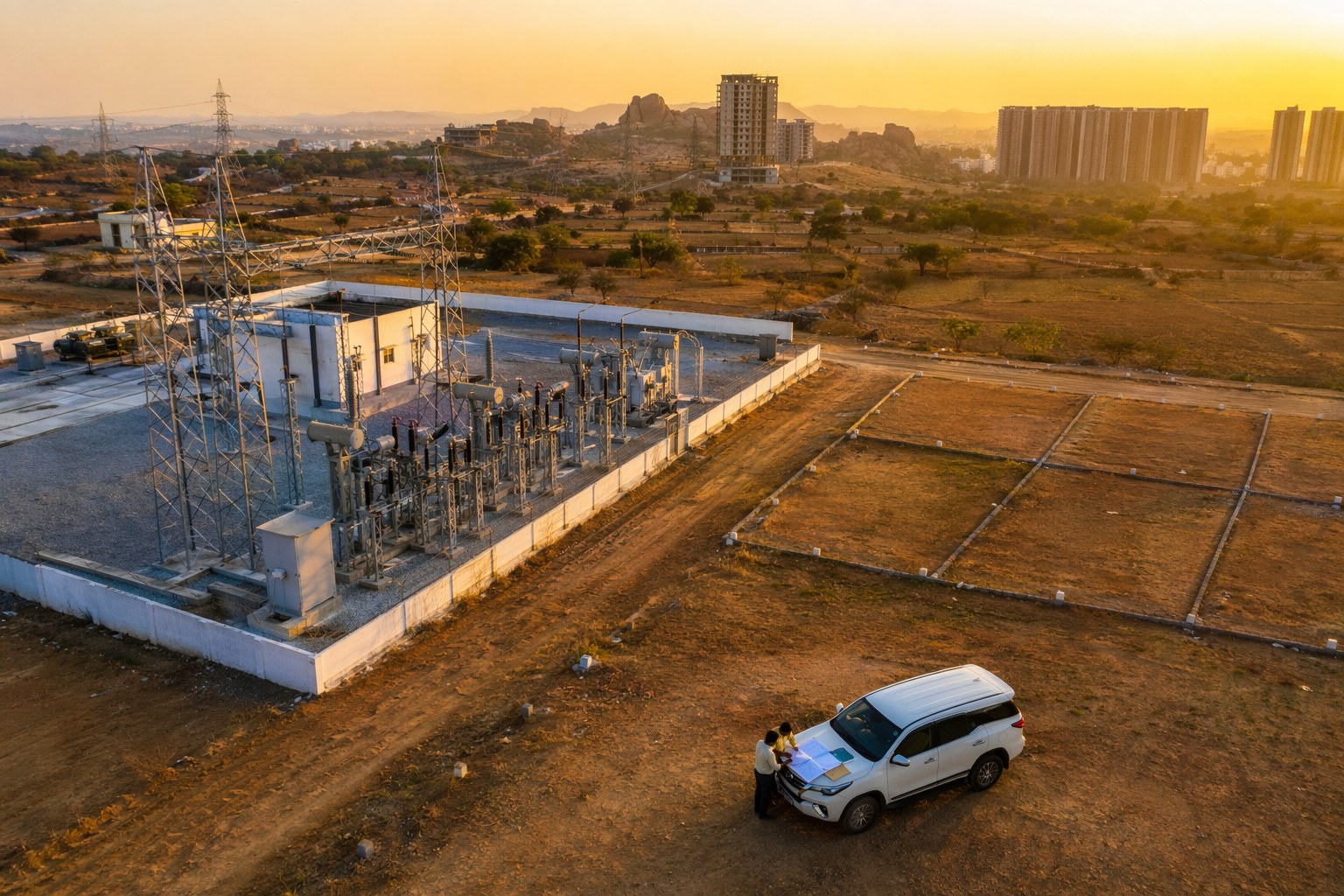
Telangana Title Ratings are being discussed by property professionals as a practical way to flag land and flat transaction risk faster, especially when the State already has 147,934 properties listed under Section 22-A prohibited properties. My view is simple: a rating will not replace legal due diligence, but it can stop many buyers from walking blindly into risky deals.
For Hyderabad’s real estate market, this matters. A family buying a plot in Adibatla, a lender funding a villa in Mokila, or a developer aggregating land in Maheshwaram cannot afford title surprises at registration stage. A clear title score, if backed by official records and updated checks, can bring speed without reducing caution.
Telangana Title Ratings: Why the idea has become urgent
The biggest trigger is the size of the prohibited property list. Section 22-A entries are not a small clerical issue. With 147,934 prohibited property records, Telangana buyers need a quicker first filter before they pay token advance or sign an agreement of sale.
In Hyderabad and surrounding growth corridors, the pressure is highest in places where land prices moved sharply after infrastructure news. We have seen buyers rush into plots around Shankarpally, Kollur, Tellapur, Tukkuguda, Kadthal, Shadnagar, Yacharam and Chevella because the rate looked lower than the neighbouring project. Many such deals are clean. Some are not. The problem is that the risk is visible only after checking pahani, Dharani data, EC, mutation history, court disputes, layout approval and SRO registration status.
A rating can make this early stage easier. Think of it like a food safety grade for property records. Not a guarantee. Not a replacement for an advocate. But a quick signal: green, amber or red.
In our experience, most title problems do not start on registration day. They start much earlier, when buyers trust a brochure, a WhatsApp location pin, or a low quoted rate without matching it with survey number records.
How Telangana Title Ratings could work for buyers and banks
A useful rating system should be boring, strict and record-based. It should not depend on marketing claims. For a house site, apartment or agricultural land parcel, the rating can be built using a few practical checks:
- Section 22-A status: Is the survey number or property blocked for registration?
- Encumbrance history: Are there mortgages, sale deeds, gift deeds, release deeds or pending charges?
- Ownership chain: Is the link document trail complete for 30 years or more?
- Dharani and pahani match: Do pattadar details, extent and survey number tally?
- Layout approval: Is it HMDA, DTCP, GHMC or gram panchayat only? This makes a big difference.
- RERA status: For projects, is the registration active and are promised blocks, units and completion dates disclosed?
- Land use: Does the master plan permit the proposed residential, commercial or mixed use?
- SRO and guideline value: Does the transaction fall under the correct Sub-Registrar Office and ready reckoner value?
On Verified.RealEstate, buyers already use checks like the Section 22-A Prohibited Property Check, Encumbrance Certificate Search, Property Verification Tool and RERA Project Lookup. A title-rating layer can sit above these checks and present the result in a simple score.
Telangana Title Ratings must respect local property realities
Hyderabad is not one single market. A flat in Madhapur is checked differently from a plotted layout in Kandukur mandal. A villa project in Tellapur has different documents from assigned land near Ibrahimpatnam. A rating model should understand this local character.
For example, buyers in Gachibowli, Kondapur and Narsingi usually focus on RERA registration, UDS, building permission, mortgage release and occupancy certificate. In fast-growing plotted markets such as Shadnagar, Tukkuguda, Maheshwaram, Kadthal and Yacharam, the main risk is often survey number identity, agricultural-to-non-agricultural conversion, layout approval and access road width.
Indicative market rates also show why speed matters. In premium apartment pockets like Kokapet and Financial District, resale and new launch prices can easily run into several crores for a 3 BHK. In Tellapur and Kollur, gated community flats and villas have been selling at strong ticket sizes because of ORR access and IT corridor demand. Around Shadnagar and Kadthal, plotted land is sold in yards, and even a small difference in title quality can affect resale liquidity. Buyers should also cross-check ready reckoner or market value using the Market Value / Guideline Value Search before assuming that a low quote is a bargain.
What a practical title-rating scale may look like
A four-level rating may work better than a complicated score out of 100. Property buyers understand colours faster than legal jargon.
| Rating | Meaning | Typical buyer action |
|---|---|---|
| A - Low visible risk | Clean EC, no 22-A hit, clear ownership chain, approved layout or project records | Proceed with legal review, valuation and loan process |
| B - Moderate risk | Minor document gaps, old mutation pending, clarification needed from seller or builder | Ask for missing papers before paying large advance |
| C - High risk | Mismatch in extent, survey number confusion, unclear link documents, approval doubts | Pause deal and take written legal opinion |
| D - Avoid until resolved | Section 22-A issue, litigation, government land claim, serious registration block | Do not proceed unless issue is officially cleared |
This format is useful for banks too. Loan teams already do legal and technical due diligence, but a standardised rating can reduce repeated work, especially in common project approvals. Developers with clean land banks may also benefit, because buyers and lenders will see lower visible risk early.
Where Telangana Title Ratings can fail
A title rating can become dangerous if it is sold as a guarantee. Property title in Telangana depends on multiple departments and historical records. Dharani may show one view. Old SRO records may show another. Court cases may not always appear in a simple search. Family disputes can appear after a sale agreement is signed.
There is also the issue of updates. A property may be clean today and receive a new encumbrance next month. That is why a rating should carry a date and a record trail. For active buyers, tracking changes through a tool like Property Change Tracker can be useful. For registration planning, the Find Your SRO Office tool and Stamp Duty Calculator help buyers understand the correct office and transaction cost.
Another weak spot is informal market practice. In some mandals, sellers first ask for advance and only then share full link documents. I do not like this practice. A serious seller should be ready with EC, link deeds, pattadar passbook details where relevant, tax receipts, layout approval, building permission and ID proof. If basic papers are delayed, the rating should reflect that hesitation.
Telangana Title Ratings and Section 22-A: the real impact
The 147,934 Section 22-A figure tells us that a public-facing risk signal is needed. Many buyers do not know what Section 22-A means until the SRO refuses registration. By then, they may have paid advance, brokerage, loan processing charges and legal fees.
A title-rating system can push the market towards better behaviour. Sellers will be forced to clean up records before listing. Brokers will be more careful while advertising land. Banks can price risk better. Developers with transparent title can stand out in competitive corridors like Kokapet, Puppalaguda, Bachupally, Kompally, Tellapur and Tukkuguda.
Still, the rating must be created with discipline. It should show the checks performed, the date of verification, the survey number or flat number, the SRO, and the limitations. If it hides the underlying records, buyers should not trust it.
Our view: useful first filter, not final certificate
Telangana Title Ratings can make property deals safer if they are treated as an early warning system. They are most useful before paying token advance, before applying for a home loan, and before signing an agreement of sale. They are least useful if buyers treat them as a substitute for legal opinion.
For a Hyderabad buyer, the smart sequence is clear: identify the exact property, confirm survey number or flat details, check Section 22-A, pull EC, verify approvals, compare guideline value, confirm SRO, and then take legal review. If a title rating can package this into a clear A/B/C/D signal, the market will become cleaner and faster.
My opinion is that Telangana should encourage such ratings, but only with transparency. A simple score backed by official records is better than a thick file nobody reads. In a market where one wrong survey number can change the entire deal, clarity is not a luxury. It is basic protection.
Frequently Asked Questions
What are Telangana Title Ratings?
Telangana Title Ratings would be a simple risk score for a property based on checks such as Section 22-A status, EC, ownership chain, approvals, Dharani records and SRO data.
Can a title rating replace legal due diligence?
No. It can help buyers identify risk faster, but final decision-making should still include an advocate’s title opinion, document review and verification of original papers.
Why is Section 22-A important for Telangana buyers?
Section 22-A covers properties prohibited from registration. Telangana has 147,934 such records, so buyers should check this before paying advance or planning registration.
Which Hyderabad areas need extra title checks?
Fast-growing land and villa corridors such as Shankarpally, Kollur, Tellapur, Tukkuguda, Maheshwaram, Kadthal, Shadnagar and Yacharam need careful survey number, approval and land-use checks.
What tools can help before buying property in Telangana?
Buyers can start with Section 22-A check, EC search, guideline value search, RERA lookup, SRO finder and land verification tools before moving to legal review.