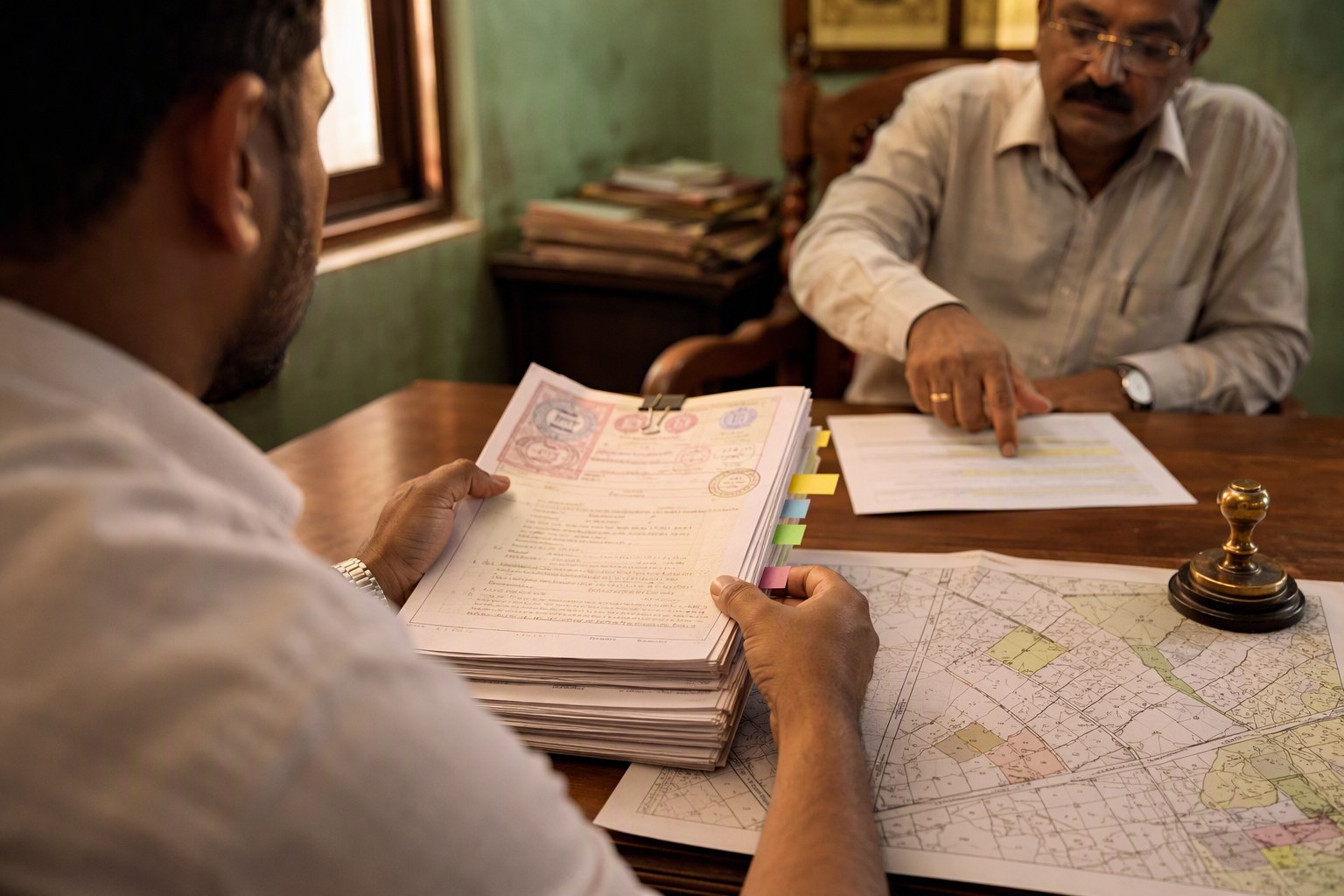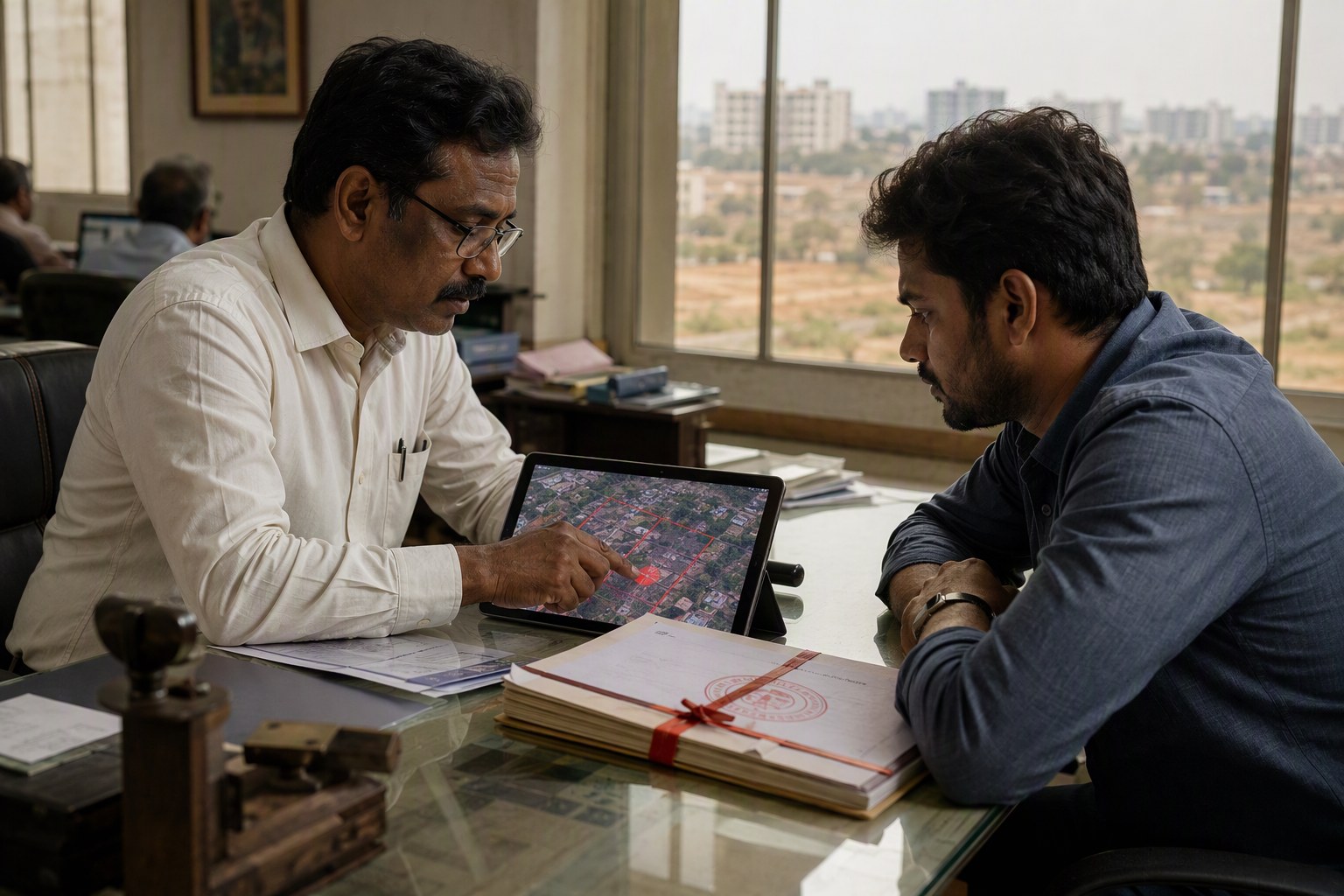
Telangana May Time-Bound Appeals for 22-A Land Entries is the regulatory move many landowners, buyers, bankers and document writers have been waiting to hear about. The issue is simple on paper but painful on the ground: once a survey number or sub-division appears in the Section 22-A prohibited properties list, registration can stop at the SRO counter unless the entry is corrected, clarified or removed through the proper channel.
As per the Verified.RealEstate database mapped from government records, Telangana has 30,76,153 prohibited property records under Section 22-A. That is not a small clerical matter. It affects sale deeds, development agreements, mortgages, partition deeds, family settlements and even resale planning across Hyderabad’s growth corridors.
The likely discussion now is around a time-bound appeal mechanism for correcting or challenging 22-A entries. If implemented well, it can reduce uncertainty for genuine landowners while still protecting government, assigned, endowment, wakf, Bhoodan and other restricted lands from illegal registration.
Telangana May Time-Bound Appeals for 22-A Land Entries: Why this matters now
Section 22-A of the Registration Act allows the government to notify certain properties as prohibited for registration. In practical terms, if your land is flagged under 22-A, the Sub-Registrar may refuse to register the document, even if the parties are ready with stamp duty, market value and signed papers.
In Hyderabad and around the ORR belt, we have seen this issue come up in places like Serilingampally mandal, Gandipet, Rajendranagar, Hayathnagar, Ghatkesar, Medchal, Shamirpet, Patancheru, Maheshwaram and Shamshabad. These are not sleepy land markets. A single 22-A entry can disturb a villa plot sale in Mokila, a commercial land transaction near Gachibowli, or a family partition in a village abutting the city.
The difficulty is not only that a property is prohibited. The bigger problem is the lack of a predictable clock. Some entries may be correct. Some may be legacy entries. Some may relate to old survey number mistakes, missing sub-division details, wrong classification, or mismatch between pahani, Dharani, municipal records and registration department data.
In our experience, buyers can digest a negative answer faster than an indefinite answer. A time-bound appeal process can bring that clarity.
Telangana May Time-Bound Appeals for 22-A Land Entries could help owners challenge wrong entries
A time-bound appeal system, if formally notified, should ideally answer three questions: who can appeal, what documents are needed, and by when the authority must pass an order. Without these three, the reform will remain only a good headline.
For genuine owners, especially those holding old registered sale deeds, succession documents, pattadar passbooks, pahanis and mutation records, the appeal route may become a structured way to say: “This land should not be in 22-A, please verify and correct it.” For buyers, it gives a safer path before paying advance. For banks, it improves mortgage due diligence.
Before paying token advance or signing an agreement of sale, buyers should run a basic check through the Section 22-A Prohibited Property Check. If the land is agricultural, also verify survey details through the Survey Number Finder. For urban flats and plots, use the Encumbrance Certificate Search and cross-check the relevant SRO through Find Your SRO Office.
What is a 22-A prohibited property entry?
A 22-A entry is a restriction recorded against a property to stop registration of certain documents. The reason may vary. It can be government land, assigned land, endowment land, wakf property, land under court or departmental restriction, or another category notified by the government.
In Telangana, buyers often hear lines like “22-A lo undi”, “registration avvadhu”, or “SRO refuse chestharu”. These are not minor remarks. Once a prohibited entry appears, the registration process can halt unless the competent authority clarifies or removes the restriction.
The most common confusion happens where village records, revenue records and registration records do not speak the same language. Old survey numbers may have been subdivided. A full survey number may be restricted, while one portion is privately held. Sometimes buyers check only the EC and miss 22-A status. EC is necessary, but it is not the full story.
Where Hyderabad buyers should be extra careful
Hyderabad’s land market is not uniform. A flat in Kondapur, a plotted layout near Shankarpally, a farmhouse land parcel in Moinabad and an industrial land parcel near Patancheru all need different checks. Still, Section 22-A verification should be non-negotiable in land-heavy transactions.
- Serilingampally and Gandipet belt: High-value land, old village survey numbers and rapid conversion into layouts make document verification crucial.
- Rajendranagar and Shamshabad side: Airport-side growth has increased interest in agricultural and converted lands. Buyers should verify classification and restrictions.
- Ghatkesar, Medchal and Shamirpet: ORR and highway access attract plotted developments, but survey number checks are still essential.
- Patancheru and Sangareddy side: Industrial and residential demand overlaps with older revenue histories. Do not rely only on broker assurances.
- Maheshwaram and Hayathnagar: Fast-moving outskirts can have mixed land categories. Check 22-A status before discussing final price.
For apartment buyers, 22-A risk is usually examined at the project land level. Use the RERA Project Lookup for registered projects and the Property Verification Tool for a wider document review. For valuation planning, the Market Value / Guideline Value Search and Stamp Duty Calculator can help you estimate registration costs once the title is clear.
How a time-bound appeal mechanism should work
The government has not publicly standardised a single public-facing process for every type of 22-A dispute in a way that citizens can treat as a simple checklist. That is why a time-bound mechanism will matter only if it is practical at mandal, district and SRO level.
A sensible appeal system should include these features:
| Issue today | What a time-bound appeal can improve |
|---|---|
| Owners do not know which office must decide the correction | Clear routing to the competent revenue or registration authority |
| Documents are submitted multiple times | Single checklist for pahani, title deed, old sale deed, mutation and survey record |
| No predictable disposal time | Fixed timeline for enquiry, hearing and speaking order |
| SRO-level refusal creates panic | Appeal order can guide the SRO on whether registration is permitted |
| Buyers lose advances due to late discovery | Pre-transaction appeal or clarification can be obtained before sale agreement |
One key point: removal from 22-A should not be automatic merely because an owner applies. The authority must verify the land classification, government notifications, village map, revenue entries and prior title documents. But if the entry is wrong, the correction should not take forever.
Documents owners should keep ready
If your land is affected by a 22-A entry, start collecting documents before you approach any office. In Telangana property matters, paper discipline saves months.
- Latest title deed and link documents
- Encumbrance Certificate for the relevant period
- Pahani or revenue extract, where applicable
- Pattadar passbook or Dharani details, where applicable
- Survey sketch, village map extract or sub-division record
- Mutation proceedings or inheritance documents
- Tax receipts, layout approvals or conversion proceedings, if applicable
- Previous SRO refusal memo, if registration was refused
Use the EC Analyzer to read transaction patterns and the Property Change Tracker to monitor changes in property status. If you are unsure of local terms like pahani, sethwar, pattedar or prohibited property, the Telugu-English Property Terms Dictionary is useful.
Impact on sellers, buyers and developers
For sellers, a time-bound appeal route can improve marketability. Right now, even genuine owners face buyer suspicion when their survey number appears in a prohibited list. Many deals do not fail because the title is bad; they fail because nobody can give a clear answer quickly.
For buyers, the benefit is risk control. If the land is truly restricted, you can walk away before paying a major advance. If the entry is wrong, you can insist that the seller obtains correction or a favourable order before registration.
For developers, especially in plotted layouts and villa projects around Hyderabad outskirts, 22-A clarity can influence project timelines. Land aggregation often involves multiple survey numbers. If even one portion is restricted, approvals, funding and customer bookings may get delayed.
For banks and NBFCs, a formal appeal order can support legal scrutiny. A loan team may still ask for an advocate title report, but an official correction or clarification carries weight.
Our view: good reform, but execution is everything
We have seen many Telangana property reforms work well only when the last-mile process is simple. A time-bound appeal for 22-A entries must not become another file-moving exercise between mandal office, district office and SRO.
The order should be speaking, reasoned and digitally traceable. The SRO should be able to rely on it. Citizens should be able to track status. If rejected, the applicant should know why. If allowed, the prohibited property database should be updated without a second round of running around.
The 30,76,153 prohibited property records show the scale of the problem. Not every entry is wrong. Many are necessary to protect public land and restricted categories. But genuine private landowners need a fair, time-bound way to correct mistakes. That balance is the real test.
What you should do before your next land deal
Before signing any agreement in Telangana, especially for open plots, agricultural lands and village survey number properties, check three things: title flow, encumbrance history and 22-A status. Do not wait for the registration day at the SRO. By then, emotions are high and money may already have changed hands.
If a 22-A entry appears, do not panic and do not accept verbal shortcuts. Ask for the entry details, identify the authority concerned, gather documents and seek written clarification. In property, written orders matter more than confident promises.
Frequently Asked Questions
What is Section 22-A in Telangana property registration?
Section 22-A allows certain properties to be prohibited from registration. These may include government land, assigned land, endowment land, wakf property and other notified restricted categories.
How many 22-A prohibited property records are there in Telangana?
As per the Verified.RealEstate database mapped from government records, Telangana has 30,76,153 prohibited property records under Section 22-A.
Can a wrong 22-A entry be corrected?
Yes, wrong entries can be challenged through the appropriate revenue or registration process. A time-bound appeal mechanism, if implemented, can make this correction process more predictable.
Should I buy land if it appears in the 22-A list?
Do not proceed only on verbal assurances. First verify the reason for the entry, obtain legal advice and insist on official clarification or correction before paying a major advance.
Is an Encumbrance Certificate enough to clear 22-A risk?
No. An EC shows registered transactions and charges, but 22-A status is a separate restriction check. Buyers should verify both before registration.