Telangana Sub-Registrar Queues May Reveal 22-A Dispute Hotspots
Telangana Sub-Registrar queues may reveal 22-A dispute hotspots earlier than glossy project brochures or broker WhatsApp forwards. That is the big takeaway for buyers watching registration delays, repeated document refusals, and last-minute objections at SRO offices across Hyderabad’s growth corridors. Section 22-A prohibited properties are not a small corner issue either. Verified.RealEstate’s prohibited-property database carries 3,076,153 records, showing how large the risk universe is for land buyers in Telangana.
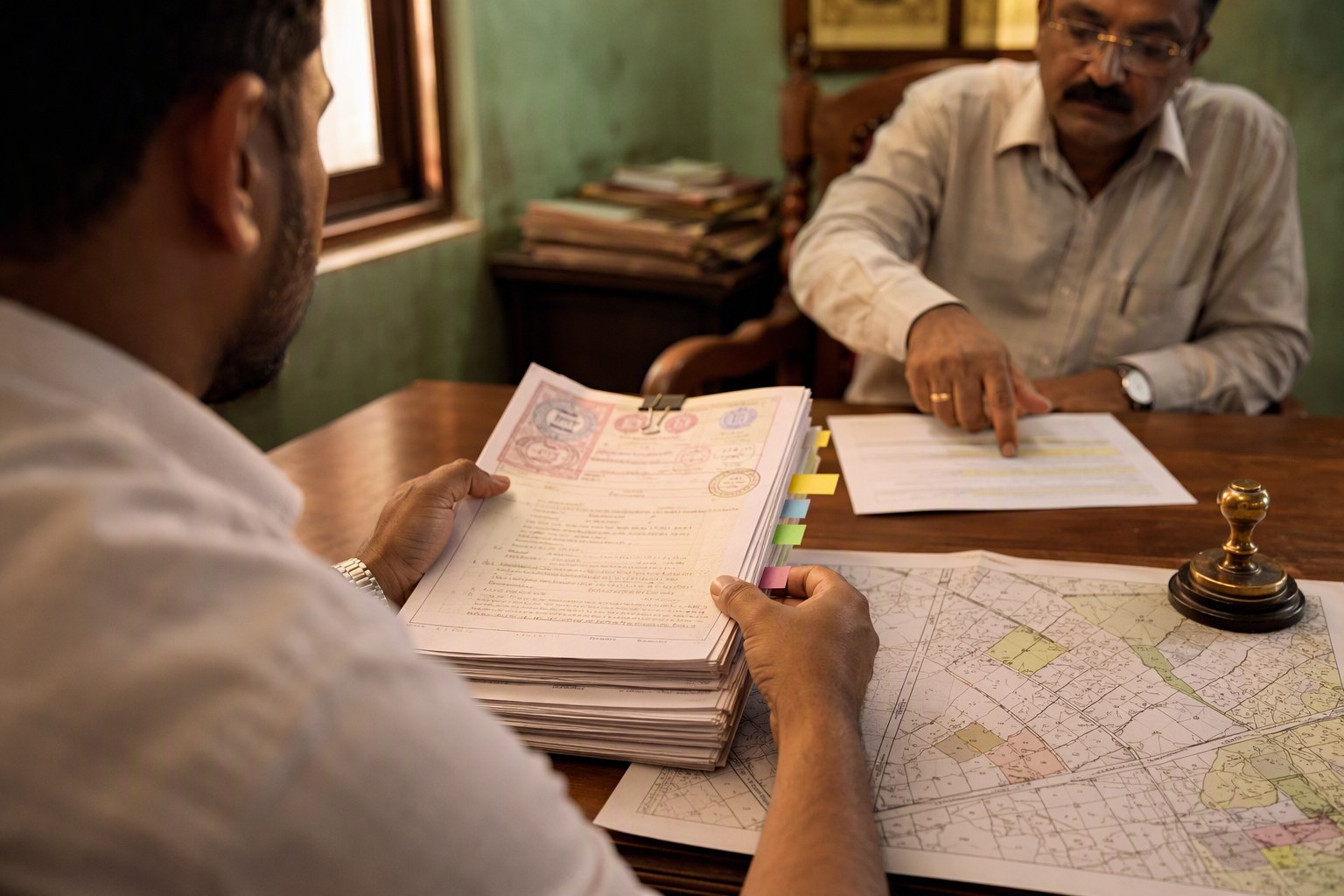
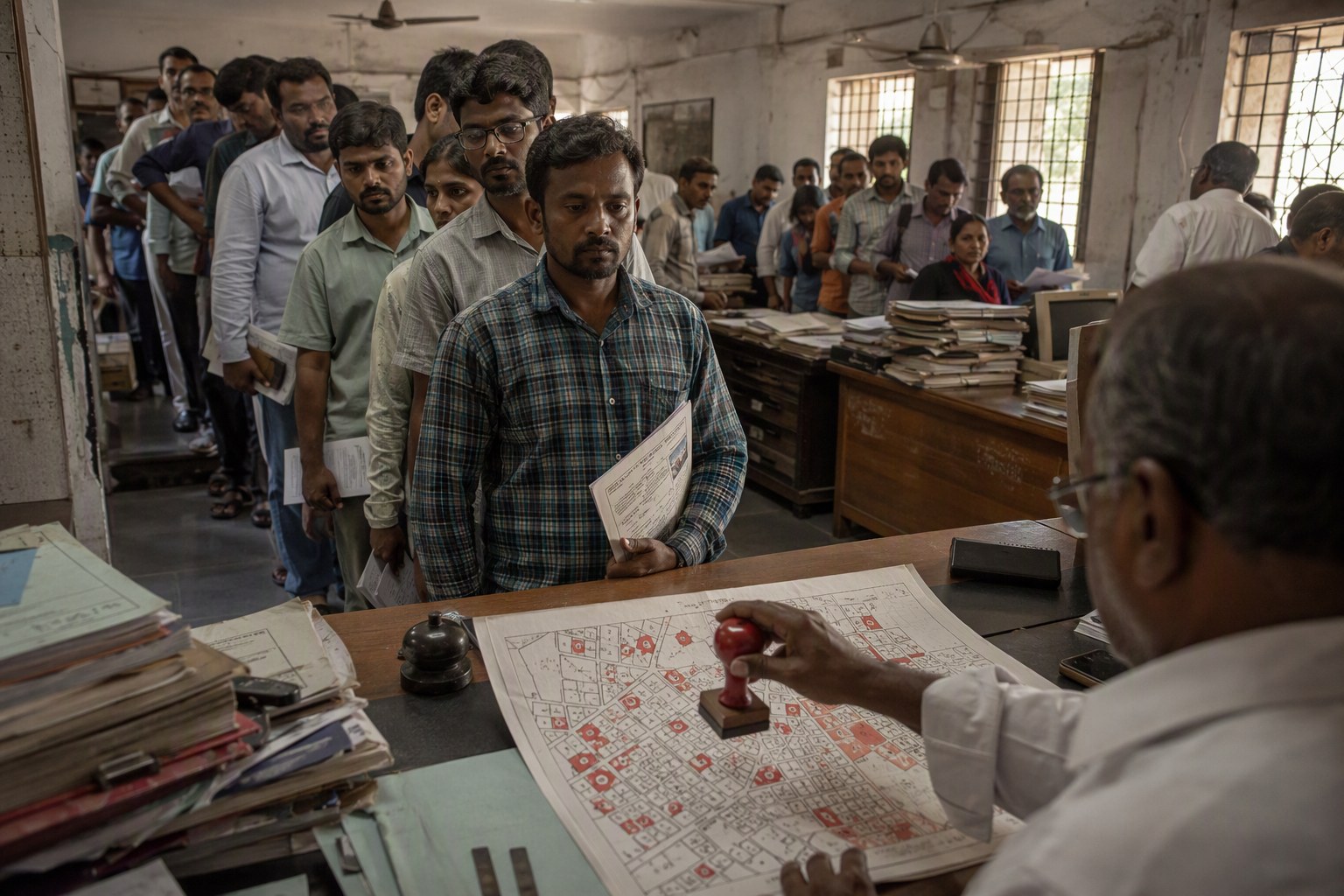
For a buyer, the queue outside an SRO is not just an inconvenience. It can be a warning signal. When multiple sale deeds from the same village, survey number belt, or layout pocket keep getting held back, returned, or pushed for clarification, that locality deserves deeper checking before token advance is paid.
Our view is simple: if registrations are slowing down around a particular village or mandal, don’t treat it as routine delay. Treat it as market intelligence.
Why Telangana Sub-Registrar Queues May Reveal 22-A Dispute Hotspots
Section 22-A of the Registration Act allows authorities to prohibit registration of certain categories of properties. In practical Telangana real estate language, this may include government land, assigned land, endowment land, wakf-linked land, court-disputed parcels, notified lands, and survey numbers blocked by competent authorities.
When a property falls under a prohibited list, the Sub-Registrar cannot casually register it just because the buyer and seller are ready. The SRO staff will typically check the survey number, village, document trail, market value, party details, and relevant prohibition entries. If the record shows a block or mismatch, the document can be refused or kept pending for clarification as per registration procedure.
This is where queues tell a story. In areas where land records are clean, sale deeds, gift deeds, and development agreements usually move in a predictable manner. In areas with repeated 22-A flags, the registration counter becomes slow. Agents keep going back with extra papers. Buyers wait. Sellers say “small technical issue”. Bank lawyers ask for one more document. That pattern is valuable.
We have seen this behaviour around fast-changing belts where agricultural land, plotted layouts, old pahanis, and new development claims overlap. Hyderabad’s western, northern, and southern edges have many such pockets: Patancheru, Tellapur, Mokila, Shankarpally, Maheshwaram, Tukkuguda, Shamshabad, Medchal, Ghatkesar, Keesara, Hayathnagar, Ibrahimpatnam, and Yacharam. Not every delay means fraud. But repeated refusal patterns around the same village or survey number belt should never be ignored.
Telangana Sub-Registrar Queues May Reveal 22-A Dispute Hotspots Before Buyers Pay Advances
Most buyers check title after paying token money. That is exactly where trouble starts. A seller may show an old registered deed, a passbook screenshot, or a pahani copy and create confidence. But Telangana land records can change because of government notifications, court orders, mutation disputes, assignment conditions, and departmental objections.
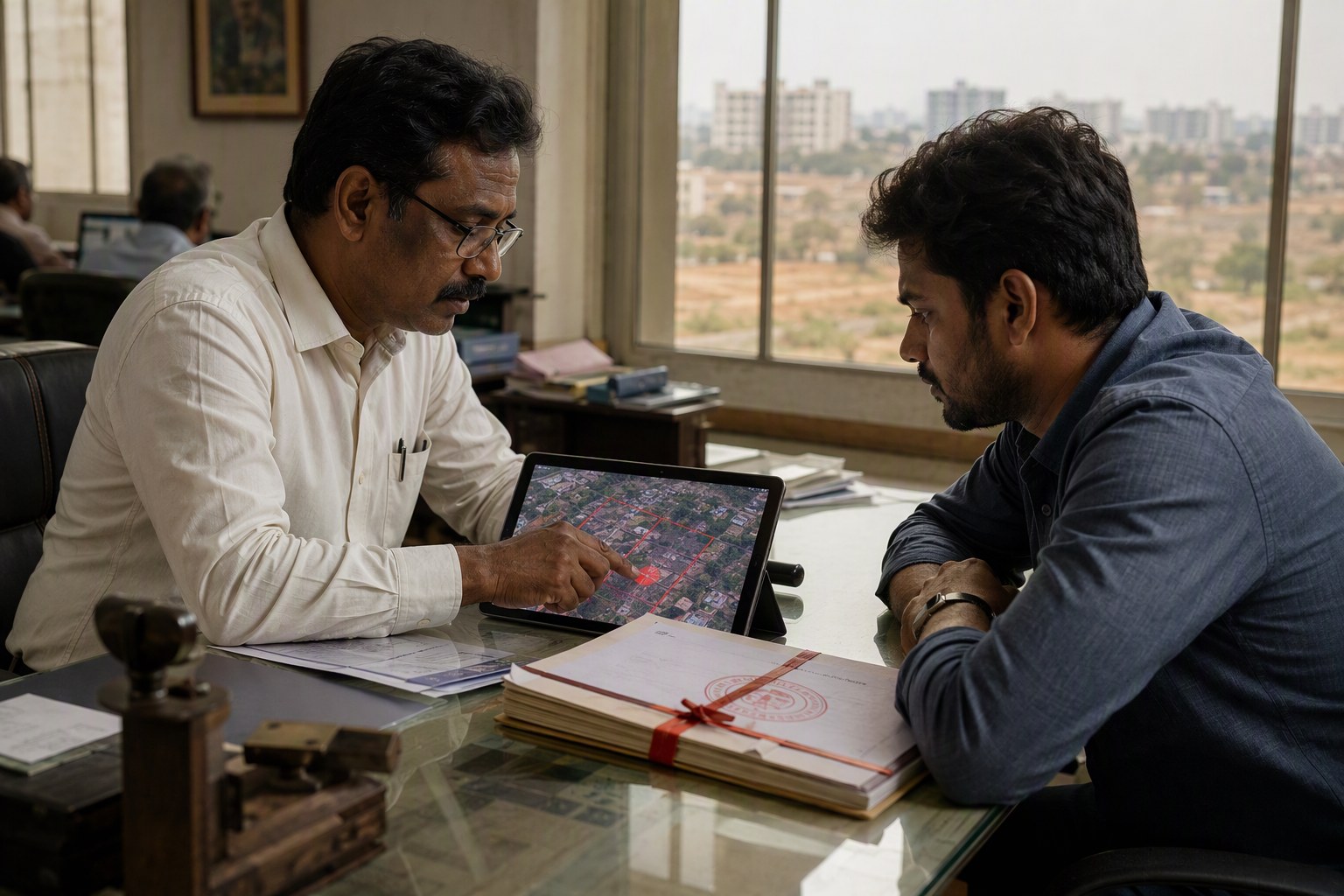
Before paying even a small advance, buyers should check whether the property is under Section 22-A using the Section 22-A Prohibited Property Check. The next step is to match the village, mandal, and survey number using the Survey Number Finder. If the property is an apartment or villa project, check project registration through the RERA Project Lookup. For older plots and resale flats, run the Encumbrance Certificate Search and read the chain properly.
In our experience, the riskiest cases are not always the obvious ones. Many problematic files come with polished layout maps, clean-looking sale deeds, and confident seller talk. The real issue may sit inside the survey number classification, a government memo, an assigned-land condition, an endowment claim, or a pending correction in Dharani.
How A Buyer Can Read SRO Delay Signals
No SRO will formally publish a “hotspot list” based on queue behaviour. But buyers, legal teams, and local property professionals can still read patterns. Here are the common signals we treat seriously:
- Repeated refusal for same village: If several documents from one revenue village are being returned, verify the village-level prohibition entries.
- Survey-number specific objections: A layout may be marketed under one brand name, but the risk may sit in one or two survey numbers inside the project.
- Sudden demand for old pahanis: When SRO or legal teams ask for older revenue records, it often means the present document is not enough.
- Dharani mismatch: Name, extent, nature of land, and survey subdivision mismatch can slow down registration and financing.
- Bank loan hold: If multiple banks are refusing or delaying loans in the same pocket, check 22-A and title history before blaming only bank policy.
- Agent insistence on cash advance: If the seller wants advance before allowing full verification, walk carefully.
Buyers should also identify the correct SRO using the Find Your SRO Office. Many buyers assume a Hyderabad address automatically means a particular registration office. But SRO jurisdiction follows village and locality mapping, not marketing brochures.
Why 3,076,153 Prohibited Property Records Matter
The number 3,076,153 is not a casual database count. It tells us that prohibited-property checking has become a core step in Telangana due diligence. A property may be physically visible, fenced, plotted, and even occupied. Still, if the land falls under a prohibited category, registration can be blocked.
For Hyderabad buyers, this matters because the city’s expansion is revenue-village driven. A flat in a gated community, a villa plot, or an open plot may all trace back to old survey numbers. Localities like Nanakramguda, Kokapet, Narsingi, Tellapur, Kollur, Mokila, Adibatla, Tukkuguda, Bowrampet, Dundigal, Ghatkesar, and Shamirpet have seen rapid conversion from agricultural or peri-urban land to real estate assets. That transformation creates value, but it also creates paperwork risk.
One small correction here: a 22-A entry does not automatically mean the seller is a cheat. Sometimes the entry is old, wrongly mapped, or later clarified by authorities. But buyers should not accept verbal assurances. Ask for written clarification, certified copies, proceedings, and legal opinion. If needed, insist that the seller clears the issue before agreement registration.
Registration Refusal Is Not The Same As Market Rumour
Real estate rumours spread fast in Hyderabad. One failed registration becomes ten WhatsApp warnings. That is not reliable due diligence. A proper check must separate rumour from record.
Start with the document trail. Look at the parent deed, link documents, mutation entries, pahanis, pattadar passbook details, EC history, layout permissions, building permissions, RERA status where applicable, and SRO market value. To verify government valuation, use the Market Value / Guideline Value Search. For duty planning, the Stamp Duty Calculator helps estimate payable charges based on declared value and applicable rules.
If you are buying a flat, do not stop at the flat sale deed. Check the underlying land. Many apartment buyers in Hyderabad only verify the builder’s agreement and RERA page. That is not enough when land title is weak. Use the Property Verification Tool to structure checks before payment.
What Sellers And Developers Should Learn From These Queues
Developers and landowners should not treat 22-A checks as buyer-side irritation. If a survey number has any prohibition history, clarify it before launching a layout, villa phase, or apartment block. A clean legal file sells faster than a discount.
For plotted layouts, give buyers the village name, mandal, survey numbers, layout approval details, link documents, and latest EC. For apartments, share land title documents, development agreement, GPA if any, RERA registration, sanctioned plan, and mortgage release details where applicable. If there was a past objection at SRO, disclose the present status with proof.
Hyderabad buyers have become sharper after seeing disputes in peri-urban land belts. A seller who says “registration ayipothundi, tension ledu” without documents is no longer convincing. The market is slowly rewarding transparent documentation.
Practical Buyer Checklist For 22-A Risk Areas
| Step | What To Check | Why It Matters |
|---|---|---|
| 1 | Village, mandal, and survey number | 22-A entries usually attach to land identity, not brochure names. |
| 2 | Prohibited-property status | Registration can be refused if the property is blocked. |
| 3 | EC and link documents | Shows past transfers, mortgages, and document continuity. |
| 4 | Dharani and pahani consistency | Mismatch in land nature or ownership can create SRO delays. |
| 5 | SRO jurisdiction | Wrong assumptions about office jurisdiction waste time. |
| 6 | RERA status for projects | Useful for apartments, villas, and plotted developments covered by RERA. |
Keep one more rule. If the seller is pushing for urgent payment because “another buyer is ready”, pause. In Hyderabad land deals, speed benefits the party with better information. Verification benefits the buyer.
Telangana Sub-Registrar Queues May Reveal 22-A Dispute Hotspots, But They Are Only One Clue
Queue behaviour is useful, but it is not final proof. The correct approach is to combine SRO observations with official records, certified documents, Dharani entries, EC review, and legal opinion. A crowded SRO counter can alert you. The records must confirm the risk.
For buyers in Telangana, the lesson is clear. Do not judge land only by location, price, road width, or builder reputation. Check the revenue identity first. Survey number, village, mandal, and SRO record are the foundation. If that foundation is shaky, even a prime-looking property can become a long legal headache.
We will be watching whether registration refusal patterns become a more visible early-warning signal in the Hyderabad market. Till then, serious buyers should create their own discipline: check 22-A, verify EC, identify the correct SRO, compare guideline value, and never pay major money on oral comfort.
Frequently Asked Questions
Can Telangana Sub-Registrar queues really indicate 22-A dispute hotspots?
They can indicate possible risk clusters, especially when delays or refusals repeatedly involve the same village, mandal, or survey-number belt. But queue behaviour is only an early signal. Buyers must verify official 22-A records, EC, Dharani details, and title documents.
What is a Section 22-A prohibited property in Telangana?
It is a property that may be restricted from registration under Section 22-A of the Registration Act. Such properties can include government land, assigned land, endowment or wakf-related land, disputed land, and other notified categories, depending on official records.
Should I pay advance if the seller says 22-A issue is only technical?
Do not rely on oral assurance. Ask for written clarification, certified copies, latest EC, revenue records, and legal opinion. If the property is blocked or unclear, the safer position is to make the seller resolve it before you pay a major advance.
Which details are needed to check 22-A risk?
You need the district, mandal, village, survey number or sub-division number, property extent, and seller details. For flats, you should also check the underlying land documents and not just the apartment sale agreement.
Is RERA approval enough to ignore 22-A checks?
No. RERA registration is useful for project-level compliance, but buyers should still verify land title, EC, prohibited-property status, permissions, and mortgage details. Land risk and project compliance are connected but not the same thing.