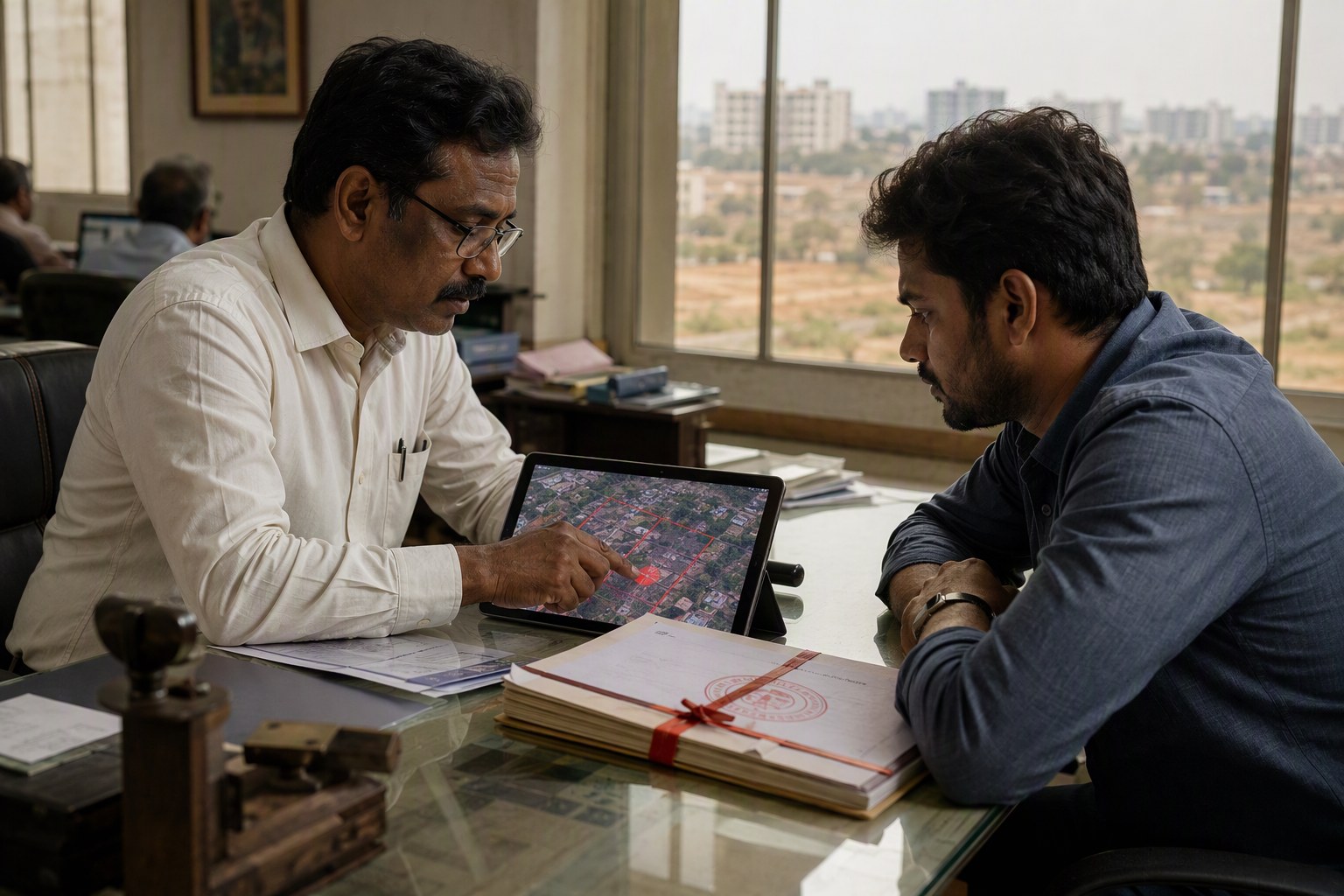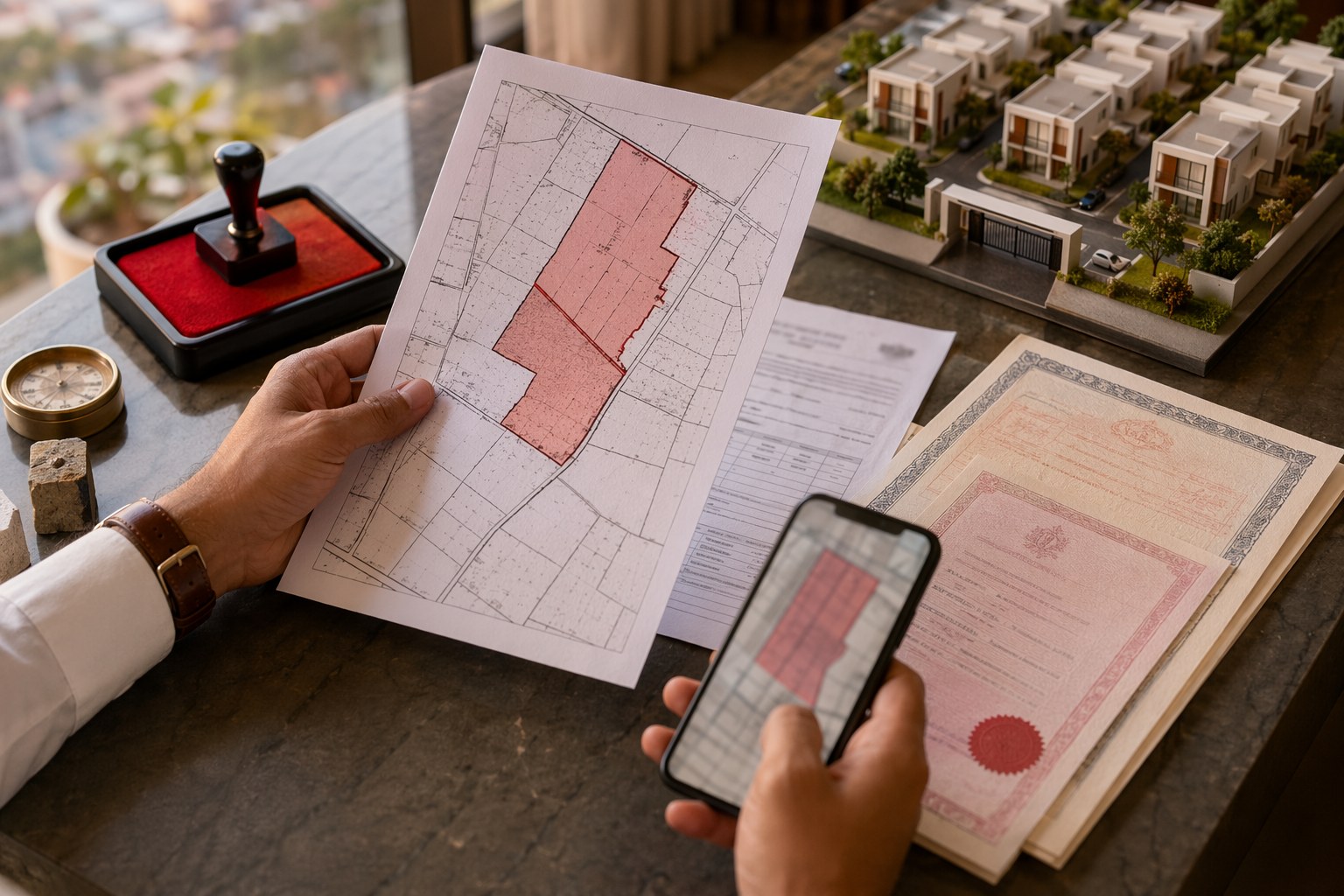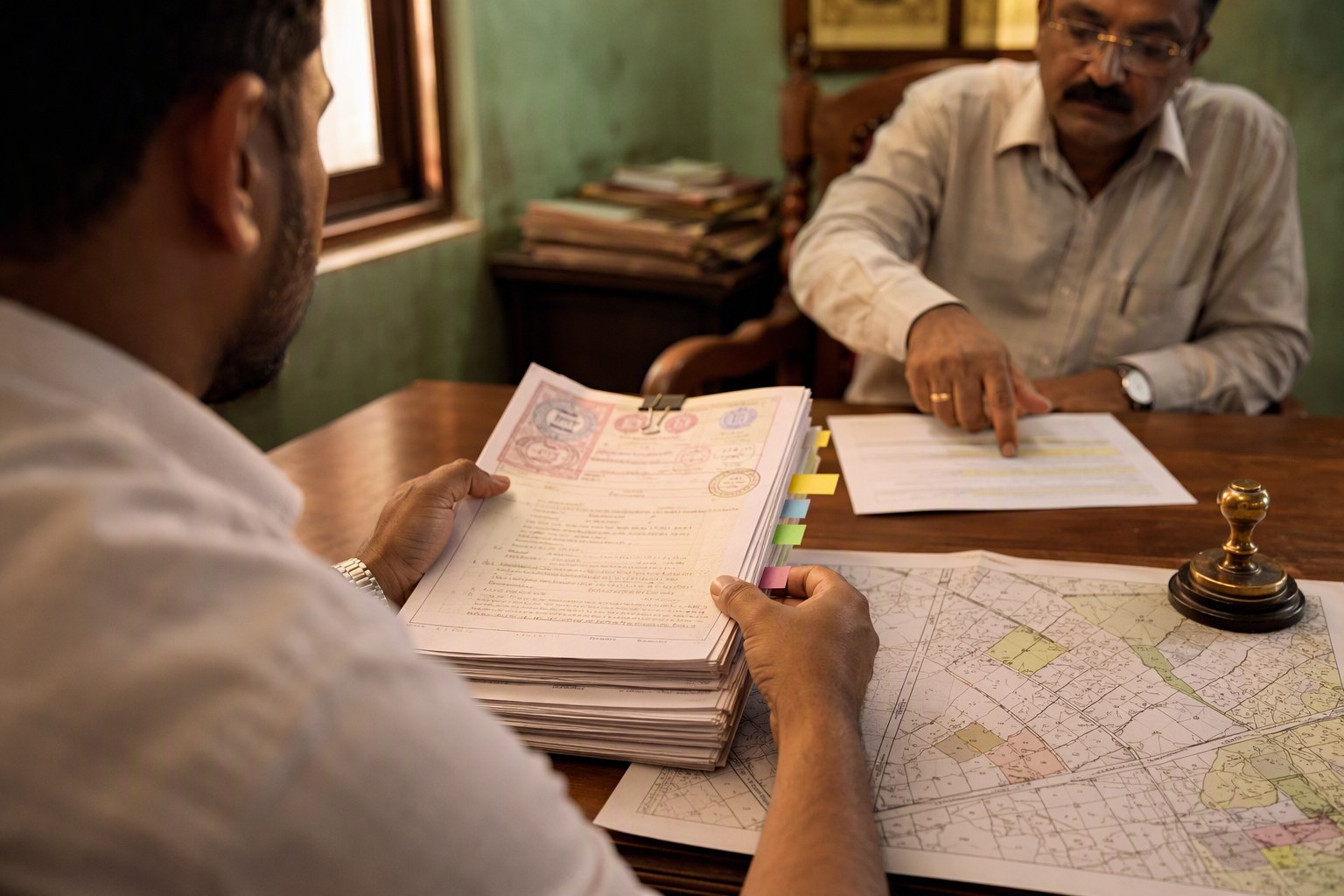
Telangana May Add Reason Codes to 22-A Registration Refusals, a move that could make life easier for buyers, sellers and landowners who currently face a plain refusal at the SRO counter without enough explanation. For a state dealing with 3,076,153 prohibited property records under Section 22-A, even a small change in how refusals are explained can reduce confusion, repeated office visits and risky token advances.
The proposed idea is simple: when a document is refused for registration because a property is on the prohibited list, the refusal note may carry a clear reason code. That code can point to the broad ground of refusal — government land, assigned land, endowment issue, court order, wakf-related entry, ceiling land, acquisition marking, or another notified restriction. The final format will depend on the registration department’s implementation, but the direction is welcome.
In our experience, the biggest pain point is not always the refusal itself. It is the silence around the refusal. A buyer in Manikonda, a farmer in Shankarpally, and an NRI family selling ancestral land in Hayathnagar all need the same thing — a clear reason they can act on.
Telangana May Add Reason Codes to 22-A Registration Refusals: Why this matters
Section 22-A entries are meant to stop registration of properties that cannot be legally transferred. The problem is that the list is very large, and the ground-level experience is uneven. One SRO may communicate orally. Another may ask the party to check with revenue officials. In some cases, the landowner is told only that the survey number is “22-A lo undi” — it is in the prohibited list.
That answer is not enough when people have already paid an advance, arranged bank loans, collected link documents, applied for EC, checked pahani extracts, and booked a slot. Hyderabad’s real estate market runs on speed, but land records move through older layers: village maps, sethwar, pahani, ROR, dharani entries, court orders, acquisition notifications, endowment records and SRO indexes.
Reason-coded refusal notes can create a first layer of clarity. They will not automatically clear the property. They will not replace legal due diligence. But they can tell a citizen where to go next — Tahsildar office, District Collector, Endowments Department, Wakf Board, civil court, or the registration department itself.
Telangana May Add Reason Codes to 22-A Registration Refusals: The buyer impact
For urban buyers, this is especially relevant in growth corridors where old village lands have become high-value real estate. We have seen buyers checking plots in Tellapur, Narsingi, Kollur, Mokila, Tukkuguda, Adibatla, Ghatkesar and Kompally with only a layout copy and a few sale deeds. That is not enough anymore.
Suppose a buyer is considering land in a village under Shankarpally mandal. The seller may have a sale deed and pattadar passbook. The EC may show past transactions. The market value may be available on the registration portal. Still, if the survey number is in Section 22-A, the SRO can refuse registration. A reason code can tell whether the issue is assigned land, government claim, court restraint or some old notification that needs correction.
Before paying a token advance, buyers should use the Section 22-A Prohibited Property Check, verify the SRO through Find Your SRO Office, and cross-check the survey number with Survey Number Finder. These checks do not replace an advocate’s title opinion, but they catch many avoidable mistakes early.
What a reason code can actually solve
A reason code is useful because it converts a vague refusal into a trackable issue. Today, many parties waste time submitting the wrong representation. A person facing an endowment-related objection may approach revenue officials. A person affected by a wrong survey number entry may keep chasing the SRO. A bank may hold the file without telling the buyer what exact clearance is pending.
Here is how coded refusal notes could help in practice:
| Current problem | How a reason code may help | Likely next step |
|---|---|---|
| SRO says the property is in 22-A, but gives no clear ground | Refusal note identifies the category of prohibition | Approach the relevant department with documents |
| Buyer cannot decide whether to wait or cancel the deal | Reason shows whether it is a curable record error or a serious title block | Take legal opinion before paying further amount |
| Seller claims it is a “small technical issue” | Written reason reduces guesswork and casual assurances | Ask seller for clearance proof |
| Bank loan is stuck due to land record mismatch | Lender gets a clearer compliance trail | Submit department clarification or corrected record |
The biggest advantage is accountability. If the refusal reason is written, the landowner can challenge it properly. If the entry is correct, the buyer is saved from a bad purchase. If the entry is wrong, there is at least a defined path for correction.
Section 22-A list size shows why clarity is needed
As per the Verified.RealEstate database, Telangana has 3,076,153 prohibited property records under Section 22-A. That is not a small administrative footnote. It affects agricultural lands, plotted layouts, old gram panchayat areas, peri-urban mandals and even families trying to settle inheritance matters.
In Hyderabad and surrounding districts, the issue often appears in mandals such as Serilingampally, Rajendranagar, Gandipet, Shankarpally, Moinabad, Maheshwaram, Medchal, Keesara, Hayathnagar and Abdullapurmet. These are not sleepy land markets. These are active zones where buyers compare guideline value, road width, zoning, RERA status and future resale potential before committing money.
For flats, buyers generally focus on RERA, building permissions and EC. For land, especially survey-number-based property, Section 22-A becomes one of the first checks. Along with the Encumbrance Certificate Search, buyers should also check market value through Market Value / Guideline Value Search and calculate registration outgo using the Stamp Duty Calculator. If the land itself is blocked, stamp duty calculation is only academic.
What landowners should do if their property is refused
If your document is refused at the SRO, do not rely only on verbal comments. Ask for the written refusal order or refusal note. If reason codes are introduced, preserve that code and the wording. It will help your advocate or consultant identify the correct department and prepare a focused representation.
Landowners should keep these records ready:
- Old and current sale deeds, gift deeds, partition deeds or inheritance documents
- Latest EC and older ECs where required
- Pahani, ROR and dharani-related extracts, wherever applicable
- Survey number, sub-division details and village name
- Mutation proceedings, if any
- Court orders, stay orders or decrees, if the land was under litigation
- Collector or Tahsildar correspondence, if any earlier representation was filed
Many owners discover problems only when they try to sell. Some entries are genuine restrictions. Some may be legacy mistakes. Some arise from survey number confusion after subdivision or village record changes. A reason-coded refusal will not decide ownership, but it can reduce blind running between offices.
What buyers should check before signing an agreement
My practical view is simple: do not treat an EC as a full title clearance. EC shows registered transactions. It does not certify that the land is free from every government restriction. For land in Telangana, especially outside dense municipal apartment markets, the due diligence checklist must include Section 22-A, dharani status, village revenue records, zoning and physical possession.
Before signing an agreement of sale, buyers should:
- Check whether the survey number is on the prohibited list
- Confirm the correct SRO and village jurisdiction
- Compare seller name with revenue records and title deeds
- Verify whether the land is agricultural, converted, layout-approved or part of a larger survey extent
- Look at surrounding access, road width and land use restrictions
- Take an independent legal opinion, not only the seller’s advocate note
For plotted ventures, also check layout approval and RERA where applicable through RERA Project Lookup. For independent land parcels, use Property Verification Tool and keep monitoring changes through Property Change Tracker. In fast-moving areas like Kollur, Mokila, Tukkuguda and Medchal, one wrong assumption can block the entire registration plan.
Will reason-coded refusals reduce disputes?
They can reduce confusion, but disputes will not disappear. Telangana’s land history is layered. One survey number may have old assignment records, later sale deeds, family partitions, layout proposals and revenue corrections. A reason code is only the opening line of the file, not the final judgment.
Still, this is a useful reform if implemented properly. The SRO counter should not become a mystery box. Citizens deserve a refusal that explains the ground in plain terms. A buyer should know whether the risk is legal, revenue-related, departmental or clerical. A genuine landowner should know which authority has to correct the record.
For the market, clarity is healthy. Good properties move faster. Problem properties get flagged earlier. False assurances reduce. Banks, advocates, brokers and families can all work with better information. In a state with 3,076,153 Section 22-A prohibited property records, reason-coded refusal notes are not a small paperwork change; they are a practical citizen-facing improvement.
Frequently Asked Questions
What are 22-A registration refusals in Telangana?
They are refusals by the registration office when a property is listed as prohibited under Section 22-A. The restriction may relate to government land, assigned land, endowment land, court orders or other notified issues.
How will reason codes help buyers?
Reason codes can show the broad ground for refusal. This helps buyers decide whether to seek legal clarification, ask the seller for clearance, approach a department or walk away from the deal.
Can a property be registered if it appears in the 22-A list?
Generally, the SRO will not register a prohibited property unless the entry is removed, corrected or clarified by the competent authority. The exact remedy depends on the reason for the 22-A entry.
Is an Encumbrance Certificate enough to check land title?
No. An EC shows registered transactions, but it may not reveal every revenue restriction, government claim or 22-A prohibition. Buyers should check EC, pahani or dharani records, SRO jurisdiction and prohibited property status.
Which tools should I use before buying land in Telangana?
Start with the Section 22-A Prohibited Property Check, Encumbrance Certificate Search, Survey Number Finder, Find Your SRO Office and Market Value / Guideline Value Search. For high-value deals, take an independent title opinion also.