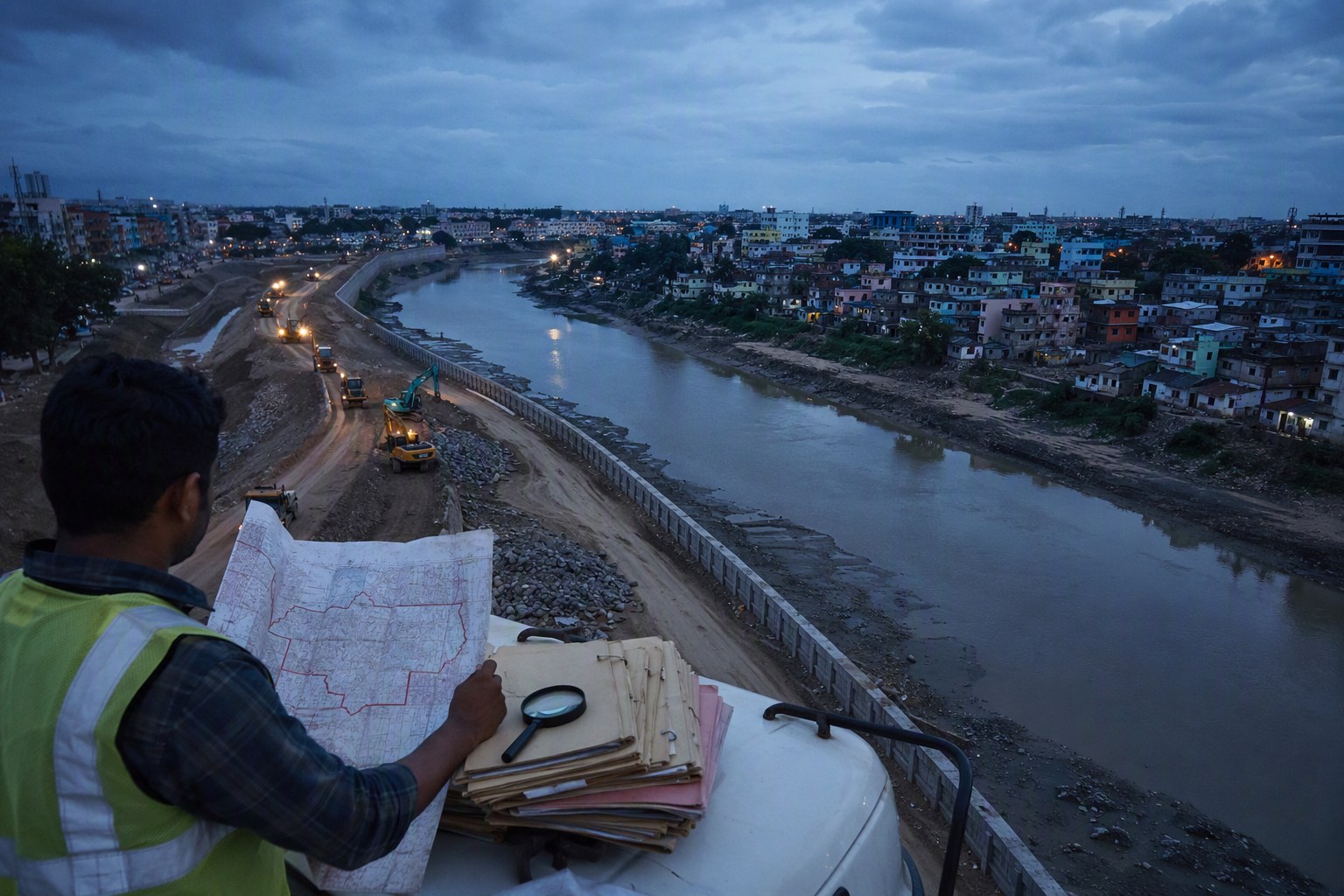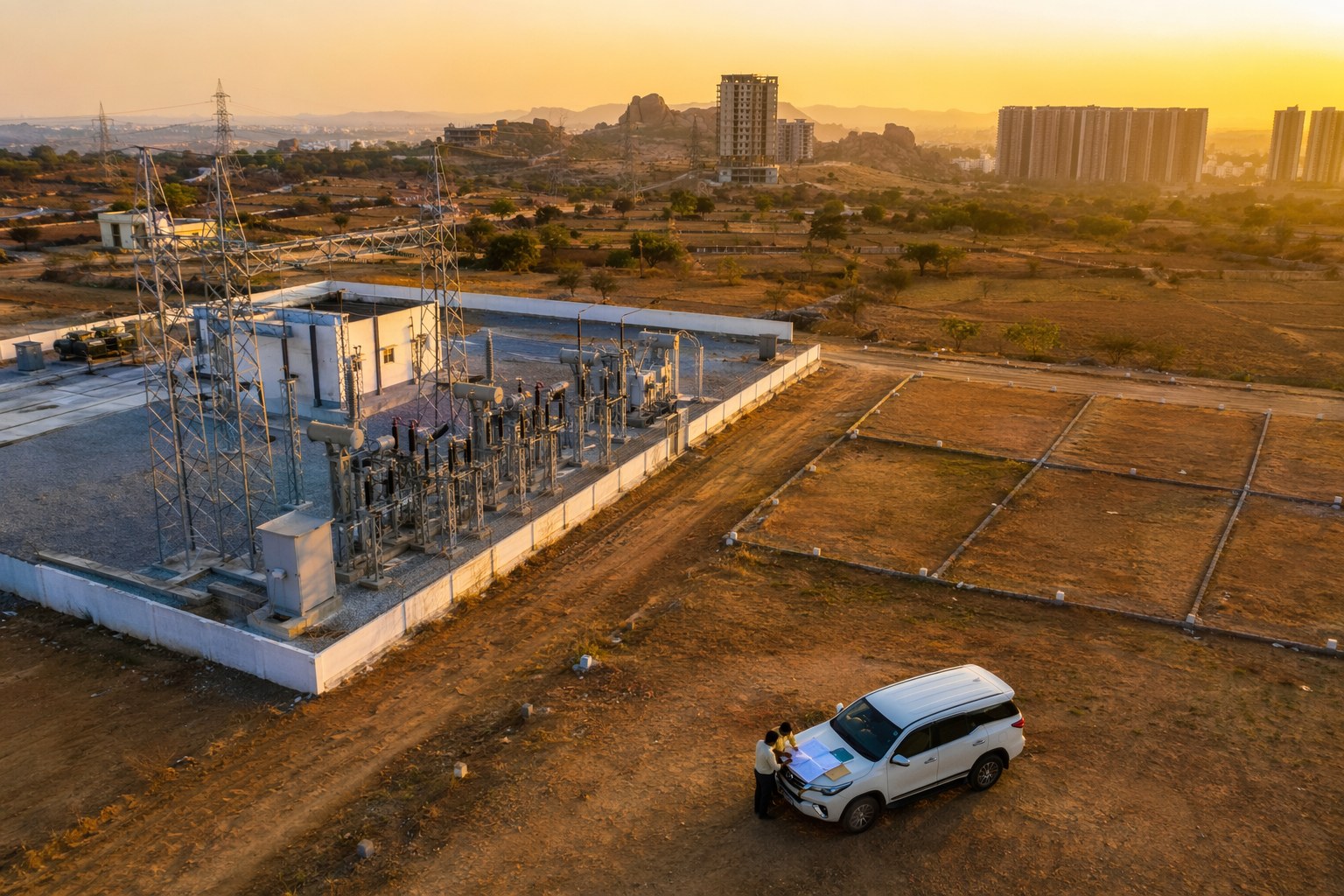



Telangana Sewerage Grid Works are likely to bring a fresh layer of title scrutiny for landowners, developers and buyers wherever sewer lines, pumping mains, STP approach roads and maintenance corridors pass through private or disputed parcels. The key issue is not only ownership. It is whether the land has a clean right of access, a recorded easement, a usable road width, and no Section 22-A restriction blocking registration or future transfer.
As per the latest IGRS-linked prohibited property dataset available with Verified.RealEstate, Telangana has 3,076,153 entries under Section 22-A prohibited properties. In plain language, that means a very large pool of survey numbers, extents or property references needs extra caution before any transaction. If sewerage infrastructure touches such land, even routine development decisions can become slow: permissions, layout approvals, mortgage checks, sale deeds and future handovers may all need better documentation.
Our view is simple: sewerage infrastructure is good for the city, but buyers should not assume that a road-facing plot automatically has legally usable access for underground utilities.
Telangana Sewerage Grid Works: Why Easement Checks Are Coming Into Focus
Sewerage networks are not like a compound wall or a small borewell pipeline inside one property. They need alignment continuity. A line may pass from one survey number to another, cross a village road, enter a layout road, touch a nala buffer, run along a service road, or require a pumping station near a low-lying point. In Hyderabad’s growth corridors, this becomes legally sensitive very quickly.
Take the belt from Kokapet and Narsingi in Gandipet mandal towards Tellapur and Kollur in the western corridor. Many parcels have moved from agricultural pahani records to layouts, gated communities and apartment projects. In Bachupally, Pragathi Nagar, Miyapur, Nizampet, Kompally, Uppal, Peerzadiguda, Shamshabad and Adibatla also, older village access tracks sit next to newer municipal roads. A sewer line may be planned along what everyone calls a road, but the title record may still show private patta land, government land, assigned land, waqf/endowment claim, nala, or a portion under dispute.
That is where easement becomes central. An easement is a right enjoyed over another person’s land for access, drainage, utilities or similar use. In real estate practice, we see many buyers check only the sale deed and EC. That is not enough when major utilities are proposed. You must also check whether the access road and utility corridor are legally recognised.
Telangana Sewerage Grid Works and the 3,076,153 Section 22-A Entries
Section 22-A entries can restrict registration of certain properties. The reasons vary across cases: government land claims, assigned land restrictions, endowment or waqf issues, court orders, ceiling surplus references, or other prohibited categories. We are not saying every 22-A entry will affect a sewerage alignment. But with 3,076,153 prohibited property entries in Telangana, public infrastructure and private title verification are now overlapping more often.
For a buyer in a fast-growing locality, the risk is practical. Suppose a villa plot near Mokila, a small apartment site in Peerzadiguda, or a commercial parcel near Shamshabad depends on an access strip for drainage and sewer connectivity. If that strip is later found to be restricted, unregistered, disputed or not part of the approved layout, the property may still exist physically but become difficult for permissions, bank funding or resale.
Before paying an advance, buyers should run a basic title stack check using Section 22-A Prohibited Property Check, Encumbrance Certificate Search, and Survey Number Finder. For apartment projects, also check the project record through RERA Project Lookup. These checks will not replace a lawyer’s opinion, but they will help you ask sharper questions at the right time.
What Developers Should Recheck Before Marketing Plots Or Flats
Developers in affected corridors should not treat sewerage access as a last-stage engineering matter. It is a title matter too. In our experience, projects face delays when the engineering drawing assumes a route, but the registered documents do not support that route.
Before opening bookings, developers should recheck:
- Access road title: Is the road public, private, gifted to the local body, part of an approved layout, or only a physical pathway?
- Utility easement: Does the sale deed, development agreement, layout approval or registered document mention drainage, sewerage and maintenance access?
- Survey number status: Are all linked survey numbers clean in Dharani, IGRS and local revenue records?
- 22-A impact: Is any portion of the approach road, STP site, buffer land or utility route under a prohibited category?
- Road width: Does the actual road width match permissions, fire access and municipal requirements?
- Maintenance rights: Can the authority, association or utility agency enter the corridor later for repairs?
For built-up projects, this also links to valuation. If a property has a clean flat sale deed but the common access or utility rights are weak, future buyers will discount risk. Use Market Value / Guideline Value Search and Stamp Duty Calculator for transaction planning, but do not confuse ready reckoner value with title safety.
Localities Where Buyers Should Be More Alert
This issue is not limited to one municipality. The risk is sharper in places where urban expansion has moved faster than record correction. I would be extra alert in these types of locations:
- Western Hyderabad: Kokapet, Narsingi, Puppalaguda, Tellapur, Kollur, Mokila and Velimela, where large projects sit beside old village boundaries and fast-changing roads.
- Northern corridor: Bachupally, Nizampet, Kompally, Dundigal and Medchal-side pockets, where layouts have expanded across mixed land histories.
- Eastern corridor: Uppal, Peerzadiguda, Boduppal, Ghatkesar and Pocharam, where older gram panchayat permissions and newer municipal rules often meet.
- Southern growth belt: Shamshabad, Kothur, Tukkuguda, Maheshwaram and Adibatla, where industrial, residential and infrastructure uses overlap.
In these belts, ask for the village name, mandal, survey number, layout approval copy, link documents, latest EC, mutation status, and any proceedings related to road gifting or public utility access. If the seller gives only a brochure and a Google Maps pin, that is not enough.
How Buyers Can Check Easement And Right-Of-Way Risk
A practical buyer check can be done in four stages.
1. Start with the survey number, not the apartment name
Every land risk starts at the survey number level. Project names change. Marketing names change. Survey numbers remain the real base record. Use Survey Number Finder and cross-check with the sale deed schedule.
2. Check the EC and link documents
The EC should be read with link documents, not separately. Look for mentions of pathway rights, common roads, drainage rights, development agreements, GPA documents, partitions and court references. The EC Analyzer can help you review entries before taking a legal opinion.
3. Check Section 22-A status
If any linked land parcel, approach road or utility strip appears under Section 22-A, pause. Do not rely on verbal assurances like “regularisation will come soon” or “everyone has bought here only”. Use Section 22-A Prohibited Property Check and then verify with the concerned SRO or revenue office.
4. Locate the correct SRO and village record
Many buyers in Hyderabad assume the nearest SRO is automatically the right office. That is not always true. Boundaries can be tricky near municipal limits and mandal edges. Use Find Your SRO Office or SRO Village Directory before applying for certified copies or clarifications.
What This Means For Property Prices
We should be realistic here. Sewerage grid and STP-linked works usually improve long-term liveability. Areas with better drainage and wastewater systems tend to become more acceptable for families, lenders and institutional buyers. But during the construction and title-clarification phase, some plots may face buyer hesitation.
Clean-title projects with registered access, proper road width and clear utility rights may gain trust faster. Properties depending on informal roads, unregistered passage rights or disputed strips may have to answer harder questions. This is especially true for plotted layouts and small standalone apartment blocks where documentation quality varies widely.
For end-users, the safest approach is not to avoid growth corridors. It is to verify them better. Good infrastructure plus clean title is a strong combination. Good infrastructure plus weak easement documentation is where trouble starts.
Telangana Sewerage Grid Works: Bottom Line For Buyers And Landowners
Telangana Sewerage Grid Works may improve urban services, but they also bring title clarity into the spotlight. If your property depends on a shared road, private passage, nala-side alignment, layout road, or unregistered access strip, treat easement verification as a must-do item.
Ask for documents. Check the survey number. Review the EC. Verify 22-A status. Confirm the SRO. If the land is part of a bigger project, check RERA details and approved plans. A little caution before token advance can save years of paperwork later.
At Verified.RealEstate, we have seen one pattern repeatedly: buyers who verify land records early negotiate better and sleep better. Sewerage infrastructure is welcome. But in Telangana’s title environment, underground lines can expose above-ground legal gaps.
Frequently Asked Questions
Will Telangana Sewerage Grid Works affect my property title?
Not automatically. But if the sewer line, STP access road or utility corridor passes through or depends on your land, shared road or disputed strip, your easement and right-of-way documents may need closer review.
Why is Section 22-A relevant for sewerage infrastructure?
Section 22-A entries can restrict registration of certain properties. Telangana has 3,076,153 such entries in the dataset used here, so buyers and developers should check whether any linked survey number, access road or utility strip is affected.
What documents should I ask for before buying in an affected area?
Ask for the sale deed, link documents, EC, survey number details, layout approval, road gifting documents if any, pahani or revenue records, Dharani status, RERA details for projects, and any easement or drainage rights mentioned in registered papers.
Is a physical road enough proof of right-of-way?
No. A physical road on site is only practical access. Legal access should be supported by approved layout records, registered documents, public road status, or clearly recorded easement rights.
Which tool should I use first for checking risk?
Start with the Section 22-A Prohibited Property Check, then review the Encumbrance Certificate and survey number details. For flats, also verify the RERA project record.