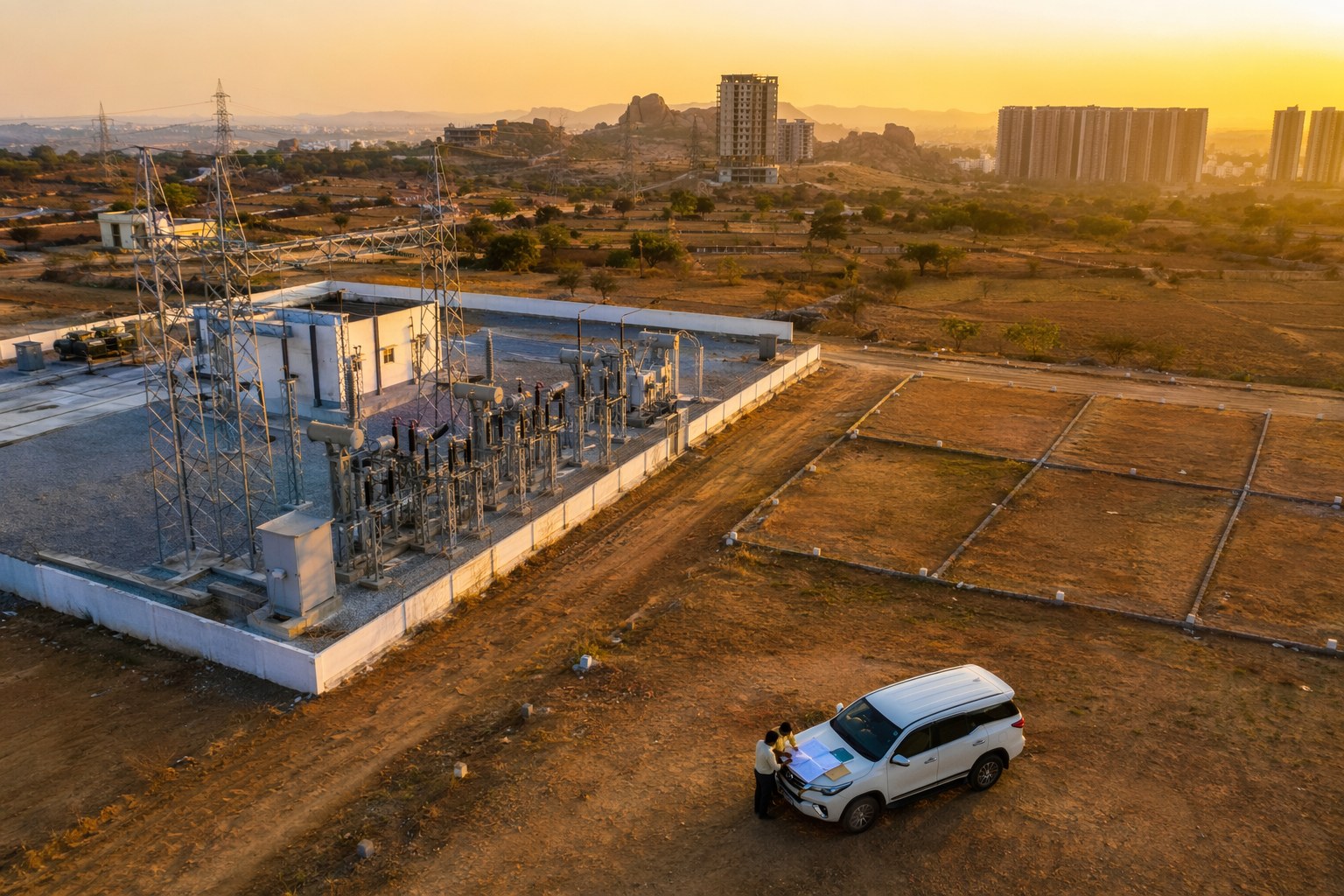



Telangana REIT Investors May Seek 22-A Exposure Notes before funding land-backed real estate assets in and around Hyderabad, as prohibited-property checks move from a legal formality to a board-level risk item. The trigger is simple: Telangana’s Section 22-A prohibited properties database carries 3,076,153 records as per latest IGRS data. For institutional capital, that is not a small back-office concern. It can affect underwriting, exits, lender comfort and investor reporting.
In our experience, large investors do not get nervous only because land has a dispute. They get nervous when the dispute is not disclosed early, quantified properly, or tracked till registration. That is where a 22-A exposure note may become a standard attachment in investment memos, especially for plotted development, warehousing, mixed-use townships and land aggregation plays.
Why Telangana REIT Investors May Seek 22-A Exposure Notes Now
Section 22-A of the Registration framework deals with properties where registration can be prohibited or restricted. In practical Hyderabad market language, buyers call it the “prohibited list”. If a survey number, village record or government classification falls into this category, the SRO may not allow normal registration unless the issue is clarified or removed through the right administrative process.
For a retail buyer, the problem may show up at the time of sale deed registration. For a REIT-style investor, the problem shows up much earlier: during term-sheet discussion, land due diligence, escrow release, lender review and asset onboarding. If a future income-generating asset is backed by land that has unresolved 22-A exposure, the investor’s exit story becomes weaker.
We have seen this concern come up more often in growth corridors like Kokapet, Narsingi, Kollur, Tellapur, Mokila, Shankarpally, Tukkuguda, Adibatla, Shamshabad and Patancheru. The same issue can appear in older urban pockets too, particularly where historical revenue records, assigned land entries, ceiling land questions, endowment claims or government land notings are mixed with private transactions.
My view is clear: for institutional money, “title is clear” is no longer enough. The file must say whether the survey number has 22-A exposure, what kind of exposure it is, who has certified it, and whether it is being monitored till registration.
What Telangana REIT Investors May Seek 22-A Exposure Notes To Cover
A useful 22-A exposure note is not a long legal essay. It should be a clean risk paper that an investment committee can read without calling the land team ten times. The best notes will likely cover the following:
- Asset identification: village, mandal, district, survey numbers, extent, boundaries and present possession status.
- Revenue record trail: pahani, Dharani entries where applicable, mutation history and classification of land.
- Registration risk: whether the SRO system reflects any prohibition or alert affecting sale, mortgage, gift, lease or development rights.
- Nature of 22-A exposure: government land, assigned land, endowment, wakf, ceiling, court attachment or other restricted category, wherever applicable.
- Commercial impact: whether the issue affects the whole parcel or only part of the land bank.
- Remedy path: whether clarification, NOC, record correction, de-notification or litigation closure is required.
- Monitoring plan: who will track changes before fund release, project launch and registration.
This is where practical verification tools matter. Before signing a non-binding term sheet, investors and developers can run a first-level check through the Section 22-A Prohibited Property Check, validate location details through the Survey Number Finder, and study past transactions through the Encumbrance Certificate Search. For pricing discipline, the Market Value / Guideline Value Search is also useful, especially when internal valuation and SRO market value do not tell the same story.
Why 3,076,153 Prohibited Property Records Matter To Capital
The number 3,076,153 is the main reason this subject cannot be brushed aside as a rare registration glitch. It signals the scale at which prohibited-property entries exist in Telangana’s land administration ecosystem. Not every record will hit a REIT-grade asset. Not every entry means a parcel is permanently unusable. But for investors, the existence of such a large database means the question must be asked every time.
A REIT-style investor generally thinks in layers: land title, approvals, construction risk, leasing risk, operating income and exit. Section 22-A sits right at the bottom of that stack. If the base land is uncertain, everything above it carries a discount. This is especially relevant for land-backed assets that are expected to become rental-yield products later, such as logistics parks near ORR exits, commercial blocks in Financial District-adjacent areas, or build-to-suit campuses in western Hyderabad.
In places like Serilingampally mandal, Gandipet mandal, Rajendranagar mandal, Hayathnagar mandal and Maheshwaram mandal, land values are driven by access, zoning, road width, approvals and future development potential. But the real rate conversation must begin with whether the land can be freely registered and financed. A shiny location name cannot cure a bad revenue entry.
How A 22-A Exposure Note Changes Deal Behaviour
Once investors start asking for a formal 22-A exposure note, the deal process changes in four visible ways.
| Deal stage | Old market practice | Likely investor expectation |
|---|---|---|
| Early screening | Developer gives basic title papers | Survey-wise 22-A check and SRO risk comment |
| Term sheet | Land risk kept under broad due diligence condition | Specific condition precedent for prohibited-property clearance |
| Funding release | Money released after legal opinion and EC review | Updated 22-A note, EC review and revenue-record confirmation |
| Exit or listing | Asset-level disclosure mainly on approvals and leases | Disclosure on historical and current land restriction exposure |
This shift will not hurt clean developers. In fact, it may help them. A builder or land aggregator who can produce clear pahani records, Dharani trail, EC, SRO confirmation and project approvals will stand apart from competitors who say “we will manage later”. Institutional capital dislikes vague assurances. It prefers documented risk and a timetable for closure.
For projects already under RERA, investors may also verify public project details using the RERA Project Lookup. If the deal involves redevelopment, additional FSI or land-use conversion assumptions, investors should cross-check planning inputs through the FSI/FAR Calculator and the Land Use Zone Finder. These checks do not replace a lawyer, but they improve the quality of questions asked in the first meeting itself.
What Developers Should Prepare Before Meeting REIT-Style Investors
Developers who want patient institutional money should prepare a clean land diligence pack. At minimum, it should include the latest EC, link documents, pattadar passbook details where relevant, pahani copies, mutation records, layout or building approvals, SRO jurisdiction details and a written note on Section 22-A status.
The SRO angle is often ignored until the last week of registration. That is a mistake. A project in one village may fall under an SRO office that has a different working history from a neighbouring location. Use the Find Your SRO Office and maintain SRO-wise clarity in the diligence file. For large land parcels spanning multiple survey numbers, even one problematic number can delay documentation.
My practical advice to developers is this: do not wait for the investor’s lawyer to discover the issue. If there is 22-A exposure, disclose it early with a remedy plan. If there is no exposure, say so with supporting checks. Silence creates suspicion; documentation creates comfort.
Telangana REIT Investors May Seek 22-A Exposure Notes As A Disclosure Standard
The next phase of Hyderabad real estate funding will be more documentation-heavy. This is not a bad thing. As land prices rise across western, southern and ORR-linked corridors, the cost of a title mistake also rises. A 22-A exposure note gives investors a simple way to separate manageable administrative issues from serious land risk.
For retail buyers, the message is also relevant. If large investors are asking for survey-wise prohibited-property checks, individual buyers should not settle for brochure promises. Before paying a token advance, check the survey number, SRO, EC and market value. If the seller refuses to share basic land details, that itself is a signal.
Telangana’s real estate market is mature enough for this discipline. We have strong demand, active corridors and serious capital interest. The next quality filter will be clean, verifiable land. Section 22-A exposure notes may soon become a normal part of that filter.
Frequently Asked Questions
What is a 22-A exposure note in Telangana real estate?
It is a written risk note explaining whether a land parcel or survey number has any Section 22-A prohibited-property restriction, what the issue is, and how it may affect registration, funding or exit.
Why would REIT-style investors ask for a 22-A exposure note?
They may ask because land-backed assets need clean registration and financeability. If 22-A risk is hidden or unresolved, the asset’s future income, mortgageability and sale exit can be affected.
Does a 22-A entry always mean the land cannot be bought?
Not always. The impact depends on the type of entry, land classification, supporting records and whether the issue can be clarified or removed through the proper authority. Legal and revenue-record verification is needed.
Which tools can help with early land risk checks?
Buyers and investors can start with the Section 22-A Prohibited Property Check, Survey Number Finder, EC Search, Guideline Value Search and Find Your SRO Office tools before moving to lawyer-led diligence.