


Telangana Lenders May Itemise 22-A Search Fees in Loan Offers
Home loan borrowers in Telangana may soon see a small but meaningful change in their sanction letters: a clearer line item for 22-A prohibited-property search and related title verification costs. It sounds like a billing detail, but for buyers in Hyderabad, Rangareddy, Medchal-Malkajgiri, Sangareddy, Yadadri, Warangal and other active markets, it can directly affect loan planning and deal certainty.
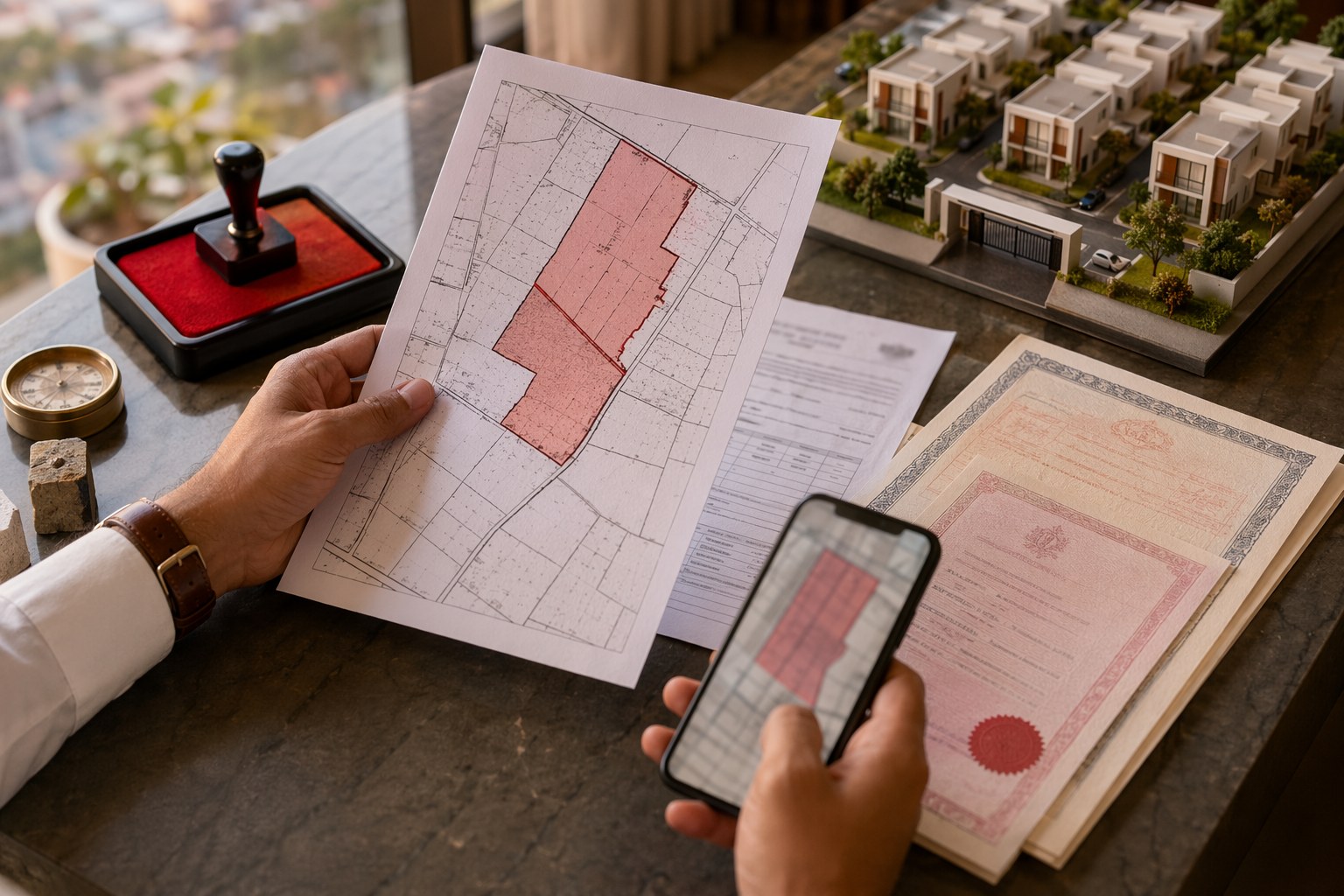
Verified.RealEstate database context shows 3,076,153 prohibited-property records under bb_prohibited_properties. That is a very large base for any lender, legal panel advocate or buyer-side consultant to ignore. When the prohibited-property universe is this wide, a standard Encumbrance Certificate check is no longer enough. Lenders have to test whether the land or flat trace is connected to a survey number, government land entry, assigned land, endowment land, wakf claim, court attachment, ceiling issue, acquisition notification or other registration block.
My reading is simple: banks and housing finance companies may not be able to keep these checks hidden inside one vague legal fee forever. Borrowers are asking better questions. Agents are getting challenged. And credit teams do not want last-minute surprises after issuing a sanction.
Why 22-A checks are becoming a loan-cost issue
Section 22-A related prohibited-property entries matter because they can stop registration or raise a serious title objection. In many Telangana transactions, the borrower approaches a lender after paying token advance. By then, the builder, landowner or resale seller is pushing for agreement timelines. If the lender later flags a 22-A issue, the buyer loses time and sometimes negotiation power.
For lenders, this is not just a documentation headache. A mortgage is only as safe as the title behind it. If the underlying property cannot be freely registered, transferred or enforced, the lender’s security becomes weak. So banks ask for legal scrutiny, SRO-level verification, link document review, EC review, survey number checks and, in land-backed cases, revenue record matching.
That work costs money. At present, many loan offers mention legal charges, processing fees, technical valuation charges and documentation charges. The 22-A search component is often not separately visible. As prohibited-property screening becomes routine, especially for plots, villas, farm land conversions and older layouts, itemisation is a fair expectation.
In Telangana, title risk is no longer a back-office topic. If a lender is charging for deeper due diligence, the borrower should be able to see what is being checked and why.
What may change in sanction letters
A typical sanction letter gives the loan amount, interest rate, tenure, EMI, processing fee and conditions before disbursement. In higher-risk files, it may also require additional legal opinion, original document verification or revaluation. The next logical step is a clearer fee break-up for title-related searches.
Borrowers could start seeing entries such as 22-A prohibited-property search, SRO search, EC extraction, legal scrutiny, revenue record verification or CERSAI search. Not every loan needs every check. A flat in a well-known RERA-registered project may need a different level of scrutiny compared to a gram panchayat layout plot or an agricultural land sale proposed for conversion.
| Possible fee line item | What it usually covers | Why borrowers should care |
|---|---|---|
| 22-A prohibited-property search | Checking whether the property or linked survey number is in a prohibited category | A flag can affect registration, mortgage creation and resale |
| EC and link document review | Review of transactions, ownership flow and past encumbrances | Helps spot missing links, mortgages or disputed transfers |
| SRO and survey verification | Matching village, SRO, survey number and registration jurisdiction | Wrong jurisdiction or wrong survey mapping can delay the loan |
| CERSAI check | Checking existing security interests reported by lenders | Useful in resale homes and loan takeover cases |
| Legal opinion fee | Panel advocate scrutiny of title documents and risks | Determines whether the bank will accept the property as security |
Why Telangana buyers should welcome itemisation
Some borrowers may initially feel that itemisation means extra charges. That is not necessarily true. The cost may already be part of the legal and processing bucket. Itemisation only makes it visible. In fact, it can help buyers compare loan offers more honestly.
For example, one lender may quote a lower processing fee but add legal, technical and search costs later. Another may disclose them upfront. On paper, the first loan looks cheaper. At disbursement stage, the difference may disappear. A clearer sanction letter reduces that confusion.
It also improves accountability. If a bank has collected a 22-A search fee, the borrower can ask whether the search was completed, what property identifiers were used and whether any adverse remark came up. The borrower may not get the full internal legal opinion, but basic clarity should be possible.
Hyderabad market impact: plots will feel it first
The strongest impact is likely in land and plot transactions. Hyderabad apartment buyers in large projects already face structured due diligence by lenders, though they must still check approvals and RERA status. Plot buyers, especially in HMDA outskirts, gram panchayat areas, old layouts and fast-moving corridors, face more title variation.
Places around Shankarpally, Chevella, Moinabad, Maheshwaram, Kandukur, Yacharam, Shadnagar, Ghatkesar, Bibinagar, Medchal and Patancheru often see buyers relying on layout brochures and broker confidence. That is risky. Survey number history, village records, SRO jurisdiction and prohibition status can change the entire deal.
Before paying advance, buyers can use the Prohibited Property Check for an early warning, the Ec Search for transaction history, and the Survey Number Finder to reduce survey-number confusion. For jurisdiction, the Find Your Sro tool is useful. These checks do not replace a lawyer, but they help buyers ask sharper questions.
What lenders may ask from borrowers
If 22-A screening becomes more formal in loan files, borrowers should expect more document requests. For resale flats, lenders may ask for link documents, sale deeds, building permission, occupancy certificate where applicable, tax receipts and society NOC. For plots, they may ask for pahanis, mutation details, layout approval, conversion proceedings, link deeds, EC, survey sketch and location proof.
For under-construction projects, buyers should check the Rera tool, verify the developer’s approvals and compare project claims with documents. For value-related planning, the Guideline Value tool and Stamp Duty Calculator can help estimate registration-side costs. If the property already has or had a loan, a Cersai Check is sensible.
The best practice is to run your own basic checks before approaching the lender. If you wait for the bank’s legal team to discover a problem, you may already be emotionally and financially tied to the transaction.
What borrowers should ask before accepting a loan offer
- Is the 22-A prohibited-property search included in the legal fee?
- Will the fee be charged even if the property is rejected by the bank?
- Which property identifiers will be used for the search: document number, survey number, village, SRO or all of them?
- Will the lender share adverse title remarks with the borrower?
- Are EC, CERSAI and SRO searches billed separately?
- Is technical valuation separate from legal title verification?
- Can the borrower submit an independent legal report?
My view: transparency is overdue
Telangana’s real estate market has matured, but buyer-facing paperwork has not always kept pace. A borrower can compare interest rates to the second decimal point, yet may not know what exactly is covered under legal charges. That gap is odd, especially when a prohibited-property check can decide whether the loan moves ahead or collapses.
Itemising 22-A search fees will not solve title disputes. It will not clean bad land records overnight. But it will make the loan process more honest. It tells borrowers that title verification is real work, not a rubber stamp. It also pushes lenders to standardise their due diligence language.
For serious buyers, the message is clear. Do not treat 22-A screening as a bank formality. Treat it as a pre-purchase filter. If the property clears lender scrutiny, your confidence improves. If it fails, losing a small search fee is better than getting trapped in an unregistrable asset.
Frequently Asked Questions
Will Telangana banks definitely add a separate 22-A search fee?
There is no confirmed universal rule yet. The trend may move towards clearer itemisation because prohibited-property screening is becoming a common part of title due diligence.
Is a 22-A search the same as an Encumbrance Certificate?
No. An EC shows registered transactions and encumbrances for a property period. A 22-A check looks for prohibited-property flags that may restrict registration or transfer.
Should I do a prohibited-property check before applying for a loan?
Yes. An early check can help you avoid paying advance on a risky property. Use it along with EC review, survey number verification and a local legal opinion.
Can a lender reject my loan if the property has a 22-A issue?
Yes, lenders can refuse to accept a property as mortgage security if the title or registration status is risky. The borrower’s income eligibility alone is not enough.