

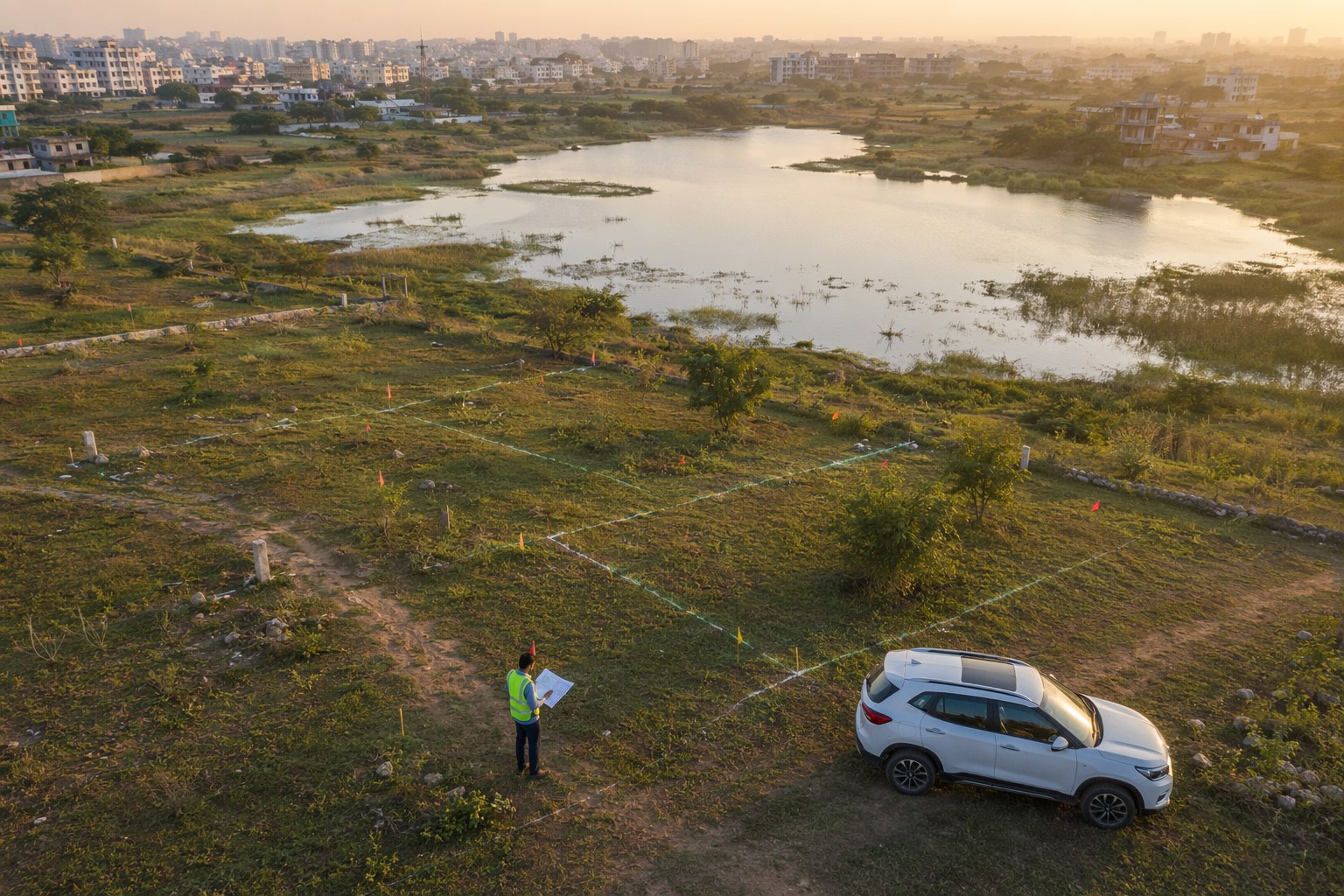
Telangana Lake Buffer Mapping May Tighten Green Plot Checks
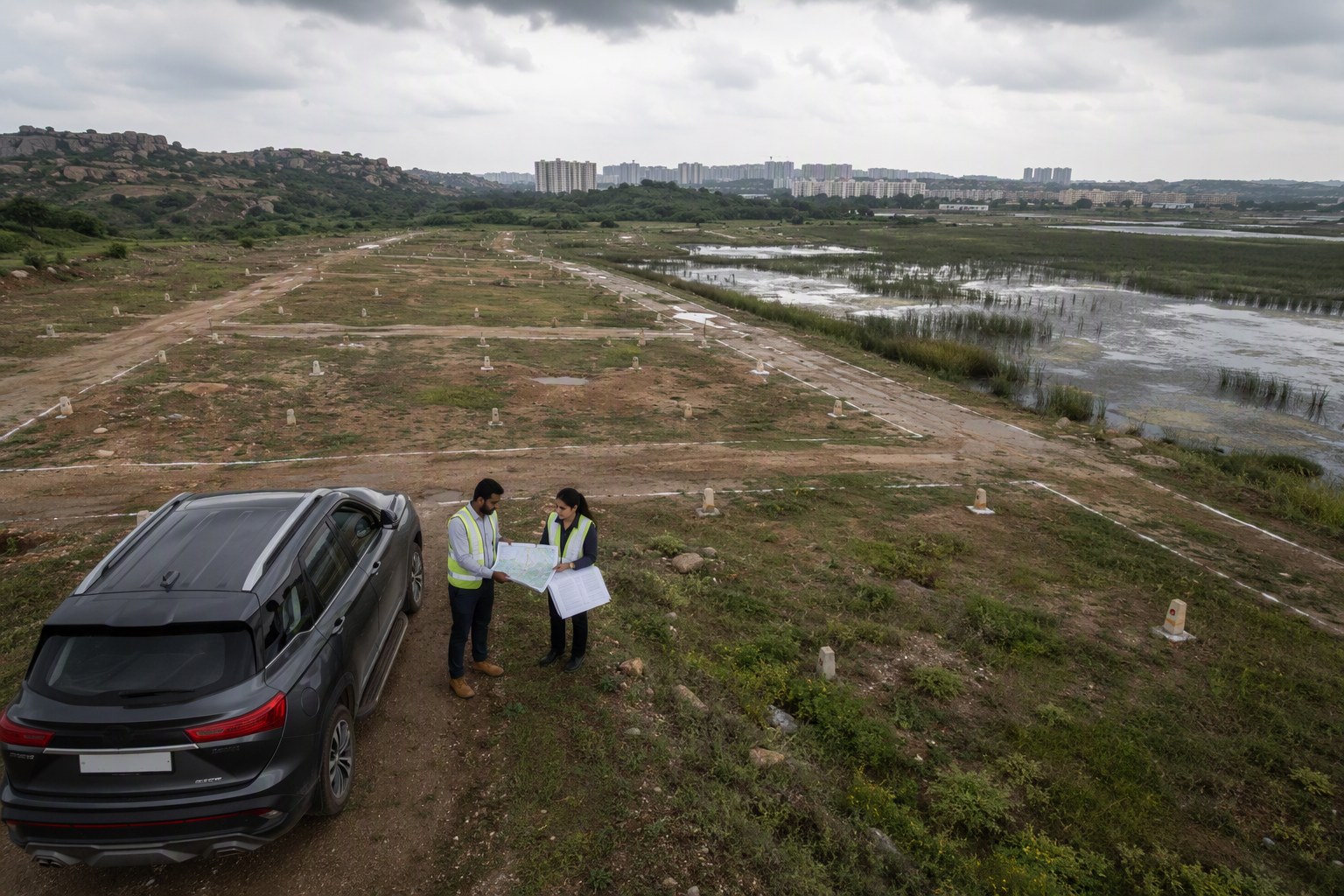
Telangana Lake Buffer Mapping is likely to become a sharper due-diligence point for plot buyers, especially in Hyderabad’s fast-growing western and northern corridors. The reason is simple: once lake full tank level (FTL), buffer and related environmental layers are mapped more tightly, plots that looked clear on paper may face tougher scrutiny at the layout, building permission and registration stages.
This comes at a time when Telangana already has 3,076,153 Section 22-A prohibited property records, as per latest IGRS data available in our database. For buyers, that number should be a clear warning. A clean sale deed alone is no longer enough. You have to check the survey number, mandal, village, land use, lake proximity, EC, dharani entries and SRO status before paying token advance.
Telangana Lake Buffer Mapping: why plot checks may become stricter
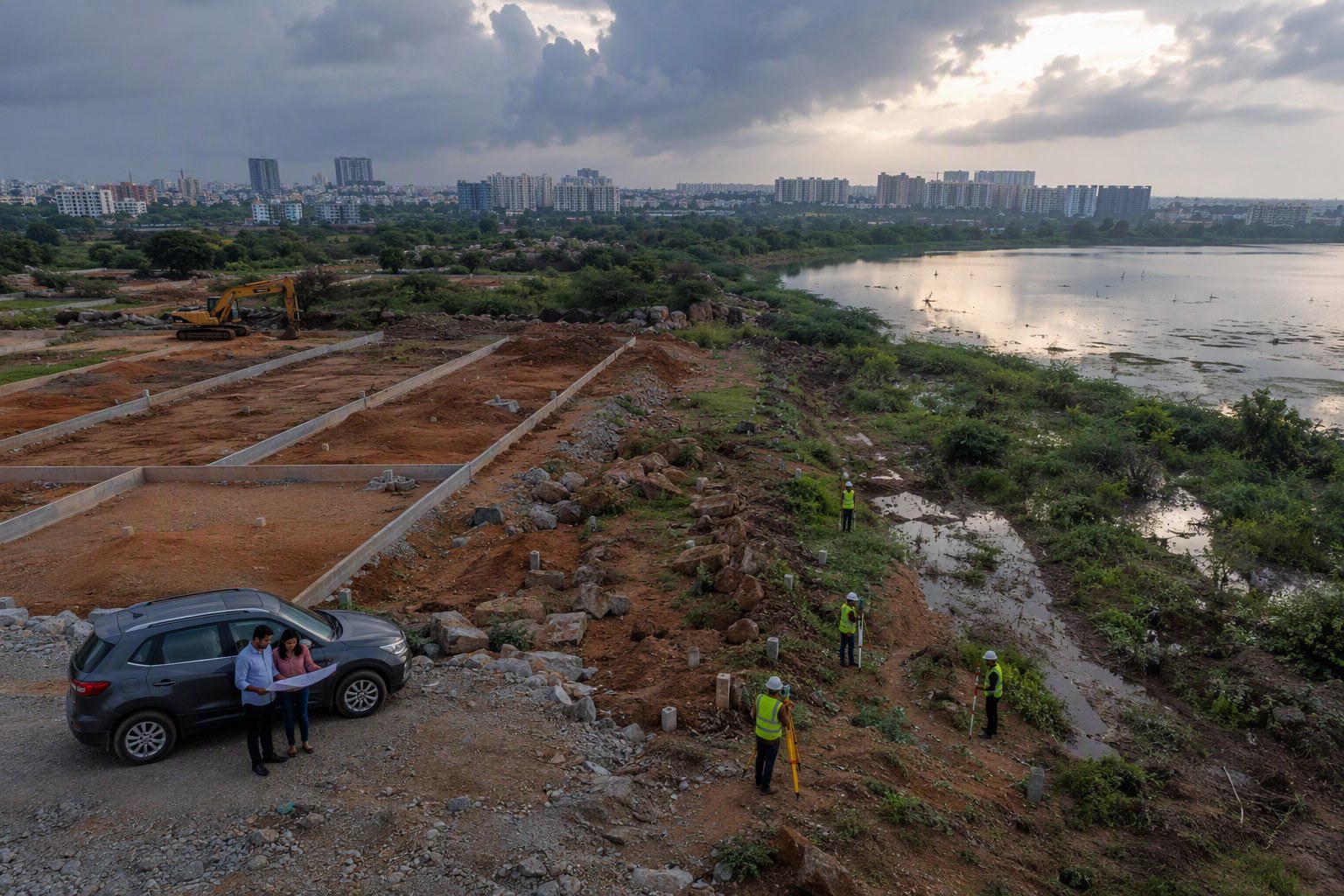
In practical terms, tighter lake buffer mapping means government departments and local bodies can compare plot boundaries against water bodies with better accuracy. If a plot falls inside FTL, buffer, nalas, surplus channels or environmentally restricted zones, permissions can get delayed or refused. In some cases, registration may not be the only issue; construction approval, bank loan and resale value may also get affected.
Hyderabad buyers usually focus on location names like Kokapet, Narsingi, Tellapur, Mokila, Bachupally, Miyapur, Kompally and Shankarpally. But the real answer sits one level deeper: village, mandal and survey number. A plot near Gandipet mandal is not the same as another plot in the same micro-market but under a different village map. Similarly, land near lakes in Serilingampally, Rajendranagar, Medchal, Shamirpet or Ghatkesar mandals needs more careful checking because lake-linked restrictions can cut across attractive residential pockets.
Our view is direct: lake mapping will not hurt genuine, well-approved layouts. It will hurt casual buying, especially where people depend only on brochure maps, agent WhatsApp locations and old photocopy documents.
Telangana Lake Buffer Mapping and the Section 22-A problem
The bigger context is Telangana’s already heavy prohibited-property burden. With 3,076,153 records under Section 22-A, buyers are dealing with a land market where government, assigned, endowment, wakf, ceiling, court-disputed and other restricted properties can appear in different forms. Lake buffer mapping adds one more layer to this risk stack.
Section 22-A is not a small clerical issue. If a property is listed as prohibited, the SRO may refuse registration or the transaction may become legally unsafe. Many buyers discover this only after paying advance. That is why we keep saying: before agreement of sale, run a Section 22-A Prohibited Property Check, match the survey number, and confirm the exact SRO jurisdiction through Find Your SRO Office.
Lake buffer restrictions and Section 22-A records are different issues, but for buyers the impact feels similar: uncertainty. One blocks or complicates legal transfer; the other can block development rights. A safe plot has to pass both filters.
Which Hyderabad and Telangana plot markets should buyers re-check?
We are not saying every lake-side or lake-adjacent locality is risky. Many approved layouts are perfectly legal and have proper permissions. But buyers should re-check plots in areas where rapid plotting has happened around tanks, cheruvus, nalas and village water bodies.
- Kokapet and Narsingi, Gandipet mandal: premium demand is strong, but survey-level checking matters because local terrain and old water channels can be tricky.
- Tellapur and Osman Nagar side: fast residential growth means buyers must verify whether the land use and layout approvals match the actual survey number.
- Mokila and Shankarpally belt: weekend-site style selling is common; always check pahani, dharani status and approach road legality.
- Bachupally, Miyapur and Pragathi Nagar belt: dense development makes lake and nala buffer verification very relevant before buying smaller plots or old houses.
- Kompally, Shamirpet and Medchal side: several villages have water bodies and open land pockets; don’t depend only on a location pin.
- Ghatkesar, Pocharam and Bibinagar corridor: plot buyers should match HMDA/DTCP approval documents with survey boundaries and village maps.
In our experience, the most common mistake is buying by project name. Project branding can change. Survey number will not. Mandal and village records will not vanish because the brochure looks premium.
What documents should be checked before buying a green plot?
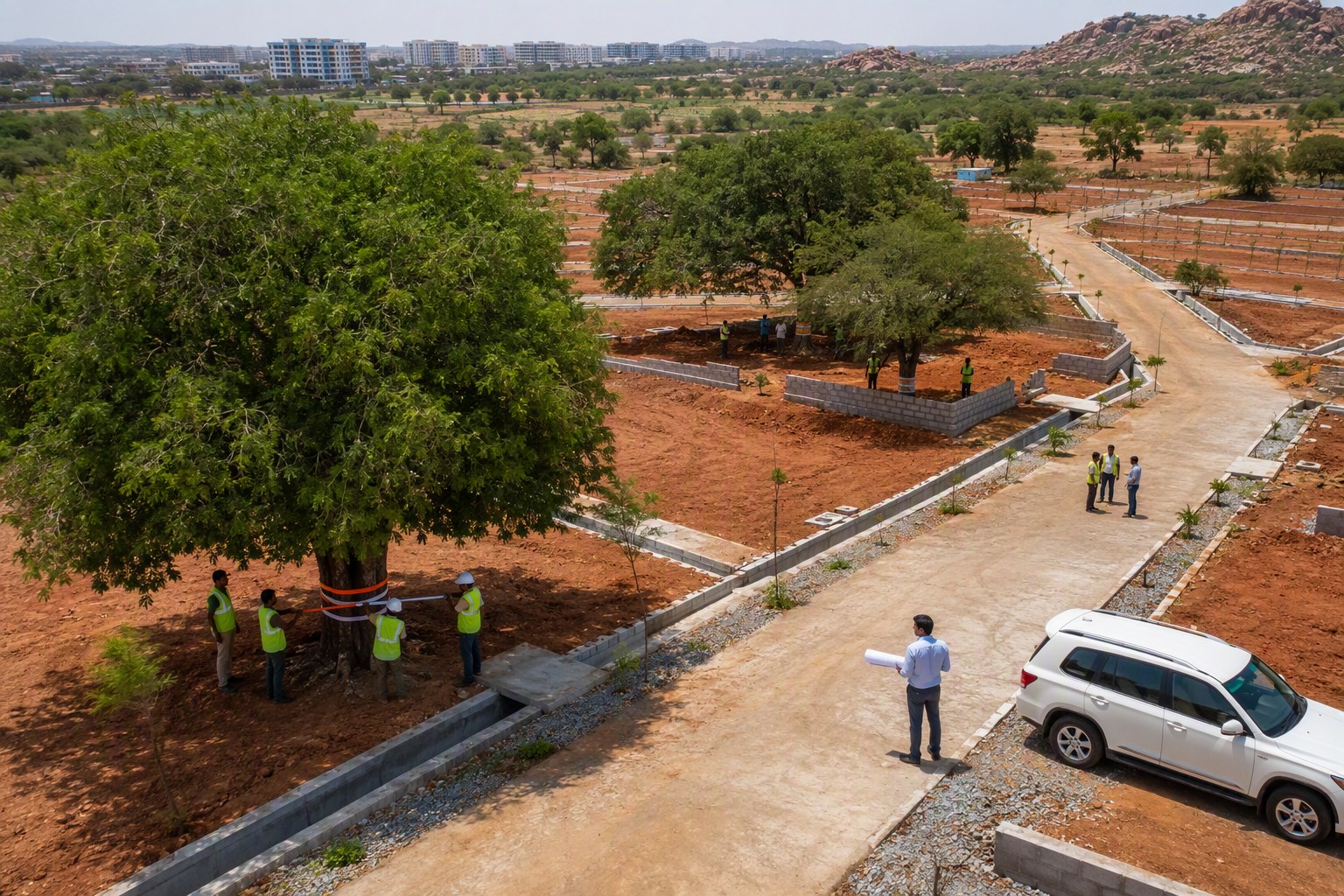
A green plot means more than open surroundings. It should be legally usable, environmentally compliant and capable of future construction. Before paying advance, buyers should ask for these records and cross-check them independently.
| Check | Why it matters | Useful tool |
|---|---|---|
| Survey number and village | Confirms the exact land parcel, not just the marketing name | Survey Number Finder |
| Section 22-A status | Shows if the property is in prohibited records | Section 22-A Prohibited Property Check |
| Encumbrance Certificate | Checks past registered transactions and charges | Encumbrance Certificate Search |
| Land use zone | Confirms whether the plot fits residential or other permitted use | Land Use Zone Finder |
| Guideline value | Helps compare ready reckoner value and stamp duty basis | Market Value / Guideline Value Search |
| Full property check | Combines key red flags before agreement | Property Verification Tool |
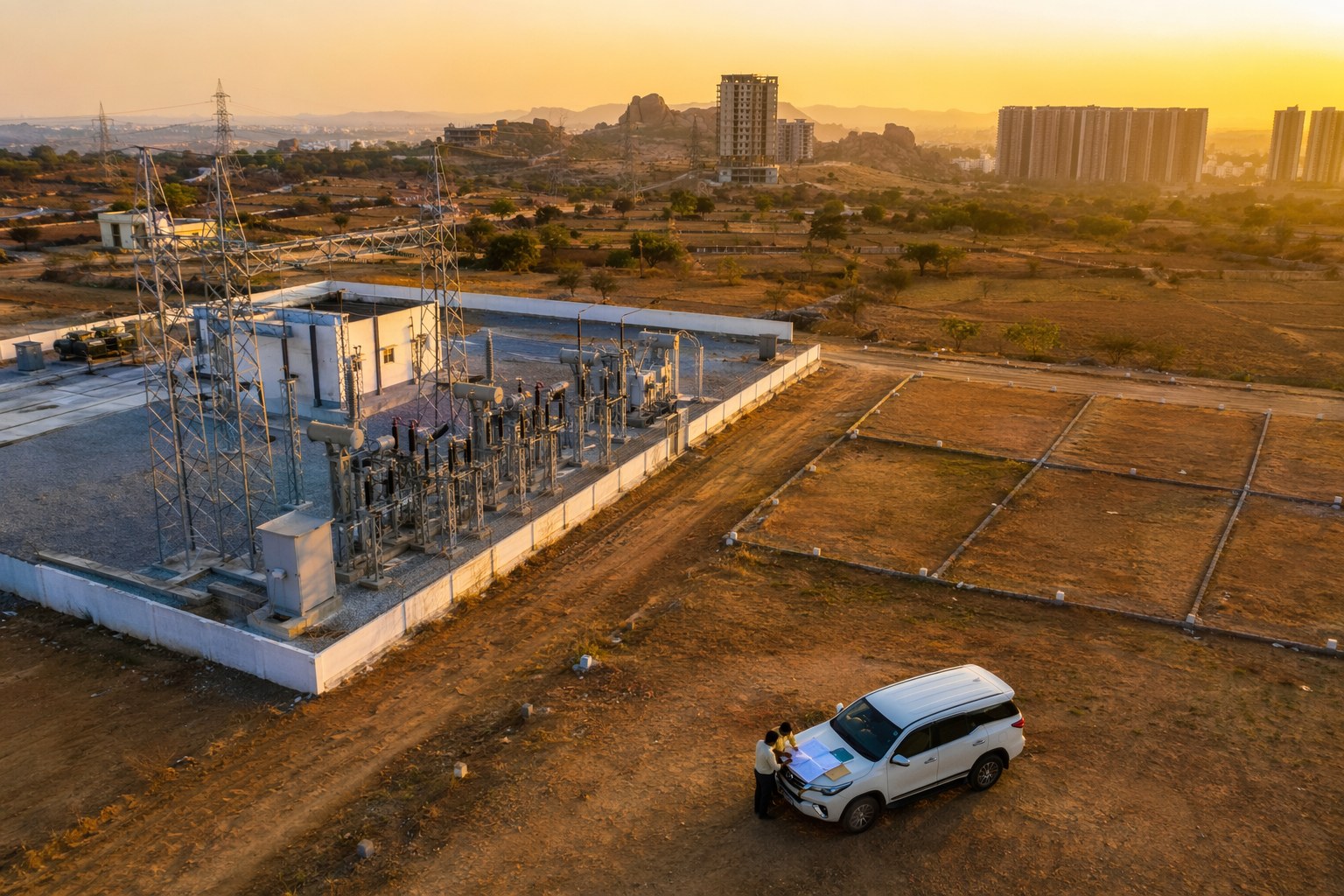
Buyers should also check the layout approval copy, LP number if applicable, mutation records, latest pahani, dharani passbook entries where relevant, link documents, family partition documents, court cases if any, and physical access road. For HMDA or DTCP layouts, don’t just see the approval letter; see whether your specific plot number and survey number are covered.
Telangana Lake Buffer Mapping: impact on builders, brokers and landowners
For developers, tighter lake buffer mapping can slow down weakly documented land aggregation. Builders who buy large parcels around outskirts will have to spend more time on geo-verification, hydrology-related checks and title review. This is healthy for the market, though some short-term deals may get stuck.
For brokers, the sales pitch has to change. Saying “registration avutundi sir” is not enough. A property may register today but still face building permission or resale issues later if it is within a mapped buffer. Good brokers will start carrying survey sketches, approval plans, EC copies and land-use screenshots. The casual ones will struggle.
For landowners, this is a chance to clean up documentation. If a parcel is genuinely outside FTL and buffer limits, proper records can improve buyer confidence. If there is doubt, getting clarity before marketing the land is better than facing disputes after collecting advance.
How should buyers read lake, buffer and SRO signals together?
Think of plot verification as three separate gates. First is title: who owns it, how they got it, and whether the link documents are clean. Second is registration safety: whether the SRO can register it and whether Section 22-A blocks exist. Third is development usability: whether the land is allowed for the purpose you have in mind.
Lake buffer mapping mainly affects the third gate, but it can also influence the first two when government land, water body classification or old village records overlap. That is why a buyer should not treat environmental checks as optional. The right sequence is: survey number, village, mandal, SRO, prohibited-property check, EC, land-use zone, layout approval, then price negotiation.
Before finalising stamp duty and registration cost, use the Stamp Duty Calculator. If you are comparing land plus structure, the Composite Value Calculator can help. For apartments or gated community projects, also verify the project through RERA Project Lookup before booking.
Our take: green plots will need cleaner paperwork
The Telangana land market is moving from relationship-based buying to document-based buying. Earlier, many buyers trusted the local patwari-style explanation, the broker’s confidence, or a relative’s opinion. That is risky now. With digital land records, dharani entries, SRO data, Section 22-A lists and possible sharper lake buffer layers, weak plots can be flagged faster.
This is good for serious buyers. It may reduce speculative selling around sensitive land. It may also push developers to create better-approved layouts instead of selling vague “future growth” stories. But buyers must do their part. Ask uncomfortable questions. If the seller refuses to share survey details, walk away. If the land is close to a cheruvu or nala and nobody can explain FTL or buffer position, pause the deal.
Telangana Lake Buffer Mapping may not change every transaction overnight. But it will change the standard of verification expected from anyone buying green plots in Hyderabad outskirts and other Telangana growth belts. Clean title, clean land use and clean environmental status will matter together.
Frequently Asked Questions
Will Telangana Lake Buffer Mapping stop all lake-side plot sales?
No. Legally approved plots outside FTL, buffer and restricted zones can still be valid. The issue is with plots that overlap water bodies, nalas, surplus channels or restricted environmental areas.
Why is Section 22-A check needed if I am only worried about lake buffer?
Because both are separate risks. Telangana has 3,076,153 Section 22-A prohibited property records as per latest IGRS data in our database. A plot must be checked for both registration restrictions and environmental/development restrictions.
What is the first detail I should ask from a plot seller?
Ask for the exact survey number, village, mandal and SRO jurisdiction. Without these, you cannot properly check pahani, dharani status, EC, land use, Section 22-A status or lake buffer risk.
Can an Encumbrance Certificate prove that a plot is outside lake buffer?
No. An EC shows registered transactions and charges. It does not confirm FTL, buffer, land-use zoning or building permission eligibility. Use EC along with land-use and survey-level verification.
Should I pay advance before checking lake buffer and prohibited-property status?
Preferably no. At least complete survey-number verification, Section 22-A check, EC review and land-use check before paying any non-refundable amount.