

Tree Census Conditions May Rework Telangana Layout Plans
Tree Census Conditions May Rework Telangana Layout Plans is not just an environmental headline. For buyers in Hyderabad’s growth corridors, it could become a practical approval checkpoint, much like land use, road width, open space reservation and title verification. If tree-count and green-cover conditions are built into layout scrutiny more tightly, developers may have to show what exists on the land, what will be retained, and what compensatory plantation is proposed before approvals move smoothly.
The immediate impact will be felt in plotted developments and larger land parcels around Shankarpally, Mokila, Kollur, Tellapur, Tukkuguda, Maheshwaram, Adibatla, Kandukur, Shadnagar and parts of Dundigal-Gandimaisamma. These are exactly the places where buyers usually focus on price, road access and future metro talk. In our experience, environmental compliance is still treated as a back-page item. That may not remain safe due diligence for long.
For a buyer, a layout with clean title but weak planning compliance is still a risk. A tree census condition can shift green cover from a marketing promise to an approval document.
Why Tree Census Conditions May Rework Telangana Layout Plans
Layout approvals in Telangana already involve several technical checks: land ownership, survey number mapping, master plan land use, road access, open space reservation, drainage, mortgage plots and statutory clearances where applicable. A tree census condition would add one more layer: a documented count and status of existing trees on the site.
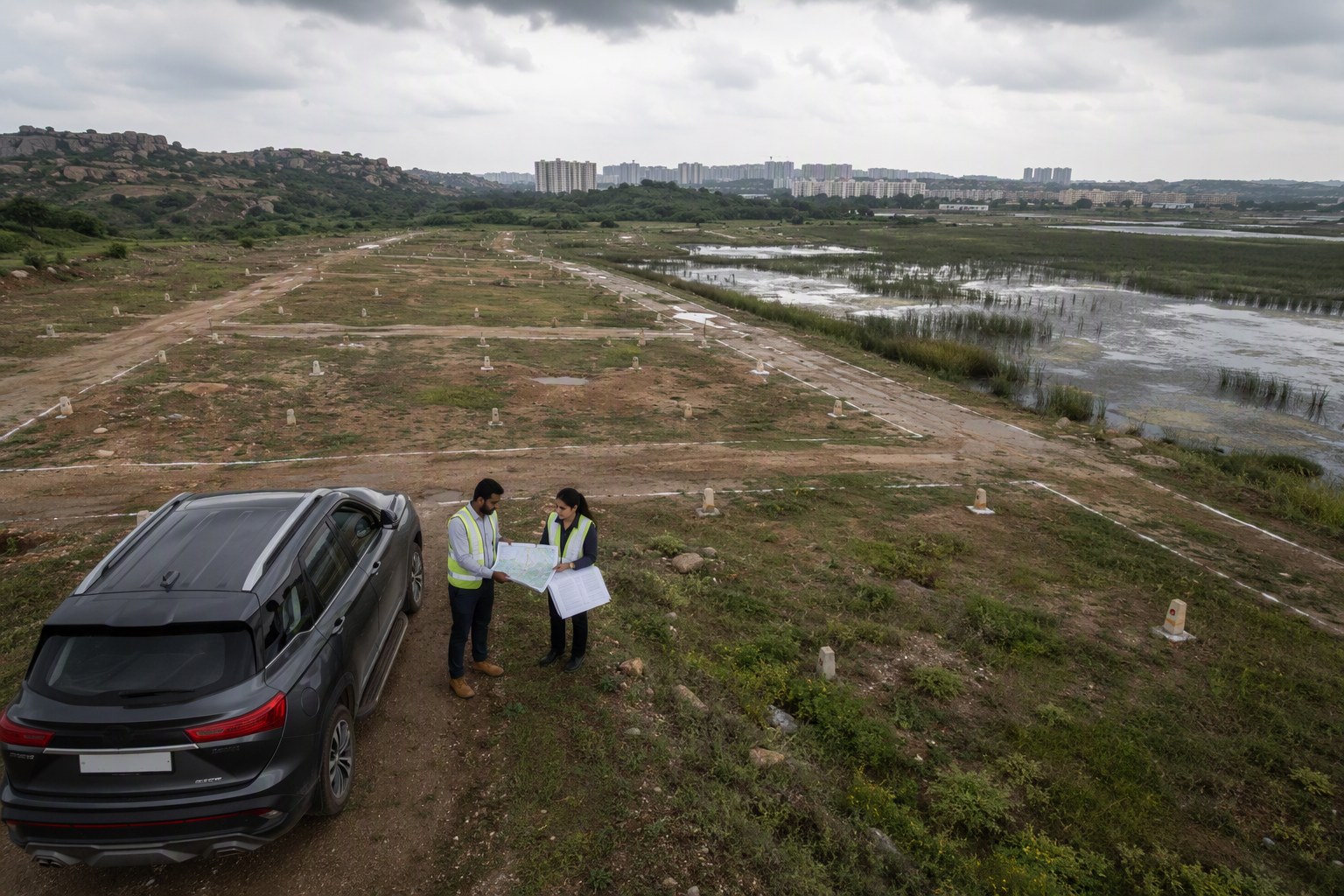
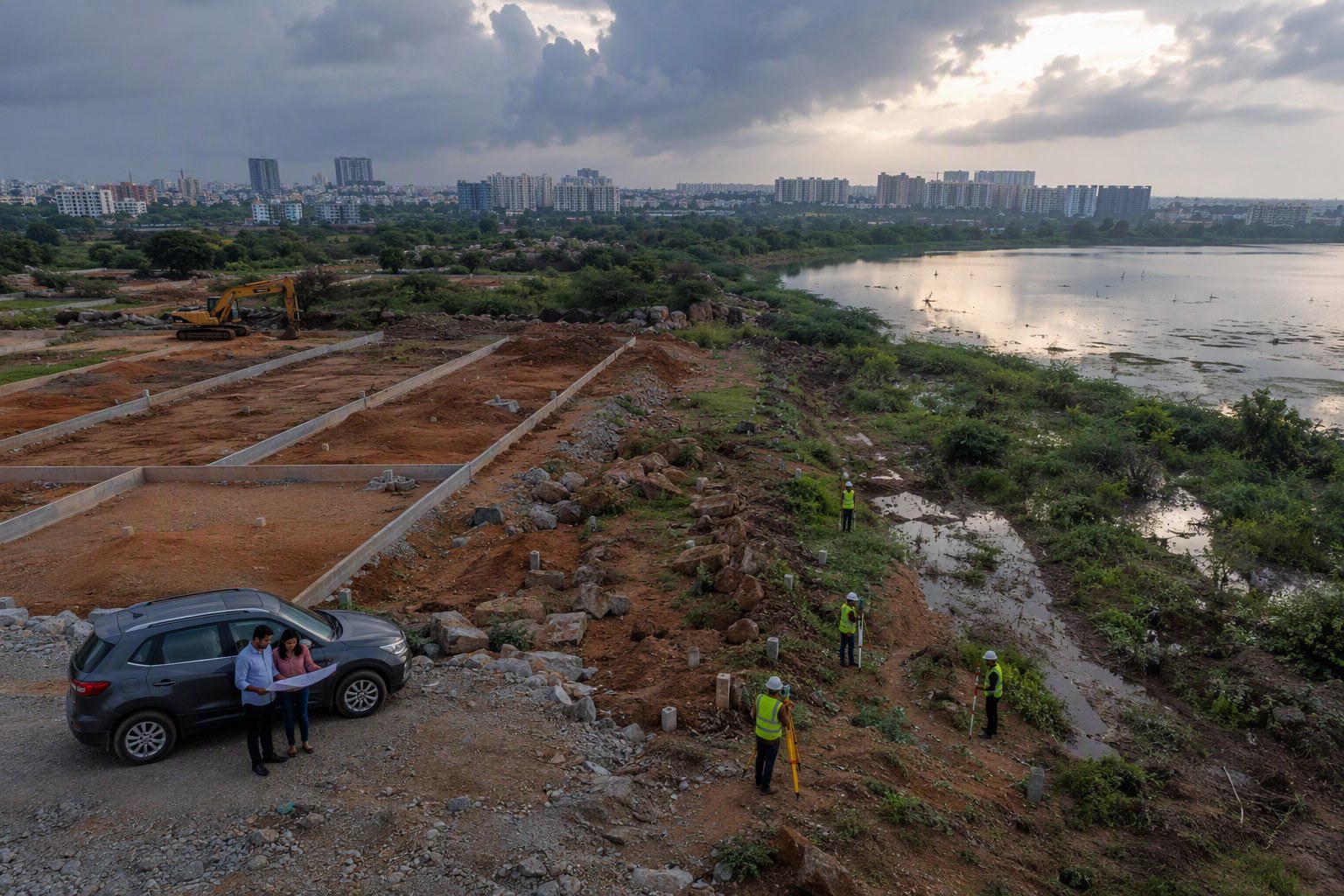
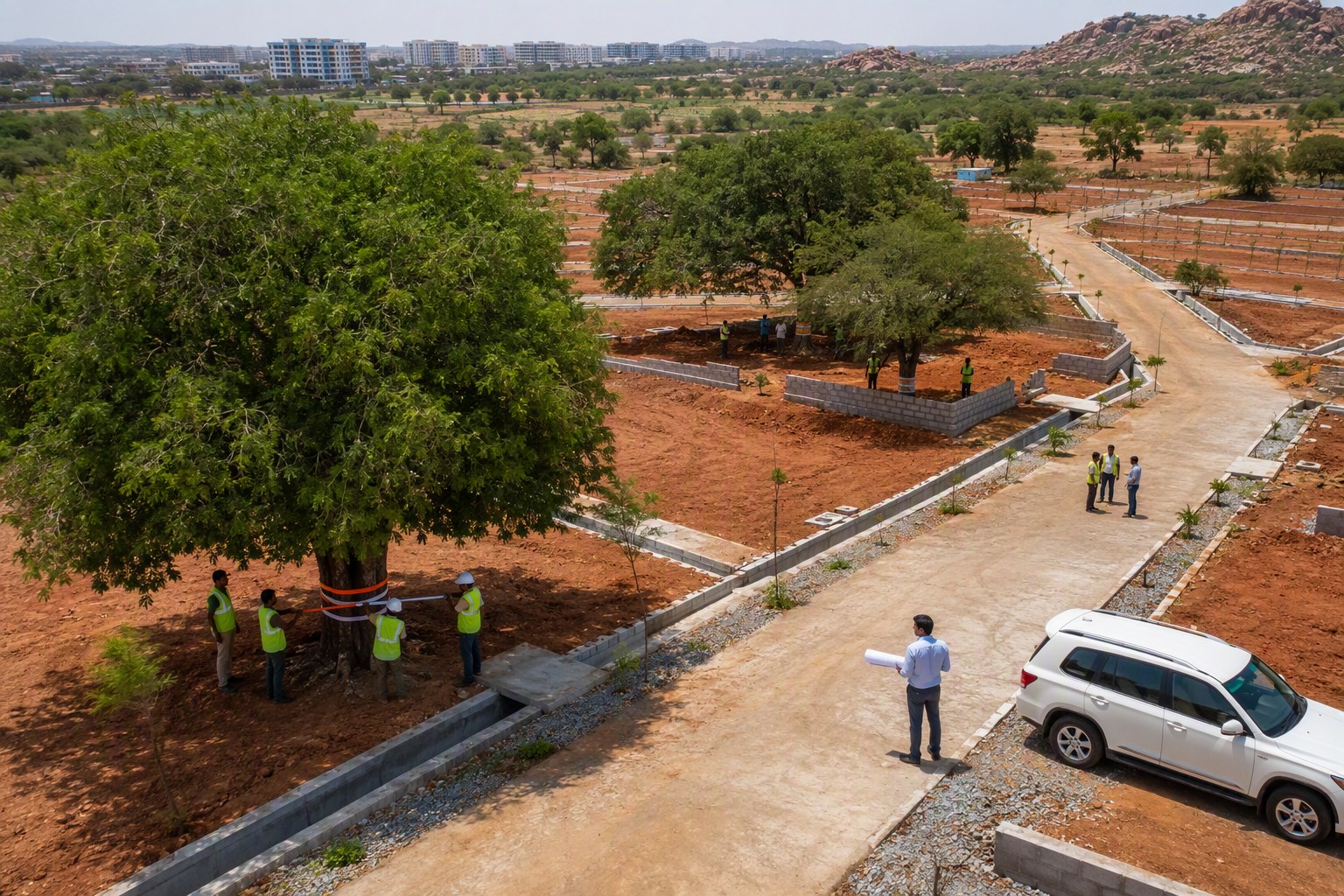
This matters because many upcoming plotted ventures sit on former agricultural land, mango gardens, scrub land or parcels abutting natural drains. In places like Mokila and Kondakal in Shankarpally mandal, or Maheshwaram and Tukkuguda on the southern side, large tracts can still carry mature trees even when the sale brochure shows a clean grid of roads and plots. If authorities ask for a tree inventory before layout approval or final release, the plotted design may need changes.
Those changes can be simple or serious. A few internal roads may be shifted. A park area may be redesigned. Some plots may become less saleable because existing green cover has to be retained. In tougher cases, the developer may have to submit a fresh plan or satisfy compensatory plantation conditions. Buyers who enter early, especially through expression-of-interest bookings, should not assume the first layout drawing is final.
Tree Census Conditions May Rework Telangana Layout Plans For Buyer Due Diligence
The buyer’s checklist in Telangana is already longer than many people think. Before paying a token advance, a prudent buyer checks the survey number, pahani history, Dharani status where relevant, SRO jurisdiction, EC entries, RERA registration for applicable projects, master plan zoning and whether the land is hit by any prohibition.
One hard number shows why this caution is needed. As per the verified database context available with us, Telangana has 3,076,153 prohibited properties under Section 22-A. That figure is not about trees, but it tells us something important: government records can carry restrictions that are not visible during a site visit. A green, well-marked layout can still have a legal or planning issue sitting in the background.
For title and restriction checks, buyers can start with the Section 22-A Prohibited Property Check, then verify transactions through the Encumbrance Certificate Search. If the project claims registration, use the RERA Project Lookup. For land identity, especially in HMDA and DTCP belt villages, the Survey Number Finder is useful before you even compare prices.
What A Tree Census May Change In A Layout File
A proper tree census is not a decorative note saying “green avenue plantation proposed”. It can require location-wise mapping of existing trees, their approximate condition, and whether they are to be retained, transplanted or removed with permission. If this becomes a practical checkpoint, layout files may start carrying a separate environmental sheet along with road pattern, plot statement and open space details.
For buyers, the most important question is simple: has the approved layout considered existing trees, or is the developer only promising landscaping after sales?
| Approval item | What buyers usually ask | What tree census conditions may add |
|---|---|---|
| Layout plan | Is the plot number shown clearly? | Whether internal roads and plots avoid protected or retained trees |
| Open space reservation | Where is the park area? | Whether existing green cover is included in the open space design |
| Land use | Is the land in residential zone? | Whether ecological features are flagged during conversion or approval |
| Final approval | Is it HMDA/DTCP approved? | Whether plantation, retention or permission conditions are attached |
The open space angle is especially relevant. Buyers should not only see the park on a brochure. They should check whether the open space reservation is calculated and located properly. The OSR Calculator can help buyers understand the concept before speaking to the developer. For zoning, use the Land Use Zone Finder. If a venture shows wider internal roads and premium corner plots, verify road feasibility using the Road Width Check.
Hyderabad Growth Corridors Where This Will Matter
In Hyderabad’s western belt, the first buyer instinct is to compare Kokapet, Narsingi, Tellapur, Kollur, Mokila and Shankarpally based on commute and future appreciation. On the southern side, people compare Tukkuguda, Maheshwaram, Adibatla, Kandukur and Shadnagar based on airport access, ORR connectivity and industrial growth. In the northern belt, Bachupally, Mallampet, Dundigal and Kompally draw plotted-layout interest from mid-budget families.
Tree census conditions will not affect every parcel in the same way. A small converted land parcel with limited vegetation may face only a routine compliance note. A large layout carved out of an old orchard or semi-rural land may need more careful planning. We’ve seen buyers get excited by east-facing plots and entrance arch designs, while missing basic approval conditions written in the annexures. That habit has to change.
Ready reckoner or guideline value is another area where buyers should be practical. Government market value is not the same as the developer’s quoted price, and it does not certify environmental compliance. Still, it helps you understand registration cost and local value bands. Use the Market Value / Guideline Value Search and the Stamp Duty Calculator before final negotiation.
What Developers May Need To Do Differently
For serious developers, this shift is manageable. They will have to survey the land properly before drawing the sales plan, not after bookings begin. The better players may start showing green-retention plans, tree-lined road sections and approval conditions openly to buyers. That will build trust.
For weaker operators, tree census conditions can expose casual planning. If a developer sells plots on an unofficial draft and later finds that trees, nalas, road widening or open space norms disturb the layout, buyers are the first to suffer. Plot numbers change. Facing changes. Park location shifts. In some cases, the promised plot size or road access becomes a dispute.
My view is simple: green compliance should not be treated as anti-development. Hyderabad needs housing and plotted supply, but the city also needs shade, water absorption and livable neighbourhoods. A layout that destroys every tree and then plants tiny saplings at the entrance is not the same as a layout that plans around existing natural assets.
Documents Buyers Should Ask For Before Paying Advance
- Latest approved layout copy, not only a marketing brochure.
- Survey number and village details matched with government records.
- Land use confirmation under the applicable master plan.
- EC and link documents checked through SRO records.
- Section 22-A prohibition check for the land parcel.
- RERA details where the project falls under RERA requirement.
- Open space reservation details and any environmental or tree-related conditions in the approval file.
- Written clarification on whether the plot number may change after final approval.
If you are buying in a fast-moving mandal, do not depend only on the agent’s WhatsApp PDF. Run a document-level check through the Property Verification Tool. For built-up projects where floor area and permissible construction matter, the FSI/FAR Calculator is also useful.
Tree Census Conditions May Rework Telangana Layout Plans: The Bottom Line
Tree census conditions may rework Telangana layout plans by making environmental compliance visible in the approval process. This will not stop genuine projects. It will push developers to plan better and buyers to ask sharper questions.
For Hyderabad property buyers, the message is clear: price, location and road connectivity are not enough. Check title, check SRO records, check land use, check RERA where applicable, check Section 22-A, and now start asking how the layout has treated existing trees and green cover. A compliant layout is not only safer legally; it is usually a better place to live.
Frequently Asked Questions
Will tree census conditions apply to every Telangana layout?
Not necessarily in the same manner. The impact will depend on the location, size of the land parcel, existing tree cover and the approval authority’s conditions. Buyers should read the actual layout approval file.
Can a developer change plot numbers after tree-related scrutiny?
It can happen if the layout design needs revision before final approval. That is why buyers should avoid relying only on draft plans and should ask whether the booked plot is part of the approved layout.
What should I check before buying a plot near Mokila, Kollur or Maheshwaram?
Check survey number, land use, EC, Section 22-A status, SRO records, RERA applicability, road access, OSR details and any environmental conditions attached to the layout approval.
Does guideline value confirm that a layout is legally safe?
No. Guideline value helps estimate registration value and stamp duty. It does not confirm title, approval status, green-cover compliance or freedom from prohibitions.