


Telangana May Link Housing OCs to Tree Survival Checks
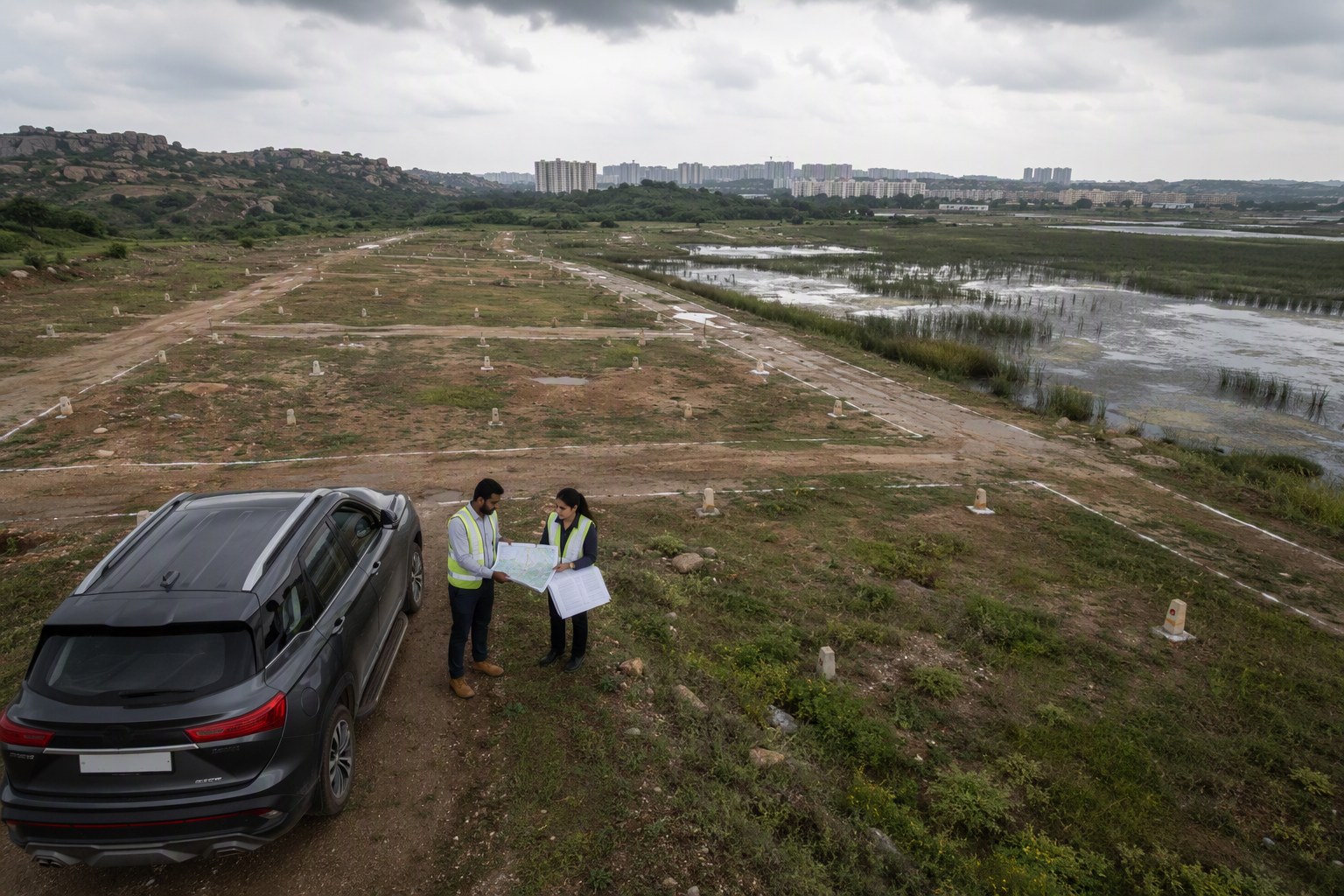
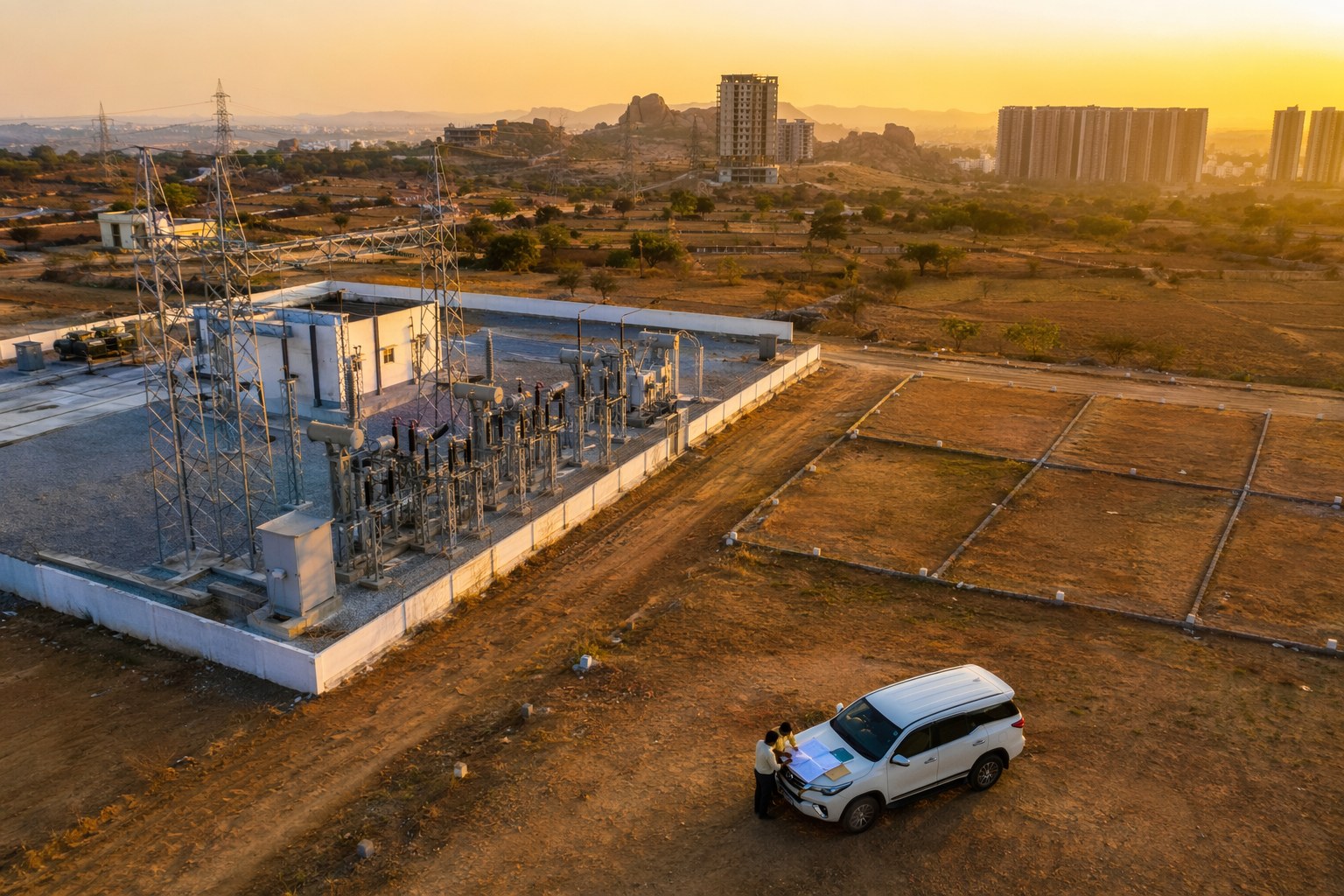
Telangana May Link Housing OCs to Tree Survival Checks in what could become a serious shift for apartment approvals across Hyderabad, especially in high-growth corridors like Kokapet, Narsingi, Tellapur, Kollur, Bachupally and Miyapur. The idea being discussed is simple: builders may have to prove that the trees shown in their approved landscape plan are not just planted, but actually surviving, before final occupancy-related approvals are closed.
This is not yet a notified blanket rule. But if Telangana moves in this direction, it will change how buyers read brochure greenery, podium garden promises and environmental compliance claims. In our experience, many projects show plantation numbers beautifully in launch material. Two summers later, the reality on the ground can be very different.
For homebuyers, the point is not whether a builder planted 500 saplings on paper. The real question is: how many are alive when families move in?
Telangana May Link Housing OCs to Tree Survival Checks: what may change for builders
At present, green compliance in housing projects is usually checked through sanctioned layout conditions, environmental permissions where applicable, open space requirements, plantation commitments and completion-stage documentation. If the proposed approach becomes part of the approval workflow, developers may need to submit survival proof through site inspection, geo-tagged photos, landscape consultant certification or municipal verification.
For large gated communities in HMDA and GHMC limits, this can be a meaningful compliance layer. Think of projects in Kokapet village of Gandipet mandal, Tellapur and Kollur in the Sangareddy belt, Mokila in Shankarpally mandal, Bachupally mandal, and Patancheru mandal. These are areas where projects are sold not just on carpet area and clubhouse size, but also on open spaces, tree avenues, oxygen parks and lake-facing landscaping.
Buyers are paying serious money in these corridors. New apartment quotations we are seeing in the western Hyderabad market often sit around ₹8,000 to ₹12,500 per sq ft in Kokapet and Narsingi, ₹6,200 to ₹9,500 per sq ft in Tellapur and Kollur, and ₹5,800 to ₹8,500 per sq ft in Bachupally and Miyapur, depending on brand, stage, floor rise and amenities. When a 3BHK crosses ₹1.2 crore or ₹1.8 crore, greenery should not remain a decorative line in the brochure.
Telangana May Link Housing OCs to Tree Survival Checks: why buyers should care
An Occupancy Certificate is not a small document. It tells a buyer that the building is fit for occupation as per approved plans and civic norms. If tree survival becomes part of the final approval conversation, buyers get one more measurable item to verify before possession.
We have seen buyers ask for RERA registration, carpet area statement, car parking plan and UDS calculations. Very few ask for the approved landscape plan, plantation schedule, species list or maintenance plan. That may have to change. If your builder promised an avenue of native trees, shaded walking tracks and buffer plantation, ask how those claims are being tracked after handover.
A practical buyer checklist can include:
- Ask for the approved landscape drawing submitted to the planning authority.
- Check whether plantation is inside the project boundary, in open space, along internal roads or only shown around the compound wall.
- Ask the builder for tree species, planting date and survival count.
- During site visits, compare brochure visuals with actual planted zones.
- At possession, ask the association to record tree count in the handover minutes.
Buyers should also do the regular property checks. Use the RERA Project Lookup to confirm project registration and promised completion timelines. Check the land title trail through the Encumbrance Certificate Search. If you are buying land or a villa plot, use the Survey Number Finder and Property Verification Tool before paying a token advance.
Brochure greenery versus approval-linked greenery
There is a big difference between marketing greenery and approval-linked greenery. Marketing greenery is what appears in 3D renders: dense tree canopies, children playing under shade, walking tracks with flowering plants. Approval-linked greenery is what authorities can verify on the ground.
If Telangana links housing OCs to tree survival checks, developers will have to treat landscaping as a compliance item, not just a handover decoration. That may push builders to choose hardy native species, plan irrigation properly, protect saplings during construction and budget for maintenance before the residents’ welfare association takes charge.
| Hyderabad market | Mandal or civic belt | Typical green claim in projects | What buyer should verify |
|---|---|---|---|
| Kokapet, Narsingi | Gandipet mandal / HMDA influence zone | Premium podium gardens, shaded internal roads, lake-side feel | Approved landscape plan, open space usage, actual tree survival |
| Tellapur, Kollur | Ramachandrapuram and nearby Sangareddy growth belt | Large gated community greenery, central parks | OSR location, plantation count, water source for maintenance |
| Bachupally, Miyapur | Bachupally and Serilingampally side | Clubhouse gardens, children’s play lawns, avenue plantation | Whether greenery is at ground level or only podium landscaping |
| Mokila, Shankarpally | Shankarpally mandal | Villa community trees, farm-style landscape | Land use, road width, survey number match |
For open space calculations, buyers and associations can cross-check basics using the OSR Calculator. For density and buildable area, the FSI/FAR Calculator helps you understand whether the project’s built form is matching the land parcel scale. If the project is on a fast-developing road, the Road Width Check is also useful.
The legal due diligence should not stop at trees
Green checks are welcome, but buyers should not forget the land file. Telangana still has a large number of properties with restrictions. Our database tracks 147,934 prohibited properties under Section 22-A. That figure should make every buyer pause before assuming that a glossy project file is enough.
Before booking in outer Hyderabad, verify whether the land falls in a clean survey number, whether there are prohibitory entries, whether the land use supports the project, and which SRO has jurisdiction. The Section 22-A Prohibited Property Check, Land Use Zone Finder and Find Your SRO Office can save buyers from painful surprises.
Ready reckoner values and market values also matter. A project may quote ₹7,500 per sq ft, but registration and stamp duty calculations depend on notified values, property type and SRO records. Use the Market Value / Guideline Value Search and Stamp Duty Calculator before finalising your budget.
What developers may need to prepare
If this compliance shift moves from discussion to notification, developers will need more discipline at the execution stage. Planting saplings one week before inspection will not be enough if survival is the metric. Builders may need to maintain a tree register, photograph growth stages, mark plantation zones on as-built drawings and keep a maintenance contractor accountable.
There will be a cost. But compared to land cost, approval delays, marketing spend and customer dissatisfaction, the cost of keeping trees alive is not unreasonable. In premium Hyderabad projects, landscaping is already priced into the sale value. The buyer is indirectly paying for it.
Smaller builders may complain about another layer of paperwork. That concern is fair if the process becomes unclear or inspection-driven without timelines. The better route would be a transparent checklist: approved plantation count, minimum survival percentage, accepted evidence formats and a defined inspection window before OC closure.
My take: this can clean up one weak area in Hyderabad housing
Hyderabad buyers have become smarter about RERA, EC, UDS and carpet area. Green claims are still weakly examined. If Telangana links housing OCs to tree survival checks, it will push the market to treat environmental promises as measurable commitments.
For buyers, my advice is direct. Do not reject a project only because tree survival compliance is still evolving. But do not blindly accept brochure greenery either. Ask for records. Visit the site in peak summer, not only after a rain. Check whether trees are planted in soil with long-term survival chances or kept in decorative planters that will disappear after possession.
A good housing project in Hyderabad must now pass three tests: clean land, lawful approvals and liveable surroundings. Tree survival checks may become one more way to separate serious developers from those who sell green views only in print.
Frequently Asked Questions
Will Telangana definitely link housing OCs to tree survival checks?
It is not yet a notified statewide rule. The proposal is being watched because it may make tree survival proof part of final housing approval or OC-related compliance.
How can a buyer verify a builder’s green claims?
Ask for the approved landscape plan, plantation count, tree species list, maintenance plan and actual site photos. During site visits, compare these with what is on the ground.
Does this affect RERA approval?
RERA registration and OC compliance are separate but connected in buyer due diligence. Use the RERA Project Lookup to check registration, timelines and declared project details.
Why is Section 22-A check relevant when discussing green approvals?
Environmental compliance is only one part of safe buying. Telangana has 147,934 prohibited properties under Section 22-A in our database, so title and restriction checks remain critical.
Which Hyderabad areas should buyers be more careful about?
Fast-growing areas such as Kokapet, Tellapur, Kollur, Mokila, Bachupally and Patancheru need careful checks on land use, survey number, road access, RERA status and promised open spaces.