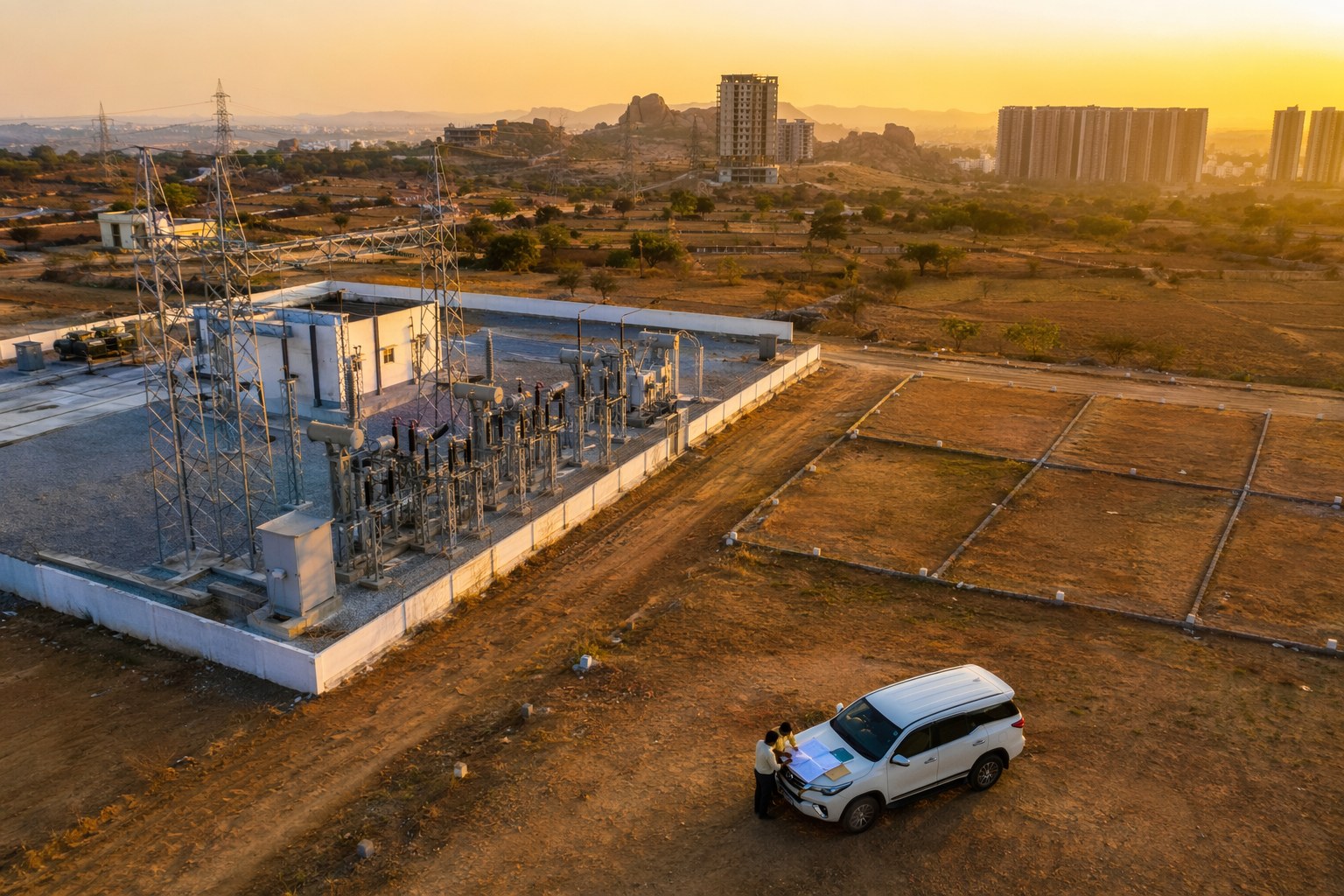



Telangana Due Diligence Firms Push 22-A Risk Scoring
Telangana Due Diligence Firms Push 22-A Risk Scoring as a practical way to convert a difficult legal entry into a buyer-friendly warning system. The trigger is clear: as per latest IGRS data available in our database, Telangana has 3,076,153 prohibited property records under Section 22-A. For buyers in Hyderabad, Rangareddy, Medchal-Malkajgiri and Sangareddy belts, this is no longer a small legal checkbox. It can decide whether a sale deed is accepted, whether a bank loan moves ahead, and whether a broker’s deal survives scrutiny.
In our experience, most buyers first hear about 22-A only when the SRO refuses registration or when a bank lawyer raises an objection. That is too late. The smarter move now is to score the risk before paying a token advance.
Telangana Due Diligence Firms Push 22-A Risk Scoring: what is changing?
Legal verification firms, document-checking teams and property consultants are increasingly treating 22-A status as a graded risk rather than a simple yes-or-no result. This is a useful shift. A flat in Narsingi with clean parent documents is not the same as a plotted land parcel near Shankarpally where the survey number has a partial government land reference. Both may need verification, but the risk level, timeline and buyer strategy are different.
Section 22-A entries generally relate to properties where registration may be prohibited or restricted. These can include government lands, assigned lands, endowment-related properties, wakf-related entries, ceiling surplus lands, court-disputed categories and other notified cases. The issue is that many buyers read one line and panic, while some sellers casually dismiss it as an “old entry”. Both reactions are risky.
My view is simple: 22-A is not just a legal status. It is a market signal. If the same survey number, village or mandal has a prohibition flag, the buyer needs a stronger verification file, not verbal comfort.
For a buyer checking land in Mokila, Tellapur, Kollur, Patancheru, Adibatla, Maheshwaram, Shamshabad, Ghatkesar or Hayathnagar, the first round should include a Section 22-A Prohibited Property Check, survey number confirmation through the Survey Number Finder, and an Encumbrance Certificate Search. If the property is an apartment in a project, the RERA Project Lookup also becomes relevant.
How 22-A risk scoring can work for Telangana buyers
A good 22-A risk score should not pretend to give a final court-level opinion. It should help buyers decide whether to proceed, pause, renegotiate or walk away. We’ve seen buyers lose time because every property is treated as either “clear” or “bad”. Real files are rarely that neat.
A practical scoring model can consider five checks:
- Survey number match: Does the exact survey number appear in the prohibited list, or is it only a neighbouring number in the same village?
- Extent match: Is the full extent affected, or only a part of the land?
- Village and mandal context: For example, land in Serilingampally mandal behaves differently from land in Shankarpally or Maheshwaram, because development history and land conversions are different.
- Document chain: Are the pahani, mutation, Dharani entries, link documents and EC aligned?
- Registration behaviour: Has the concerned SRO previously accepted similar transactions, or are buyers facing repeated objections?
This is where firms can create a scorecard. A low-risk property may show no 22-A hit, clean EC, matching pahani and proper layout approvals. A medium-risk property may have a name mismatch or old revenue entry needing clarification. A high-risk property may show a direct 22-A hit, government land reference, missing link document or an unresolved court entry.
Telangana Due Diligence Firms Push 22-A Risk Scoring for lenders and brokers
Banks and NBFCs will be major users of this approach. A lender does not want to fund a property where the sale deed can be stopped or challenged later. At the same time, loan teams cannot spend weeks on every small ambiguity. A risk score helps them send files into the right lane: normal processing, legal clarification, senior legal review or rejection.
Brokers also benefit, though some may not like the extra scrutiny. A professional broker in Kondapur, Bachupally, Kompally or Uppal should be able to tell a buyer whether the survey number, SRO jurisdiction and basic title chain are clean. The days of saying “registration ayipothundi, tension ledu” are fading. Buyers are asking sharper questions now.
For builders, especially in fast-moving corridors like Kollur, Osman Nagar, Gandimaisamma, Tukkuguda and Adibatla, a pre-sale 22-A score can reduce booking disputes. If a project has clear land title, proper RERA registration, and matching approvals, the developer should not hesitate to share the verification pack.
What should go into a practical 22-A risk report?
A buyer-friendly report should be readable. Not every purchaser can interpret revenue language, Telugu document terms or SRO remarks. The report should clearly say what was checked, what matched, what did not match and what action is suggested.
| Risk item | What it means for buyer | Suggested action |
|---|---|---|
| No 22-A hit on exact survey number | Lower immediate registration risk | Still verify EC, ownership chain and approvals |
| Partial match in same survey number | Extent and boundaries need close review | Check pahani, sketch, layout and SRO position |
| Direct prohibited entry | Registration may be refused or delayed | Take legal opinion before paying advance |
| Mismatch between sale deed and revenue record | Title chain may need correction | Ask seller for mutation, Dharani and link records |
| Old EC gaps or missing link documents | Past transfers may not be fully traceable | Use EC analysis and lawyer review |
Buyers should also check market value and registration cost before final negotiation. The Market Value / Guideline Value Search helps compare ready reckoner values, while the Stamp Duty Calculator gives a clearer idea of registration outgo. For SRO jurisdiction, use Find Your SRO Office. If a file has past charges or bank loans, a CERSAI Charge Check is sensible.
Why Hyderabad buyers should not ignore 22-A during token stage
The most expensive mistake is paying a token amount first and checking title later. This happens often in hot micro-markets. A buyer sees a good price in Tellapur or Bandlaguda Jagir, the seller says another party is ready, and the token is transferred. After that, the buyer starts checking EC, pahani, Dharani and 22-A status. By then, bargaining power has shifted.
My advice is direct: do the basic risk check before token. If the seller refuses to share survey number, old sale deed, pattadar details or layout copy, treat that as a warning sign. Genuine sellers may ask for privacy, fair enough, but they should not block basic verification.
In apartment purchases, buyers sometimes assume 22-A is only a land issue and not their concern. That is not correct. Every apartment stands on land. If the underlying land has a serious title issue, the flat buyer can also face resale, loan or litigation trouble later. This is why project-level checks matter along with flat-level EC.
My take: 22-A risk scoring is overdue, but it must be honest
Risk scoring should not become a marketing gimmick. A colourful “green tick” without document review is dangerous. A serious score must be backed by record checks, SRO mapping, survey number review and human legal interpretation where needed.
Telangana’s land records have improved in many areas, but local realities still matter. Revenue village boundaries, old survey subdivisions, assigned land history, layout permissions and conversion records can change the final view. In mandals like Gandipet, Shankarpally, Shamshabad, Maheshwaram and Medchal, the same village can have clean private patta land, disputed parcels and government-notified pockets sitting close to each other.
That is why a 22-A risk score should be treated as a decision tool, not a replacement for a lawyer. For small buyers, it brings clarity. For lenders, it brings consistency. For brokers, it brings accountability. For the Hyderabad market, it may reduce the number of deals collapsing at the SRO counter.
Before signing an agreement of sale, use a layered check: 22-A status, EC, survey number, SRO jurisdiction, guideline value and project approvals. If something does not match, pause. In Telangana real estate, patience before payment is cheaper than litigation after registration trouble.
Frequently Asked Questions
What is 22-A risk scoring in Telangana property checks?
It is a practical method of grading a property’s risk based on Section 22-A status, survey number match, revenue records, EC, SRO behaviour and title documents. It helps buyers decide whether to proceed, pause or seek legal review.
Does a 22-A entry always mean the property cannot be bought?
Not always. The exact survey number, extent, village, mandal and nature of the entry matter. But a direct 22-A hit is a serious warning and should be checked by a property lawyer before paying any advance.
Which records should I check along with 22-A status?
Check EC, pahani, Dharani details, link documents, sale deed chain, mutation records, layout approvals, RERA details for projects, and SRO jurisdiction. A single record is rarely enough for safe buying.
Is 22-A relevant for apartment buyers in Hyderabad?
Yes. Even if you are buying a flat, the building stands on land. If the underlying land has a serious 22-A or title issue, it can affect loans, resale and future legal comfort.
When should I do a 22-A prohibited property check?
Do it before paying token advance or signing an agreement of sale. Once money is paid, recovering it can become difficult if the seller disputes the reason for cancellation.