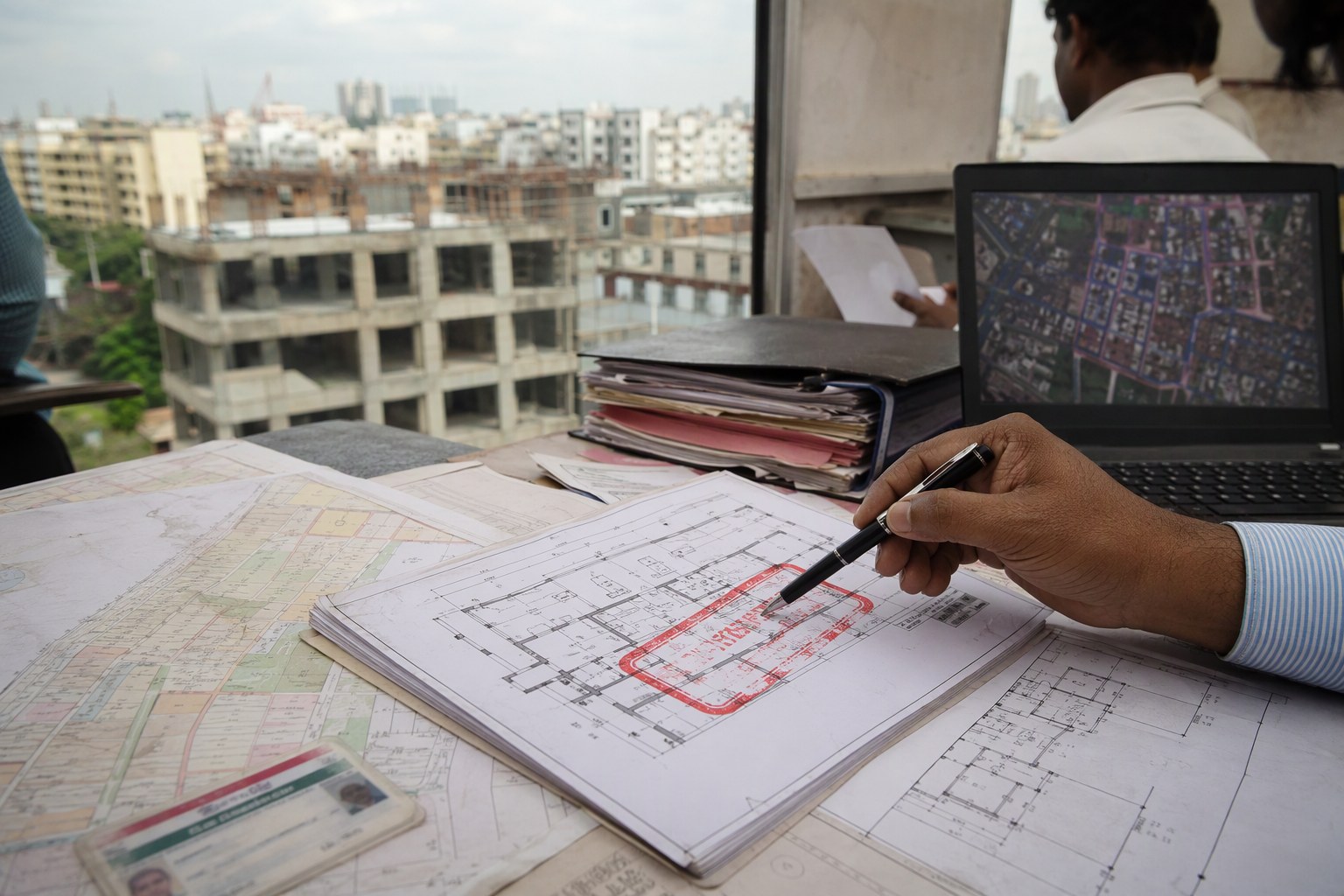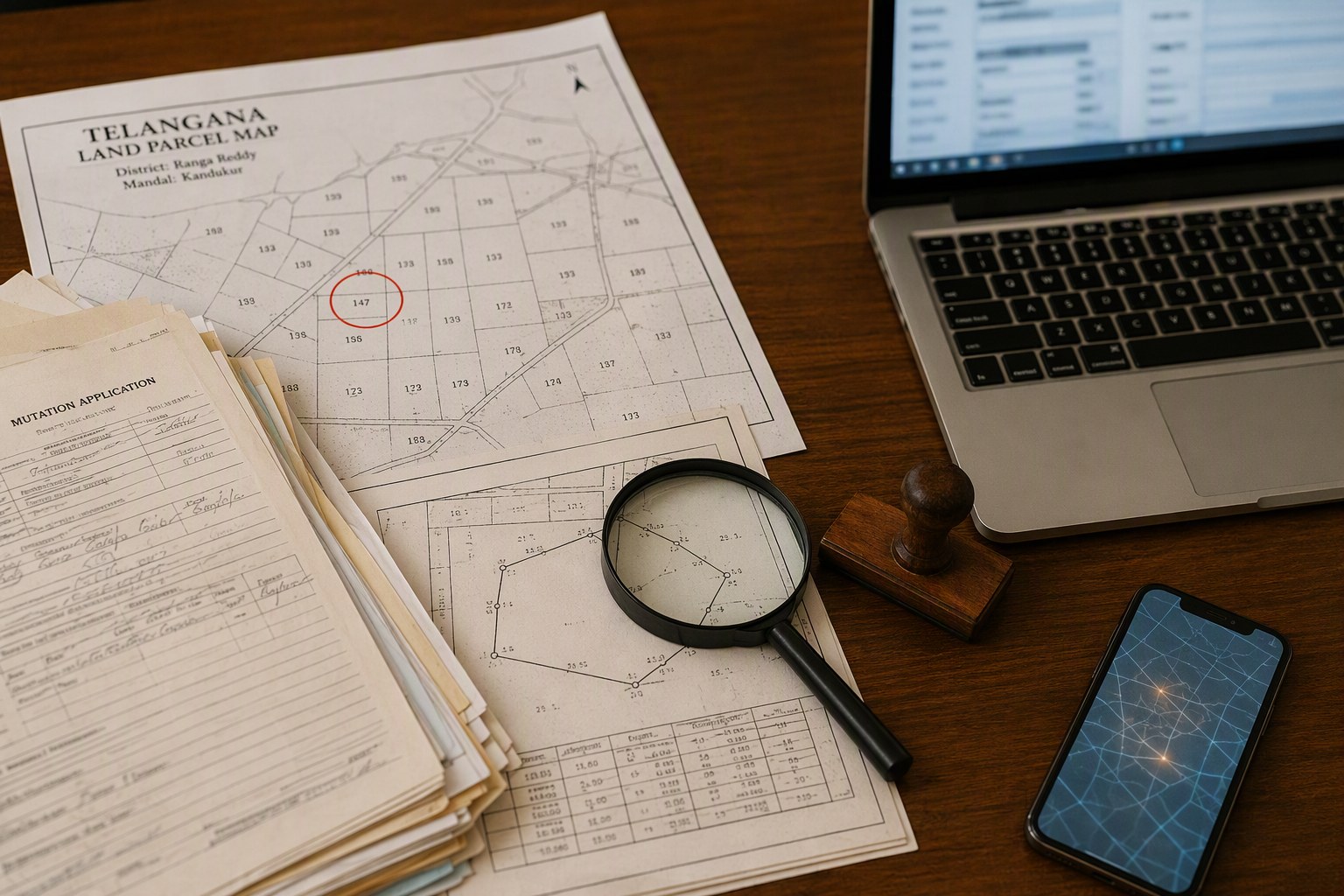
Telangana Bhu Bharati Rollout is not just a portal change for land records. For buyers in Hyderabad, Rangareddy, Medchal-Malkajgiri, Sangareddy and the fast-moving mandals around ORR, it can directly affect mutation checks, survey number verification, prohibited land screening and registration readiness. The short answer: before paying token advance, buyers must verify whether the land record, seller name, extent, nature of land and SRO data are all matching.
The state’s move towards Bhu Bharati land record reforms comes after several years of public complaints around land entries, pending mutations, wrong extents, missing pahanis and title disputes in the Dharani era. In our experience, the biggest risk for ordinary buyers is not always fraud. It is mismatch — one detail in pahani, another in sale deed, a third in EC, and a fourth at the registration office.
For buyers, Bhu Bharati should be treated as a fresh verification trigger. Do not assume an old Dharani screenshot, old pahani copy or broker-shared mutation entry is enough.
Telangana Bhu Bharati Rollout: Why buyers should care now
The Bhu Bharati rollout is expected to bring changes in how Telangana land records are corrected, accessed and used for transactions. That matters because property buying in Telangana is deeply record-driven. A flat in Narsingi, a villa plot in Mokila, an agricultural parcel in Shankarpally, or an open plot in Adibatla will all need clean supporting records before registration money is blocked.
One number shows the scale of caution required. Telangana has 147,934 prohibited properties under Section 22-A. These are properties where registration can be restricted due to government land, assigned land, ceiling surplus, endowment, wakf, court or other notified issues. Many buyers come to know about such restrictions only when the document reaches the SRO, which is too late if advances are already paid.
That is why Section 22-A checking should now sit at the top of buyer due diligence. Use our Section 22-A Prohibited Property Check before you sign an agreement of sale, especially for plots and land parcels in growth corridors like Maheshwaram, Kandukur, Ibrahimpatnam, Ghatkesar, Shamirpet, Moinabad and Chevella.
Telangana Bhu Bharati Rollout and mutation checks
Mutation is the first practical area where buyers must be alert. In Telangana, many families have old sale deeds but delayed mutation. Some sellers depend on inheritance entries, succession claims or family arrangements that are not fully reflected in land records. Under Bhu Bharati, if correction and mutation workflows become more active, buyers may see fresh changes in names, extents and classifications.
For example, in Shankarpally mandal, we regularly see land that has moved through multiple hands after HMDA layout activity around Mokila, Kondakal and Tangutoor. A seller may have an old registered deed, but the revenue record may still show an earlier pattadar or a different extent. In Gandipet mandal, especially Kokapet, Narsingi and Puppalaguda, urbanisation has created another layer: converted land, layout approvals, municipal permissions and SRO records must all line up.
Before paying token advance, ask for:
- Latest pahani or land record extract
- Mutation status and pattadar name
- Survey number and sub-division details
- Registered link documents for at least 30 years where available
- Encumbrance Certificate from the correct SRO
- Layout approval, LP number or building permission where applicable
You can start with the Survey Number Finder and then cross-check with the Encumbrance Certificate Search. If the survey number itself is unclear, do not depend on the boundary stones shown during site visit. Boundaries on ground and records in revenue files can differ, particularly in gram panchayat and peri-urban areas.
Registration readiness under Telangana Bhu Bharati Rollout
Registration readiness means the property is not only attractive and negotiable, but also document-ready for SRO acceptance. Telangana’s standard sale transaction cost is usually calculated at 6% of value — 4% stamp duty, 1.5% transfer duty and 0.5% registration fee. The payable amount is based on the higher of consideration value and government market value.
So, if you are buying a plot for Rs 80 lakh in Tellapur or a flat for Rs 1.2 crore in Kondapur, you should not calculate duty casually from the deal amount alone. Verify the notified market value first using the Market Value / Guideline Value Search, then estimate charges through the Stamp Duty Calculator.
In many Hyderabad transactions, especially in Serilingampally mandal localities such as Gachibowli, Kondapur, Madhapur and Nanakramguda, the market rate and government value may be far apart. In plotted layouts around Patancheru, Isnapur, Rudraram and Shankarpally, we have seen buyers budget for stamp duty only after finalising loan sanction. That is risky. If the ready reckoner value has changed, the cash requirement at registration can move sharply.
Where Bhu Bharati may change buyer due diligence
The reform should be watched across five checkpoints. These are the places where buyers should expect sharper scrutiny and possibly cleaner trails if implementation is handled well.
| Checkpoint | What buyer should verify | Why it matters |
|---|---|---|
| Seller identity | Pattadar name, Aadhaar-linked details, legal heirs | A sale deed from the wrong person can create long litigation |
| Survey number | Village, mandal, extent, sub-division | Wrong survey number can block loan and registration |
| Land nature | Agricultural, non-agricultural, assigned, government, endowment | Some categories are restricted or need conversion |
| Mutation | Latest mutation entry after prior sale or inheritance | Pending mutation weakens buyer confidence |
| SRO readiness | EC, market value, jurisdiction, Section 22-A status | Registration can fail if SRO data does not support the deed |
For SRO jurisdiction, use Find Your SRO Office. This is basic but often missed. A property in Manikonda may be marketed as near Gachibowli, but its registration jurisdiction, municipal body and survey village can be different. Same story in Bachupally, Bowrampet, Dundigal, Kompally and Medchal belt.
Telangana Bhu Bharati Rollout: Special caution for plots and agricultural land
Flats in approved projects usually have more paper trail, particularly if the project is RERA-registered. Still, buyers should check the builder’s land title, approvals and project registration through the RERA Project Lookup. For open plots and agricultural land, the buyer carries heavier due diligence responsibility.
In places like Yacharam, Kandukur, Kadthal, Amangal, Shadnagar and Chevella, land is frequently sold on future potential — pharma city, airport corridor, regional ring road influence, industrial growth or warehousing demand. Price excitement should not replace title checking. We have seen cases where buyers were shown one bit physically, while the registered survey number related to another parcel. In some cases, land was under family dispute or shown in prohibited records.
My practical view: if the seller is rushing you by saying mutation will be fixed later, walk slower. If the land has pending correction under Bhu Bharati or revenue review, keep the agreement conditional. Write clear clauses on refund, mutation completion, survey demarcation and Section 22-A clearance.
Buyer checklist before agreement of sale
- Run prohibited property screening for the survey number and village
- Check EC for 30 years where possible, not just 13 years
- Match seller name across pahani, mutation, EC and sale deed
- Confirm SRO jurisdiction and market value before stamp duty budgeting
- Verify layout approval if buying a plot in HMDA, DTCP or municipal limits
- For flats, check RERA, building permission and UDS calculation
- For land, insist on physical survey by a licensed surveyor
For a deeper one-window check, use our Property Verification Tool. If you are tracking a shortlisted property over a few weeks, the Property Change Tracker can help you monitor changes instead of depending only on broker updates.
What buyers should ask sellers during the Bhu Bharati transition
During any land record transition, smart buyers ask direct questions. Has the seller applied for mutation? Is any correction pending? Is the land part of family partition? Was it converted from agricultural to non-agricultural use? Is it in a layout or only an individual plotting arrangement? Has any notice been issued by revenue, municipality, HMDA, irrigation, endowment or wakf authorities?
In urban apartments, buyers should also verify undivided share of land, sanctioned floors, mortgage release from lenders and occupancy certificate status. In high-value areas like Jubilee Hills, Banjara Hills, Film Nagar, Hitec City, Financial District and Kokapet, title gaps can be expensive. In suburban growth markets like Kollur, Tellapur, Mallampet, Pocharam and Adibatla, approvals and land conversion matter just as much as price.
The Bhu Bharati rollout may improve transparency over time, but buyers should not treat any government portal as the only proof of title. In India, title is built through a chain of documents, possession, revenue records, registration data, approvals and absence of litigation. One clean screen is helpful. It is not the full story.
Our take for Hyderabad and Telangana buyers
The best use of Bhu Bharati for buyers is not after registration. It is before negotiation hardens. Check the land record first, then EC, then Section 22-A, then SRO value and charges. For plots and land, add survey demarcation and land use checks. For apartments, add RERA and approval checks.
If you are buying in Telangana in 2025, especially around Hyderabad’s expansion belts, treat record verification as part of price negotiation. A property with clean mutation, clean EC, correct survey number and no prohibited entry deserves a better price than a property where the seller says everything will be corrected after advance. We have seen enough deals to say this plainly: paperwork is not back-office work. It is the deal itself.
Frequently Asked Questions
What is Telangana Bhu Bharati Rollout?
Telangana Bhu Bharati Rollout refers to the state’s land record reform process aimed at improving access, corrections and reliability of land records. Buyers should use it to re-check mutation, survey number, pattadar name and land classification before purchase.
Will Bhu Bharati replace the need for Encumbrance Certificate?
No. An EC from the correct SRO is still needed to check registered transactions, mortgages and claims. Bhu Bharati records and EC records must be read together, not separately.
Why is Section 22-A checking necessary in Telangana?
Telangana has 147,934 prohibited properties under Section 22-A. If a property appears in this list, registration can be restricted. Buyers should check this before paying advance.
What should I verify before buying land near Hyderabad ORR?
Verify survey number, village, mandal, mutation, pahani, EC, Section 22-A status, land conversion, layout approval and SRO market value. Areas like Shankarpally, Maheshwaram, Ghatkesar and Moinabad need extra care.
How much are normal registration charges in Telangana?
For a regular sale deed, buyers generally budget 6% of value: 4% stamp duty, 1.5% transfer duty and 0.5% registration fee. The value is usually the higher of sale consideration and government market value.