


Telangana May Set Deadlines for 22-A Rectification Petitions
Telangana May Set Deadlines for 22-A Rectification Petitions is now the main talking point for landowners, buyers and brokers dealing with properties blocked under Section 22-A. The scale is not small. As per latest IGRS data available in our database, Telangana has 30,3,076,153 prohibited properties tagged under Section 22-A. If the State moves towards a time-bound rectification system, it can bring much-needed clarity for genuine owners whose land has been wrongly or vaguely marked as prohibited.
For many families in Hyderabad outskirts, this is not an academic issue. A 22-A entry can stop registration at the SRO, affect bank loans, delay layouts, and create serious doubt in resale discussions. We have seen this problem in places like Serilingampally mandal around Gachibowli and Kondapur, Gandipet mandal around Kokapet and Narsingi, and fast-growing corridors near Shadnagar, Maheshwaram, Patancheru and Medchal.
Telangana May Set Deadlines for 22-A Rectification Petitions: What may change
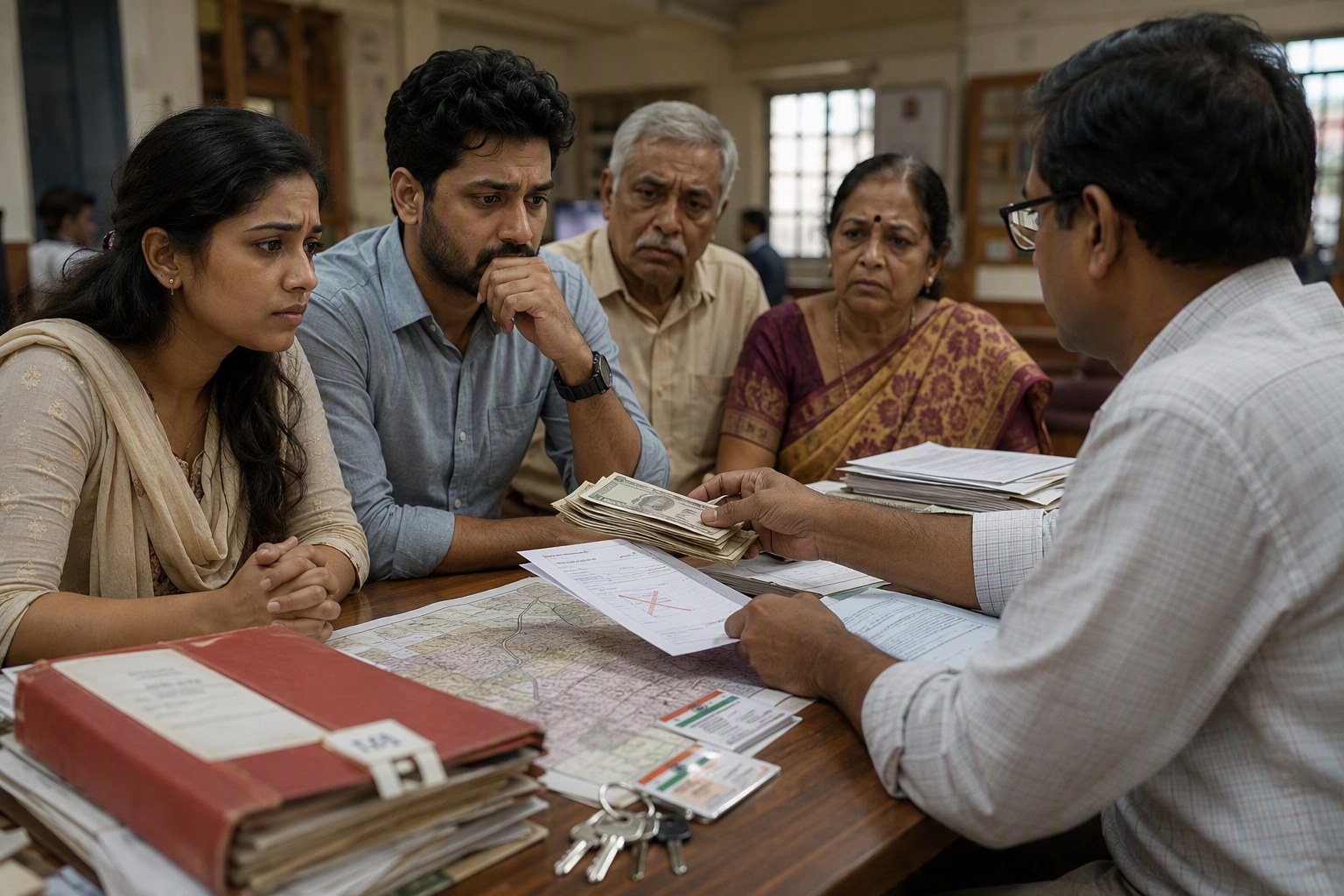
At present, owners whose land is shown under Section 22-A usually have to submit documents, revenue records and past title papers to seek correction. The pain point is time. Some cases move quickly when records are clear. Many others sit pending because the land may have old government classification, assigned land history, endowment references, wakf claims, ceiling entries, court orders, or survey mismatch.
A deadline-based rectification process would mean one basic thing: once a genuine owner files a petition with required documents, the department should decide it within a fixed period instead of leaving the file open-ended. In our experience, even a rejection with reasons is better than silence. At least the owner knows what document is missing or which authority must be approached next.
For the real estate market, the biggest benefit of a time-bound 22-A process will be certainty. Buyers can plan, sellers can correct records, and SRO-level confusion can reduce.
Section 22-A exists to stop registration of lands that should not be freely transferred. That purpose is valid. Government land, assigned land, endowment land and land under legal restriction must be protected. But when a private patta land gets wrongly tagged, the owner should not suffer for years. This is where a structured rectification window can help.
Why 30,3,076,153 prohibited properties is a serious market signal
The number 30,76,153 is large enough to affect the behaviour of buyers and lenders across Telangana. Not every prohibited entry is wrong. Many may be correctly listed. But even a small portion of doubtful or outdated entries can create lakhs of title checks, lawyer opinions, SRO visits and Dharani-related follow-ups.
In Hyderabad’s active property belt, 22-A checks are now part of basic due diligence. Buyers looking at open plots in Adibatla, Tukkuguda, Shamshabad, Mokila, Kollur, Tellapur, Bachupally, Kompally and Shamirpet are asking the same question first: “Is the survey number clean?” Earlier, people would start with price and road width. Now, serious buyers first ask for survey number, pahani, passbook details, EC and prohibited property status.
Before paying token advance, buyers should use the Section 22-A Prohibited Property Check, verify past transactions through the Encumbrance Certificate Search, and confirm jurisdiction using Find Your SRO Office. These three checks will not replace a legal opinion, but they will catch many red flags early.
Telangana May Set Deadlines for 22-A Rectification Petitions: What owners should prepare
If deadlines are introduced, owners should not wait until the last day. Rectification cases usually depend on old records. The more organised your file is, the better your chance of getting a clear decision.
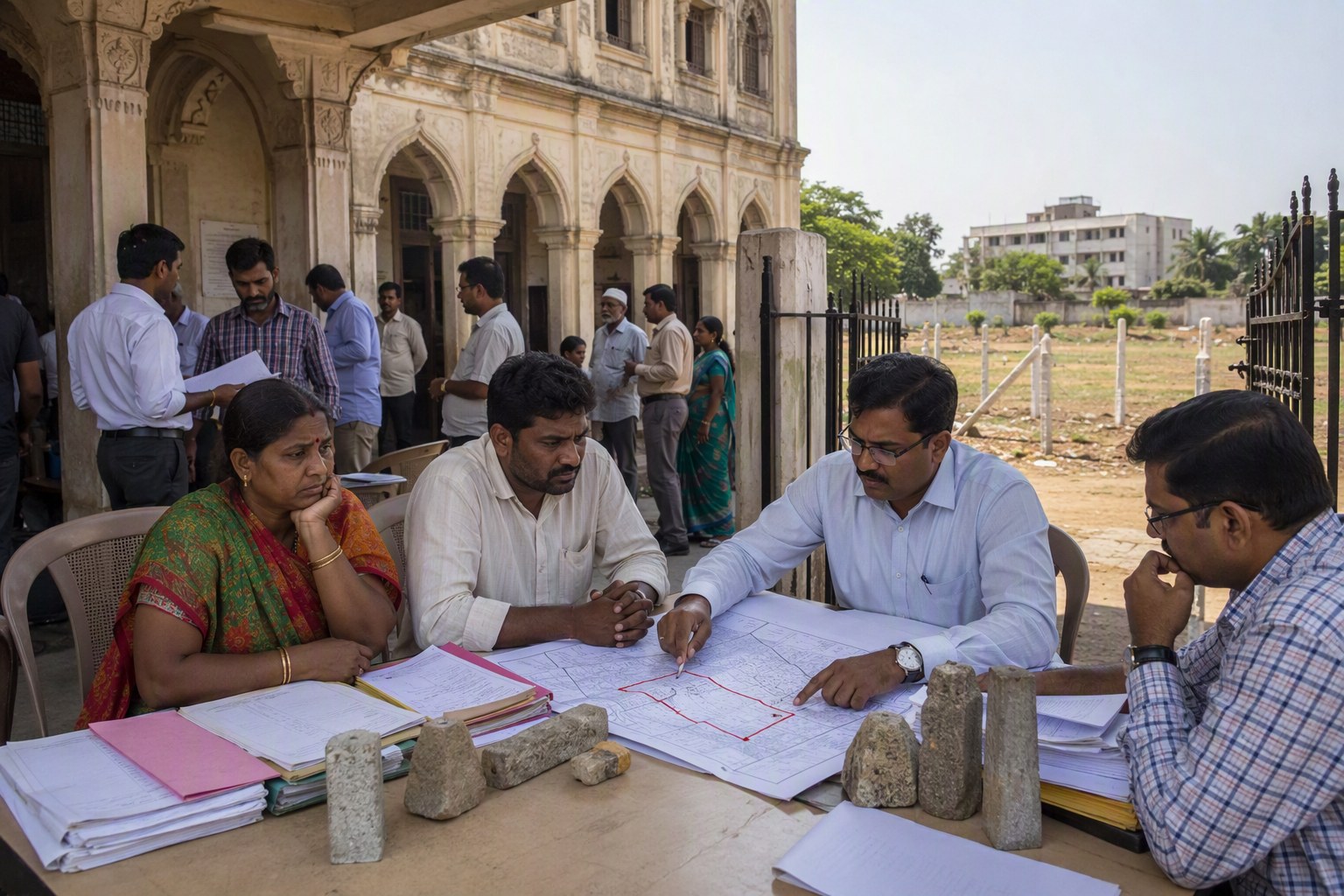
A practical file should include available title deeds, link documents, pahanis, Dharani passbook details where applicable, mutation records, tax receipts, layout permissions if any, court orders if any, and family partition or succession papers where the land came through inheritance. For old agricultural lands, survey number consistency is very critical. A small mismatch in survey number, extent or village name can push the file into another round of clarification.
Owners should also compare the land’s current market value classification and government ready reckoner entry through the Market Value / Guideline Value Search. If there is any sale planning after rectification, stamp duty impact can be checked through the Stamp Duty Calculator. For survey confusion, especially in villages converted into high-growth suburbs, the Survey Number Finder can help start the verification trail.
Documents that usually matter in 22-A rectification
- Registered sale deed or gift deed, with link documents where available
- Latest Dharani details, passbook information or mutation reference
- Pahani or adangal extracts showing possession and classification
- Survey number, sub-division number, village and mandal details
- EC showing transaction history for the required period
- Any court order, revenue order or government communication already obtained
- Identity and ownership proof of the petitioner
One opinion I strongly hold: owners should avoid filing casual petitions with incomplete papers. A weak petition can result in a vague rejection, and then the next round becomes harder. Get the facts aligned first.
How a deadline system can help buyers, sellers and SROs
For buyers, a deadline system can reduce uncertainty before registration. If a seller says the 22-A tag is wrong, the buyer can ask whether a rectification petition has been filed and whether any order has been passed. This changes the discussion from verbal assurance to document-based verification.
For sellers, especially genuine pattadars, it can unlock stuck assets. Many families in Ranga Reddy, Medchal-Malkajgiri, Sangareddy, Yadadri-Bhuvanagiri and Vikarabad districts have land that cannot be sold or developed because of a prohibited entry dispute. If their case is genuine, a fixed decision timeline will reduce financial stress.
For SROs, it can reduce repeated visits and pressure at the registration counter. Today, the sub-registrar often becomes the first person to face public anger, even when the 22-A entry comes from higher-level government records. Clear rectification orders will help SRO staff act with confidence.
| Stakeholder | Current pain point | How deadlines may help |
|---|---|---|
| Landowner | Petition remains pending without clarity | Gets approval or reasoned rejection within a defined period |
| Buyer | Cannot judge whether seller’s claim is genuine | Can ask for rectification order or petition status |
| SRO | Faces registration disputes at counter | Can rely on updated prohibited property records |
| Bank or lender | Title risk remains unresolved | Can assess property after official correction |
Where due diligence must still continue
A rectified 22-A entry does not mean buyers can skip all checks. It only means one major restriction may have been removed. Title chain, possession, layout approval, land use, road access, litigation, mortgage and RERA status still matter.
For apartments and villas, buyers should check project registration using the RERA Project Lookup. For open plots or redevelopment land, use the Property Verification Tool and track future changes with the Property Change Tracker. If there is any old loan or security interest, a CERSAI Charge Check is also sensible.
Hyderabad’s land market is moving quickly, especially around ORR exits, Regional Ring Road influence zones, and airport-side growth corridors. But speed should not replace paperwork. A clean EC, correct survey number, proper mandal and village mapping, and absence of 22-A restriction are now minimum requirements, not premium due diligence.
What we will watch next
If Telangana formally moves towards deadlines for 22-A rectification petitions, the key details will matter. Will the timeline apply to all categories or only clear private patta cases? Will petitions be filed online or at district offices? Will there be an appeal mechanism? Will old rejected cases get another window? These answers will decide whether the reform truly helps owners.
For now, landowners should treat this as a preparation period. Pull out your papers, check your survey number, verify the SRO, download EC, compare Dharani details and consult a property lawyer where the land value is significant. A time-bound process, if implemented well, can clean up many genuine cases. But the owner’s file must be ready.
Frequently Asked Questions
What is Section 22-A in Telangana property registration?
Section 22-A is used to prohibit registration of certain properties, including land under government restriction, assigned land, endowment-related land, disputed categories and other notified properties. If a property is tagged under 22-A, the SRO may refuse registration.
How many prohibited properties are listed in Telangana?
As per latest IGRS data in our database, Telangana has 30,3,076,153 prohibited properties tagged under Section 22-A.
Can a wrongly tagged 22-A property be corrected?
Yes, genuine owners can seek rectification by submitting title documents, revenue records, survey details and other supporting papers to the concerned authorities. A deadline-based process, if introduced, may make this more predictable.
Should buyers avoid all 22-A properties?
Buyers should be very cautious. Some 22-A entries are valid and cannot be ignored. If the seller claims the entry is wrong, ask for official rectification records and take a legal opinion before paying advance.
Which checks should be done before buying land in Telangana?
At minimum, check Section 22-A status, EC, survey number, SRO jurisdiction, Dharani or revenue records, land use, access road, litigation and mortgage history. For plotted layouts or projects, also verify permissions and RERA status where applicable.