


Telangana May Link 22-A Checks With Mutation Approvals
Telangana May Link 22-A Checks With Mutation Approvals could become one of the more practical land-record changes for buyers in Hyderabad’s expanding suburbs. The reported policy thinking is simple: when a mutation request is processed, the system may also verify whether the land falls under Section 22-A prohibited properties. Telangana currently has 147,934 prohibited properties recorded under 22-A, and many buyers discover such risks too late — often at the SRO counter, after token payments, agreements and loan work have already started.
If this integration is taken up, buyers and landowners may get an earlier warning inside the mutation workflow itself, instead of finding out only during registration. In our experience, this timing matters more than people realise. A title issue caught before mutation is a headache. A title issue caught after an agreement and bank processing is a financial dispute.
Telangana May Link 22-A Checks With Mutation Approvals: What Is Being Considered?
The possible move is to connect mutation approval checks with the 22-A prohibited property database. Mutation is the process of updating revenue records after sale, inheritance, gift, partition or court order. In Telangana, this connects closely with Dharani, pahani entries, survey numbers, pattadar passbooks and revenue records maintained at mandal level.
Section 22-A of the Registration Act allows the state to block registration of certain categories of property. These may include government land, assigned land, endowment land, wakf land, land under certain court or departmental restrictions, and other notified parcels. Once a property is listed under 22-A, the Sub-Registrar Office generally cannot register a sale deed for that property unless the restriction is removed or clarified by the competent authority.
At present, many buyers run title checks in pieces: one check through an advocate, one through the SRO, one through revenue records, and sometimes one through local enquiries. A system-level 22-A check during mutation can reduce this gap. It will not replace legal due diligence, but it can stop risky transactions earlier.
Our view: the strongest benefit is not only for big layouts. It is for individual buyers purchasing 150 to 300 square yard plots in fast-moving mandals like Shankarpally, Moinabad, Maheshwaram, Ghatkesar, Keesara and Abdullapurmet, where survey-number level risk can be missed in colony-level talk.
Why Telangana May Link 22-A Checks With Mutation Approvals Now
Hyderabad’s growth has pushed land transactions deeper into the surrounding districts. Buyers who once focused only on Kukatpally, Miyapur, LB Nagar or Uppal are now looking at Mokila, Kollur, Tellapur, Narsingi, Tukkuguda, Adibatla, Chevella, Yacharam and Shamirpet. The price conversation has also changed. In Kokapet and Narsingi, apartment selling prices can commonly sit in the ₹8,000 to ₹12,000 per sq ft band depending on project and stage. In plotted pockets around Shankarpally, Moinabad and Maheshwaram, values can change sharply from one survey number to the next based on road access, land use and title comfort.
That is exactly where a 22-A layer inside mutation can help. Buyers may know the venture name. They may know the HMDA layout number. But they may not know if one part of the original survey number has a government claim, assignment history, endowment issue or pending restriction. A simple warning at mutation stage can push the buyer to verify before paying the next instalment.
For a quick self-check, buyers can use our Section 22-A Prohibited Property Check, then cross-check the same survey number through the Property Verification Tool and Encumbrance Certificate Search. These tools do not replace a lawyer, but they help you ask sharper questions before visiting the SRO.
How This Could Change Mutation, Registration And Buyer Due Diligence
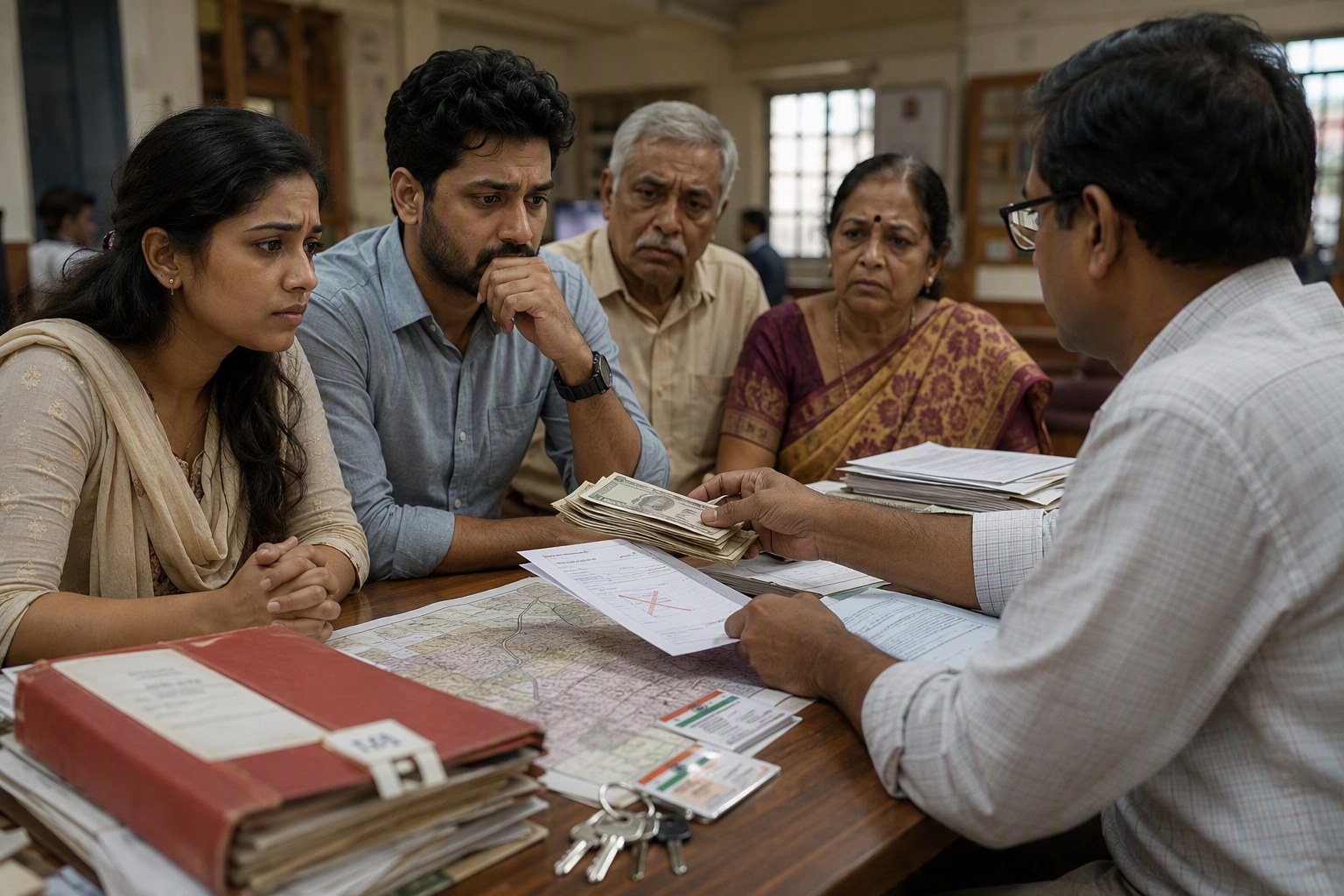
The biggest shift will be from registration-stage detection to mutation-stage detection. Today, a buyer may sign an agreement, apply for a bank loan, arrange stamp duty, take leave from office and reach the SRO only to hear that the property is blocked under 22-A. If mutation-linked screening becomes active, that risk can surface earlier in the revenue record chain.
| Stage | Current buyer risk | Possible impact of 22-A mutation check |
|---|---|---|
| Before agreement | Buyer depends on seller papers and broker confidence | Buyer can check survey number and pahani history more seriously |
| Mutation application | Revenue record update may proceed without full visibility to buyer | System may flag prohibited property status during approval |
| SRO registration | 22-A risk may be found late | Fewer last-minute surprises at registration |
| Loan processing | Bank legal team may raise queries after fees are paid | Buyer can resolve doubts before deeper financial commitment |
For urban flats, 22-A risk is less common than in raw land, but it is not irrelevant. If the project land itself has unresolved title issues, the apartment buyer can face loan, resale or registration trouble. Buyers in Serilingampally, Rajendranagar, Gandipet and Medchal should not assume that a glossy brochure settles land title. Check the project on the RERA Project Lookup, verify the land survey details, and compare the registration jurisdiction through Find Your SRO Office.
What Buyers Should Check Before Paying Token Amount
My advice is blunt: do not pay a serious token amount only because the seller says “Dharani lo clear undi”. Dharani entries are useful, but title comfort needs more than one screen. Ask for the survey number, subdivision number, old pattadar details, link documents, layout approval, land conversion order if applicable, and the latest EC.
Use the Survey Number Finder if the seller gives only a location pin or plot number. Then use the Market Value / Guideline Value Search to compare government market value with the quoted price. For registration cost planning, check the Stamp Duty Calculator. In Telangana sale registrations, buyers generally plan for stamp duty, transfer duty and registration charges together, so the cash outflow should be calculated before agreement drafting.
- For plots: check 22-A status, EC, pahani, layout approval, land use, approach road and whether the survey number matches the plotted layout.
- For agricultural land: check pattadar details, succession, assignment history, ceiling restrictions and local mandal revenue records.
- For flats: check RERA registration, land title documents, building permission, UDS share and previous mortgage entries.
- For resale homes: check EC, previous sale deed, loan closure proof, property tax and SRO jurisdiction.
Local Impact: Hyderabad Growth Corridors Need Earlier Title Alerts
The immediate impact, if the state moves ahead, will be felt in the land-heavy growth corridors. Shankarpally mandal has seen strong buyer interest from the Financial District and Kokapet side. Maheshwaram and Tukkuguda attract airport-side investors. Ghatkesar, Bibinagar and Yadadri-side locations pull buyers looking for lower ticket sizes. Moinabad and Chevella have farmhouse and weekend-home demand, but these areas also need careful survey-level checks.
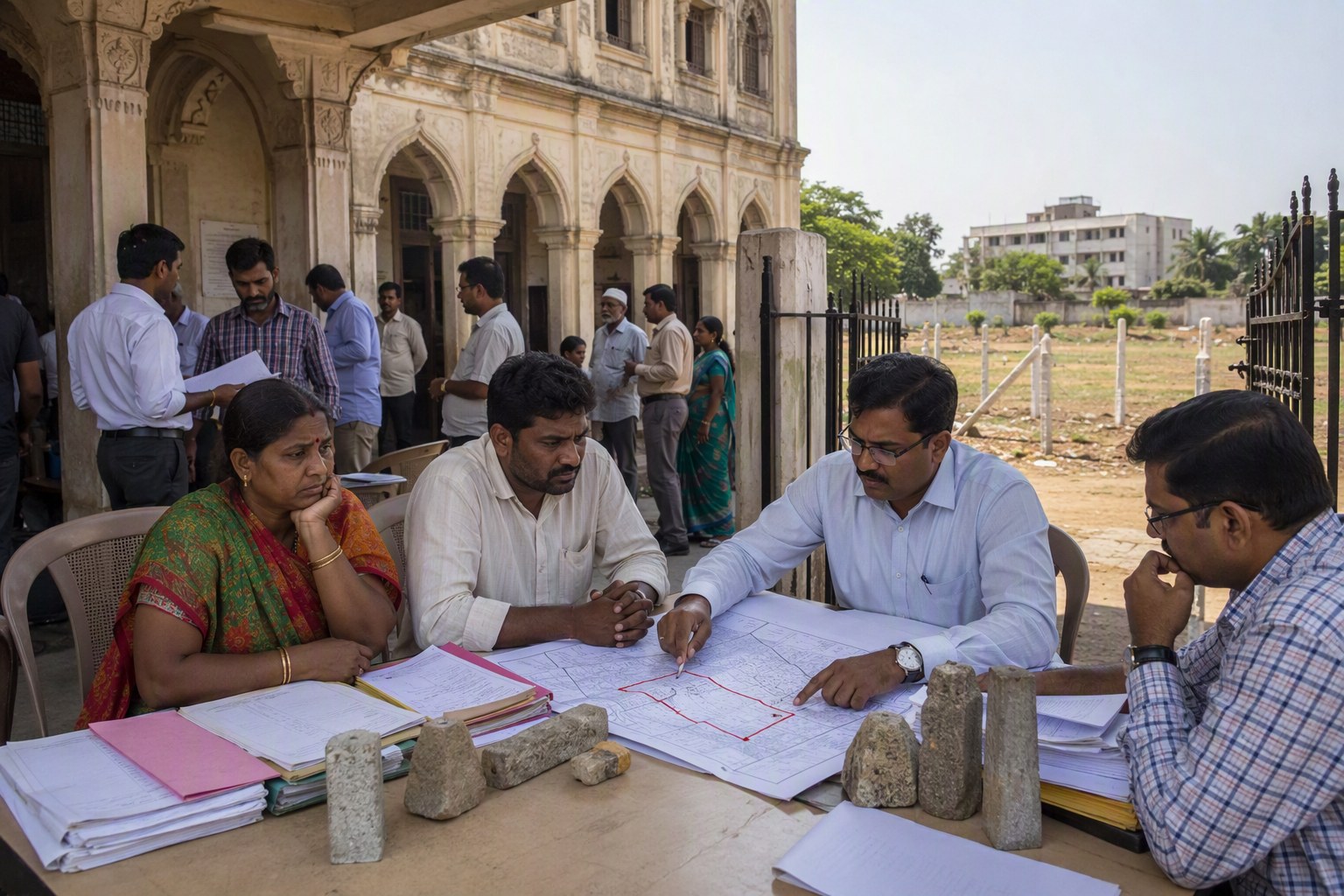
In such places, one village may have clean patta land, assigned land pockets, old government claims, water body boundaries and layout conversions sitting close to each other. A buyer cannot judge this by road width alone. We have seen cases where two adjacent plots have different legal comfort because their parent survey numbers have different histories.
A mutation-linked 22-A check will not cure all title defects. It may not catch every civil dispute, unregistered family claim or physical possession issue. But it can give an official early signal for a major category of blocked properties. That is a sensible upgrade for a state where land values have moved faster than buyer awareness.
What Sellers And Developers Should Prepare
Sellers should clean up records before entering the market. If a property is wrongly reflected under 22-A, the correction process can take time through the competent department. Waiting until the buyer reaches registration is poor practice and usually damages the deal.
Developers and layout promoters should keep survey-wise title notes ready, not just marketing maps. For HMDA and DTCP layouts, buyers are now asking better questions. They want to know the parent document chain, mutation status, land conversion, mortgage plots, open space details and whether any part of the land has a prohibited property flag. This is healthy for the market.
For buyers, the safest approach is layered checking: 22-A status, EC, guideline value, SRO jurisdiction, RERA where applicable, and a local advocate’s title opinion. The possible government move may make one of those layers stronger and earlier.
Frequently Asked Questions
What is a 22-A prohibited property in Telangana?
A 22-A prohibited property is a property blocked from registration under Section 22-A of the Registration Act. It may include government land, assigned land, endowment land, wakf land or other notified restricted property.
How many prohibited properties are recorded in Telangana?
Telangana has 147,934 prohibited properties recorded under Section 22-A, based on the available database figure.
Will a mutation-linked 22-A check replace legal verification?
No. It can give an earlier official warning, but buyers should still check EC, link documents, pahani, land use, layout approval and get a lawyer’s title opinion.
Which Hyderabad areas need extra care for 22-A checks?
Land-heavy areas such as Shankarpally, Moinabad, Maheshwaram, Ghatkesar, Chevella, Abdullapurmet and Yacharam need careful survey-number level checks before payment.
Where can I check 22-A status before registration?
You can start with Verified.RealEstate’s Section 22-A Prohibited Property Check, then verify EC, SRO jurisdiction, survey number and guideline value before signing the agreement.