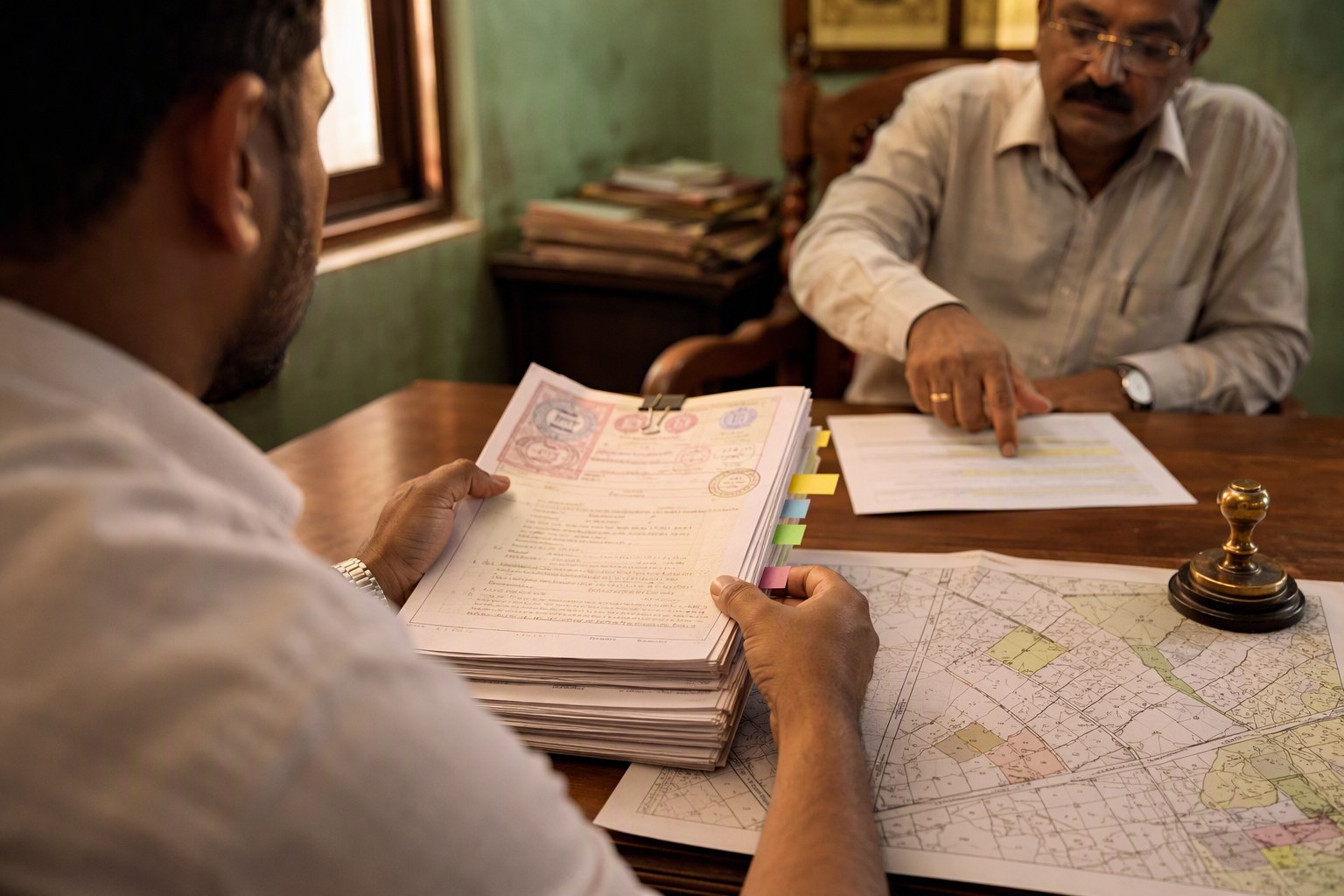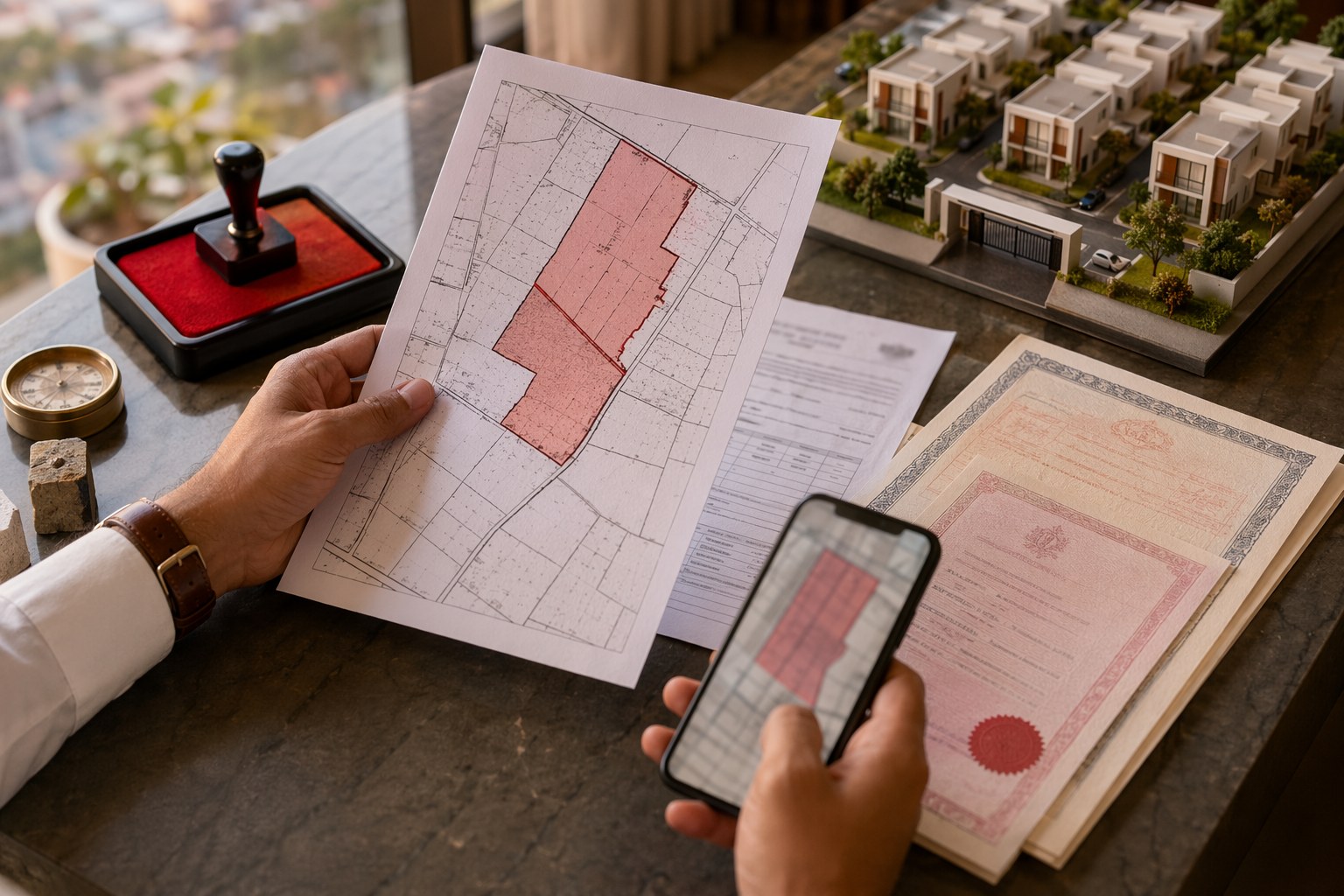
Telangana May Add Seller e-KYC to Property Registrations, a move that could bring one more identity check into sale deed registration at Sub-Registrar Offices across the state. If implemented, the seller may have to complete electronic KYC before or during registration, reducing the risk of impersonation, forged appearances, benami-style misuse, and family-property disputes where one person sells without proper authority.
The proposal is being watched closely by buyers, brokers, document writers and legal teams in Hyderabad, especially because Telangana already has 147,934 prohibited properties under Section 22-A on the radar. For a market where land in Gandipet, Shankarpally, Maheshwaram, Medchal, Rajendranagar and Serilingampally can move quickly, identity verification at the SRO counter is not a small procedural change. It can decide whether a buyer sleeps peacefully after paying the advance.
Telangana May Add Seller e-KYC to Property Registrations: What may change at SROs
At present, a property registration in Telangana typically depends on deed documents, party presence, photographs, biometrics, PAN, Aadhaar-related identification, witness details, challan payment and SRO-level verification. The proposed seller e-KYC layer may tighten the identity side of this workflow.
In plain terms, the government may ask the selling party to digitally confirm identity before a sale deed, gift deed, exchange deed or other conveyance document is accepted for registration. This could be linked to Aadhaar-based authentication, mobile OTP, facial match or another approved digital identity method. Final rules are not yet public, so buyers should wait for the official circular before assuming the exact process.
In our experience, the weakest point in many property frauds is not always the title chain. Sometimes the title is clean on paper, but the person sitting in front of the document writer is not the real owner, or does not have valid authority to sell. Seller e-KYC directly targets that gap.
For genuine sellers, e-KYC may add a few minutes. For fraudsters trying to impersonate an NRI owner, elderly parent, missing family member or dead pattadar, it can become a serious roadblock.
Why Telangana May Add Seller e-KYC to Property Registrations now
Telangana’s property market has become faster, larger and more document-heavy. A buyer in Narsingi may be dealing with a flat in a RERA project. Another buyer in Mokila may be purchasing converted land. A family in Hayathnagar may be regularising inherited property. A small mistake in identity verification can create years of litigation.
The government is also dealing with a large prohibited-property universe. The number available from the database is clear: 147,934 properties are marked under Section 22-A prohibited property records. These can include government lands, assigned lands, endowment lands, wakf-related lands, court-disputed entries and other restricted categories depending on the record. A buyer should always check the 22-A status before paying token advance. You can use our Section 22-A Prohibited Property Check for this first filter.
Seller e-KYC will not replace title verification. It will not convert disputed land into safe land. But it can add a personal-identity shield at the registration stage. That is useful in places where land values have risen sharply and old pattadar passbooks, GPA documents and family settlements are often mixed into sale negotiations.
How identity fraud happens in Telangana property deals
Most Hyderabad buyers imagine fraud as a fake layout or a missing HMDA approval. Those are real risks, no doubt. But impersonation is another problem we keep seeing in field-level checks.
- NRI owner impersonation: A person claims to act on behalf of an owner living in the US, Gulf or Australia, but the GPA is doubtful or cancelled.
- Family property sale without consent: One sibling sells ancestral property in Moinabad or Chevella mandal without proper release deeds from other legal heirs.
- Old-owner fraud: A land parcel changes hands using outdated identity documents, while the true owner is unaware.
- Fake pattadar appearance: In agricultural land deals, someone poses as the pattadar using manipulated copies of pahani, passbook or Dharani screenshots.
- Dead person title misuse: A property is sold using documents of a deceased person, especially when mutation is pending.
Seller e-KYC can reduce these risks only when it is integrated properly with registration data, party photographs, biometrics and document history. If it becomes only another checkbox, it will not help much. The real value comes when the SRO system flags mismatch between owner details, identity credentials and the proposed deed.
Impact on Hyderabad buyers, sellers and brokers
For buyers, this is mostly positive. Before paying a ₹5 lakh or ₹10 lakh advance for a resale flat in Kondapur, Manikonda, Miyapur or Uppal, the buyer can insist that the seller’s identity and ownership documents are consistent. For land purchases in Shankarpally, Maheshwaram, Kandukur, Abdullapurmet and Medchal mandals, the check becomes even more valuable because survey numbers, extents and pattadar details must match cleanly.
For sellers, the main impact will be preparation. Aadhaar-linked mobile number, PAN, correct name spelling, updated address and valid authority documents will matter. If the sale is through GPA, the principal’s identity and the agent’s authority may face closer scrutiny. NRI sellers should keep notarised, apostilled or consulate-attested documents ready wherever applicable.
For brokers and document writers, the days of taking documents to SRO at the last minute may become tougher. I would tell any serious broker in Hyderabad: verify seller identity before you collect advance from the buyer. It saves everyone from ugly disputes later.
| Deal type | Likely e-KYC benefit | Buyer should still check |
|---|---|---|
| Resale flat in Gachibowli, Kondapur, Miyapur | Confirms seller identity at registration | EC, link documents, society NOC, loan closure |
| Open plot in Shankarpally or Maheshwaram | Reduces fake-owner risk | Survey number, layout approval, 22-A status, land use |
| Agricultural land in Chevella or Moinabad | Checks pattadar identity | Dharani details, pahani, mutation, access road |
| GPA-based sale | May expose weak authorisation | GPA validity, principal identity, revocation status |
Telangana May Add Seller e-KYC to Property Registrations, but due diligence remains your job
A government identity check is not the same as legal clearance. Buyers must understand this clearly. The SRO registers documents; it does not give a legal guarantee that the property is litigation-free, mortgage-free, family-dispute-free or conversion-compliant.
Before registration, use the Encumbrance Certificate Search to check registered transactions and mortgages. Cross-check the government market value using the Market Value / Guideline Value Search. If you are unsure which registration office applies to your property, use Find Your SRO Office. For land parcels, our Survey Number Finder and Property Verification Tool can help you structure the first level of checks.
Also calculate your registration outgo early. In many Telangana sale transactions, buyers budget around 6% towards stamp duty, transfer duty and registration fee, subject to property type and latest government rules. A ₹1 crore flat can therefore need roughly ₹6 lakh towards registration-related charges. Use the Stamp Duty Calculator before fixing your payment schedule.
What I would check before booking a property now
If seller e-KYC becomes mandatory, good. But I would not wait for the rule to protect my money. For any Hyderabad or Telangana deal, my checklist is simple:
- Match the seller’s name across sale deed, link documents, Aadhaar/PAN, tax receipts and EC.
- Check whether the property appears in Section 22-A prohibited records.
- Verify survey number, extent and boundaries, especially for plots and agricultural land.
- Check Dharani, pahani and mutation details for agricultural land.
- Ask for original link documents, not only scanned copies.
- For flats, verify RERA status using RERA Project Lookup, occupancy certificate, sanctioned plan and undivided share.
- For resale homes under loan, insist on bank closure letter and original document release process.
- Keep advance payment through banking channels only. Avoid large cash advances.
Hyderabad buyers are becoming sharper, but the market is also becoming more creative in risk. A villa plot near Kollur, a high-rise flat in Nanakramguda, or a farmhouse-style land parcel near Shamirpet may all look attractive. The real question is whether title, identity, approvals and possession line up properly.
What happens next
The proposed seller e-KYC system will need clear operating rules. Will it apply to all deed types? Will NRIs get a separate process? What happens if Aadhaar authentication fails due to mobile number issues? Can elderly sellers complete assisted e-KYC at the SRO? Will the system integrate with Dharani and registration databases? These details will decide whether the reform is practical or painful.
My view is that Telangana should implement seller e-KYC, but with proper exception handling. Genuine sellers should not be harassed due to spelling differences or old mobile numbers. At the same time, impersonation risk must be attacked firmly. A market with 147,934 prohibited 22-A properties already needs tighter safety filters, not looser ones.
For buyers, the message is straightforward: treat e-KYC as one safety layer, not the full safety net. Identity, title, approvals, valuation, possession and taxation must all be checked before registration day.
Frequently Asked Questions
Will seller e-KYC be mandatory for all Telangana property registrations?
The final rule is not yet public. If notified, it may apply to sale deeds first and later to other deed types, depending on the government’s registration workflow.
Can seller e-KYC stop all property fraud?
No. It can reduce impersonation risk, but buyers must still check title documents, EC, 22-A prohibited status, survey number, approvals, loans and possession.
Why is Section 22-A checking important in Telangana?
Telangana has 147,934 prohibited properties recorded under Section 22-A. If a property is restricted, registration may be blocked or legally risky.
What should an NRI seller prepare if e-KYC is introduced?
An NRI seller should keep identity documents, Aadhaar-linked details if available, valid GPA or authorisation papers, and consulate or apostille documentation where required.
Which tools can I use before registration?
Start with prohibited property check, EC search, guideline value search, SRO finder, survey number check and stamp duty calculation before paying a major advance.