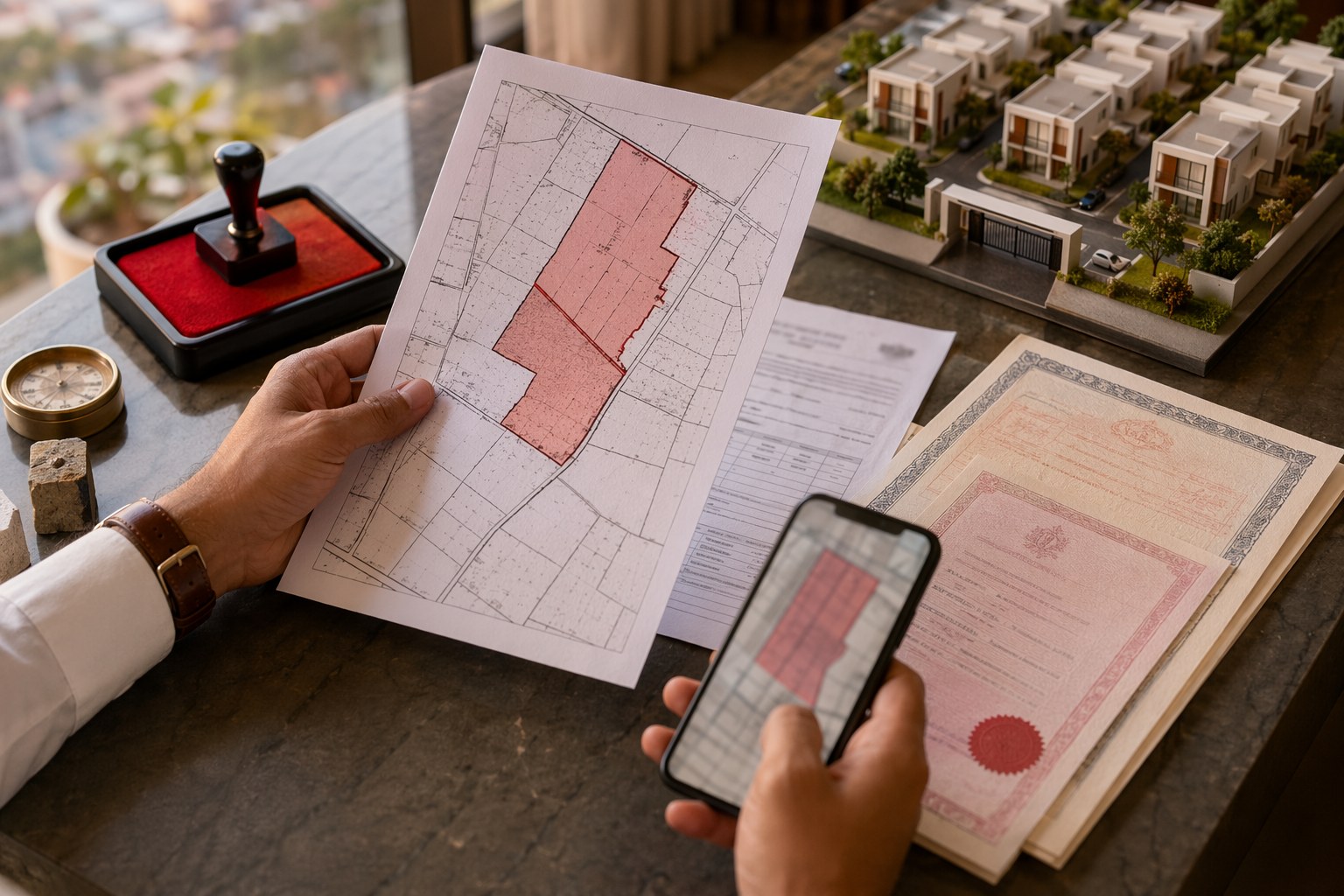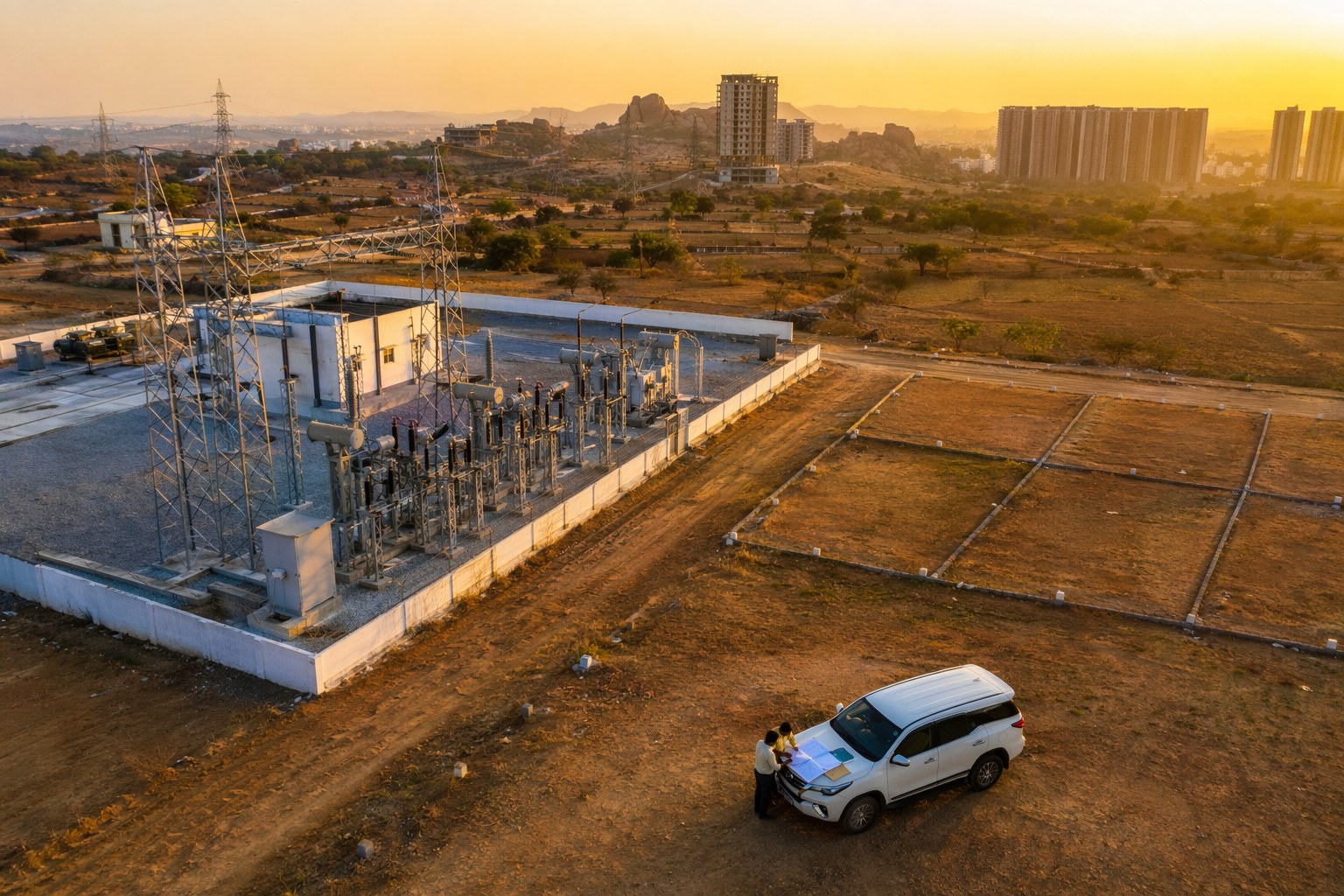
Telangana 22-A Verification APIs are becoming a serious discussion point in property due diligence after government records show 3,076,153 prohibited property entries under Section 22-A. For lenders, brokers, legal-tech firms and verification desks handling Hyderabad and Telangana land deals, this is no longer a slow manual-check problem. It is a scale problem.
The immediate market signal is clear: when prohibited-property data runs into millions of entries, one-off checks at the end of a transaction are not enough. Banks, NBFCs, large brokerages, land aggregators and law firms need faster ways to screen survey numbers, village names, mandals and SRO-linked records before money, token advance or loan processing starts.
In our experience, most title problems in Telangana do not begin with a dramatic court case. They begin with a small mismatch: wrong survey number, old village name, missing pahani trail, incorrect mandal mapping, or an assumption that because a land parcel is near Gachibowli, Kokapet, Narsingi, Miyapur, Tellapur or Shadnagar, it must be clean. That assumption can be costly.
Why Telangana 22-A Verification APIs are becoming relevant
Section 22-A refers to categories of properties where registration can be restricted or prohibited. A property may appear in such records for reasons connected to government land, assigned land, endowment or wakf issues, court restrictions, notified lands, or other official prohibitions. A buyer should not read every 22-A hit as fraud, but a hit is never something to casually ignore.
For a single buyer, checking one plot through a Section 22-A Prohibited Property Check may be enough at the first level. But for a housing finance company processing files across Serilingampally mandal, Gandipet mandal, Maheshwaram mandal, Farooqnagar mandal, Patancheru mandal and Ramachandrapuram mandal, manual checking becomes slow and inconsistent.
This is where API-based verification comes in. Instead of asking a legal executive to search each file separately, a lender or due diligence firm can plug a verification API into its loan origination, customer onboarding or document review workflow. The system can flag possible 22-A risk early, before valuation, legal opinion or disbursement.
Our view is simple: Telangana title verification is moving from document collection to data matching. Section 22-A is one of the first checks that should happen, not the last.
Telangana 22-A Verification APIs and the lender use-case
Lenders are natural users of this technology. Housing finance teams already ask for sale deed, link documents, EC, tax receipts, layout approvals and valuation reports. But if a property is hit by a prohibited-property record, much of that effort becomes wasted.
A good API-led workflow can run an early red-flag screen using survey number, village, mandal and district inputs. It can then push the file for deeper legal review only where needed. This is especially useful for plotted development files around fast-moving corridors such as Kollur, Mokila, Adibatla, Tukkuguda, Shamshabad, Shankarpally and Ibrahimpatnam, where agricultural land histories, conversion records and layout permissions need careful reading.
We have seen buyers get excited by HMDA layout talk, ORR access and metro corridor rumours, but the legal file still comes down to basics: survey number, ownership chain, encumbrance, zoning, registration eligibility and SRO jurisdiction. Technology cannot replace a competent property lawyer, but it can stop obviously risky files from entering the pipeline blindly.
What brokers and due diligence firms gain from API checks
Good brokers in Hyderabad are already more careful than before. They know that one bad listing can damage their name in a locality. If a broker is handling resale flats in Kondapur or Manikonda, the checks are different from open plots in Shadnagar or agricultural land near Chevella. But the habit should be the same: verify before pitching.
For brokerages and due diligence firms, Telangana 22-A Verification APIs can support three practical tasks:
- Listing hygiene: screen land parcels before adding them to inventory.
- Buyer confidence: share a first-level risk note before site visits and token discussions.
- File prioritisation: send only clean or explainable cases to senior legal teams.
A buyer can start with public-facing checks such as the Survey Number Finder, Encumbrance Certificate Search and EC Analyzer. For professional users handling bulk files, the same logic needs to operate at higher volume with audit trails.
The Hyderabad land market angle
Hyderabad’s land market is not uniform. A flat in Kukatpally has a different risk profile from a villa plot in Narsingi. A converted plot in Maheshwaram mandal is not the same as agricultural land near Kandukur. A resale apartment in LB Nagar will usually revolve around building permissions, UDS, EC and society records, while land near Moinabad or Shankarpally may need deeper village-level checks, old pahani records and family title review.
That is why API-based checks must not be treated as a magic stamp. They should be part of a stack: 22-A status, EC, SRO mapping, guideline value, RERA where applicable, land-use zone and document consistency. For market value and ready reckoner checks, users can refer to the Market Value / Guideline Value Search. For registration office mapping, the Find Your SRO Office tool is useful at the early stage.
Rates should never be taken only from WhatsApp groups or broker talk. The government ready reckoner or guideline value is not the same as market price, but it anchors stamp duty, registration cost and official valuation discussions. Before paying an advance, buyers should also use the Stamp Duty Calculator to understand registration-side costs.
How a practical verification workflow may look
| Stage | Check | Why it matters |
|---|---|---|
| Pre-listing | Survey number and village mapping | Prevents wrong-property verification, a common field-level issue |
| First legal screen | Section 22-A prohibited-property check | Flags registration restrictions before token advance |
| Document review | EC, link deeds and pahani trail | Shows ownership movement and possible gaps |
| Valuation support | Guideline value and SRO mapping | Helps align official value, duty calculation and jurisdiction |
| Final decision | Lawyer review and lender policy check | Converts data into a lending or purchase decision |
This kind of workflow is not only for banks. Proptech portals, corporate relocation teams, family offices, plotted development marketers and NRI advisory firms can all benefit. NRIs, in particular, often depend on relatives or local brokers for first-level information. A structured API check can reduce blind trust, though final verification should still involve original documents and legal opinion.
What API providers must get right
The opportunity is large, but legal-tech firms cannot afford casual data handling. A 22-A API must be explainable. If a record is flagged, the user should know the basis: district, mandal, village, survey number match and nature of prohibition where available in government records. Fuzzy matching is useful, but false confidence is dangerous.
In Telangana, spelling variations are a real issue. Village names may appear differently across old deeds, Dharani records, SRO records and local usage. Mandal boundaries and administrative references may also confuse buyers who are new to the state. API systems should account for Telugu-English spelling differences, legacy names and survey sub-division formats.
For public users, a broader first check can be done through the Property Verification Tool. For professionals tracking changes over time, the Property Change Tracker becomes useful because land records are not static. A clean-looking file today still deserves monitoring if the transaction is large or delayed.
Telangana 22-A Verification APIs will not replace legal opinion
There is one point where I will be blunt. An API result is not a legal opinion. It is a decision-support layer. If a land parcel near Kokapet or Tellapur comes clean in a first-level check, that does not automatically prove marketable title. Link documents, family partitions, GPA history, court cases, layout approval, land conversion and possession still matter.
But the reverse is also true. If a basic Section 22-A check throws a serious red flag, no buyer should rush into paying token money just because the location is hot. Hyderabad has enough genuine inventory. There is no need to gamble on a property that cannot pass elementary verification.
The larger industry shift is visible: property verification in Telangana is becoming data-first, then document-led, then lawyer-reviewed. With 3,076,153 prohibited property entries in government records, legal-tech firms that build accurate, auditable and locally aware verification APIs will find serious demand from the people who carry transaction risk every day.
Frequently Asked Questions
What are Telangana 22-A Verification APIs?
They are software interfaces that help lenders, brokers or due diligence teams check whether a property may appear in Section 22-A prohibited-property records using inputs such as survey number, village, mandal and district.
Does a Section 22-A hit mean the property is fraudulent?
No. A hit means the property needs deeper review. It may relate to government records, assigned land, endowment or other restrictions. A lawyer should examine the exact reason before any purchase decision.
Can buyers check 22-A status before paying token advance?
Yes. Buyers should run a first-level prohibited-property check before paying token money, especially for plots and land parcels. It is safer to verify survey number, village and mandal details early.
Do APIs replace a property lawyer?
No. APIs help with early screening and risk flags. Final title opinion still needs document review, EC analysis, link deed reading, pahani checks where relevant and a qualified legal opinion.
Which Hyderabad areas need extra care in land verification?
Fast-growing land and plotted development belts such as Kokapet, Narsingi, Tellapur, Mokila, Shankarpally, Maheshwaram, Tukkuguda, Shadnagar and Adibatla need careful survey-number and title checks.