


Hyderabad JDAs Shift to Revenue Share as Title Checks Bite
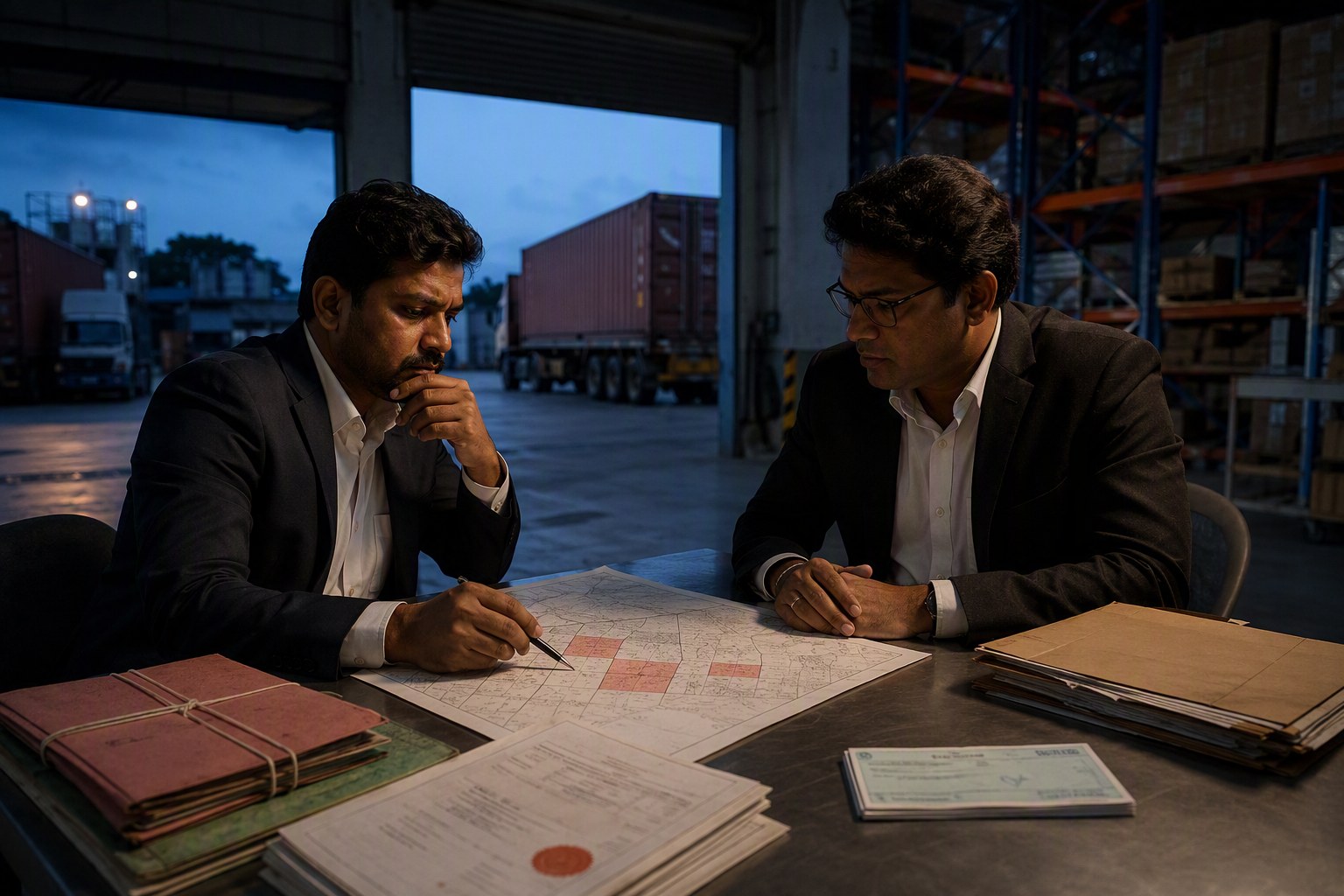
Hyderabad JDAs are seeing a clear change: big landowners and developers are now leaning towards revenue-share joint development agreements rather than outright land purchases, especially in high-value corridors where 22-A title checks can delay or disturb a deal. The immediate trigger is simple. Telangana has 147,934 prohibited properties under Section 22-A, and that number is now sitting inside every serious due diligence conversation from Kokapet and Narsingi to Tellapur, Mokila, Bachupally, Shamshabad and Maheshwaram.
In our experience, this is not a small paperwork issue. When land values are running into ₹80,000 to ₹2 lakh per sq yd in parts of western Hyderabad, even one unclear survey number, old assignment entry, endowment claim or court notation can change the economics of a project. Developers do not want to lock ₹200 crore to ₹800 crore in land purchase money before the title is fully clean. Landowners, on the other side, still want upside from future apartment sales. Revenue-share JDAs are becoming the middle path.
Hyderabad JDAs: Why revenue share is beating outright land buys
Earlier, large developers preferred clean outright acquisitions if the parcel was strategic. Pay the landowner, register the sale deed, consolidate the survey numbers, obtain permissions and launch. That model still exists, but it is getting harder in parcels with multiple pattadars, old pahanis, inheritance gaps, Dharani mismatches or 22-A doubts.
Revenue-share JDAs reduce the first shock. Instead of paying full land consideration upfront, the developer agrees to share a fixed percentage of sales revenue with the landowner. In western Hyderabad, we are seeing negotiations broadly around 30:70 to 45:55 in favour of the developer, depending on location, title clarity, approval risk, road access, FSI potential and whether the landowner insists on minimum guarantee.
For example, a land parcel in Gandipet mandal near Kokapet or Narsingi has a very different bargaining power from land in outer growth pockets of Shankarpally mandal or Maheshwaram mandal. Around Neopolis-Kokapet, market talk for prime land often crosses ₹1.5 lakh per sq yd and can go much higher for well-placed parcels. In Tellapur and Nallagandla, many negotiated land discussions sit around ₹80,000 to ₹1.4 lakh per sq yd depending on frontage and access. Mokila and Shankarpally are lower than Kokapet but still active, with many plotted and villa-linked land conversations around ₹30,000 to ₹60,000 per sq yd.
These are not stamp paper numbers. For registration, parties still have to check the official market value, SRO jurisdiction and ready reckoner before finalising duty costs. Buyers and landowners can use our Market Value / Guideline Value Search, Stamp Duty Calculator and Find Your SRO Office before fixing commercial terms.
Hyderabad JDAs and 22-A: The clause that now controls payout timing
Section 22-A has become the clause sitting quietly behind many JDA negotiations. If a property is on the prohibited list, the Sub-Registrar will not register it in the normal course. The issue may relate to government land, assigned land, wakf, endowment, ceiling surplus, court orders or other restrictions. Sometimes, the landowner says the entry is wrong. Sometimes, part of the survey number is affected and part is clean. The problem is that apartment buyers, banks and RERA-facing developers do not like doubt.
That is why many new JDAs are not simply saying, landowner gets X percent revenue. They now include staged payout language. A typical structure may look like this:
- Signing amount or refundable deposit after basic document review.
- Second tranche after 22-A clearance, Dharani correction or mutation confirmation.
- Revenue share begins only after RERA registration and sale collections.
- Minimum guarantee payable after approvals, not on day one.
- Indemnity from landowners for old title claims, family disputes and hidden encumbrances.
- Right for developer to pause sales if EC or SRO record shows a fresh objection.
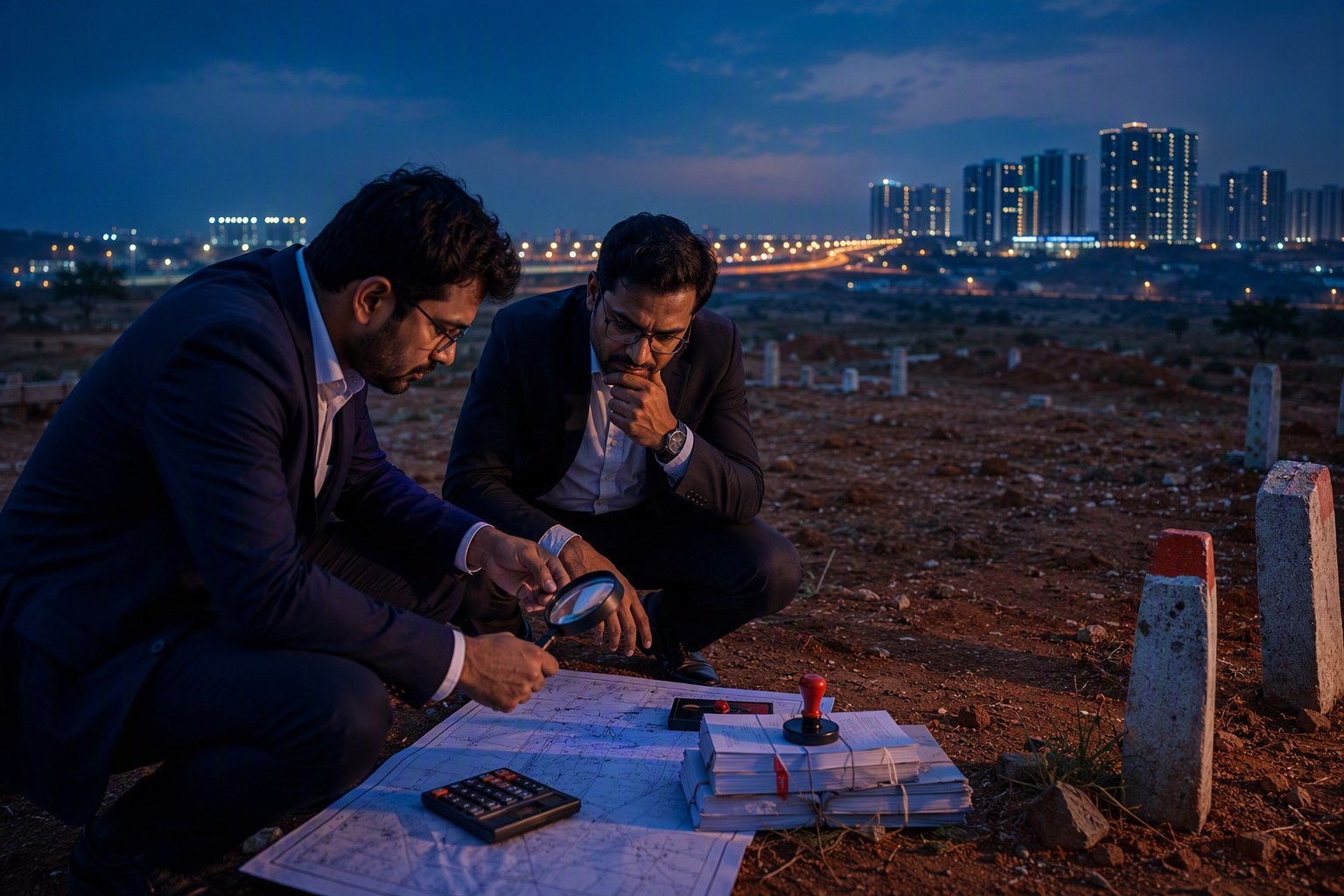
Before any landowner signs, the survey number must be tested properly. At Verified.RealEstate, we keep telling readers to start with the basics: identify the exact survey number, compare pahani records, take EC, check Dharani entries and run a 22-A search. Useful starting points are our Survey Number Finder, Encumbrance Certificate Search and Section 22-A Prohibited Property Check.
Our view is blunt: a JDA with weak title verification is not a development agreement, it is a litigation pipeline. Revenue share can reduce cash risk, but it cannot cure bad title by itself.
What this means for landowners in Kokapet, Tellapur, Mokila and Shamshabad
Landowners are not losing power. In fact, clean-title landowners in prime mandals are gaining better terms because developers are competing for fewer risk-free parcels. A landowner in Serilingampally mandal near Gachibowli, Nallagandla or Tellapur can demand stronger revenue share if the title chain is clean for 30 years, the EC is clear, access road is available and there are no land use conflicts.
But landowners with unresolved 22-A entries, pending succession issues or joint family disputes are being pushed into conditional deals. Developers may ask for a lower revenue share, longer approval window or a larger indemnity. Some are also insisting that landowners bear the cost of title rectification, survey demarcation, conversion and missing link documents.
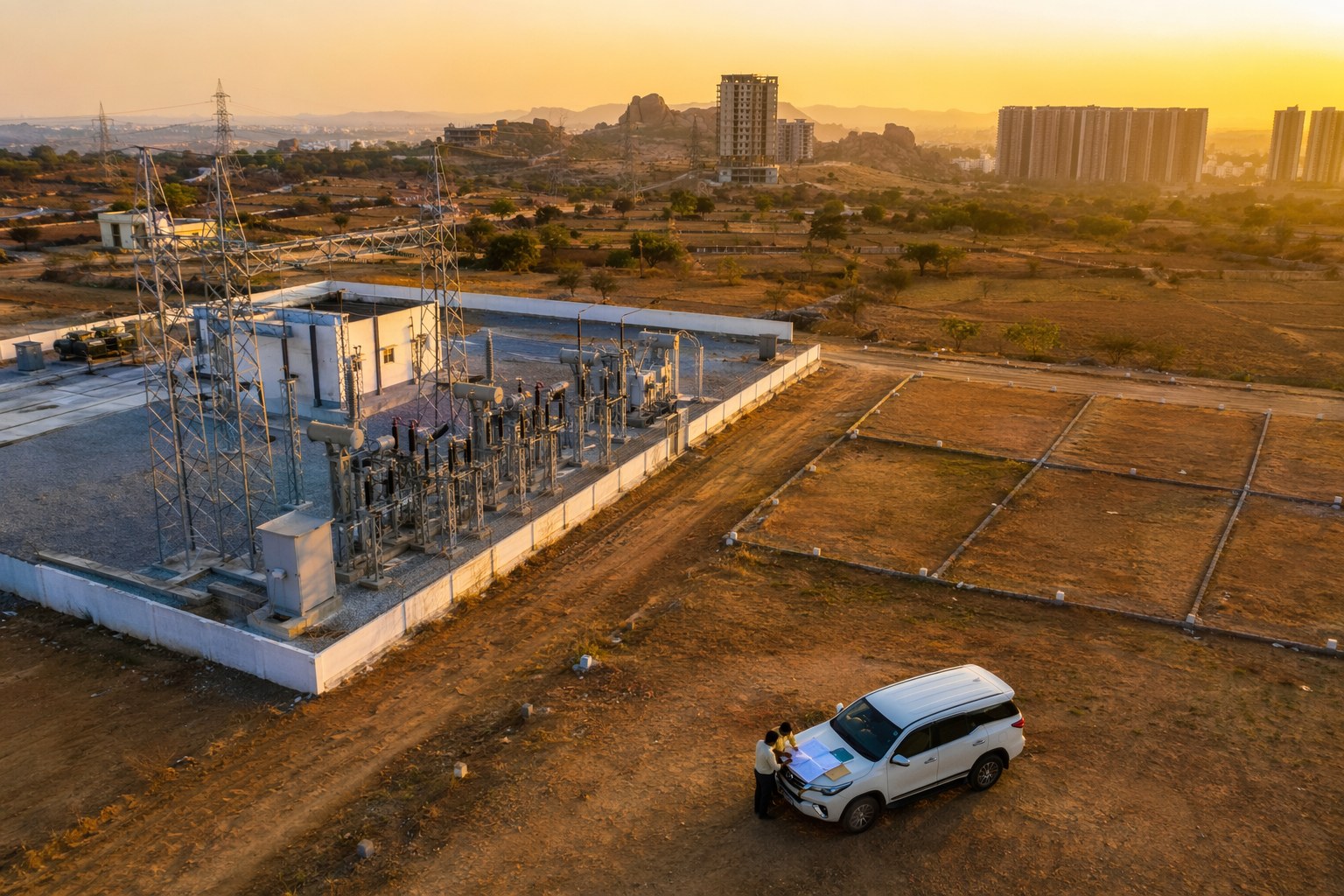
In Shamshabad, Maheshwaram and Hayathnagar mandals, where logistics, plotted layouts, villa projects and future connectivity are driving interest, the same pattern is visible. Developers like land banks, but they are cautious about government land overlap, old assignment pattas and conversion history. A parcel may look attractive on ground, but the file may tell another story.
Buyer confidence: Why Hyderabad JDAs need cleaner disclosure
For apartment buyers, the JDA structure matters because they are ultimately buying a flat built on somebody else’s land contribution. If the landowner and developer are fighting, construction slows. If title is challenged, banks may hesitate. If a 22-A issue appears late, resale confidence drops.
Buyers should not stop at glossy brochures. Check whether the project is registered, whether the land extent matches approvals and whether the developer has disclosed the development agreement properly. Start with the RERA Project Lookup. For land and layout risk, our Property Verification Tool, Land Use Zone Finder and Road Width Check can help you ask sharper questions.
One more point: revenue share can influence launch pricing. If the developer has paid a high minimum guarantee or agreed to a steep landowner share, that cost usually enters the apartment price. This is one reason why projects in Kokapet, Financial District, Narsingi and Tellapur are pricing differently even when they appear close on the map.
How deal clauses are changing in Hyderabad JDAs
| Deal item | Older approach | Current trend |
|---|---|---|
| Land consideration | Large upfront sale payment | Revenue share with smaller deposit |
| Title risk | Handled before registration | Built into staged clauses and indemnities |
| 22-A check | Often treated as one due diligence item | Now a deal-making or deal-breaking condition |
| Landowner payout | Fixed consideration or area share | Sales-linked payout, often after RERA and approvals |
| Buyer comfort | Based mainly on brand name | Based on RERA, EC, title chain and bank approvals |
We have also seen developers bring technical checks earlier into the discussion. FSI, road width, land use zone, open space requirement and composite valuation are now being reviewed before commercial closure. A landowner may quote a premium rate, but if the parcel has poor road width or restrictive zoning, the JDA share will be negotiated down. Tools like the FSI/FAR Calculator, OSR Calculator and Composite Value Calculator are useful for early checks.
Verified.RealEstate view on Hyderabad JDAs
The shift to revenue-share JDAs is a practical response to title risk, high land prices and the growing seriousness of buyers. It is not a temporary fashion. As long as the prohibited properties list remains large and Hyderabad land values keep rising, developers will prefer structures where money moves after title confidence improves.
For clean landowners, this is a strong market. For landowners with pending title corrections, this is the time to clean the file before sitting across the table. For buyers, the message is simple: do not buy only the elevation, clubhouse and launch offer. Check the land story.
Hyderabad real estate is still one of India’s most active markets. But the smarter money is now asking one question before signing: is the land clean enough for the next buyer, the bank and the SRO?
Frequently Asked Questions
What is a revenue-share JDA in Hyderabad real estate?
A revenue-share JDA is a joint development agreement where the landowner receives an agreed percentage of sale revenue from the project instead of selling the land outright for a fixed upfront amount.
Why are Hyderabad developers preferring JDAs over land purchase?
Developers are trying to reduce upfront cash exposure and title risk. With 147,934 properties under Section 22-A in Telangana, clean title checks are now central to land deals.
How does Section 22-A affect a JDA?
If the land is listed as prohibited under Section 22-A, registration and financing can become difficult. Developers usually add clauses for clearance, indemnity and staged payouts before proceeding.
Should apartment buyers check the JDA before booking?
Yes. Buyers should check RERA details, EC, land ownership, approvals and whether the developer has valid development rights. A clean JDA improves bank and resale confidence.
Which Hyderabad areas are seeing more revenue-share JDAs?
Kokapet, Narsingi, Tellapur, Nallagandla, Mokila, Shankarpally, Shamshabad and Maheshwaram are seeing active JDA discussions because land prices are high and title checks are strict.