Hyderabad GCC Campus Deals Add Deeper Land Title Clauses as large office and campus transactions in the city face a sharper legal filter. The trigger is not only high ticket size. Telangana has 147,934 properties listed under Section 22-A prohibited properties, and that number is now sitting inside boardroom discussions, term sheets and legal due diligence calls for Global Capability Centre campus deals.
In our experience, the older style of agreement — seller gives title papers, buyer checks an Encumbrance Certificate, deal closes — is no longer enough for 10-acre, 25-acre or 50-acre campus acquisitions around Hyderabad. GCC occupiers, developers and funds are asking for detailed title warranties, Dharani checks, prohibited-property confirmation, survey-level mapping, revenue record matching, indemnity baskets and escrow holdbacks.
Why Hyderabad GCC Campus Deals Add Deeper Land Title Clauses
The news from the market is clear: title risk has moved from the lawyer’s annexure to the commercial heart of the transaction. Hyderabad’s office demand is still strong, especially in the western corridor, but buyers are no longer treating land title as a routine closing item.
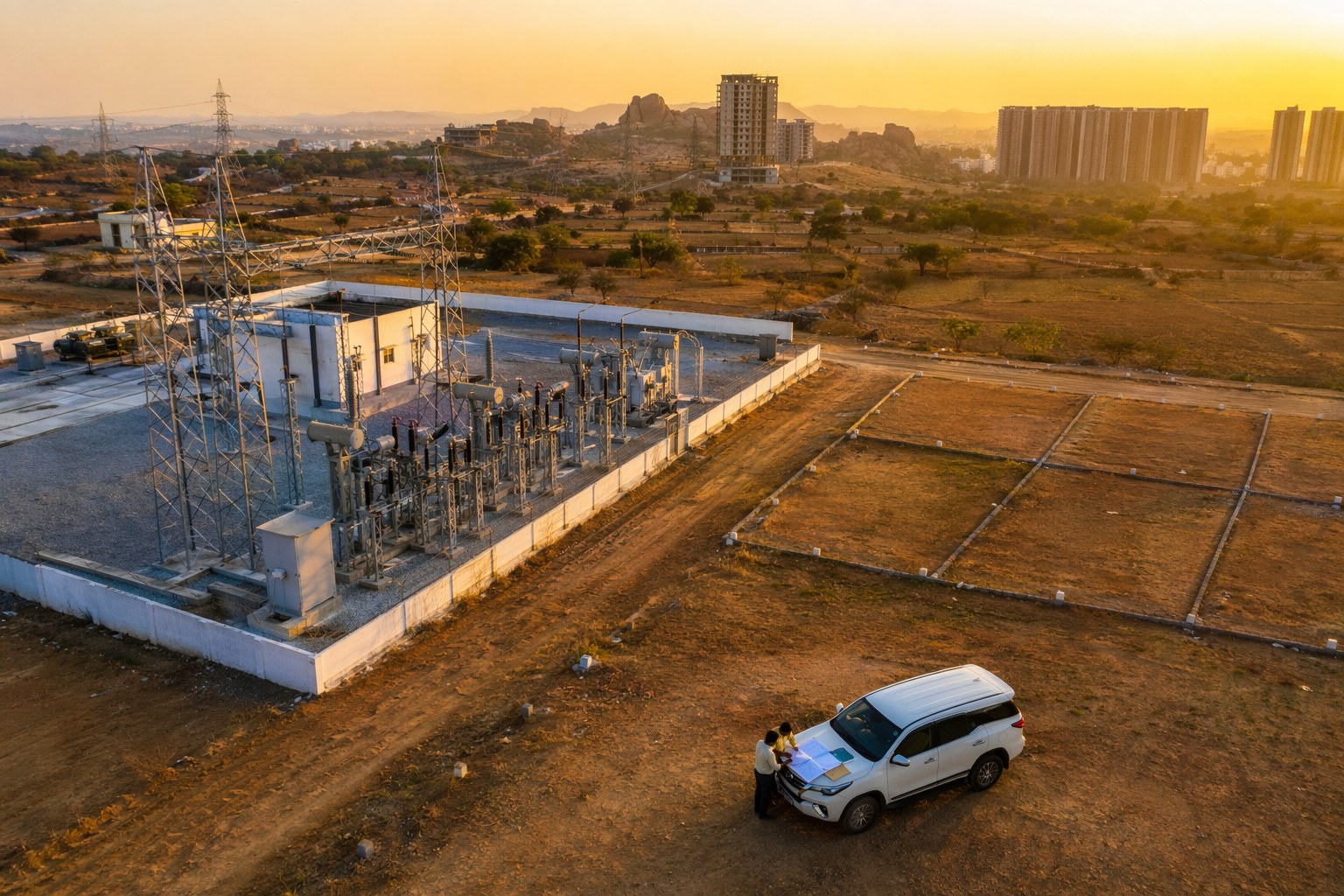
Areas like Kokapet, Neopolis, Financial District, Raidurg, Nanakramguda, Puppalaguda, Narsingi, Tellapur, Kollur, Mokila and Shamshabad are seeing large-format campus conversations. Many of these locations fall across mandals such as Gandipet, Serilingampally, Rajendranagar, Shankarpally and Shamshabad. In these belts, one survey number mistake or old assignment entry can delay registration at the SRO or push the deal into litigation.
The 147,934 prohibited-property count under Section 22-A is the number that keeps coming back. It covers categories where registration may be restricted, including government lands, assigned lands, endowment lands, wakf-linked entries and other notified properties. For a small buyer, a rejected registration is painful. For a GCC campus, it can disturb hiring plans, capex timing, design approvals and investor reporting.
My view is simple: Hyderabad is still one of India’s best office markets, but the land paper trail has to match the ambition of the project. A 30-acre GCC campus cannot be built on half-checked title comfort.
What Changed In Hyderabad GCC Campus Deals Add Deeper Land Title Clauses
Earlier, many land purchase agreements carried broad seller statements: clear title, no encumbrance, no litigation, possession delivered. Now the clauses are getting more specific. Buyers are asking sellers to confirm that the land is not present in the Section 22-A prohibited list, not classified as assigned land, not under endowment or wakf claim, not hit by acquisition notification, and not affected by road widening or master plan reservations.
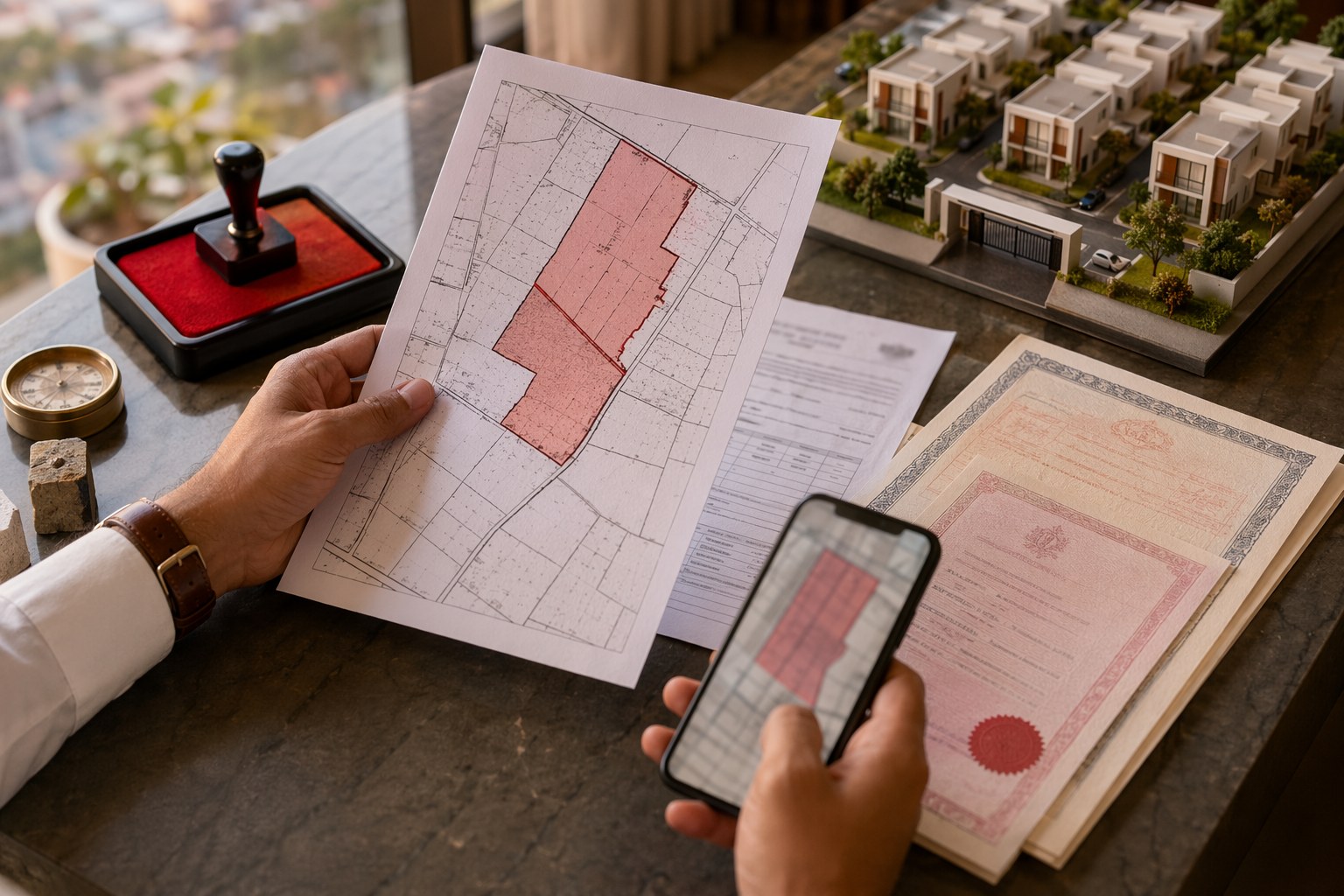
We’ve seen special focus on Dharani entries, pahani records, old ROR extracts, passbook history, mutation chain, SRO registration history and survey sketch consistency. For office campus deals, the land has to survive scrutiny from the buyer’s Indian legal team, global counsel, lenders, title insurance teams, architects and sometimes state facilitation agencies.
Buyers are also checking whether the land use supports the intended development. A parcel may look perfect on Google Maps, but if the zoning, access road or FSI calculation does not work, the commercial valuation changes quickly. This is why tools such as the Land Use Zone Finder, FSI/FAR Calculator and Road Width Check are now being used much earlier in the transaction process.
The New Deal Clauses GCC Buyers Are Asking For
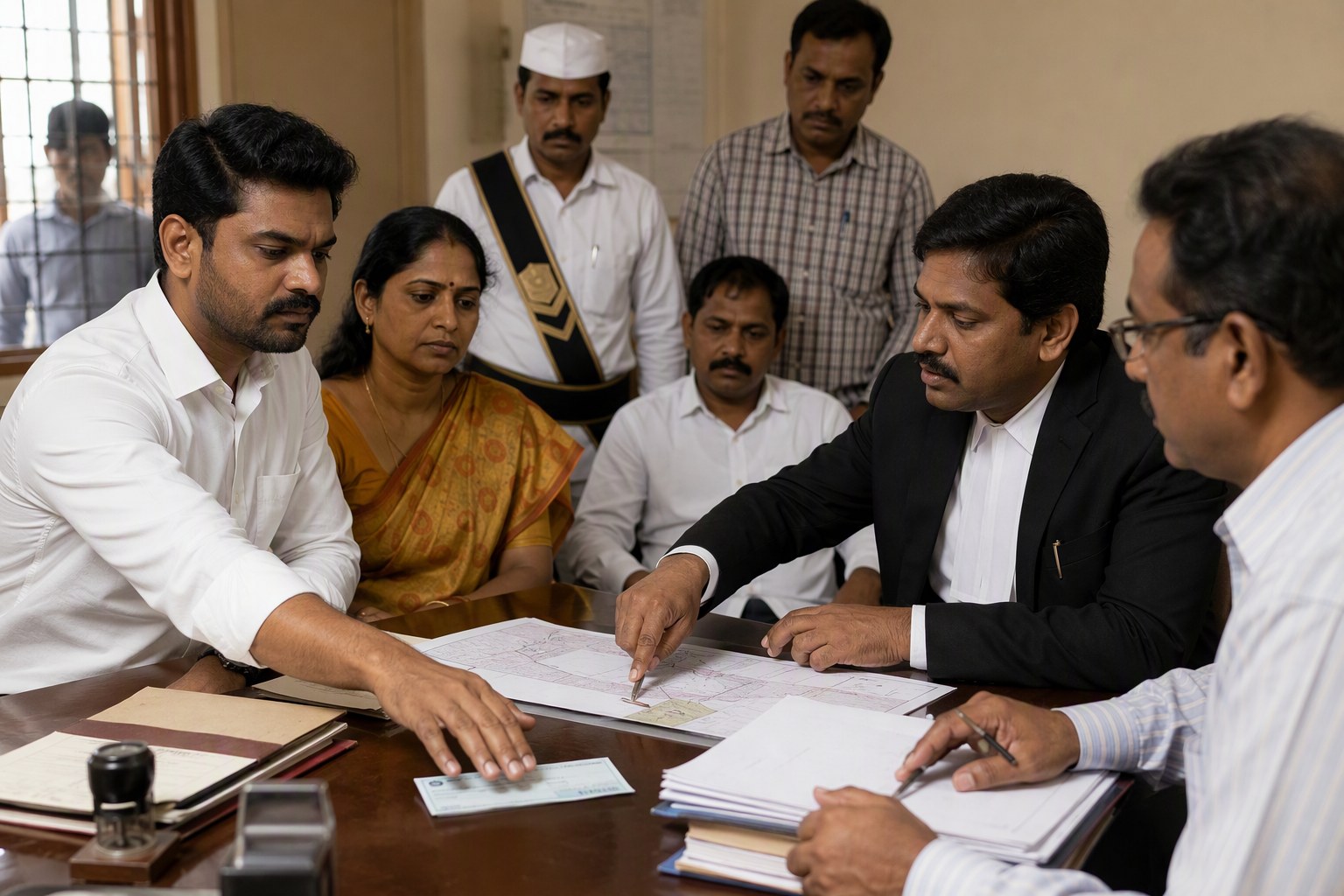
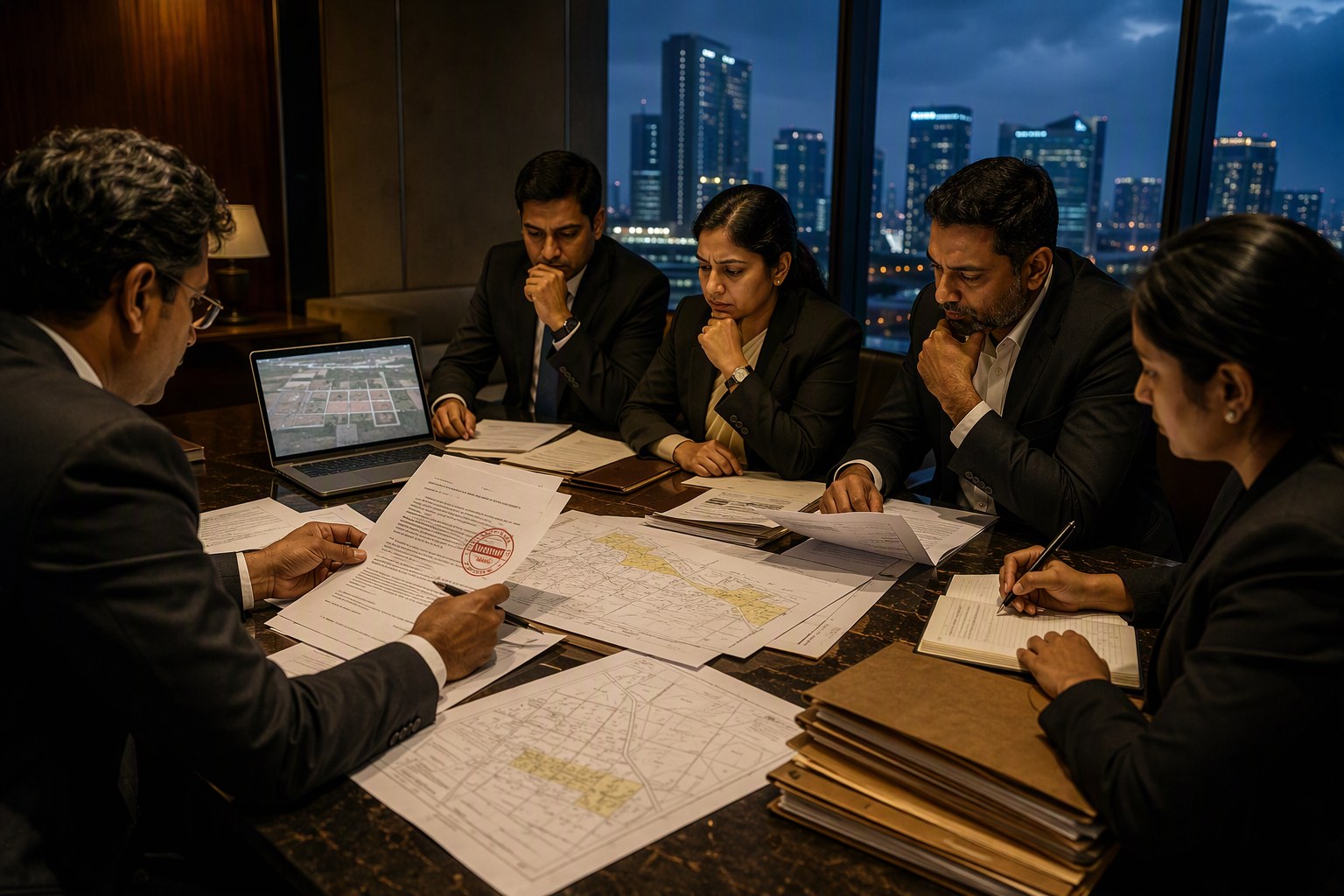
In Hyderabad’s large campus deals, the term sheet itself is becoming thicker. A simple sale agreement is getting supported by a title action matrix. Here are the clauses we are seeing more often:
- Section 22-A representation: Seller must confirm that no survey number in the transaction is listed as prohibited property.
- Dharani and revenue record warranty: Names, extents, nature of land and classification must match across Dharani, pahani and ROR records.
- Survey number schedule: Every survey number, sub-division, extent and boundary is listed separately, not casually grouped.
- Indemnity for legacy claims: Seller remains liable for old title defects, family disputes, assignment restrictions or government claims.
- Escrow holdback: A portion of sale consideration is retained until mutation, registration and physical possession are fully completed.
- Condition precedent list: Closing happens only after EC, SRO search, prohibited-property check, litigation search, land use check and board approvals.
- Access and road warranty: Seller must confirm legal access to the parcel, not only physical access used by locals.
For a buyer, these clauses are not academic. If a project in Kokapet is modelled at premium office rentals, or a campus near Tellapur is planned for phased delivery, title delay can hit the internal rate of return. Land values in the western corridor are already high. Market conversations for larger land parcels in Kokapet and Financial District often sit in the broad range of ₹75 crore to ₹120 crore per acre, depending on frontage, zoning, plot shape and development potential. In Tellapur, Kollur and Narsingi, good parcels can still command serious institutional interest because of ORR access and residential catchment depth.
Due Diligence Is Moving From EC Search To Title Intelligence
The Encumbrance Certificate remains necessary, but nobody serious is treating it as sufficient. EC only shows registered transactions and encumbrances at the SRO. It may not reveal every revenue restriction, government claim, court dispute or classification problem. That is why deal teams now combine SRO records with Dharani, pahanis, municipal master plan checks and physical boundary verification.
Before any token advance, buyers should run a Section 22-A Prohibited Property Check. After that, use the Encumbrance Certificate Search for registration history and the Survey Number Finder to avoid basic identity mistakes. For higher-value transactions, our preference is to also run the Property Verification Tool and keep a record of each finding in the negotiation file.
Another underrated check is the SRO mapping. Hyderabad’s fast-growing edges often confuse buyers because project marketing may say Hyderabad, but the registration office and mandal jurisdiction may be different. For example, a parcel marketed as near Financial District may fall under a different revenue village or registration jurisdiction than the buyer assumes. The Find Your SRO Office tool helps avoid that embarrassment before the legal team starts drafting.
Impact On Sellers, Developers And GCC Occupiers
For sellers, the message is sharp: clean paper gets better pricing. If the land record is ready, survey boundaries are clear, and there are no 22-A surprises, the seller has stronger bargaining power. If records are messy, buyers will either discount the price, insist on escrow, or walk away.
For developers, this is a chance to package land more professionally. A developer aggregating land in Gandipet mandal or around Shamshabad should maintain a due diligence room with ECs, pahanis, Dharani screenshots, mutation records, tax receipts, litigation declarations, master plan extracts and survey maps. Institutional buyers like clean folders. They pay for reduced uncertainty.
For GCC occupiers, the title clause discussion is now part of business continuity. A global bank, pharma major, cloud company or engineering centre setting up a Hyderabad campus cannot afford a land dispute after design freeze. Even when the GCC is only leasing a built-to-suit campus, it will ask the developer for title comfort, RERA status where applicable, approvals and mortgage disclosures. The RERA Project Lookup and Market Value / Guideline Value Search are useful starting points for that review.
Hyderabad Market Still Strong, But Paper Quality Will Decide Speed
Hyderabad has not lost its appeal. The city has airport access, ORR connectivity, deep tech talent, large residential supply and a government machinery that understands office-led growth. The western corridor remains the first choice for many GCC discussions, while Shamshabad and the southern belt are getting attention for larger campus formats and long-term land banking.
But the next phase of Hyderabad’s office campus growth will be more document-driven. The buyer will not simply ask, “How many acres?” The better question is, “Which survey numbers, which mandal, which SRO, what classification, what 22-A status, what access, what zoning, and who indemnifies if something fails?”
That is a healthy shift. It reduces speculative noise and rewards owners who have maintained proper land records. In a state with 147,934 prohibited-property entries, deeper title clauses are not over-caution. They are common sense for high-value GCC campus transactions.
Frequently Asked Questions
Frequently Asked Questions
Why are Hyderabad GCC campus deals adding deeper title clauses?
Because large campus deals involve high land values, long development timelines and global compliance checks. Telangana’s 147,934 Section 22-A prohibited-property entries have made buyers more careful about title, survey records and registration risk.
Is an Encumbrance Certificate enough for a large land deal in Hyderabad?
No. An EC is necessary, but it mainly shows registered transactions at the SRO. Buyers should also check Dharani records, pahani, ROR, Section 22-A status, litigation, zoning, road access and survey boundaries.
Which Hyderabad areas are seeing more GCC campus due diligence?
Kokapet, Financial District, Raidurg, Nanakramguda, Narsingi, Tellapur, Kollur, Mokila and Shamshabad are key locations where large land and office campus checks are becoming more detailed.
What is a Section 22-A prohibited property check?
It verifies whether a land parcel is restricted from registration under Section 22-A. This may include government land, assigned land, endowment-related land, wakf-linked entries or other notified categories.
How can sellers improve confidence in a GCC campus land deal?
Sellers should keep ECs, Dharani extracts, pahanis, mutation records, survey maps, tax receipts, land use proof and litigation declarations ready. Clean documentation can support better pricing and faster closure.