Hyderabad Co-Living Launches are now moving closer to metro-connected job hubs such as HITEC City, Raidurg, Madhapur, Ameerpet, Uppal and LB Nagar, as developers and rental operators chase young tech, pharma, BFSI and consulting employees who want smaller private rooms, predictable rents and shorter commutes.
The shift is visible in two formats. One is the managed co-living block, usually with furnished rooms, housekeeping, Wi-Fi, food options and app-based rent collection. The second is the compact rental-focused apartment project, where investors buy studio or 1BHK units and hand them over to an operator. In our experience, this second model is being pitched aggressively to retail buyers who want rental income but do not want day-to-day tenant headache.
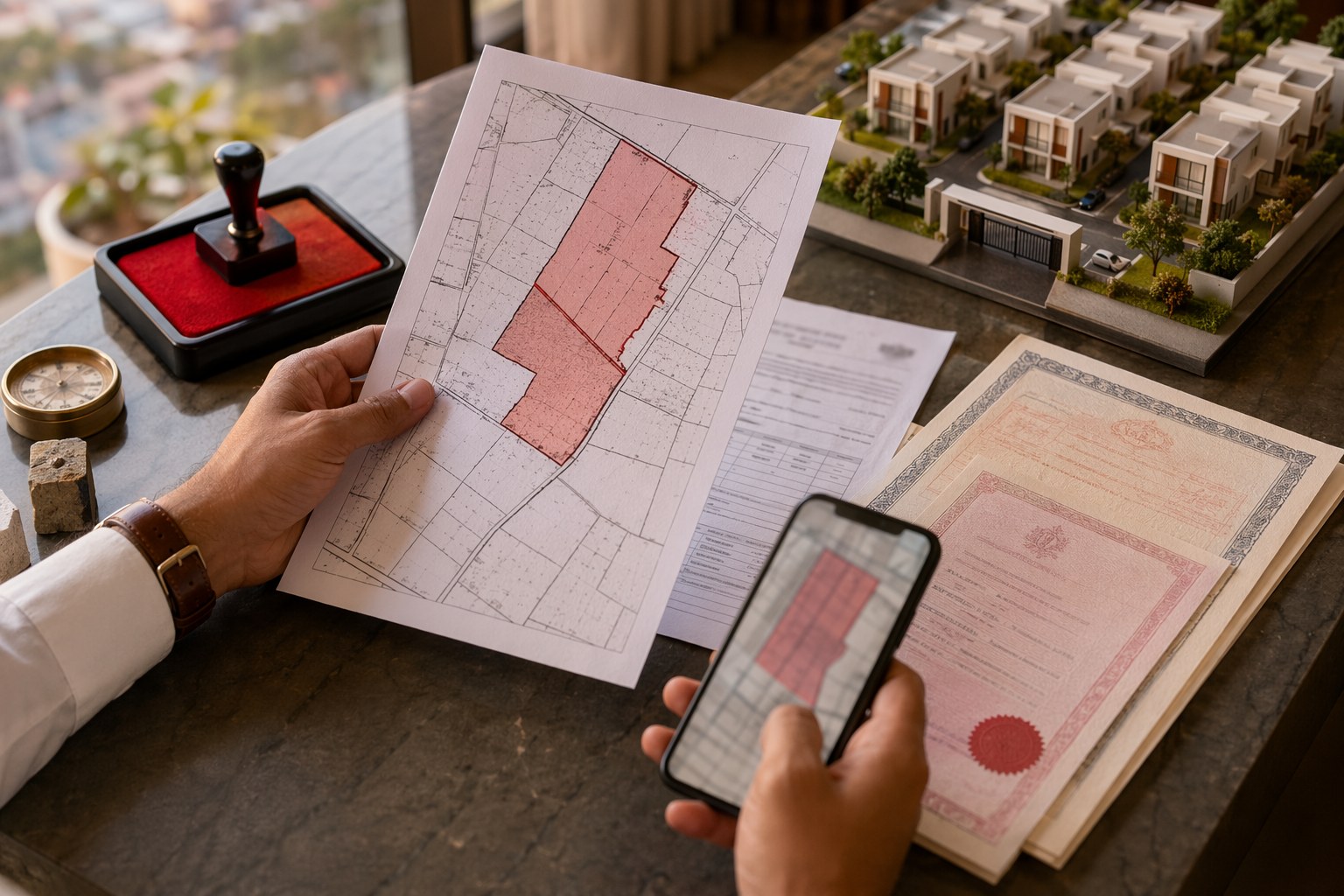
Our view is simple: metro access improves tenant demand, but it does not replace legal due diligence. Before buying into any rental-yield story, check RERA, approvals, title, SRO records and Section 22-A status.
Hyderabad Co-Living Launches: Why metro-linked hubs are getting attention
Hyderabad’s rental market has always followed employment. Earlier, the strongest rental pockets were around Madhapur, Gachibowli, Kondapur and Manikonda because the IT corridor pulled tenants directly. Now, metro connectivity is changing the map. A young employee working near Raidurg or HITEC City may prefer a room near Ameerpet, SR Nagar, Durgam Cheruvu, Kukatpally or Miyapur if the commute is predictable.
That is why developers are studying corridors rather than just pin codes. The Blue Line from Nagole to Raidurg links eastern and western employment movement. The Red Line from Miyapur to LB Nagar supports rental demand across Kukatpally, Ameerpet, Nampally and Dilsukhnagar. The Green Line has smaller coverage but still adds value around MG Bus Station and adjoining central zones.
For co-living operators, this gives three clear advantages:
- Lower vacancy risk: tenants can access multiple job hubs from one location.
- Smaller unit acceptance: tenants are willing to take compact rooms if the metro station is nearby.
- Faster leasing: furnished, ready-to-move rooms reduce decision time for new Hyderabad employees.
Hyderabad Co-Living Launches are not only an IT corridor story
Madhapur, Gachibowli and Financial District still dominate premium rentals, but not every new co-living project can afford land there. We are seeing more interest in slightly indirect but well-connected locations. Ameerpet mandal areas, Kukatpally, Moosapet, Uppal, Nagole, Dilsukhnagar, LB Nagar and Miyapur are becoming practical choices for managed rental formats.
The reason is land and acquisition cost. A project near Raidurg or Madhapur has higher land cost and tighter pricing pressure. In comparison, compact rental projects near Miyapur, Kukatpally, Uppal or LB Nagar can be positioned at a more accessible ticket size while still claiming metro-led demand.
Buyers should not confuse this with guaranteed returns. Rental income depends on occupancy, operator quality, maintenance cost, room density, fire safety, parking, local competition and tenant profile. A bad operator can spoil a good location. A weak title can spoil everything.
Localities to watch for managed rental demand
| Metro-linked belt | Nearby job/rental driver | Common product type | Buyer caution |
|---|---|---|---|
| Raidurg, HITEC City, Madhapur | IT parks, offices, start-ups | Premium co-living, studio units | Higher pricing, check carpet area and maintenance load |
| Ameerpet, SR Nagar, Begumpet | Coaching, offices, metro interchange access | Shared rooms, compact rental blocks | Verify building permissions and fire compliance |
| Kukatpally, KPHB, Moosapet | IT corridor commute, retail, students | 1BHK investor units, managed PG formats | Check parking, road width and association rules |
| Miyapur, Hafeezpet side | Metro terminal, IT commute, families and singles | Studio and 1BHK rental stock | Check survey number, land use and RERA status |
| Uppal, Nagole | Metro access, eastern Hyderabad workforce | Affordable co-living beds, small apartments | Check title flow and SRO records carefully |
| LB Nagar, Dilsukhnagar | Healthcare, coaching, retail, metro access | Budget managed rental rooms | Check conversion approvals and fire exits |
Rates, duties and official checks buyers should run
For any compact rental-focused purchase, the first number to calculate is not projected rent. It is total acquisition cost. In Telangana, property registration generally includes 4% stamp duty, 1.5% transfer duty and 0.5% registration fee, making the common transaction cost 6% of the value considered for registration. Buyers can estimate this using our Stamp Duty Calculator.
The next number is the government market value, often called guideline value or ready reckoner value in buyer conversations. This value can affect registration cost and loan assessment. Before believing a brochure price, compare it with official market value using the Market Value / Guideline Value Search.
We have also seen cases where rental-yield buyers do not know the correct SRO. That is risky. A property near a metro station may fall under a different registration jurisdiction than what the buyer assumes. Use the Find Your SRO Office tool before checking documents.
RERA and approval checklist for Hyderabad co-living buyers
If a project is being sold as units or undivided share with construction, RERA status becomes a serious checkpoint. As a broad rule, projects above 500 sq. metres or more than 8 apartments usually require RERA registration, unless they fall under a specific exemption. Do not accept only a colourful brochure or a WhatsApp PDF. Search the project through the RERA Project Lookup.
For co-living, buyers should ask sharper questions than normal flat buyers:
- Is the sanctioned plan for residential use, commercial lodging use, hostel use or mixed use?
- Does the operator have permission to run managed accommodation in that building?
- Are fire NOCs required, and if yes, are they obtained?
- Is parking planned for actual occupancy or only for sale brochure comfort?
- Who controls common areas, terrace, kitchen, laundry and service shafts?
- Can the unit be rented independently if the co-living operator exits?
- Is the rental return fixed, assured, variable or only projected?
In our experience, the last point is where many buyers get carried away. If a sales team says 8% or 10% rental yield, ask for comparable leases, operator agreement, lock-in period, termination clause, GST treatment and maintenance deductions. Net yield after maintenance and vacancy is the real figure.
Title due diligence: do not skip Section 22-A and EC
Telangana has a large land record risk pool. The database currently shows 147,934 prohibited properties under Section 22-A. That number should make every buyer pause, especially when the deal involves land share, redevelopment, conversion or a newly aggregated parcel.
Before booking, run a Section 22-A Prohibited Property Check. If the land is prohibited, disputed, assigned, endowment-related, wakf-linked or otherwise restricted, registration and resale can become painful.
Then check the Encumbrance Certificate using the Encumbrance Certificate Search. EC is not a full title certificate, but it helps reveal registered transactions, mortgages, releases and sale history. For land parcels, also verify survey number details using the Survey Number Finder and run a broader check through our Property Verification Tool.
Planning checks matter more in compact rental projects
Co-living buildings usually carry higher human load than a regular apartment block. That means road width, FSI, setbacks, fire movement and open space are not small technical points. They decide whether the building can operate safely and legally.
Buyers should compare the sanctioned built-up area with the actual proposal. The FSI/FAR Calculator can help you understand whether the proposed construction intensity looks reasonable. For access and fire movement, use the Road Width Check. If the project is on the edge of a residential and commercial belt, the Land Use Zone Finder is useful.
Open space reservation also matters in plotted or larger layouts. Where applicable, check OSR using the OSR Calculator. These are not glamour points, but they protect resale value.
Investor view: good demand, but no blind buying
Hyderabad’s co-living demand has a genuine base. The city keeps attracting employees from Telangana districts, Andhra Pradesh, Maharashtra, Karnataka, Odisha, North India and the North-East. Many new employees do not want to buy furniture, negotiate with landlords or pay heavy deposits. Managed rooms solve that problem.
But the buyer side needs discipline. A compact rental unit near a metro station can be a useful income asset if the title is clean, approvals are proper, the operator is credible and the price is not inflated in the name of rental yield. Without these, the same asset becomes hard to finance, hard to rent and harder to resell.
Our recommendation is practical: first check land and approvals, then check price, then check rental projections. Not the other way around.
Buyer checklist before booking a metro-linked co-living unit
- Check RERA registration and match the promoter name, project name and location.
- Verify market value, stamp duty and total registration cost.
- Confirm SRO jurisdiction and pull EC for the correct property.
- Run Section 22-A prohibited property check.
- Verify survey number, land use and sanctioned plan.
- Ask for operator agreement, rental sharing model and exit clause.
- Check fire safety, parking, lift capacity and common area maintenance.
- Speak to a local lawyer before paying a large booking amount.
Frequently Asked Questions
Are Hyderabad co-living launches a good investment?
They can be, especially near metro-linked job hubs like Raidurg, Madhapur, Ameerpet, Kukatpally, Miyapur and Uppal. But returns depend on clean title, legal approvals, operator quality, occupancy and the final purchase price.
Should a co-living project in Hyderabad have RERA registration?
If the project crosses the RERA threshold, generally above 500 sq. metres or more than 8 apartments, it should be checked for RERA registration unless exempt. Buyers should verify the project before booking.
What is the biggest legal risk in compact rental-focused projects?
The biggest risk is buying without checking title, EC, sanctioned plan and Section 22-A status. Telangana has 147,934 prohibited properties in the database, so land verification is not optional.
Which Hyderabad areas are seeing co-living demand?
Demand is strong around HITEC City, Raidurg, Madhapur, Ameerpet, SR Nagar, Kukatpally, Miyapur, Uppal, Nagole, Dilsukhnagar and LB Nagar because these areas connect well to jobs, coaching centres and transit.
What should I check before believing assured rental returns?
Ask for the operator agreement, lock-in period, deduction structure, maintenance charges, GST impact, vacancy clause and comparable rentals. Treat projected yield as a sales claim until documents support it.