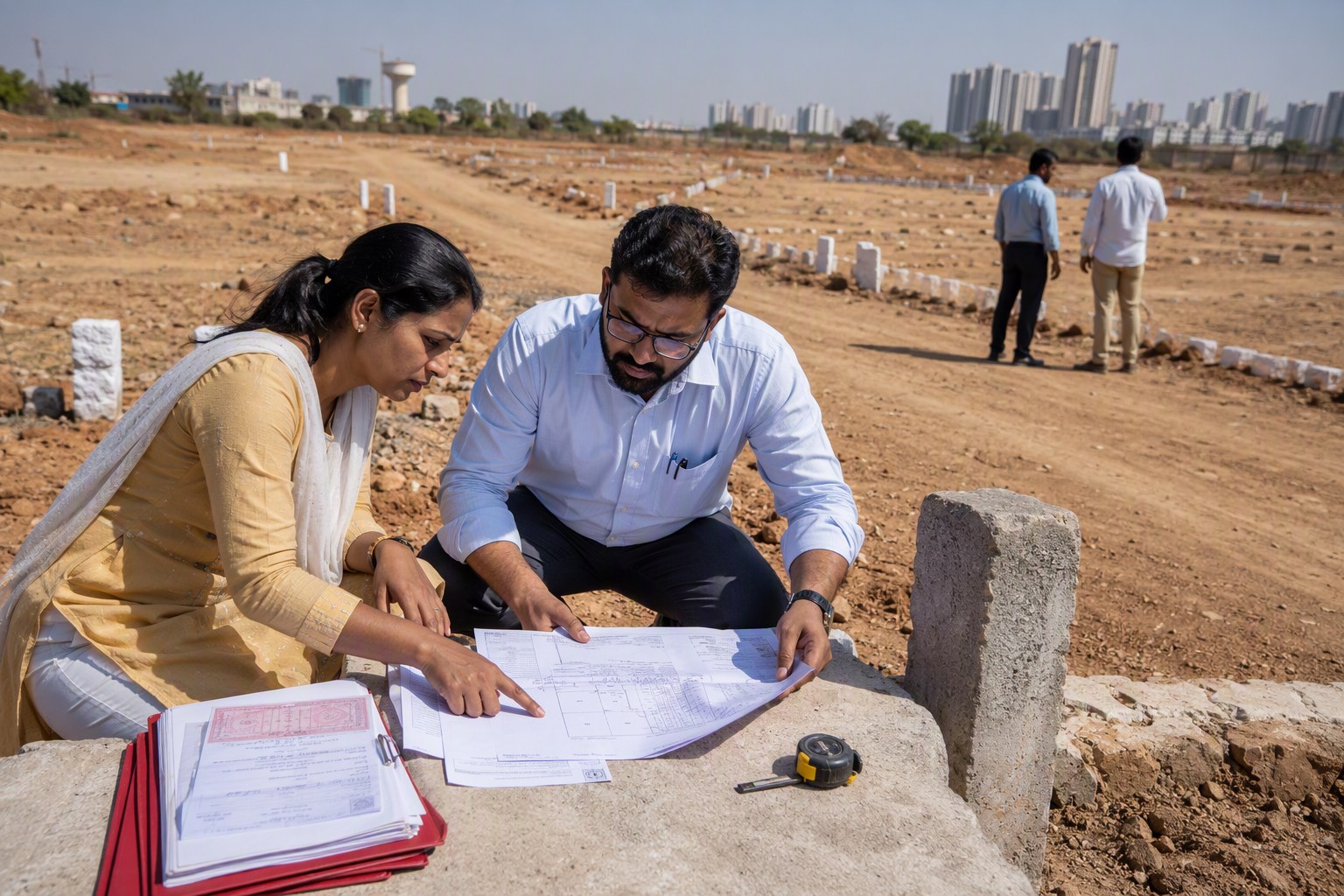
Hyderabad Co-Living Projects may start mentioning Section 22-A land status more clearly in launch brochures, investor decks, rental onboarding packs and booking documents. The reason is simple: co-living and managed rental assets are no longer just hostel-style operations. Many are being pitched as income-generating real estate products across Gachibowli, Madhapur, Kondapur, Nanakramguda, Kokapet, Tellapur, Uppal and Kompally. Once investors, tenants and lenders enter the picture, land title risk cannot remain hidden in fine print.
As per latest IGRS data available with Verified.RealEstate, Telangana has 3,076,153 prohibited property records under Section 22-A. That number is not a small footnote. For any project dependent on clean title, registration, leasing continuity or refinancing, 22-A status is one of the first filters serious buyers now want checked.
Hyderabad Co-Living Projects May Use 22-A Status As A Launch Disclosure
In our experience, the better-managed developers and rental operators in Hyderabad are already getting more careful with land-related disclosures. For conventional apartments, buyers ask for RERA number, link documents, EC, building permission and occupancy status. For co-living, the same discipline has been slower because many deals are structured as lease, revenue-share, fit-out investment or bulk inventory tie-ups.
That gap may reduce. Upcoming co-living launches may start adding a simple line in their public documents: whether the project land survey number appears in Section 22-A prohibited property records or not. This is especially relevant where the project is on converted land, old village boundaries, inherited parcels, assigned land claims, endowment-linked land, wakf-related claims or government land disputes.
For a young tenant, the issue may look distant. For an investor buying a revenue-share studio or funding interiors in a managed rental block, it is very direct. If the underlying land has a restriction, future registration, mortgage, redevelopment, exit or even institutional leasing can become difficult.
Why 22-A Land Status Matters For Hyderabad Co-Living Projects
Section 22-A is a restriction mechanism used in registration records for properties that cannot be freely registered due to legal or government-related reasons. A property being listed under 22-A does not always mean the same type of dispute. It can relate to government land, assigned land, ceiling surplus land, endowment land, wakf property, court orders or other notified restrictions. The practical effect, however, is clear: the SRO may refuse registration or raise an objection.
In Hyderabad’s western corridor, where co-living demand is strong around HITEC City, Financial District, Gachibowli and Nanakramguda, land history can be layered. Serilingampally mandal has seen old gram panchayat layouts, regularised buildings, joint development deals and high-value apartment redevelopment. Gandipet mandal, including Kokapet and Narsingi side, has its own mix of auction lands, private patta lands and legacy village survey numbers. In Tellapur and Kollur, which fall around Ramachandrapuram and nearby growth pockets, large parcels often have long link-document chains.
That is why a plain 22-A check before launch is not over-caution. It is basic hygiene.
What Buyers, Tenants And Investors Should Expect In The New Disclosure Format
A useful launch disclosure should not be vague. Saying “title is clear” is not enough. We have seen enough files where marketing language and land records tell different stories.
For co-living and managed rental projects, a sensible 22-A disclosure should mention:
- Village name, mandal and district as per revenue records.
- Survey number or sub-division number used for the project land.
- SRO jurisdiction where registration falls.
- Whether the land appears in Section 22-A prohibited property records.
- Latest Encumbrance Certificate period checked.
- RERA registration status, if the project structure requires it.
- Building permission and land-use basis used for the project.
Before paying token advance, investors can run a quick title-risk screen using the Section 22-A Prohibited Property Check. They should also verify the survey number through the Survey Number Finder and identify the correct registration office using Find Your SRO Office. These checks do not replace a lawyer’s opinion, but they help you ask sharper questions.
How This Could Change Co-Living Launch Documents In Hyderabad
Until now, many co-living launches focused on rent yield, occupancy, furniture package, app-based access, housekeeping, food, Wi-Fi and proximity to offices. Those points matter. But land status matters more when money is being collected upfront from retail investors.
We may now see launch documents carry a title-risk snapshot along with commercial details. For example, a managed rental project in Madhapur may show its SRO, village, survey number, EC reference and 22-A status in one table. A co-living block in Kondapur may attach land-use confirmation and RERA lookup details. A branded rental property near Uppal metro or LB Nagar may give tenants clarity on whether the building has proper permission and whether the land record has restrictions.
Such disclosure will also help banks and NBFCs. If a lender is funding the property owner, or if an investor is taking a loan against a unit, the file moves faster when land data is clean and traceable.
Hyderabad Co-Living Projects And The Risk Of Half-Checked Land Records
Co-living is operationally intensive. A small title issue can affect far more people than a normal flat dispute. One building may house students, IT employees, nurses, trainees and young working professionals. If there is a registration block, municipal objection or ownership dispute, tenants may face sudden notices or service disruption, while investors may get stuck without a clean exit.
This risk is higher in projects where the operator is not the landowner. Many managed rental brands take buildings on long lease. Some sign revenue-share agreements. Some aggregate floors from multiple owners. In these cases, the tenant sees the brand, but the land title belongs to someone else. That is exactly why 22-A disclosure should sit at project level, not just owner level.
A clean rental agreement cannot cure a defective land title. A glossy brochure cannot override a prohibited property entry. If the survey number is blocked, that fact must be known before launch, not after bookings.
Quick Due Diligence Checklist Before Booking A Co-Living Investment
| Check | Why It Matters | Useful Tool |
|---|---|---|
| Section 22-A status | Shows whether the survey number is under prohibited property records. | Section 22-A Prohibited Property Check |
| Encumbrance Certificate | Helps identify sale deeds, mortgages, releases and other registered transactions. | Encumbrance Certificate Search |
| RERA status | Confirms whether a registered real estate project record exists. | RERA Project Lookup |
| Guideline value | Helps compare declared value with government market value records. | Market Value / Guideline Value Search |
| Land-use and road access | Useful for checking whether the proposed use and access support the building plan. | Land Use Zone Finder |
For larger ticket investments, also run the title papers through the Property Verification Tool and track future changes with the Property Change Tracker. If the property is being sold as a unit, use the Stamp Duty Calculator to understand registration cost as per applicable values.
What Developers And Operators Should Do Now
For developers, the message is straightforward: disclose early and avoid future mistrust. If the land is clean, saying so with survey-level clarity improves credibility. If there is a pending clarification, disclose the status and expected remedy. Hyderabad buyers are not allergic to complexity. They are allergic to surprises after payment.
For co-living operators, title due diligence should become part of property onboarding. Before taking a building on lease in Gachibowli, Ameerpet, Kukatpally, Manikonda, Narsingi or Pocharam, the operator should check owner documents, EC, building permission, fire and municipal compliance where applicable, and Section 22-A status. Tenants may not ask all these questions today. Institutional clients and corporate HR teams certainly will.
Our view is that 22-A disclosure will become a trust marker in Hyderabad’s managed rental market. Projects that show land status upfront will look more bankable than projects that only talk about beds, rent and amenities.
The Bottom Line For Hyderabad’s Managed Rental Market
Hyderabad’s co-living demand is real, especially near job clusters and education corridors. But as the sector matures, launch documents must move beyond lifestyle promises. Section 22-A status is one of the clearest title-risk signals available before booking.
With 3,076,153 prohibited property records under Section 22-A in Telangana as per latest IGRS data, buyers and investors should not treat this as a rare issue. A five-minute check can save months of confusion later. For serious co-living projects, public disclosure of 22-A land status may soon become the difference between a casual launch and a credible launch.
Frequently Asked Questions
What is 22-A land status in Telangana?
Section 22-A refers to prohibited property records where registration may be restricted due to government, legal or notified reasons. It can include different categories of land, so the exact reason must be checked against the survey number and official records.
Why should Hyderabad co-living projects disclose 22-A status?
Co-living projects involve tenants, investors, operators and sometimes lenders. If the underlying land has a registration restriction, future sale, mortgage, redevelopment or exit can become difficult. Early disclosure gives a clearer title-risk signal.
Can a tenant check 22-A status before moving into a co-living property?
Yes. A tenant can ask for the village, mandal and survey number of the property and run a basic Section 22-A check. For normal short-term stays, tenants may not do full legal due diligence, but checking land status is useful for longer stays and company leases.
Is RERA enough to confirm clean title for a managed rental project?
No. RERA lookup is useful, but it should be read along with EC, link documents, building permission, land-use records and 22-A status. For lease-based co-living properties, RERA may not always be the only relevant filter.
Which details should I ask from a co-living project before investing?
Ask for survey number, village, mandal, SRO, EC, land-use basis, building permission, owner documents, RERA status where applicable and written confirmation on Section 22-A status. Do not rely only on projected rent or occupancy claims.