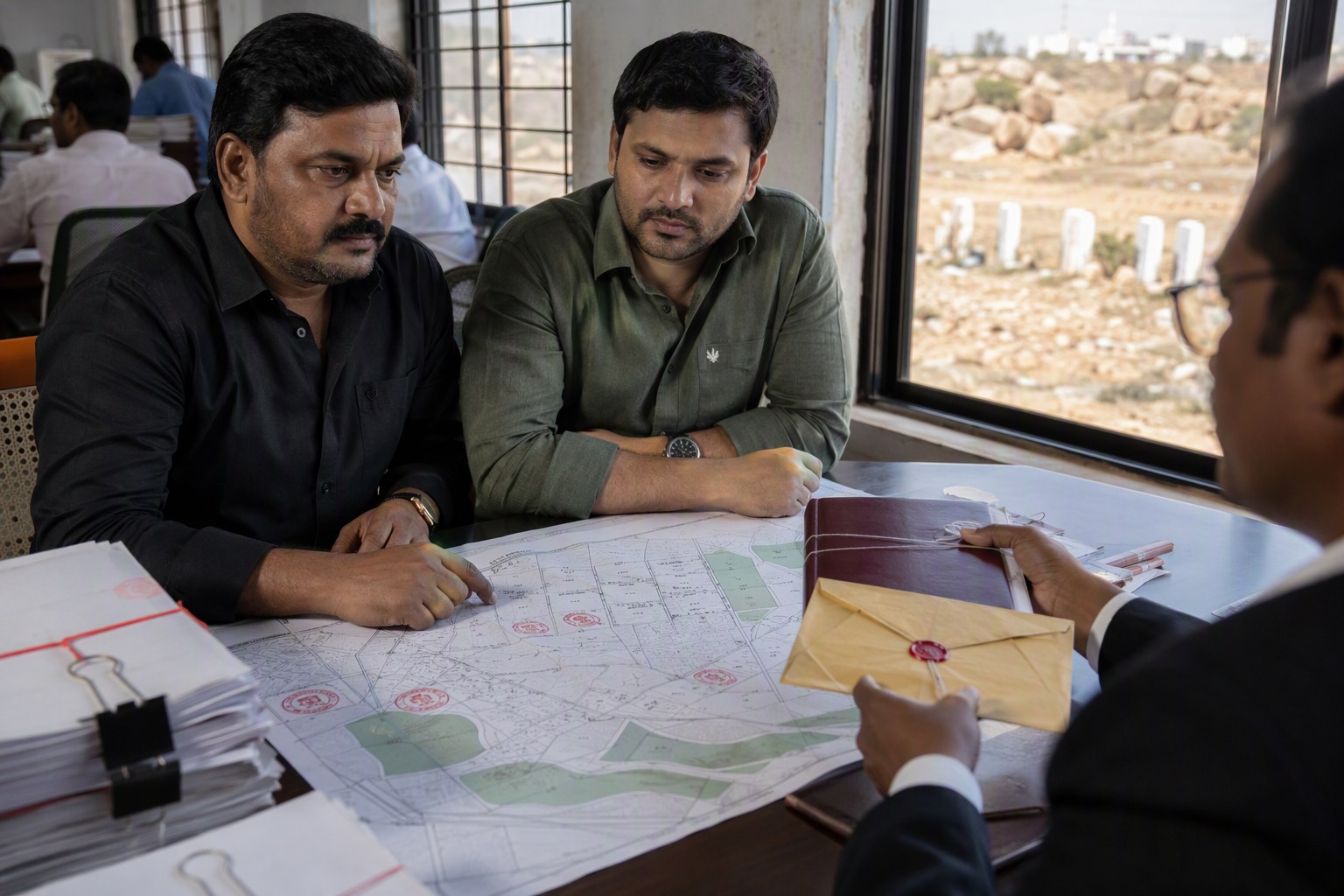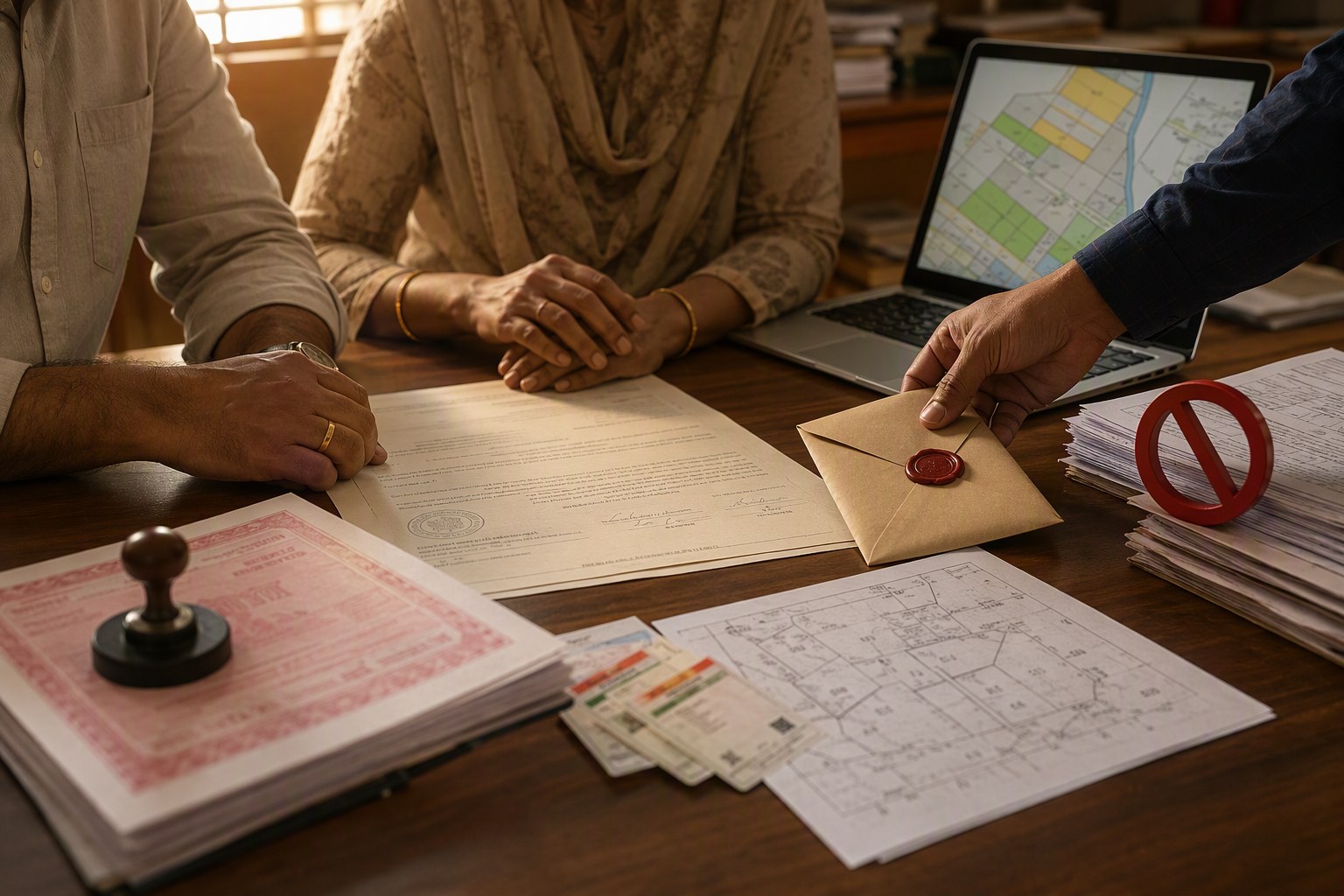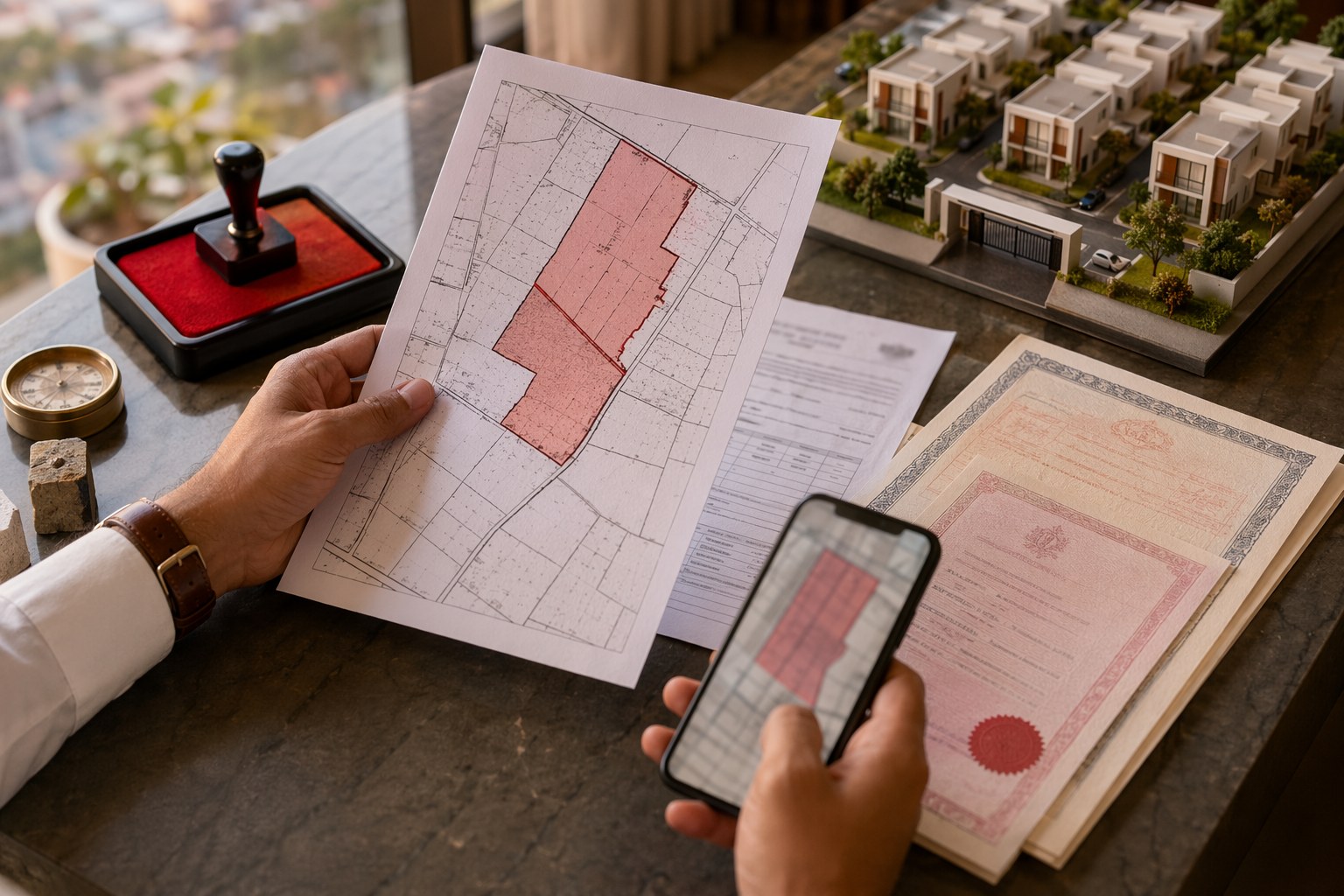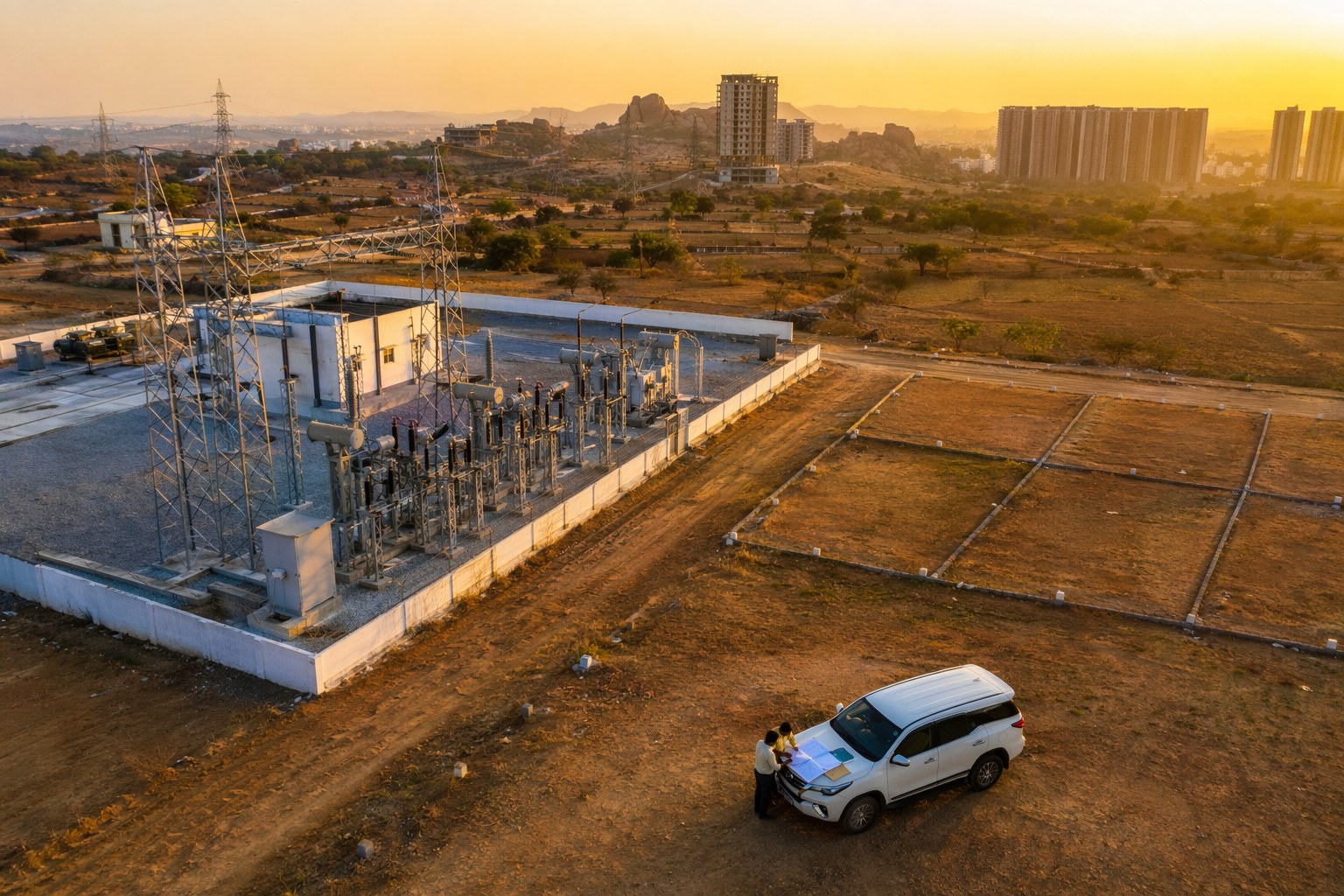
Big land swaps in Telangana may need 22-A clean chits as a practical closing condition, especially in Hyderabad’s high-growth corridors. The reason is simple: in a land-for-land deal, one disputed or prohibited parcel can disturb the value, title comfort and registration path on both sides of the transaction. As per latest IGRS data available with Verified.RealEstate, Telangana has 3,076,153 prohibited properties recorded under Section 22-A. For large exchanges involving developers, institutions, family settlements or aggregator-led land banks, that number is no longer background noise. It is now a deal-risk item.
Big Land Swaps in Telangana: Why 22-A Clean Chits Are Becoming Deal Conditions
In a straight sale, the buyer checks the seller’s title and either proceeds, renegotiates or walks away. A swap is more sensitive. Both parties become buyers and sellers at the same time. If Parcel A in Mokila, Shankarpally mandal, is clean but Parcel B in Maheshwaram mandal has a Section 22-A issue, the entire exchange can get stuck. The party giving the clean land may refuse to execute until the other side produces a clear confirmation from the registration side.
We’ve seen this concern sharpen around fast-moving belts such as Kokapet, Puppalaguda, Narsingi, Tellapur, Gachibowli, Shamshabad, Adibatla, Tukkuguda, Maheshwaram and Hayathnagar. These are not casual village-level barter transactions. Many swaps are linked to access roads, development share arrangements, layout consolidation, family partition balancing, industrial land assembly and future apartment or villa projects.
That is why lawyers and transaction advisors are increasingly treating a Section 22-A Prohibited Property Check as a pre-closing item, not as a last-minute SRO counter query. A quick starting point is the Section 22-A Prohibited Property Check, followed by survey number verification, EC review and SRO-level confirmation where needed.
22-A Clean Chits in Telangana Land Swaps: What Changes at Closing?
Earlier, many land swaps moved on the strength of pattadar passbooks, pahani copies, Dharani entries, family declarations and local knowledge. That still matters. But high-value transactions now need a tighter closing checklist. The clean chit is not always a single certificate in a neat format. In practice, parties look for proof that the survey number, sub-division, extent and village are not blocked under Section 22-A at the time of registration.
For a swap deed, the exposure is doubled. Stamp duty and registration planning also becomes tricky because values have to be assigned to both parcels. Parties usually compare government market value, local market expectation, development potential, road access and land use. Before fixing the equalisation amount, if any, parties should check the Market Value / Guideline Value Search and use the Stamp Duty Calculator for transaction cost estimates.
Our view is straightforward: if the land is big enough to require board approval, lender consent or multiple family signatures, it is big enough to require a 22-A check before closing.
Why One Problem Parcel Can Affect Both Sides
In a land-for-land swap, the transaction is interdependent. One side may be giving land near an existing road in Gandipet mandal, while the other side may be giving a larger extent in Shamshabad mandal with future potential. The value balance depends on both parcels being capable of registration and possession transfer. If one parcel is later found in a prohibited list, the other party may face three problems.
- Registration risk: The SRO may refuse registration or keep the document pending if the survey number is hit by a Section 22-A entry.
- Title imbalance: The party giving clean land may end up with disputed land, which defeats the commercial purpose of the swap.
- Financing and project risk: Banks, NBFCs, joint development partners and RERA-facing developers may hesitate if the incoming land has unresolved restrictions.
This is why a swap agreement should not simply say “both parties confirm title is clear”. It should specifically mention prohibited property status, survey number verification, EC review, mutation status, possession, access and pending litigation declarations.
Where Telangana Buyers Should Be Extra Careful
The 22-A risk is not limited to one type of land. It can appear in government land, assigned land, endowment-related land, wakf-related entries, ceiling surplus matters, court-disputed parcels and other categories recorded by authorities. The risk becomes more visible in urban expansion zones where old agricultural survey numbers are being converted into layouts, villas, warehouses and plotted ventures.
For example, a swap involving land in Tellapur, Ramachandrapuram mandal, and another parcel in Kollur or Velimela needs checks across revenue, registration and planning angles. A deal involving Adibatla, Ibrahimpatnam side, may need a different review from a parcel in Narsingi or Puppalaguda. Mandal, village and survey number matter. A broad locality name is not enough.
For buyers who only have a location pin or a rough village name, the Survey Number Finder can help start the mapping. For registration jurisdiction, use Find Your SRO Office. For past transactions and charges, check the Encumbrance Certificate Search and, where the EC is lengthy, the EC Analyzer.
How a 22-A Closing Condition Can Be Drafted
A good swap agreement should make the 22-A clearance a condition precedent. In plain English, the deal should close only after both sides satisfy each other that neither parcel is prohibited for registration. This is especially useful where there is a time gap between signing the memorandum of understanding and executing the registered swap deed.
| Deal Stage | Recommended 22-A Action | Why It Matters |
|---|---|---|
| Before MOU | Check village, survey number, extent and owner details | Prevents signing on unclear land identity |
| Before valuation | Verify guideline value and registration restrictions | Helps compare both parcels fairly |
| Before final deed | Run fresh 22-A and EC checks | Captures changes after negotiation |
| At registration | Confirm SRO jurisdiction and document readiness | Reduces last-minute refusal risk |
Parties should also preserve screenshots, certified copies, application acknowledgements and legal opinions. If a later dispute arises, these records show that both sides acted with care.
Big Land Swaps in Telangana Need More Than Dharani Screenshots
Dharani entries are useful, but they are not the full story for a complex swap. A clean pattadar name does not automatically answer every question on prohibited status, earlier sale deeds, mortgage entries, court disputes, access rights or layout permissions. The revenue record, registration record and ground reality must speak to each other.
In our experience, the biggest mistakes happen when parties rely on local confidence: “This family has owned it for years”, “registration happened for the neighbour”, or “the broker checked at the SRO”. These statements may be true, but they are not enough for a major land exchange. The safer route is documentary verification, preferably close to the closing date.
Developers should also check whether the incoming land suits the intended project. Land use, road width, FSI/FAR, OSR obligations and RERA exposure can change the commercial value. Depending on the project type, use Land Use Zone Finder, Road Width Check, FSI/FAR Calculator and RERA Project Lookup.
What This Means for Hyderabad’s Deal Market
Hyderabad’s land market is still active in the western, southern and airport-side corridors, but transaction discipline is improving. Large families, developers and investors are asking sharper questions before exchanging land. That is a healthy shift. A swap can unlock value, solve access issues, consolidate fragmented holdings and support larger development plans. But it can also transfer a hidden defect if the paperwork is casual.
The presence of 3,076,153 prohibited properties in the Telangana prohibited property database is a strong reminder that Section 22-A cannot be treated as a small clerical check. For big land swaps, a 22-A clean chit is likely to become as routine as EC review, market value verification and SRO mapping.
Our opinion: any serious swap deed in Telangana should carry a specific representation that both parcels are free from Section 22-A restrictions as on the execution date. If either side cannot give that comfort, the other side should pause, verify and renegotiate before handing over clean land.
Frequently Asked Questions
What is a 22-A clean chit in a Telangana land swap?
It means both parties have verified that the survey numbers being exchanged are not blocked as prohibited properties under Section 22-A at the time of registration.
Why is Section 22-A risk higher in land-for-land swaps?
Because both sides are transferring and receiving land. If one parcel has a prohibited property entry, the entire value balance and registration plan can get affected.
Can Dharani records alone confirm that land is safe for a swap?
No. Dharani is useful, but parties should also check Section 22-A status, EC, survey number identity, SRO jurisdiction, access and any legal restrictions.
When should parties check 22-A status?
Check it before signing the MOU and again before executing the registered swap deed, especially if there is a time gap between negotiation and closing.
Which tools can help before a Telangana land swap?
Start with the Section 22-A Prohibited Property Check, Survey Number Finder, EC Search, Guideline Value Search and Find Your SRO Office tools.