


Why Telangana Buyers May Need More Margin for Home Loans
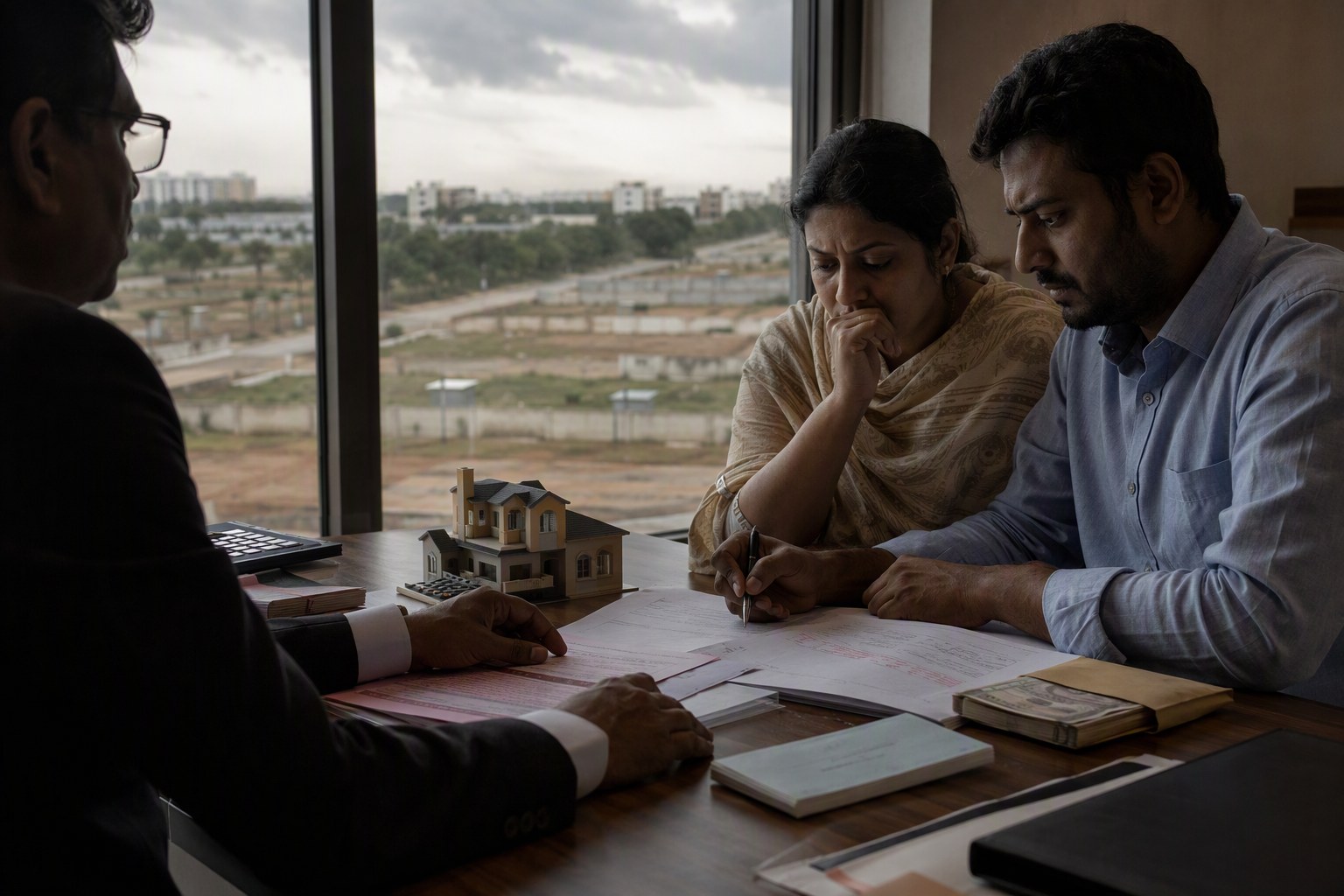
Telangana buyers may need more margin for home loans because lenders are becoming cautious wherever title, registration or government restriction risk appears. The biggest data point is hard to ignore: as per latest IGRS data available with Verified.RealEstate, Telangana has 3,076,153 Section 22-A prohibited property entries. In plain language, that is 30.76 lakh entries where registration can be restricted or blocked unless the issue is clarified.
That number does not mean every flat, plot or land parcel in Telangana is risky. It also does not mean every 22-A entry is automatically a bad property. But for a bank or housing finance company, even one unresolved entry linked to a survey number, village, mandal or old title document can change the loan conversation. The bank may still process the case, but the buyer may be asked to bring more own contribution, submit extra title papers, wait longer for legal clearance, or accept final disbursal only after registration-side risk is settled.
In our experience, loan sanction is not the real finish line. Final disbursal is where title, EC, SRO records, Dharani history, RERA details and Section 22-A risk all meet.
This is now affecting buyers in and around Hyderabad too, especially in fast-moving corridors such as Kokapet, Narsingi, Tellapur, Kollur, Patancheru, Miyapur, Bachupally, Kompally, Uppal, Pocharam, Shamirpet, Adibatla and Ibrahimpatnam. The issue is not limited to one side of the city. It can appear in Gandipet mandal, Serilingampally mandal, Ramachandrapuram mandal, Patancheru mandal, Medchal mandal, Shamirpet mandal, Hayathnagar mandal, Ibrahimpatnam mandal, Moinabad mandal and other locations depending on the survey number and land history.
Telangana Buyers May Need More Margin for Home Loans When Section 22-A Risk Appears
Section 22-A is a registration-side restriction list. Properties may enter this list due to government land claims, assigned land issues, endowment or wakf-related concerns, ceiling land matters, court disputes, acquisition notifications or other prohibited categories recorded by the registration department. The buyer may see a good road, compound wall, layout board and even a sale agreement. But the lender is not funding the road view. The lender is funding a legally mortgageable asset.
When a property is not freely registrable, or when the SRO may refuse registration, the bank’s security becomes weak. If the sale deed itself cannot be registered cleanly, the mortgage cannot be created cleanly. If mortgage cannot be created, the loan is not safe from the lender’s side.
This is why the 30.76 lakh Section 22-A prohibited property entries matter to home buyers. They create a background risk environment. Banks do not want to discover after sanction that the survey number is blocked, the parent land has a government claim, or the land on which the apartment project stands has a pending registration objection.
Before paying token advance, buyers should use the Section 22-A Prohibited Property Check and cross-check the survey number, village and mandal. For land or villa plots, do not depend only on the marketing brochure. Use the Survey Number Finder if the seller gives only a location pin or old document reference. For flats, ask for the project land schedule and check the underlying survey numbers, not just the flat number.
How Telangana Buyers May Need More Margin for Home Loans in Practical Terms
When a lender is uncomfortable, the result is usually not dramatic on day one. The bank may not say outright that the property is rejected. Instead, buyers see small but costly changes.
- Lower funding comfort: The lender may reduce how much it is willing to fund against the agreement value or property value assessed by its legal and technical team.
- Higher buyer contribution: The buyer may be asked to pay more from own funds before final disbursal.
- Delayed disbursal: The bank may hold back payment until the SRO, builder, seller or advocate clarifies title issues.
- Extra documentation: The bank may ask for old sale deeds, link documents, pahani, Dharani extracts, mutation records, layout approvals, RERA papers or court case status.
- Conditional sanction: The loan may be sanctioned on paper, but subject to legal clearance before release.
For a salaried buyer booking a flat in Tellapur or Narsingi, this can disturb the payment schedule with the builder. For a plot buyer in Shankarpally, Moinabad or Ibrahimpatnam side, it can create a more serious cash-flow problem because plot transactions often move quickly once an agreement is signed. For resale apartments in Miyapur, Kukatpally, Uppal or Kompally, missing link documents can delay bank legal clearance even when the building is occupied.
My view is simple: a buyer should not treat bank sanction as a substitute for title verification. Banks check for their loan safety. You must check for your ownership safety.
Why Lenders Connect Section 22-A, EC and SRO Records Before Disbursal
A home loan is secured by mortgage. The lender wants a property that can be sold or enforced if the borrower defaults. That sounds harsh, but that is how secured lending works. If a property has a registration bar, unclear title chain or missing approvals, the lender’s recovery position weakens.
Legal teams generally look at three broad questions:
- Can this property be legally transferred? This is where Section 22-A and SRO records become relevant.
- Is the seller’s title traceable? This is where parent documents, link documents, EC and pahani history matter.
- Is the building or project acceptable? This is where RERA, building permission, layout approval, land use and technical valuation come in.
Buyers can start with an Encumbrance Certificate Search to see registered transactions and charges. An EC is not a magic certificate, but it is one of the first documents any lender will ask for. For deeper reading, the EC Analyzer can help identify gaps or unusual entries that need explanation.
For apartments and gated community projects, use the RERA Project Lookup. RERA registration does not remove every title risk, but it gives useful project-level details. Buyers should compare RERA land extent, promoter name, approvals and project status with the agreement and brochure.
Where Hyderabad Buyers Are Seeing This More Often
The pressure is sharper in growth corridors where agricultural land became layouts, villas, plotted developments or apartment projects over time. We have seen buyers become relaxed because the locality name is famous. But famous locality and clean title are two different things.
Take Kokapet and Narsingi in Gandipet mandal. These are premium markets, but buyers still need to check survey number history, land use, permissions and mortgage releases. In Tellapur and Kollur side, falling under surrounding mandal and SRO jurisdictions depending on the exact village, the issue may be older land conversion, layout approval or link document gaps. In Patancheru and Ramachandrapuram belts, industrial history, old layouts and mixed-use pockets can create document questions. In Uppal, Pocharam and Ghatkesar side, buyers should be careful with village records, approach road status and layout approval. In Shamirpet, Medchal, Moinabad and Ibrahimpatnam belts, plot buyers must be even more careful because land schedules, survey numbers and revenue records decide the loan comfort.
The ready reckoner or guideline value also matters during registration and valuation. Before finalising consideration, buyers can check the official market value direction using the Market Value / Guideline Value Search. For duty planning, use the Stamp Duty Calculator. These do not replace legal due diligence, but they reduce surprises at the SRO stage.
Bank Sanction Letter Is Not Equal to Final Home Loan Disbursal
This is one of the most common misunderstandings in Hyderabad home buying. A buyer gets a sanction letter and assumes the bank has approved everything. Not always. A sanction letter often depends on income eligibility first. Property legal and technical clearance may still be pending, or may be partly reviewed.
Final disbursal comes only when the lender is satisfied with the property, borrower contribution, agreement, valuation, insurance requirements, mortgage process and registration plan. If Section 22-A risk appears late, the bank can pause. If the SRO refuses registration or asks for clarification, disbursal can get stuck. If the seller cannot provide link documents, the legal team can raise objections.
This is why buyers should not exhaust all savings on booking amount, interiors or advance payments. Keep a buffer. If the lender asks for higher margin due to title discomfort, you should not be forced into a personal loan or distress cancellation.
| Risk signal | What lender may do | What buyer should check |
|---|---|---|
| Survey number appears in Section 22-A records | Hold legal clearance or reject mortgage until clarified | Check SRO records, revenue records and use the prohibited property check |
| EC has missing link or unexpected entry | Ask for old documents and advocate opinion | Review EC, sale deeds, release deeds and mortgage closures |
| Project details do not match RERA or approvals | Delay disbursal or ask builder for clarification | Compare RERA, building permission, land schedule and agreement |
| Guideline value and agreement value need clarity | Seek valuation report and registration estimate | Check market value and stamp duty before signing |
| SRO jurisdiction confusion | Delay registration planning | Use correct SRO and village details before booking slot |
If you are unsure about the correct registration office, use Find Your SRO Office or the SRO Village Directory. Wrong assumptions about SRO jurisdiction can waste time during agreement and registration planning.
What Buyers Should Do Before Paying Advance
Before paying a non-refundable advance, ask the seller or builder for the document set. Do not feel shy. A serious seller will have documents ready. A serious builder will not object to bank legal scrutiny. If someone says, “Sir, all buyers are taking, why you are asking so many documents?”, slow down.
For a flat in Hyderabad or surrounding municipalities
- Ask for land ownership documents and link documents.
- Check RERA details using the project name and promoter name.
- Check building permission and sanctioned plan details.
- Ask whether the project land has any mortgage and whether release will be provided.
- Review the draft agreement before paying a large amount.
- Check EC for the project land and, in resale, for the specific flat.
For a plot or land parcel
- Confirm village, mandal, survey number and extent.
- Check Section 22-A status before agreement.
- Ask for pahani, Dharani details, mutation history and old sale deeds.
- Check layout approval, land use zone and road access.
- Confirm whether the land is agricultural, converted, assigned, ceiling-affected or under any acquisition issue.
- Use the Land Use Zone Finder and Road Width Check where relevant.
For buyers who want one starting point, the Property Verification Tool is useful because it forces you to gather basic identifiers: survey number, village, mandal, SRO and document history. Many bad transactions happen because buyers discuss only square yards, facing, road width and price, while ignoring the legal identity of the property.
Why Your Own Contribution May Go Up Even When Income Is Strong
Many buyers think higher salary means easy home loan. Income helps, no doubt. But home loan funding is not only about your salary. It is also about the property’s acceptability.
A borrower working in HITEC City may have strong income. But if the chosen plot near Moinabad has unclear title, the lender may still reduce comfort. A buyer purchasing a resale flat in Kukatpally may have a clean credit score, but if the previous mortgage release is not reflected properly, the bank can wait. A family buying in Shamirpet may be ready with down payment, but if the survey number is flagged, the lender will ask for clarification before creating mortgage.
This is the part buyers often underestimate. The bank’s legal team is not emotionally attached to your chosen home. They will go by documents. If documents are weak, your margin requirement may rise, not because you are a weak borrower, but because the security is not fully comfortable.
How to Protect Your Booking Amount
The safest approach is to make your agreement conditional. Put clear clauses that the transaction depends on clean title, bank legal approval, SRO registration eligibility and delivery of required documents. If the seller is confident, they should accept fair conditions.
Use staged payments. Pay a small token first, subject to document verification. After legal clearance, pay the next amount. For under-construction projects, match your payments with construction stage and lender disbursal process. For resale, insist that original documents, loan closure letters and NOC documents are available before registration day.
Track changes if you are waiting for a few weeks or months. The Property Change Tracker can help you monitor property record changes. For existing loans or possible charges, use the CERSAI Charge Check. This is especially useful in resale transactions where the seller says the loan is closed but papers are still with the bank.
My Practical Advice for Telangana Home Loan Buyers
Do not panic because Telangana has 3,076,153 Section 22-A prohibited property entries. Panic leads to poor decisions. But do not be casual either. A property may look perfect on site and still have a registration issue in records.
Before you finalise a flat in Narsingi, a villa in Kollur, a plot in Shankarpally, a resale unit in Miyapur, or land near Ibrahimpatnam, check the government-facing identity of the property. Match survey number, village, mandal, SRO and document chain. If the bank asks for more margin or pauses disbursal, treat it as a warning signal, not as a small administrative delay.
In Hyderabad real estate, the best buyers are not the fastest buyers. They are the buyers who verify early, negotiate with documents in hand, and keep enough margin for surprises.
Frequently Asked Questions
Why may Telangana buyers need more margin for home loans?
Buyers may need more margin when the lender sees title risk, Section 22-A restriction, EC gaps, approval mismatch or registration uncertainty. The bank may reduce funding comfort and ask the buyer to bring more own contribution before final disbursal.
Does a Section 22-A entry mean I should cancel the property immediately?
Not automatically. Some entries may need clarification, correction or supporting documents. But you should not pay a large advance until the survey number, village, mandal and SRO records are checked by a competent property lawyer and accepted by your lender.
Can a bank sanction a loan and still delay final disbursal?
Yes. Sanction can be based mainly on borrower eligibility, while final disbursal depends on legal, technical, valuation, registration and mortgage clearance. If property risk appears late, disbursal can be held back.
Which checks should I do before booking a plot in Telangana?
Check Section 22-A status, survey number, village, mandal, pahani or Dharani records, EC, link documents, layout approval, land use and SRO jurisdiction. For plots, survey number-level checking is more important than brochure claims.
Is RERA enough for a home loan approval?
RERA is useful, but it is not the only check. Lenders will still review title documents, approvals, EC, land schedule, valuation and mortgageability before final disbursal.